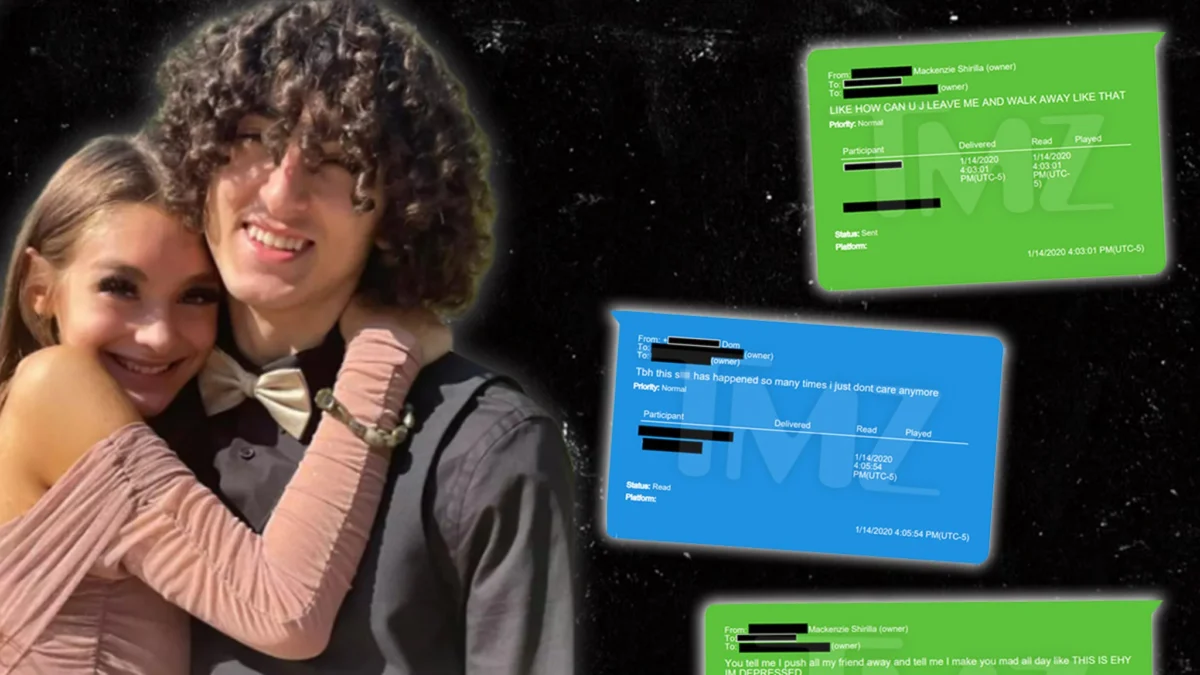
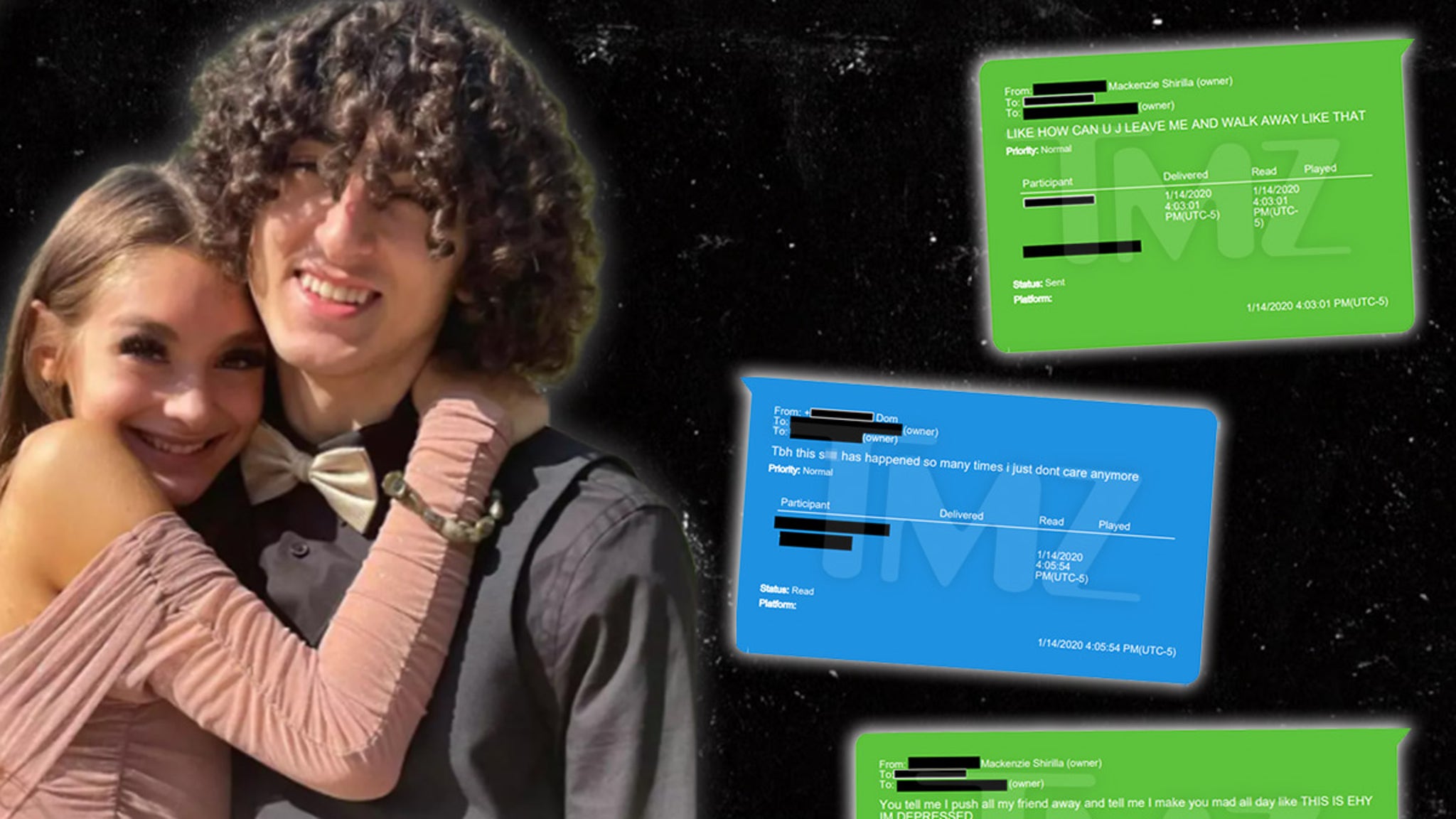
Recently unsealed text messages, obtained as part of a rigorous police investigation, have offered a chilling glimpse into the profoundly troubled relationship between Mackenzie Shirilla and her then-boyfriend, Dominic Russo, years before Shirilla was convicted of their murders. These highly emotional and often volatile communications reveal a deep-seated strain and emotional distress that permeated their interactions, providing critical context to the tragic events that unfolded. The messages, which served as compelling evidence in the high-profile case, paint a portrait of a relationship fraught with conflict, despair, and alarming expressions of self-harm and aggression, ultimately shedding light on the tumultuous inner world of the convicted individual.
Unveiling the Volatility: A Glimpse into Shirilla’s Messages
The content of the text messages is stark and unsettling, showcasing Mackenzie Shirilla’s extreme emotional state and her deeply problematic dynamic with Dominic Russo. In exchanges that predated the fatal car crash, Shirilla’s words conveyed a profound sense of desperation and anger. Among the most disturbing phrases uncovered were "I’m gonna kill someone," an ominous statement that, in retrospect, takes on a chilling significance. Further illustrating her distress, Shirilla wrote, "I j want to bang my head on the wall till I’m dead," and, most starkly, "THIS IS WHY I J WANNA F***ING KMS," an abbreviation commonly understood to mean "kill myself." These statements, far from being isolated incidents, were woven into a tapestry of complaints and emotional outbursts directed at Russo.
Beyond these explicit expressions of violence and self-harm, the messages delve into a litany of personal struggles and grievances. Shirilla communicated her anxieties about a potential pregnancy, her experiences getting tested for sexually transmitted diseases, and health issues she attributed to smoking. She also expressed dissatisfaction with her living situation, confessing to feeling depressed and frequently complaining about how Dominic treated her. These myriad issues collectively painted a picture of a young woman grappling with significant internal turmoil, external pressures, and a relationship characterized by intense emotional dependency and conflict. The repetitive nature of these complaints and the escalation of her language suggest a pattern of behavior and a level of distress that extended beyond typical teenage angst, indicating a deeper emotional crisis.
Adding a peculiar layer to the narrative, one message from Dominic Russo to Mackenzie Shirilla revealed that he had crashed his mother’s car. While seemingly a separate incident, this detail might have been considered by investigators and the court as indicative of a broader pattern of recklessness or irresponsibility within their shared lives, or perhaps a demonstration of a chaotic environment in which both individuals operated. Such details, though seemingly minor, can contribute to a more comprehensive understanding of the personalities and circumstances involved in a complex criminal case.
The Tragic Incident: A Timeline of Events
The unsealed texts gain their tragic significance from the horrific event that ultimately led to Mackenzie Shirilla’s conviction. The fatal crash occurred on July 31, 2022, in Strongsville, Ohio. Shirilla, then 17 years old, was driving her Toyota Camry with Dominic Russo, 20, and their friend, Davion Flanagan, 19, as passengers. Evidence presented during the trial revealed that Shirilla intentionally veered her vehicle off the road, accelerating to speeds exceeding 100 miles per hour before crashing into a brick wall at the side of a commercial building. The impact was catastrophic, instantly killing both Russo and Flanagan. Shirilla herself sustained serious injuries but survived.
The investigation into the crash was immediate and thorough. Authorities quickly moved beyond the initial assessment of a mere accident, given the unusual circumstances and the extreme speed involved. Police retrieved cell phone data, including the very text messages now made public, along with GPS data, surveillance footage, and witness testimonies. These pieces of evidence meticulously constructed the prosecution’s case, painting a picture of deliberate action rather than an accidental mishap.
The legal process that followed was lengthy and emotionally charged. Mackenzie Shirilla was charged with four counts of murder, four counts of felonious assault, and two counts of aggravated vehicular homicide. Her trial, held in Cuyahoga County Common Pleas Court, drew significant public attention. The prosecution argued that Shirilla intentionally crashed the car, a premeditated act of murder. They highlighted the lack of braking before impact, the extreme acceleration, and the trajectory of the vehicle directly into the brick building, asserting that her actions were not accidental but a deliberate act of violence. The defense, conversely, attempted to portray the incident as an accident, suggesting Shirilla lost control or that the emotional texts were simply hyperbolic expressions of a troubled young person, unrelated to any intent to harm.
On August 14, 2023, Judge Nancy Margaret Russo (no relation to Dominic Russo) delivered a guilty verdict on all counts. In her ruling, Judge Russo stated that Shirilla "purposely and intentionally drove the car into the building," describing her actions as an "act of revenge." The judge noted that Shirilla had a "mission" and that she chose "a wall, not a hospital." This definitive finding solidified the court’s view that the crash was not an accident but a deliberate act.
Following her conviction, Mackenzie Shirilla was sentenced on August 21, 2023. She received a sentence of life in prison with eligibility for parole after 15 years. The sentencing marked the culmination of a harrowing legal battle and brought a degree of closure, albeit painful, to the families of Dominic Russo and Davion Flanagan. The case underscored the devastating consequences of extreme emotional distress and the catastrophic outcomes when such feelings manifest in violent actions.
The Role of Digital Evidence in Modern Jurisprudence
The extensive police probe into the Shirilla case heavily relied on digital evidence, particularly the trove of text messages exchanged between Mackenzie Shirilla and Dominic Russo. In contemporary criminal investigations, digital forensics has become an indispensable tool, offering unprecedented insights into the minds and motivations of individuals involved in crimes. For the prosecution in Shirilla’s trial, these texts were invaluable. They served not only to illustrate the volatile nature of her relationship with Dominic but also potentially to establish a pattern of aggressive ideation and emotional instability that could be interpreted as a precursor to her actions.
Prosecutors likely presented the messages — especially those expressing suicidal ideation and homicidal thoughts — to argue Shirilla’s state of mind, suggesting a deep-seated anger or despair that could have driven her to commit such a heinous act. The phrase "I’m gonna kill someone" could be presented as a direct, albeit generalized, threat, while "THIS IS WHY I J WANNA F***ING KMS" might have been used to suggest a motive of murder-suicide or an intentional act driven by a desire to end her own life, tragically taking others with her. While the defense might have attempted to dismiss these as mere teenage hyperbole, the court ultimately found them compelling enough to contribute to the narrative of intent.
The inclusion of Dominic’s message about crashing his mom’s car, while not directly incriminating Shirilla, could have subtly influenced the court’s perception of the overall environment of recklessness or dysfunction within their relationship. Such details, when accumulated, help paint a more complete picture for a jury or judge, allowing them to draw inferences about character, patterns of behavior, and the dynamics between the individuals involved.
The meticulous analysis of phone records, GPS data, and social media interactions has become standard practice in high-stakes criminal cases. These digital breadcrumbs often provide objective evidence of locations, communications, and even emotional states, which can be critical in proving or disproving intent, alibis, or patterns of behavior that are central to a conviction. The Shirilla case serves as a stark reminder of how deeply digital footprints are interwoven into the fabric of modern life and how they can decisively impact the outcome of legal proceedings.

Broader Implications and Societal Reflections
The Mackenzie Shirilla case, amplified by the raw intimacy of her unsealed text messages, resonates far beyond the confines of the courtroom, sparking important societal discussions. The tragic loss of two young lives, coupled with the revelation of Shirilla’s turbulent emotional state, forces a critical examination of youth mental health, toxic relationships, and the potential for extreme violence.
One significant implication is the heightened awareness of mental health crises among adolescents and young adults. Shirilla’s texts explicitly detailed feelings of depression, self-harm ideation, and intense emotional distress. This case underscores the urgent need for robust mental health support systems, early intervention strategies, and accessible resources for young people struggling with similar issues. The ability to identify and address such profound emotional turmoil before it escalates into tragic outcomes is a paramount challenge for families, educators, and healthcare professionals alike.
Furthermore, the case sheds light on the dangers of toxic relationships, particularly among youth who may lack the emotional maturity or coping mechanisms to navigate complex interpersonal dynamics. The cycle of intense conflict, emotional dependency, and aggressive communication evident in Shirilla’s texts can create an environment ripe for catastrophic consequences. Educational initiatives focusing on healthy relationship boundaries, conflict resolution, and emotional regulation are crucial in preventing similar tragedies.
The public’s fascination with cases like Shirilla’s, often fueled by media coverage and documentaries (as suggested by the "Netflix" and "The Crash Documentary" tags), also highlights a societal desire to understand the "why" behind such horrific acts. While media plays a vital role in informing the public, it also carries the responsibility of portraying such sensitive issues with accuracy, empathy, and a focus on broader societal lessons rather than sensationalism.
Ultimately, the Mackenzie Shirilla case serves as a somber reminder of the fragility of life and the profound impact of unchecked emotional distress. The unsealed texts, while painful to read, offer invaluable, albeit disturbing, insight into the complexities of human behavior and the critical importance of mental well-being, healthy relationships, and the careful navigation of life’s most challenging emotions. The legal system has delivered its judgment, but the societal lessons from this tragedy continue to unfold, urging communities to reflect on how best to support young people and prevent future heartbreak.