The story of Éric Cantona, a figure etched in the annals of football history not just for his sublime skill but for his tempestuous spirit, is brought to vivid life in the recent documentary, "Cantona." Premiering in the prestigious Special Screening section of the 79th Cannes Film Festival, this 115-minute film, co-directed by David Tryhorn and Ben Nicholas, delves into the complexities of a footballer who defied convention and courted controversy in equal measure. Known for their previous insightful sports documentaries, including "Pelé," "El Caso Figo," and "Untold: Vinnie Jones," Tryhorn and Nicholas have crafted an intriguing portrait of a gifted yet volatile subject, aiming to unravel the enigma of a player frequently misunderstood throughout his brief yet extraordinary professional career.
The documentary opens with a potent quote from Charles Baudelaire, "the flower of evil," immediately establishing a thematic undercurrent of contradiction: the coexistence of beauty and tarnishment. This duality serves as a central motif, exploring how Cantona’s exceptional talent was inextricably linked to his volatile temperament. The film then launches into a rapid-fire prologue, a whirlwind tour of his early career highs and lows. This segment vividly recalls infamous moments, such as a particularly ill-tempered television interview where Cantona defiantly declared he would "piss on the arse" of the pundits, even extending his disdain to include the Pope. This audacious outburst set the tone for a career defined by an unwavering refusal to conform, a characteristic that earned him the label of "unmanageable" from the French footballing authorities.
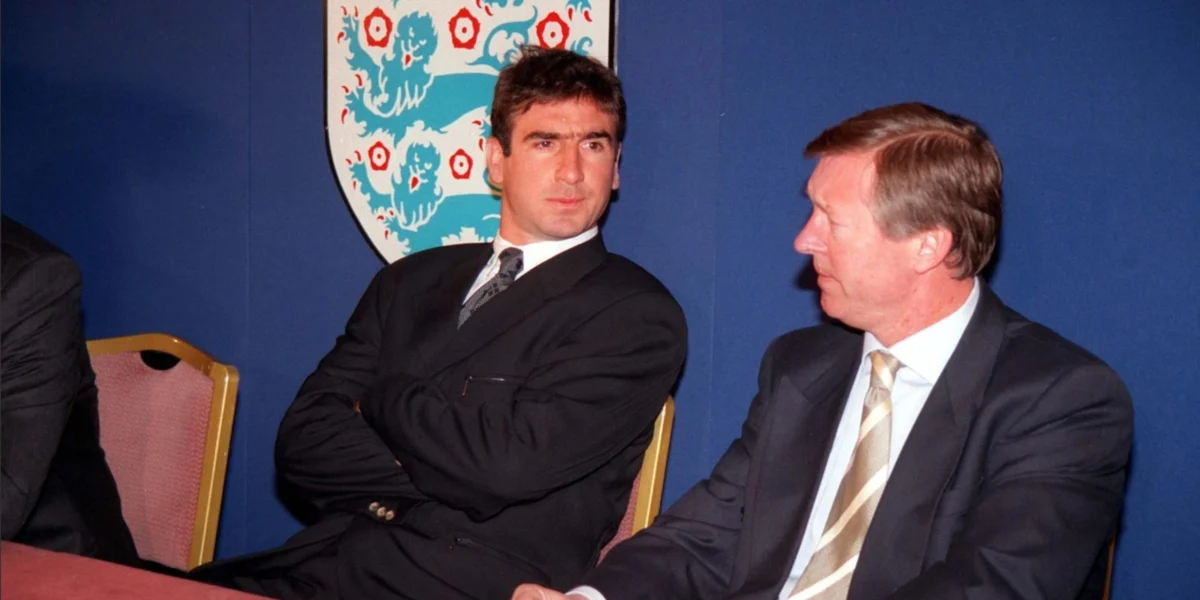
Following this explosive introduction, the documentary adopts a more structured narrative. It unfolds chronologically, divided into five distinct "Seasons" representing key periods of his career, interspersed with three "Flashbacks" that provide deeper context to his formative years and recurring behavioral patterns. This approach allows for a systematic exploration of Cantona’s journey, weaving together archival footage with candid, present-day interviews. The directors have opted for a curated selection of talking heads, focusing on a select few individuals whose insights are crucial to understanding Cantona. These include the man himself, his legendary manager at Manchester United, Sir Alex Ferguson, his former protégé David Beckham, his first professional manager Guy Roux, and his parents, Albert and Eleonore Cantona. This stripped-down approach, while potentially limiting in scope, amplifies the intimacy and depth of the film, allowing for more profound revelations from each participant.
The core of the narrative naturally gravitates towards Cantona’s transformative tenure at Manchester United. Before arriving at Old Trafford, Cantona had already navigated a career through seven different clubs in a remarkably short span. His departures were often punctuated by contentious incidents: throwing a ball at a referee or contemptuously discarding his jersey. These episodes painted him as a problematic figure, a reputation that preceded him even as he signed for Manchester United. However, Sir Alex Ferguson, known for his shrewd man-management and bold gambles, saw beyond the controversy. His audacious decision to sign Cantona proved to be a masterstroke, with the Frenchman’s unparalleled talent acting as the catalyst that revitalized Manchester United’s fortunes. Many at the time, and indeed still today, consider him the most gifted footballer of his generation, a player who single-handedly inspired a dynasty.
The Turning Point: The Selhurst Park Incident
The documentary dedicates significant attention to the infamous "kung fu kick" incident at Selhurst Park in January 1995. This event, which resulted in a lengthy ban from professional football, serves as the film’s dramatic fulcrum. It encapsulates Cantona’s inherent paradox: a player blessed with extraordinary on-field genius, yet seemingly incapable of reining in his explosive anger and frustration. The film skillfully uses this incident to explore the man behind the myth, highlighting how Cantona’s brilliance was inextricably linked to his inner turmoil.
Cantona himself offers remarkably candid and insightful reflections on his character flaws. He acknowledges a burning "flame" within him that demanded constant fuel and could, at times, erupt with destructive force, even at the zenith of his success. The documentary presents this admission with a striking vulnerability, allowing viewers to witness the internal struggle that often manifested externally.
The film cleverly injects moments of dark humor derived from the aftermath of the kung fu incident. One particularly memorable instance sees Cantona, in a present-day interview, wryly remark, "I should have kicked him harder, because he deserved it." This statement, delivered with a dry wit, underscores his unyielding defiance. Another darkly amusing highlight is the archival footage of a press conference where, instead of offering a contrite apology, Cantona walked out after delivering a cryptic and pointed analogy to the assembled media: "When the seagull follows the trawler, it’s because they think sardines will be thrown into the sea." This audacious dismissal of the press, mirroring his disdain for perceived hypocrisy, further cements his image as a man who remained resolutely true to his principles, irrespective of the immense pressure and expectations placed upon him. A third amusing yet profoundly insightful moment occurs during an interview with football presenter Dickie Davies. When asked if the incident ultimately changed him for the better, Cantona’s simple, unflinching reply is, "No." These instances, while unsettling, are crucial in building the film’s nuanced portrait of Cantona as an individual who valued authenticity above all else, even at the cost of his career.
The Father Figure and the Friendship
Beyond the on-field drama and controversial outbursts, "Cantona" also explores the profound emotional dimensions of the player’s life. The documentary poignantly depicts the relationship between Cantona and Sir Alex Ferguson, a bond characterized by mutual respect and deep affection. Both men speak of each other with warmth and admiration, revealing a connection that transcended the typical manager-player dynamic. Cantona openly admits to searching for a father figure, a role he found fulfilled by Ferguson, and earlier by his manager at Auxerre, Guy Roux.
A particularly revealing anecdote, almost an "Easter egg" for astute viewers, features a chuckling Guy Roux recounting how Ferguson initially sought his advice on managing the volatile Cantona. Roux’s simple yet profound counsel to the Scottish manager was, "Love him." This seemingly straightforward advice encapsulates the essence of Ferguson’s approach and highlights the deep-seated understanding that was required to harness Cantona’s extraordinary, yet difficult, talent. This aspect of the film adds a layer of emotional resonance, showcasing the human element behind the public persona.
A Glimpse Beyond the Pitch
While the documentary predominantly focuses on Cantona’s footballing career, it offers a brief, albeit disappointingly brief, exploration of his post-football life. The film touches upon his ventures into acting and his artistic pursuits, including his painting. However, this section feels somewhat rushed, particularly the coverage of his film career and his paintings, and notably omits any mention of his poetry. The visual of Cantona painting multiple canvases simultaneously on the ground in a field, presented towards the end of the film, sparks curiosity about his artistic process, making the lack of deeper exploration into this facet of his life a missed opportunity. The inclusion of his role in Ken Loach’s "Looking For Eric" serves as a valuable illustrative point earlier in the film, but a more thorough examination of his later creative endeavors would have provided a more complete picture of his multifaceted personality.
Analysis and Implications
"Cantona" succeeds as a well-crafted sports documentary that delves into the complexities of a truly unique individual. Despite its relatively short running time of 115 minutes, the film offers considerable insight and candor, providing a balanced perspective that should appeal to both devoted football aficionados and those less familiar with the sport. The directors’ skillful use of archival footage, coupled with intimate interviews, allows for a deep dive into Cantona’s psyche, challenging preconceived notions of him as merely a tempestuous figure.
The documentary’s analysis of Cantona’s impact extends beyond his individual brilliance. His arrival at Manchester United is widely recognized as a pivotal moment in the club’s history. From 1992 to 1997, Manchester United achieved significant success, winning four Premier League titles and two FA Cups during his tenure. His presence instilled a winning mentality and a flair that captivated fans and intimidated opponents. Data from this period shows a marked improvement in Manchester United’s win percentage and goal-scoring record following his acquisition. The "kung fu kick" incident, while resulting in an eight-month ban, also led to significant changes in football regulations regarding player conduct and fan interaction. The club, and Cantona himself, faced immense scrutiny, with media coverage reaching a fever pitch. The subsequent tabloid pressure and relentless media attention are presented as contributing factors to his early retirement from the sport at the age of 30 in 1997, a decision that sent shockwaves through the football world.
The film’s exploration of Cantona’s relationship with Ferguson offers a valuable case study in leadership and man-management. Ferguson’s ability to understand and nurture Cantona’s complex personality, rather than simply trying to suppress it, proved instrumental in unlocking his potential. This approach, as exemplified by Roux’s advice, suggests that effective leadership often involves empathy and a willingness to embrace individuality, even when it presents challenges. The film implicitly suggests that by understanding and accepting Cantona’s "flame," Ferguson was able to channel it into productive energy on the pitch, transforming a potentially destructive force into a creative and winning one.
The broader implications of Cantona’s career and the documentary’s portrayal of him extend to the evolving nature of celebrity in sport. Cantona was a pioneer in embracing a persona that was both aspirational and defiant, influencing a generation of athletes to consider their public image and the narratives that surround them. His willingness to speak his mind, even when it courted controversy, resonated with a public weary of manufactured sincerity. The film’s success at Cannes and its subsequent release underscore the enduring fascination with figures who challenge the status quo and refuse to be easily categorized. The documentary serves as a testament to the enduring power of football to produce figures of immense talent and complex character, whose stories continue to captivate and provoke debate long after their playing days have concluded.