


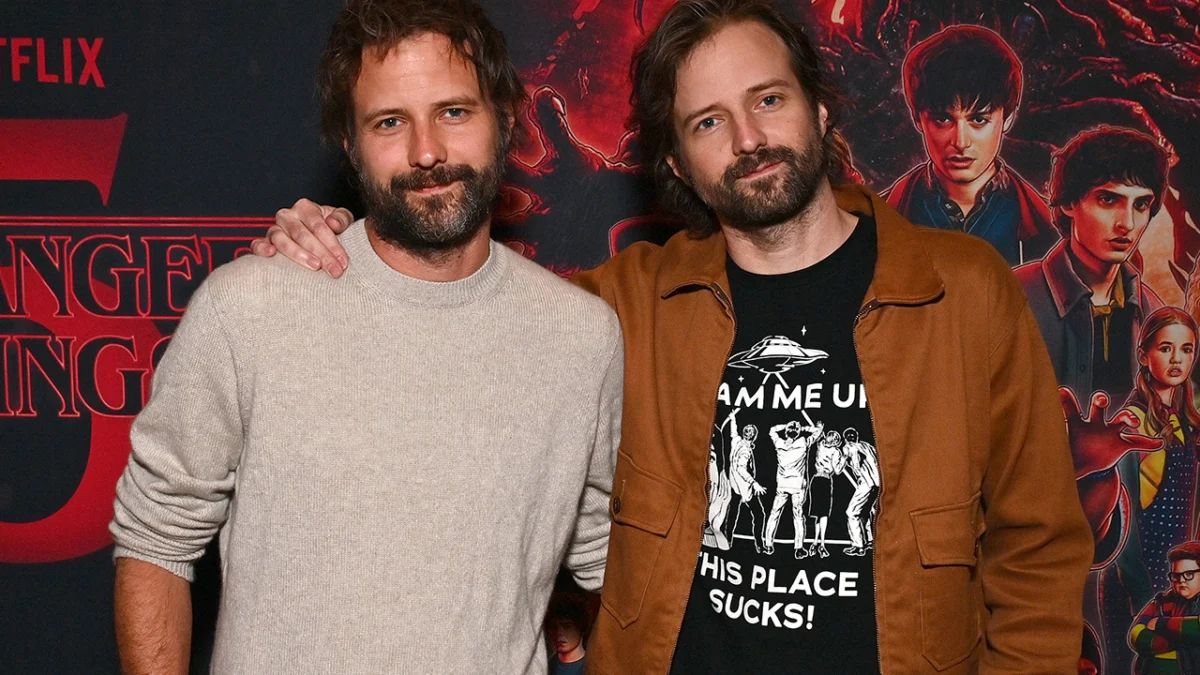
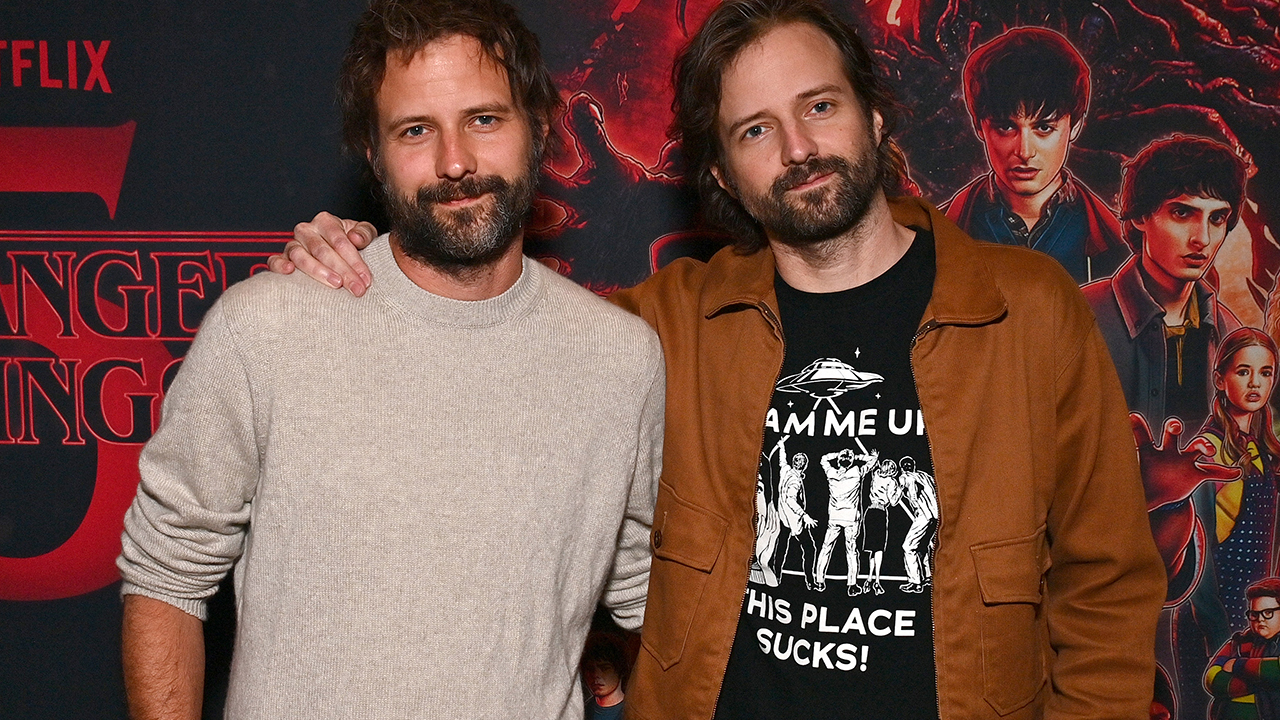
Following a period of notable quietude after the seismic conclusion of Stranger Things Season 4 on New Year’s Day, creators Matt and Ross Duffer, collectively known as the Duffer Brothers, re-emerged into the public discourse through a revealing, hour-plus interview on Josh Horowitz’s popular Happy Sad Confused podcast. Conducted at a live taping in Los Angeles, the wide-ranging conversation offered fans and industry observers an unprecedented look into the creative processes, challenges, and surprising behind-the-scenes decisions that have shaped one of Netflix’s most globally acclaimed series. The interview, now accessible across all major podcast platforms, has quickly become a cornerstone for Stranger Things lore, addressing long-standing fan theories, revealing casting secrets, and clarifying controversial narrative choices.
The Duffer Brothers’ post-Season 4 hiatus was a well-deserved retreat following an intense media blitz surrounding the penultimate season’s release, which saw the show break numerous viewership records and dominate pop culture conversations. Their appearance on Happy Sad Confused marked a significant return, providing a candid and often humorous retrospective on their careers, particularly their journey with Stranger Things. Unlike previous promotional engagements often tied to Netflix’s official channels, this interview offered a more unfiltered perspective, touching on sensitive topics and debunking persistent online rumors without the typical corporate oversight. This independence was subtly highlighted by the article’s original observation regarding Netflix’s own TUDUM platform attempting to capitalize on the interview without offering new content, underscoring the value of external journalistic platforms in facilitating genuine creator-fan dialogue.
The brothers, known for their meticulous planning and hands-on approach to every aspect of the series, delved into specifics that illuminated the intricate balance between creative vision, logistical challenges, and the immense pressure of helming a global phenomenon. From the initial conceptualization of characters to navigating fan expectations and executive mandates, their conversation with Horowitz provided a comprehensive narrative arc of Stranger Things‘ development.
Unveiling the Original Chief Hopper: Billy Crudup’s Near-Miss
One of the most captivating revelations centered on the casting of the beloved Chief Jim Hopper. David Harbour’s portrayal of the gruff yet tender police chief has become iconic, almost inseparable from the character itself. However, Harbour, ever the curious actor, initiated this particular discussion himself by sending a surprise video question to the live podcast audience. He playfully speculated about the common industry adage that actors often land roles as a second or third choice, and directly asked the Duffers if he was indeed second to a Hollywood legend like Josh Brolin.
The Duffer Brothers, sharing a laugh, swiftly dispelled the Brolin rumor. Instead, they revealed their initial top choice for the role was none other than Billy Crudup, a respected actor known for his diverse filmography and, more recently, his Emmy-winning performance in Apple TV+’s The Morning Show. At the time of Stranger Things‘ pre-production, Crudup was not as active in television, and ultimately passed on the opportunity. This decision opened the door for Harbour, whose unconventional self-tape audition immediately struck a chord with the creators. Harbour’s audition—a single, unedited take of a scene where Joyce informs Hopper of Will’s disappearance, with Hopper stubbornly refusing to remove his hat before abruptly exiting—demonstrated an innate understanding of the character’s complex blend of stoicism and simmering frustration. The Duffers instantly recognized that Harbour possessed the unique gravitas and vulnerability required to bring Hopper to life, making him an indispensable pillar of the Stranger Things universe. This insight highlights the often serendipitous nature of casting and how a single, powerful audition can redefine a show’s trajectory.
Debunking the Kali Episode: "The Lost Sister" Was Never a Backdoor Pilot
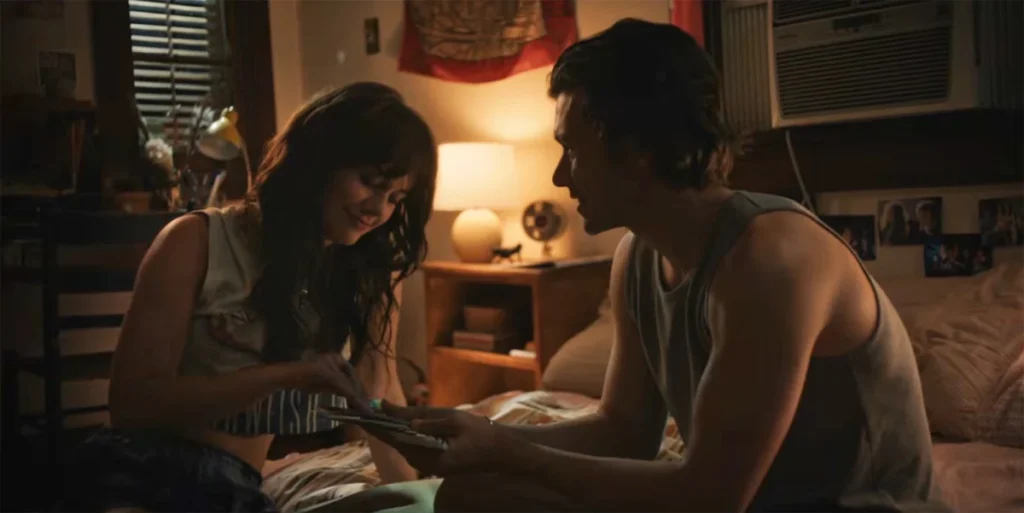
Perhaps one of the most persistent and polarizing debates among Stranger Things fans concerns Season 2, Episode 7, titled "The Lost Sister." This standalone "bottle episode" saw Eleven travel to Chicago to find Kali, also known as Eight, another super-powered child who escaped Hawkins Lab. For years, widespread speculation suggested that this episode was an ill-fated "backdoor pilot," a term used in television for an episode intended to gauge audience interest for a potential spin-off series. The episode’s narrative divergence, distinct aesthetic, and introduction of new characters far from Hawkins often led to a mixed reception, with some critics and viewers feeling it disrupted the season’s momentum.
Matt Duffer seized the podcast platform to unequivocally refute this long-held internet rumor. With firm conviction, he declared, "Let me just clear up some bullshit out on the internet. That was never designed as a spin-off shoot. That’s bullshit. That’s not true. That’s gross. We would not do that." This strong denial aims to put to rest years of fan theories and critical analyses.
The brothers candidly admitted that the episode’s pacing and isolated nature were, in retrospect, a misstep on their part. They revealed that they were deeply engrossed in the demanding process of writing and directing the final two episodes of Season 2 concurrently, which led to a less integrated approach for Kali’s storyline. Given another chance, they would have woven Kali’s character and her narrative threads more organically throughout the entire season, allowing for a more seamless integration into the broader story of Eleven’s journey of self-discovery. Interestingly, despite the initial harsh reception, the Duffer Brothers revealed that the experience unexpectedly emboldened them. Rather than retreating to safer narrative choices, the critical feedback on "The Lost Sister" pushed them to take even bolder creative swings in subsequent seasons, leading to the ambitious scope and intricate storytelling seen in Season 3 with the Starcourt Mall battle and Season 4’s global expansion and darker themes. This demonstrates a resilience and willingness to learn from audience feedback while staying true to their overarching creative vision.
The Meticulous Craft of Suspense: Steve Harrington’s Near-Death Reshoot
The Duffer Brothers are renowned for their meticulous pre-production and efficient filming schedules, a testament to their disciplined approach to filmmaking. So precise is their planning that, until the final season, Stranger Things had never required a single reshoot. This impressive track record was broken by a pivotal and terrifying moment involving fan-favorite character Steve Harrington.
In a scene that left audiences collectively holding their breath, Steve Harrington endured a harrowing near-death experience while battling demobats in the Upside Down, culminating in a suspenseful fall from a towering structure. This heart-stopping sequence, designed to manipulate audience emotions, almost didn’t achieve its intended impact. The Duffer Brothers revealed that in the original edit, the sequence unfolded too rapidly and was visually too dark to convey the full weight of the peril and suspense.
To rectify this, the production team undertook an extraordinary measure: they constructed a small, three-foot replica slab of the tower. Joe Keery, the actor behind Steve Harrington, was brought back for a half-day of reshoots, specifically to film his slow-motion drop on this makeshift set. This additional footage allowed the editors to meticulously craft the moment, extending the suspense and amplifying the emotional resonance for the audience. The brothers candidly admitted that this particular scene was intentionally designed to "f*ck with the audience." They were keenly aware of the fervent online speculation and "Save Steve" campaigns surrounding the character’s potential demise, and they saw a "golden opportunity" to play on those fears, demonstrating their awareness of the show’s intense fandom and their willingness to engage with it creatively. This insight not only highlights the technical precision involved in television production but also the sophisticated psychological game creators play with their audience.
From ‘Montauk’ to ‘Stranger Things’: The Battle Over a Title
It is almost unimaginable now to conceive of the series under any other name, but "Stranger Things" was far from the original title. For over a year during its nascent development stages, the show was known as Montauk, reflecting its initial setting in the real-life Long Island town, famous for its association with conspiracy theories and paranormal phenomena. This original concept drew heavily from the rumored Montauk Project and invoked the classic 1980s Spielbergian aesthetic the brothers aimed for, blending sci-fi, horror, and coming-of-age drama.
However, when the creators made the pivotal decision to relocate the story to the fictional, more generic Midwestern town of Hawkins, Indiana, they found themselves without a fitting title. For months, industry trades and early reports awkwardly referred to the project as the "Untitled Duffer Brothers Project," much to the frustration of Netflix co-CEO Ted Sarandos. The Duffers recounted Sarandos’s growing impatience, joking about the constant query, "Everyone’s like, who the fuck are the Duffer brothers?" Eventually, Sarandos issued a strict two-week deadline, famously promising them, "You’ll get used to it."
The team eventually settled on Stranger Things, a title that perfectly encapsulated the show’s mysterious and otherworldly essence. However, not everyone was immediately convinced. The brothers shared a particularly amusing anecdote involving David Harbour, who had only recently been cast as Chief Hopper and was still relatively new to them. Harbour, known for his passionate and articulate nature, sent them a "massive, rambling email" detailing his strong dislike for the new title. The Duffers joked about the possibility of publishing the email one day, offering a glimpse into the unfiltered initial reactions to what would become a global phenomenon. Ultimately, time and unprecedented viewership numbers proved Sarandos unequivocally right: everyone, including Harbour, certainly got used to Stranger Things, embracing it as a title synonymous with groundbreaking television.
The Lingering Enigma of Eleven’s Fate and the ‘Heartbeat’ Deception

The series finale of Stranger Things left viewers with a monumental, lingering question: the ultimate fate of Eleven following her selfless sacrifice. The epilogue, which jumps forward 18 months, sees Mike reassuring his friends with a story, insisting that Eleven is still alive somewhere. This ambiguity has fueled extensive fan discussions and theories, mirroring the intense debates that have followed other iconic ambiguous TV finales.
During the podcast, Horowitz polled the live audience on whether they believed Eleven survived, revealing a divided crowd. More fascinatingly, the Duffer Brothers shared that several core cast members, including Sadie Sink (Max), Caleb McLaughlin (Lucas), and Gaten Matarazzo (Dustin), have openly expressed their personal skepticism about Eleven’s survival. The creators found this amusing, emphasizing a crucial distinction: while the actors themselves might harbor doubts, their characters within the narrative absolutely believe she is alive, highlighting the separation between actor interpretation and character motivation.
Adding another layer to the finale’s enigma was a mysterious audio cue heard just before the 18-month time jump, which many dedicated fans interpreted as Eleven’s heartbeat, suggesting her survival. The Duffer Brothers finally clarified this sound effect, revealing a cleverly orchestrated misdirection. "It is written in the script that it is supposed to sound like a heartbeat, but it’s actually just… a brick," they confessed. "It’s just distorted. But yeah, you could interpret it as that. It was meant to be interpreted as that potentially." This revelation underscores the meticulous sound design and narrative subtlety employed by the creators to fuel audience engagement and speculation.
As for whether fans will ever receive a definitive answer to Eleven’s fate, the brothers playfully referenced David Chase’s legendary 20-year silence regarding the controversial ending of The Sopranos. They joked that they might similarly wait two decades before finally revealing the full truth, leaving the door open for continued fan theorizing and perhaps a grand reveal in the distant future. This playful nod to television history further solidifies their place among the pantheon of creators who expertly wield narrative ambiguity.
Broader Implications and the Future of the Upside Down
These candid revelations from the Duffer Brothers offer invaluable insights into the creative engine behind Stranger Things. They illuminate the complex interplay of artistic vision, production challenges, audience engagement, and executive pressures that define the creation of a global entertainment phenomenon. The discussion about the Kali episode, for instance, provides a rare look into how creators adapt and evolve their storytelling in response to feedback, ultimately leading to a stronger, more ambitious series. The meticulous detail surrounding Steve Harrington’s reshoot showcases the commitment to perfection and the clever ways creators can interact with and even playfully manipulate their highly engaged fanbase. Meanwhile, the journey of the show’s title and the initial resistance to "Stranger Things" highlights the often-unpredictable path to iconic branding.
The lingering questions surrounding Eleven’s fate, now clarified by the "heartbeat" sound effect revelation, underscore the Duffer Brothers’ mastery of crafting compelling narratives that resonate deeply with audiences, even when leaving certain elements open to interpretation. This strategy not only sustains interest but also fosters a vibrant community of fan theorists, ensuring the show remains a cultural touchstone long after its initial airing.
As anticipation builds for Stranger Things Season 5, which will serve as the grand finale of the main series, these insights provide a deeper appreciation for the creative journey that has brought the story to this point. Furthermore, with hints already dropped about a future spin-off series set within the Stranger Things cinematic universe, these revelations offer a foundational understanding of the Duffer Brothers’ approach to world-building and their willingness to take creative risks. The podcast interview serves as a critical historical document, charting the evolution of a beloved series and providing a rich tapestry of anecdotes that will undoubtedly shape how Stranger Things is remembered and analyzed for years to come. The Duffer Brothers, through this extensive and honest conversation, have not only satisfied fan curiosity but also reinforced their status as visionary storytellers at the forefront of contemporary television.