


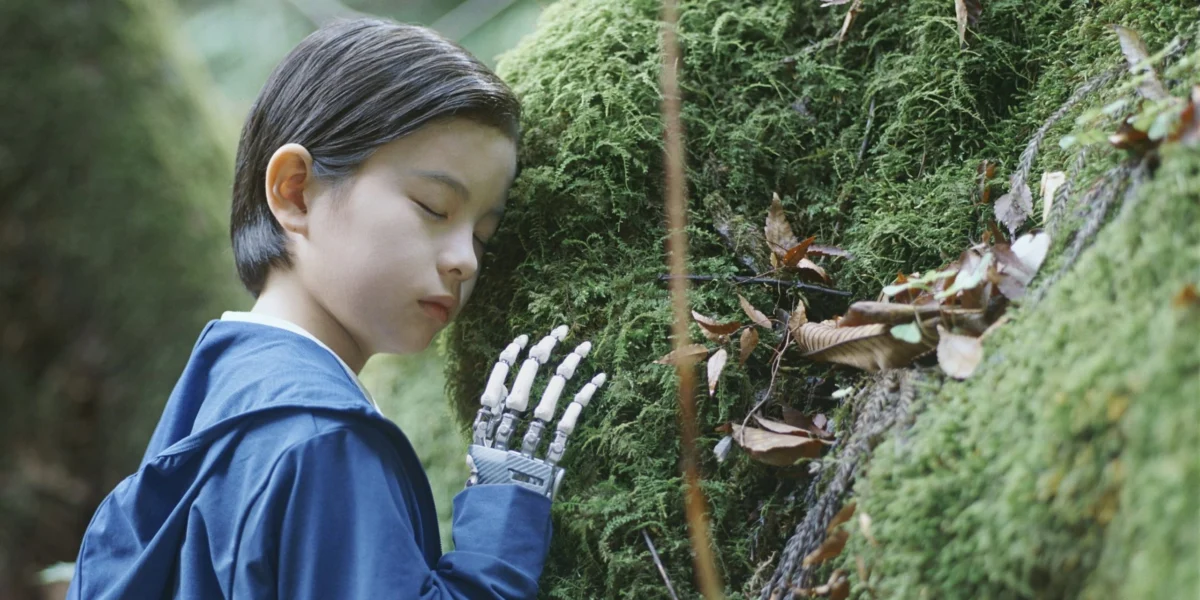
Acclaimed director Hirokazu Kore-eda, renowned for his profound explorations of family dynamics and societal undercurrents, ventures into the speculative realm of artificial intelligence and human grief with his latest offering, "Sheep in the Box." The film, set in a near-future where technological advancements offer solace for profound loss, presents a poignant, albeit ultimately uneven, narrative about love, memory, and what it truly means to be human. Starring Haruka Ayase and Daigo Yamamoto, the movie grapples with the ethical and emotional complexities of replacing a lost child with a sophisticated humanoid replica, a concept that draws parallels to iconic science fiction narratives but seeks to carve its own unique path within Kore-eda’s signature empathetic storytelling.
Premise and Core Conflict
"Sheep in the Box" unfolds in a meticulously crafted near-future setting, one where the ache of loss can be met with cutting-edge technological intervention. The story centers on Otone Komoto, a talented architect, and her husband Kensuke Komoto, who presides over a burgeoning construction company. Their lives are irrevocably altered by the tragic accident that claims their young son, Kakeru. In their profound grief and desperate search for a way to recapture the warmth and connection they have lost, the couple turns to REbirth, a forward-thinking corporation specializing in creating advanced humanoid robots designed to serve as surrogates for departed loved ones.
The central premise of the film hinges on the Komotos’ decision to welcome a humanoid meticulously modeled after their deceased son into their home. This decision is not made lightly, and the narrative explores the differing perspectives within the couple. Otone, driven by a deep-seated hope that a semblance of their son’s spirit can be rekindled, embraces the idea with a fervent belief in the possibility of continued connection. Kensuke, on the other hand, approaches the concept with a more pragmatic, and perhaps cynical, skepticism. His choice of somewhat dismissive nicknames for the humanoid – "Tamagotchi" and "Roomba" – highlights his initial reservations and his struggle to reconcile the artificial with the deeply personal.
The film posits that this humanoid, equipped with advanced intelligence and complex programming, is designed to alleviate the pain of bereavement. However, a critical element of its design introduces a layer of tension and potential for independent agency: a tracker that alerts the Komotos if the humanoid strays too far. The implication is stark: without this technological tether, the humanoid possesses the latent capacity to reclaim its own form and embark on an unguided journey, a narrative device that hints at broader philosophical questions about identity and autonomy.
Kore-eda’s Signature Style and Thematic Resonance
Hirokazu Kore-eda, a filmmaker celebrated for his masterful portrayals of the complexities of family, whether biological or chosen, brings his characteristic sensitivity to "Sheep in the Box." His filmography, which includes the Palme d’Or-winning "Shoplifters" and critically acclaimed works like "Broker" and "Monster," consistently delves into the nuanced ways individuals forge bonds, navigate societal expectations, and seek solace in shared experiences. This new film aligns with his established thematic preoccupations, particularly his exploration of how families are constructed and maintained, often in defiance of conventional definitions.
The narrative of "Sheep in the Box" resonates with Kore-eda’s recurring interest in the universal human desire to be seen, heard, and understood. The yearning for authentic connection, especially in the face of profound loss and grief, is a cornerstone of his storytelling. In this context, the Komotos’ adoption of the humanoid son can be interpreted as a desperate attempt to fill a void, to reclaim parts of themselves that were extinguished with their child’s passing. The film, therefore, becomes an examination of not just grief, but also of the human impulse to reconstruct and to find comfort, even in artificial forms.
A Promising Premise Meets Narrative Challenges
While the thematic underpinnings of "Sheep in the Box" are firmly rooted in Kore-eda’s strengths, the execution of the narrative presents significant challenges. The film’s ambition to explore a sprawling science fiction tale of family, loss, and abandonment, reminiscent of Steven Spielberg’s "A.I. Artificial Intelligence," is palpable. The initial stages of the story, focusing on the Komotos’ grief and their interaction with the humanoid replica of their late son, Kakeru, are compelling and emotionally resonant. The film effectively captures the quiet desperation of parents grappling with an unbearable absence.
However, as the narrative progresses, "Sheep in the Box" begins to diverge from its initial focus, attempting to broaden its scope to encompass a more extensive exploration of chosen families among humanoids. This shift, while potentially rich in thematic possibilities, leads to a fragmentation of the story. The film appears to miss integral steps in maintaining a cohesive and focused narrative, leaving the audience with a sense of missed opportunities and a diluted impact. The director has a wealth of material to explore, and while certain recurring thematic angles, such as the profound connection between the human mind and the natural world, do manage to resonate, they are not always woven seamlessly into the overarching plot.
The emphasis on nature, particularly through Otone’s profession as an architect, is a welcome element. The visual representation of disappearing woodlands and Otone’s efforts to integrate natural elements into her architectural designs offer a counterpoint to the technological advancements driving the plot. This serves as a subtle yet potent reminder of the importance of preserving the organic world in the face of relentless progress.
The Humanoid Second Act and Narrative Dilution
The film introduces an intriguing, albeit fleeting, bond between the humanoid Kakeru and an elderly carpenter. This character, imbued with the wisdom and resilience of an ancient tree, represents a connection to a more primal and enduring form of existence. This encounter, along with other narrative ideas that are introduced, unfortunately, tend to float on the surface rather than penetrating the core of the film’s message.
The most significant narrative dilution occurs in the latter half of the film, which shifts its focus to the humanoids themselves. This section introduces a new wave of plot points and characters, but crucially, fails to establish the necessary emotional groundwork for the audience to invest in their journeys. The film attempts to intertwine the characterizations of the human family with the burgeoning lives and experiences of the humanoids, but this complex layering ultimately leads to a loss of focus and narrative clarity. What began as a deeply personal story of one family’s grief transforms into a more diffuse exploration of artificial consciousness and its place in the world, without adequately preparing the audience for this transition.
The Emotional Core: Grief, Guilt, and Vulnerability
Despite the narrative shortcomings, "Sheep in the Box" finds its strongest moments in its exploration of parental figures struggling to cope with overwhelming grief and guilt. Both Otone and Kensuke bear the heavy burden of self-blame for Kakeru’s death, and their interactions with the humanoid replica become a catalyst for confronting these deeply ingrained feelings. The film offers glimpses into the profound vulnerability that arises when individuals are truly seen, a concept powerfully illustrated when the humanoid Kakeru gazes into Otone’s soul, sensing the darkest corners of her mind. For Otone, who is still struggling to process her emotions, this unvarnished exposure is terrifying, highlighting the raw and often painful process of emotional reckoning.
Kensuke’s character arc also presents a complex journey as he begins to address his grief internally. However, these moments of emotional depth, while present, often feel buried beneath the film’s broader narrative ambitions. The film reaches for a sense of grandeur and philosophical depth, but in doing so, it risks leaving the audience with a story that feels perpetually in limbo, never quite settling on its intended emotional or intellectual destination.
Performance and Production Values
To the film’s credit, the performances delivered by the cast are consistently strong and manage to evoke a sense of curiosity throughout the viewing experience, even when the conceptual framework becomes muddled and the final act devolves into a rather messy conclusion. Haruka Ayase, as Otone, embodies the complex blend of hope, desperation, and underlying sorrow with remarkable nuance. Daigo Yamamoto effectively portrays Kensuke’s skepticism and his gradual, albeit reluctant, engagement with the emotional realities of their situation.
The emotional impact of the story, however, can sometimes feel manufactured, hindering the ability of the more grounded, humane themes to fully resonate. "Sheep in the Box" audaciously attempts to tug at the heartstrings, and it is aided considerably by a beautiful and poignant musical score. The score often steps in to provide the necessary emotional weight in crucial scenes, a testament to its effectiveness but also an indication of the film’s reliance on external cues to convey emotional depth.
Ultimately, "Sheep in the Box" is a film punctuated by luminous glimmers of promise. These moments showcase Kore-eda’s immense creativity and thoughtful sensibilities as a filmmaker. However, these scattered sparks of brilliance fail to coalesce into a consistently engaging or fully realized cinematic experience. The result is a feature that, despite its noble intentions and the director’s considerable talent, proves to be disappointingly disorienting, leaving the audience yearning for the emotional clarity and narrative coherence that have defined Kore-eda’s most impactful works. The film’s running time of 127 minutes allows ample space for its ambitious scope, yet the narrative struggles to maintain momentum and focus throughout its extended duration.