

GKids has announced the highly anticipated return of Michael Arias’s seminal animated feature, Tekkonkinkreet, to theaters for a special 20th-anniversary celebration. The critically acclaimed film, originally released in late 2006, will be presented in a meticulously crafted 4K remaster for two nights only: May 31st and June 1st, 2026. This re-release offers both long-time aficionados and a new generation of viewers the opportunity to experience the visually stunning and thematically rich narrative in unprecedented clarity, underscoring its enduring legacy as a cornerstone of modern Japanese animation. The announcement was accompanied by a new trailer, igniting significant enthusiasm across the animation community and reaffirming the film’s status as a profound exploration of brotherhood amidst urban decay.
A Landmark Animated Feature Returns
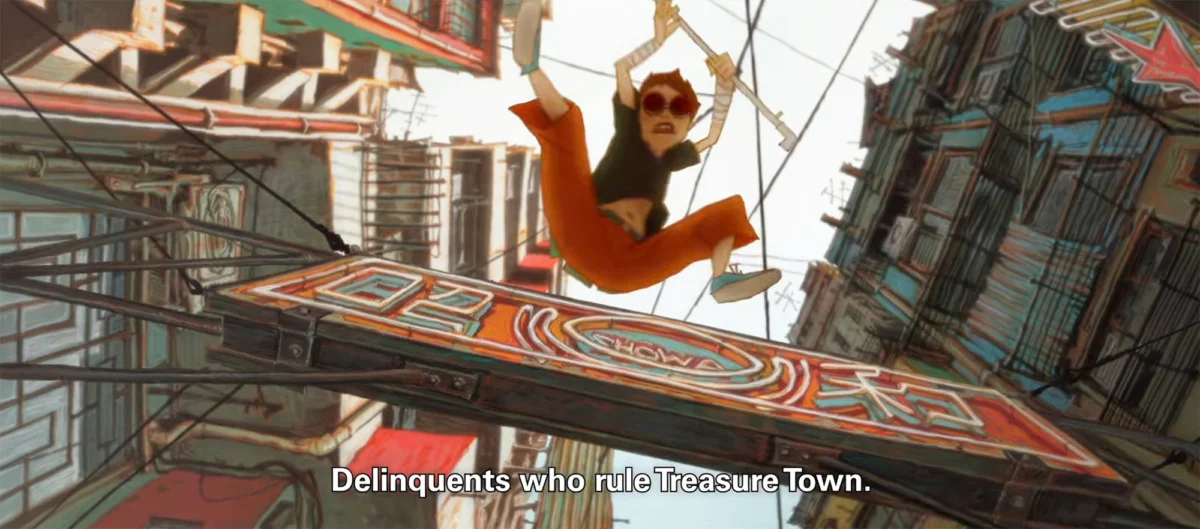
Tekkonkinkreet stands as a unique achievement in animation, not only for its distinctive visual style but also for its compelling narrative. Directed by American filmmaker Michael Arias, marking his feature directorial debut, and produced by the renowned Japanese animation house Studio 4°C, the film captivated audiences with its vibrant yet gritty portrayal of Treasure Town. The story centers on Black and White, two orphaned street kids who fiercely defend their crumbling city against a looming threat of yakuza attempting to clear it for new, modernized development. This intricate blend of action, poignant character drama, and social commentary established Tekkonkinkreet as an immediate standout upon its initial release. Its return to the big screen in a 4K format is not merely a nostalgic exercise but a testament to its artistic integrity and continued relevance in discussions about urbanism, identity, and the clash between tradition and progress. The limited engagement, distributed by GKids, a company known for its dedication to international animation, highlights the film’s significant cultural footprint and the growing demand for preserved animated classics.
The Genesis of Treasure Town: From Manga Pages to Animated Masterpiece
The journey of Tekkonkinkreet from concept to screen is a narrative in itself, marked by creative collaboration and groundbreaking artistic vision. Its roots lie deep within the pages of an influential manga series, which then blossomed under the guidance of a visionary studio and an international director.
Taiyo Matsumoto’s Visionary Source Material
At the heart of Tekkonkinkreet is the extraordinary manga series by Taiyo Matsumoto, serialized between 1993 and 1994 in Shogakukan’s Big Comic Spirits. Matsumoto is celebrated for his unconventional art style, which often blends intricate detail with fluid, almost impressionistic forms, and his penchant for exploring themes of alienation, childhood, and the fringes of society. Tekkonkinkreet, meaning "concrete-iron" (a transliteration of "tekkon-kin-kurîto"), encapsulates this aesthetic perfectly, presenting a world that is simultaneously harsh and beautiful, grounded in reality yet infused with a dreamlike quality. The manga’s narrative depth, psychological complexity, and unique visual language garnered widespread critical acclaim, earning it nominations for prestigious awards such as the Eisner Award for Best U.S. Edition of Foreign Material. Matsumoto’s influence extends across the manga landscape, inspiring a generation of artists with his fearless storytelling and distinctive character designs. The characters of Black and White, with their contrasting personalities—Black, the aggressive protector, and White, the childlike dreamer—are emblematic of Matsumoto’s ability to craft deeply human figures against fantastical backdrops. Their symbiotic relationship forms the emotional core of the narrative, exploring themes of codependency and the struggle to maintain innocence in a brutal world. The manga’s rich tapestry of detailed urban landscapes and expressive character work provided an exceptionally fertile ground for animated adaptation, challenging any studio to match its unique artistic spirit.

Studio 4°C’s Artistic Prowess
The task of translating Matsumoto’s distinctive visual and narrative style to animation fell to Studio 4°C, an animation studio renowned for its experimental approach and high-quality productions. Founded in 1986, Studio 4°C has carved out a niche for itself by pushing the boundaries of traditional animation, often collaborating with international talent and embracing diverse storytelling methods. Their portfolio includes acclaimed works such as Mind Game, segments of The Animatrix, and Children of the Sea, all characterized by innovative animation techniques and a willingness to tackle complex themes. For Tekkonkinkreet, Studio 4°C embarked on an ambitious project that required a careful balance of preserving Matsumoto’s raw aesthetic while adapting it for dynamic motion. The studio’s animators meticulously recreated the manga’s unique perspectives, exaggerated character movements, and vibrant color palette, demonstrating an exceptional commitment to the source material. Their ability to render the bustling, decaying cityscape of Treasure Town with such intricate detail and fluid animation was a monumental undertaking, showcasing their technical mastery and artistic sensitivity. The collaboration between Studio 4°C and Michael Arias was pivotal, allowing for a fusion of traditional Japanese animation techniques with modern CGI integration, a hallmark of the film’s distinctive look.
Michael Arias: A Cross-Cultural Directorial Debut
Perhaps one of the most remarkable aspects of Tekkonkinkreet‘s production was the appointment of American filmmaker Michael Arias as its director. Arias, with a background rooted in computer graphics and visual effects, had previously contributed to projects like The Animatrix, where he directed "The Second Renaissance" segments. His selection to helm a major Japanese animated feature was unprecedented at the time, bridging cultural and stylistic divides. Arias’s deep understanding of CGI technology allowed for innovative approaches to Tekkonkinkreet‘s visual execution, particularly in rendering the complex urban environments and dynamic action sequences. He skillfully integrated 3D elements with traditional 2D animation, creating a layered visual experience that enhanced the film’s gritty realism and surreal undertones. This cross-cultural collaboration was a challenging but ultimately rewarding endeavor, proving that a shared artistic vision could transcend geographical and linguistic barriers. Arias has often spoken about the immense respect he had for Matsumoto’s original work and his commitment to honoring its spirit while bringing his own directorial perspective to the project. His unique position as an outsider allowed him to approach the material with a fresh perspective, contributing to the film’s distinctive identity and global appeal. Following Tekkonkinkreet, Arias continued to explore diverse narratives, directing films like Heaven’s Door and Harmony, further cementing his reputation as a versatile filmmaker.
A Gritty Urban Fable: Themes and Character Depth
Tekkonkinkreet is more than just an action-packed anime; it is a profound exploration of human connection, urban decay, and the struggle for identity. The film delves into a complex array of themes that resonate deeply with contemporary audiences, presented through its distinctive visual language and compelling character arcs. At its core, the narrative is a sensitive story of brotherhood, centered on the orphaned duo, Black and White. Black, the older, more cynical, and fiercely protective brother, embodies the harsh realities of their existence, relying on his fighting prowess to navigate the treacherous streets of Treasure Town. White, his younger counterpart, possesses an almost ethereal innocence and a childlike optimism that acts as a moral compass for Black. Their symbiotic relationship is the emotional anchor of the film, highlighting how two disparate individuals can form a complete whole, each compensating for the other’s vulnerabilities. The film meticulously explores the concept of innocence versus experience, as White’s naivety constantly clashes with the brutal realities Black faces, forcing both to confront the nature of their world and their own identities.
Beyond the personal, Tekkonkinkreet offers a powerful commentary on urban development and societal change. Treasure Town itself is a character—a vibrant, chaotic, and decaying metropolis that serves as a microcosm for broader societal shifts. The arrival of the yakuza, intent on demolishing the old city to build a sterile theme park, symbolizes the relentless march of modernization and gentrification, often at the expense of community and history. This conflict raises questions about the value of progress, the destruction of cultural heritage, and the displacement of marginalized populations. The film’s visual aesthetic, characterized by its detailed, almost tactile rendering of dilapidated buildings, narrow alleyways, and bustling markets, amplifies this theme, presenting a world that is both beautiful in its chaos and threatened by homogeneity. Furthermore, Tekkonkinkreet touches upon deeper psychological themes, exploring the internal struggles of its characters. Black grapples with his own inner demons, personified by menacing alter-egos, representing his struggle to maintain control and protect White from the darkness within and without. This psychological depth elevates the film beyond a simple action narrative, offering a nuanced look at mental resilience and the human condition. The film’s ability to weave together these complex themes with stunning, action-packed visuals from Studio 4°C ensures its lasting impact as a modern cult classic.
The Journey to a Cult Classic: Critical Reception and Legacy
Upon its initial release in Japanese theaters in December 2006, Tekkonkinkreet quickly garnered critical acclaim, setting the stage for its eventual ascent to cult classic status. Critics lauded its audacious visual style, compelling narrative, and the groundbreaking collaboration between Japanese animation and an American director. The film’s unique aesthetic, combining traditional hand-drawn animation with innovative CGI, was highlighted as a significant step forward for the medium. Early reviews frequently praised Studio 4°C’s ability to translate Taiyo Matsumoto’s distinctive manga art into fluid, dynamic animation, capturing both the grit and the surreal beauty of Treasure Town. The film’s mature themes and psychological depth also resonated with critics, who appreciated its willingness to explore complex ideas about brotherhood, urban decay, and identity without resorting to simplistic narratives.

The film’s accolades quickly followed, cementing its position as a significant work in animation. In 2007, Tekkonkinkreet was honored with the Japan Academy Prize for Animation of the Year, a prestigious recognition within the Japanese film industry, and subsequently won awards at various international film festivals. Its international distribution further expanded its reach, introducing it to a global audience that embraced its unique blend of gritty realism and fantastical elements. Over the past two decades, Tekkonkinkreet has steadily built a dedicated following, evolving into a revered cult classic. Its enduring appeal lies in its timeless themes, its unforgettable characters, and its distinct artistic vision that continues to stand apart from more conventional animated productions. Anime enthusiasts and film scholars often cite it as a prime example of animation’s capacity for artistic expression and storytelling depth, placing it alongside other influential works that have pushed the boundaries of the medium. The film’s legacy is evident in its continued discussion and analysis, influencing subsequent animators and filmmakers who seek to create works that are both visually striking and intellectually stimulating.
The 4K Remaster: Breathing New Life into a Visual Spectacle
The decision to re-release Tekkonkinkreet in a 4K remaster is a significant development, promising to revitalize the film’s already stunning visuals for contemporary audiences. 4K resolution, offering four times the pixel count of standard 1080p high definition, provides an unparalleled level of detail and clarity. For an animated film as visually rich and intricate as Tekkonkinkreet, this remastering process is transformative. It allows for a more precise rendering of Studio 4°C’s meticulous artwork, from the weathered textures of Treasure Town’s buildings to the subtle nuances in character expressions and the vibrant, often chaotic color palette. Color fidelity is dramatically improved, ensuring that the original artistic intent behind the film’s distinctive hues and atmospheric lighting is faithfully reproduced.
The remastering process typically involves rescanning the original film negatives or digital masters at a higher resolution, followed by extensive digital restoration work. This includes cleaning up any imperfections, correcting color timing, and enhancing contrast to meet modern display standards without altering the film’s original aesthetic. For Tekkonkinkreet, this means that the dynamic action sequences will appear sharper and more impactful, while the quieter, more introspective moments will gain an added layer of visual depth. Industry experts suggest that the 4K treatment will not only preserve the film for future generations but also offer a fresh perspective for those who have previously viewed it in lower resolutions. A spokesperson for Studio 4°C might emphasize their commitment to ensuring the remaster respects the integrity of the original animation while leveraging new technological capabilities to enhance the viewing experience. This commitment to visual excellence aligns perfectly with the film’s artistic ambitions, ensuring that its powerful imagery continues to captivate and immerse audiences.
GKids and the Preservation of Animated Cinema
GKids’ involvement in the 4K re-release of Tekkonkinkreet underscores its crucial role as a champion of international animated cinema in North America. Founded in 2008, GKids has built an impeccable reputation for acquiring and distributing critically acclaimed animated films from around the world, often earning numerous Academy Award nominations for Best Animated Feature. Their commitment extends beyond new releases; GKids has also become a custodian of beloved animated classics, ensuring their accessibility and preservation for new generations. The distribution strategy for Tekkonkinkreet, featuring a limited two-night theatrical run, is typical of GKids’ approach to eventizing culturally significant animated works. This method generates buzz and allows fans to experience these films in a communal setting, reminiscent of their original theatrical debuts.
A spokesperson for GKids might emphasize that the re-release of Tekkonkinkreet is a vital part of their mission to showcase the artistic breadth and cultural importance of animation. They likely view the film as a masterpiece deserving of the highest quality presentation, especially as it marks its 20th anniversary. GKids’ track record includes bringing Studio Ghibli films back to theaters and distributing works from acclaimed directors like Mamoru Hosoda and Tomm Moore, establishing them as a trusted name for quality animation. Their decision to invest in a 4K remaster for Tekkonkinkreet signifies their belief in its enduring artistic value and its potential to attract both existing fans and new viewers who appreciate sophisticated storytelling and groundbreaking animation. This strategic re-release not only celebrates a milestone but also reinforces GKids’ position as a key player in fostering the appreciation of diverse animated narratives.

Anticipation and Broader Implications for Animation
The announcement of Tekkonkinkreet‘s 4K remaster and re-release has generated considerable excitement within the global anime community and the broader film industry. Fans who grew up with the film are eager to revisit Treasure Town in stunning clarity, while newcomers have a prime opportunity to discover a pivotal work in modern animation. Online discussions across various platforms reflect this anticipation, with many praising GKids for bringing such an important film back to the big screen. This re-release is part of a growing trend in the animation industry: the meticulous remastering and re-issuing of classic animated features in higher resolutions and enhanced formats. This movement is driven by several factors, including advancements in digital restoration technology, the increasing sophistication of home entertainment systems, and a renewed appreciation for animation as a serious art form deserving of preservation.
The implications of this trend are far-reaching. Firstly, it ensures that iconic animated works are preserved in the highest possible quality, protecting them from the degradation of time and making them accessible to future audiences. Secondly, it highlights the commercial viability of cult classics, demonstrating that there is a strong market for niche, high-quality animated films beyond mainstream blockbusters. This encourages distributors and studios to invest further in similar restoration projects, potentially paving the way for other beloved anime and international animated features to receive the 4K treatment. Thirdly, the theatrical re-release aspect serves to re-contextualize these films, allowing them to be experienced as communal events, much as they were originally intended. This fosters a deeper appreciation for the artistry and craftsmanship involved in their creation. Tekkonkinkreet‘s return is thus more than just an anniversary celebration; it is a significant cultural event that underscores the enduring power of animation and its rightful place in the pantheon of cinematic art.
The 20th-anniversary 4K remaster and re-release of Michael Arias’s Tekkonkinkreet represents a pivotal moment for both the film itself and the wider animation industry. It is a testament to the enduring power of Taiyo Matsumoto’s original manga, the groundbreaking artistry of Studio 4°C, and Arias’s visionary direction. As audiences prepare to return to the vibrant, chaotic streets of Treasure Town on May 31st and June 1st, 2026, they will not only be celebrating two decades of a cult classic but also reaffirming the timeless appeal and profound impact of animated storytelling. The enhanced visual fidelity promises to immerse viewers in a world that is as relevant and compelling today as it was upon its original debut, solidifying Tekkonkinkreet‘s place as an indispensable work in the canon of animated cinema.