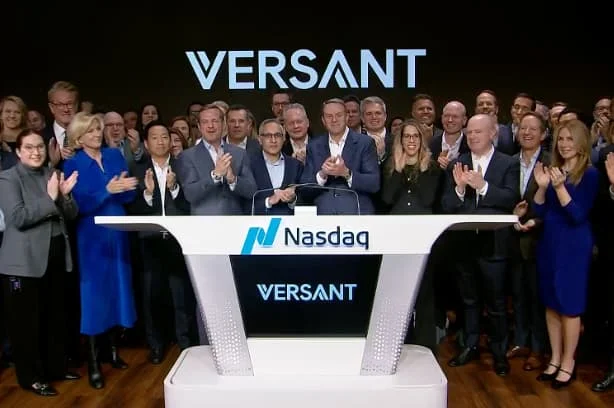
Versant Media Group is scheduled to release its first earnings report as a publicly traded entity on Tuesday, an event that will provide Wall Street with its most comprehensive look yet at the internal mechanics of a company composed primarily of legacy pay television networks. This report marks a critical milestone for the Comcast spinoff, which officially debuted on the Nasdaq on January 5, 2026, following one of the most structurally significant reorganizations in the modern media landscape. The upcoming financial disclosure is expected to serve as a bellwether for the broader cable industry, testing investor confidence in "pure-play" media assets at a time when the traditional television bundle faces unprecedented secular challenges.
The formation of Versant Media Group represents a strategic pivot by its former parent company, Comcast, which sought to insulate its high-growth broadband, wireless, and theme park divisions from the ongoing decline of the linear television market. By carving out its cable networks—including CNBC, MS Now, USA Network, Golf Channel, Syfy, E!, and Oxygen—into a standalone entity, Comcast effectively created a specialized vehicle for these assets. The portfolio also includes a suite of digital and transactional properties such as Fandango, Rotten Tomatoes, GolfNow, and Sports Engine, which are intended to provide a growth hedge against the eroding margins of traditional broadcast distribution.
The Financial Landscape: Revenue Trends and Market Valuation
Ahead of Tuesday’s report, investors are weighing the company’s historical performance against its current market valuation. In the lead-up to its public debut, Versant released financial data that underscored the gravity of the headwinds facing the cable sector. According to Securities and Exchange Commission (SEC) filings, the assets now comprising Versant generated $7.1 billion in revenue in 2024. While substantial, this figure represents a clear downward trajectory from the $7.4 billion earned in 2023 and the $7.8 billion reported in 2022. This approximately 9% decline over a two-year period highlights the impact of cord-cutting on advertising and affiliate fee revenue.
Since its January listing, Versant’s stock has experienced significant volatility, declining approximately 25% from its opening price. Analysts attribute much of this downward pressure to technical selling related to the spinoff process, as institutional investors who received Versant shares as part of their Comcast holdings rebalanced their portfolios. As of the most recent trading sessions, the company’s market capitalization sits at roughly $4.8 billion, a valuation that reflects a cautious stance from the investment community regarding the long-term sustainability of the cable-heavy business model.
Strategic Defense: The Live Programming Moat
Despite the overarching decline in the cable bundle, Versant leadership has consistently pointed to the unique composition of its portfolio as a primary competitive advantage. During an investor day presentation in December, CEO Mark Lazarus emphasized that the company is not a typical general entertainment provider. "At Versant, 62% of our audience comes from live programming across sports and news," Lazarus stated. This focus on "must-see" live content is designed to make Versant’s networks indispensable to both viewers and distributors.
The company’s sports rights are a cornerstone of this strategy. While Versant lacks the "Tier One" rights associated with the NFL or NBA, it maintains a robust slate of mid-tier and niche sports that command high viewer loyalty. This includes significant golf coverage through the Golf Channel, professional wrestling via WWE, and motorsports through NASCAR. Analysts at Raymond James have noted that this focus is a net positive, stating in a research note that Versant has "far fewer of the lower-value general entertainment networks" that have historically been the first to be dropped by cost-conscious consumers.
Distribution Stability and the 2026 Renewal Cycle
A critical component of Versant’s short-term stability is its existing carriage agreements. Before the spinoff was finalized, NBCUniversal secured long-term distribution deals with major providers, including Charter Communications and Google’s YouTube TV. These agreements, which include the Versant suite of networks, remain in effect for at least the next two years.
Anand Kini, Versant’s Chief Operating Officer and Chief Financial Officer, highlighted this "cushion" during the December investor day, noting that more than half of the company’s pay TV subscribers are governed by agreements extending through 2028 or beyond. Some sports-specific agreements are locked in past 2030. This visibility into future revenue streams provides a level of predictability that is rare in the current media environment.
However, the company faces an immediate test this year. Two significant distribution agreements are reportedly up for renewal in 2026. These negotiations will be the first time Versant sits at the table as an independent entity, without the added leverage of NBCUniversal’s broadcast network or the Peacock streaming service. The outcome of these discussions will be a major indicator of whether news and sports-heavy networks can still command premium pricing in a market where blackouts and contentious negotiations have become the new norm.
The Digital Pivot: Transitioning the Business Model
Versant’s long-term survival strategy hinges on what management describes as a "business model transition." The company has set an ambitious target to shift its revenue mix from being 80% dependent on pay TV distribution to a 50/50 split between traditional cable and a diversified array of digital, platform, and transactional businesses.
"We view 2026 as the first year of our business model transition," Kini told investors. This evolution involves aggressive investment in direct-to-consumer products and the expansion of ad-supported television (FAST) channels. The company’s digital properties, such as Fandango and Rotten Tomatoes, are central to this effort, offering transactional revenue streams that are decoupled from the traditional cable bundle.
In pursuit of this diversification, Versant has already engaged in targeted M&A activity. The company recently completed the acquisition of Free TV Networks, a provider of over-the-air digital broadcast channels, and Indy Cinema Group, a cloud-based operating system for movie theaters. The latter has been integrated into Fandango’s operations to streamline cinema management and ticketing. While leadership has explicitly ruled out "bulking up" on additional linear TV networks, they have signaled a continued appetite for assets that enhance their digital and platform capabilities.
Comparative Context and Industry Sentiment
The market’s reception of Versant is being viewed through the lens of other recent media sector movements. Last year, Newsmax, a conservative-leaning cable news network, went public on the New York Stock Exchange. Its trajectory—an initial surge followed by a steep decline—serves as a cautionary tale for pure-play media stocks. Similarly, Warner Bros. Discovery recently navigated a complex strategic crossroads, initially considering a split of its TV networks from its streaming assets before eventually reaching a merger agreement with Paramount Skydance.
In contrast to these more volatile examples, some analysts see signs of a "glimmer of stability" in the traditional TV landscape. Charter Communications recently reported its first quarterly gain in cable customers since 2020, and while other distributors continue to lose subscribers, the rate of decline appears to be moderating. Craig Moffett of MoffettNathanson has suggested this could indicate a potential stabilization of the core bundle for high-value content providers.
Despite these nuances, major financial institutions remain measured in their outlook. Goldman Sachs initiated coverage of Versant in January with a "Neutral" rating, citing the "secular challenges in the linear networks business" while acknowledging the potential of the company’s platform-based initiatives.
Broader Implications for the Media Sector
The Tuesday earnings report will be more than just a tally of profit and loss; it will be a referendum on the viability of the "spin-to-survive" strategy. If Versant can demonstrate that its sports and news focus is successfully slowing revenue erosion while its digital assets begin to scale, it may provide a blueprint for other media conglomerates looking to offload legacy assets. Conversely, if the report shows accelerated declines or a lack of traction in the digital pivot, it could signal further consolidation or restructuring across the industry.
As Wall Street awaits the results, the focus will remain on three key metrics: the rate of decline in affiliate and advertising revenue, the growth trajectory of the digital and transactional properties, and any guidance regarding the upcoming distribution renewals. For Versant Media Group, the transition from a protected subsidiary of Comcast to a standalone public entity has been a baptism by fire, and Tuesday’s data will determine if the company’s "live-focused" strategy is enough to navigate the ongoing transformation of global media consumption.