


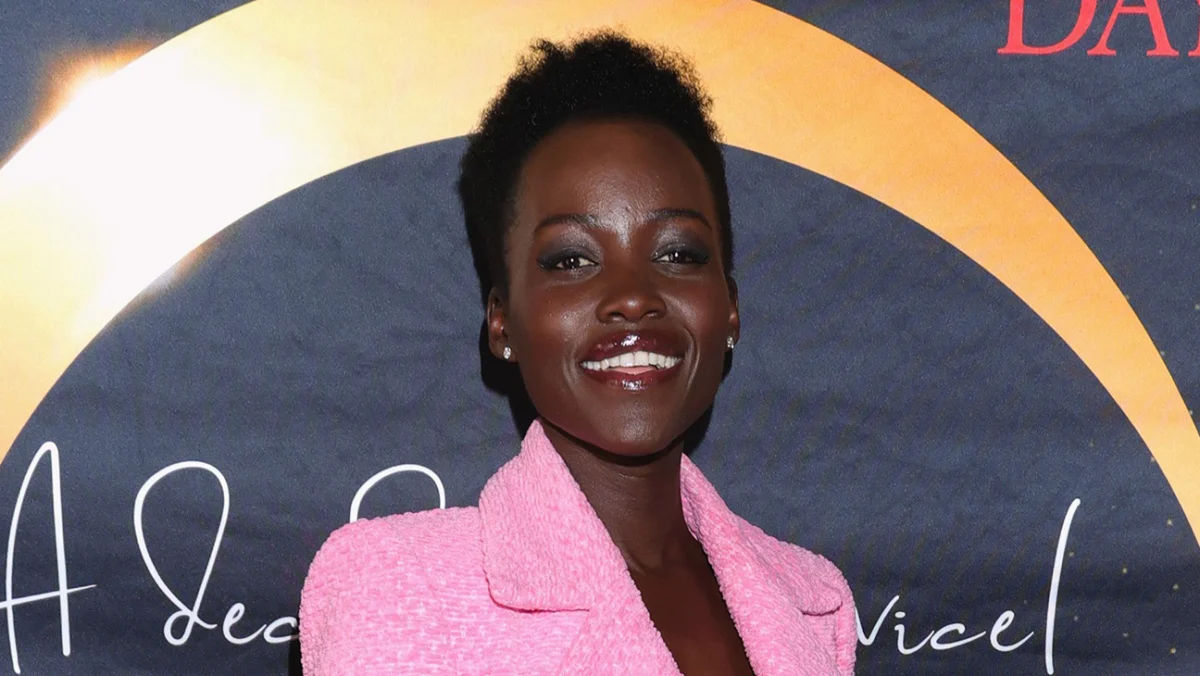
Tech mogul and X owner Elon Musk has once again inserted himself into the burgeoning debate surrounding Christopher Nolan’s highly anticipated adaptation of Homer’s epic, The Odyssey, by publicly endorsing a far-right journalist’s racist criticism of Oscar-winning actor Lupita Nyong’o’s casting as Helen of Troy. The controversy, unfolding on the social media platform X, has reignited discussions about diversity in Hollywood, artistic interpretation, and the weaponization of online discourse against creative choices.
The Epic Undertaking: Nolan’s The Odyssey and Its High Stakes
Christopher Nolan, fresh off the monumental success of his Oscar-winning historical epic Oppenheimer, is preparing for the wide release of The Odyssey in July. The film is one of the year’s most anticipated cinematic events, shrouded in Nolan’s characteristic secrecy while simultaneously generating immense hype. Nolan’s reputation as a meticulous filmmaker known for grand narratives, complex structures, and an unparalleled ability to blend artistic ambition with global box office success — as demonstrated by films like Inception ($836.8 million worldwide), The Dark Knight ($1.006 billion), and Dunkirk ($527 million) — places his projects under intense scrutiny. Oppenheimer alone grossed over $957 million globally and garnered seven Academy Awards, solidifying his status as one of Hollywood’s most influential auteurs. The expectation for The Odyssey is therefore immense, and any deviation from traditional interpretations of classical literature is bound to spark fervent discussion, especially within the current cultural climate.
The ensemble cast for Nolan’s The Odyssey is star-studded, featuring Matt Damon as the titular hero Odysseus, Tom Holland as his son Telemachus, Anne Hathaway as Penelope, Robert Pattinson as Antinous, and Zendaya as Athena. However, it is the casting of Lupita Nyong’o as Helen of Troy that has become the focal point of a racially charged critique. Helen, famously described in Homer’s classic as "the face that launched a thousand ships" and the most beautiful woman in the world, is a figure of immense symbolic power in Western literature, central to the narrative of the Trojan War.
The Controversy Ignites: Matt Walsh’s Critique and Musk’s Endorsement
The confirmation of Nyong’o’s casting emerged through a cover story in Time magazine, subsequently reported by The Hollywood Reporter on Tuesday. This revelation quickly caught the attention of conservative political commentator and Daily Wire host Matt Walsh. Known for his provocative and often controversial stances on cultural issues, Walsh took to X (formerly Twitter) to voice his strong objection.
On Tuesday, Walsh posted a screenshot of The Hollywood Reporter‘s coverage, accompanying it with a scathing comment: "Not one person on the planet actually thinks that Lupita Nyong’o is ‘the most beautiful woman in the world.’ But Christopher Nolan knows that he would be called racist if he gave ‘the most beautiful woman’ role to a white woman. Nolan is technically talented but a coward. Too afraid to do anything that even slightly challenges the spirit of the age."
Within moments, Elon Musk, the owner of X and a frequent participant in online culture wars, amplified Walsh’s sentiment by replying with a concise, "True." This one-word affirmation from Musk, who boasts over 180 million followers on the platform, instantly catapulted Walsh’s critique into a much wider public sphere, lending it significant weight among his followers and sparking widespread debate and condemnation.
Escalation of Rhetoric: Accusations of Hypocrisy
Walsh, emboldened by Musk’s support, returned to the topic on Wednesday, doubling down on his argument and introducing a perceived double standard in Hollywood casting practices. He posited that the role of Helen of Troy should have been reserved for a white actor, even floating the name of Sydney Sweeney as an example, an actor who herself has been a "lightning rod for arguments about race" in previous online discussions.
"We’re told that we shouldn’t object to Helen of Troy being portrayed as a black woman. And yet if a major Hollywood studio made a film set in Africa and cast a white woman as ‘the most beautiful woman in Africa,’ those same people would literally riot in the street," Walsh wrote. "If, say, Sydney Sweeney was cast in the role, they’d be driven to murderous violence. We all know this is the case."
Musk once again chimed in, echoing Walsh’s escalated rhetoric: "Absolutely true. Such hypocrisy in Hollywood." His repeated endorsements underscore a growing alignment with conservative critiques of diversity initiatives in entertainment, framing them as politically motivated rather than artistically or socially driven. This aligns with a broader "anti-woke" sentiment frequently expressed on X under Musk’s ownership, where discussions around race, gender, and representation often devolve into heated exchanges.
A Pattern of Commentary: Musk’s Prior Interventions on The Odyssey
This is not the first instance of Elon Musk publicly weighing in on Christopher Nolan’s The Odyssey with strong opinions. His commentary on the film dates back to January when initial rumors of Nyong’o’s casting first began circulating. At that time, Musk had already expressed his disapproval, characterizing Nolan’s creative decisions as a loss of artistic integrity. "Chris Nolan has lost his integrity," Musk declared on X, long before the casting was officially confirmed.
Even more forcefully, Musk reacted to earlier unconfirmed rumors suggesting that trans actor Elliot Page might be cast as Achilles. In response to a post by UnHerd, Musk wrote, "One of the dumbest and most twisted things I’ve ever heard." These past comments establish a clear pattern of Musk’s critical engagement with The Odyssey‘s casting choices, particularly when they involve actors from marginalized communities or challenge traditional interpretations of classical figures. This behavior is noteworthy given Musk’s personal life; he has a trans daughter from his first marriage, Vivian Jenna Wilson, who changed her name and publicly cut ties with her father at 18, occasionally sparring with him online. This personal context adds another layer to his public criticisms of trans and diverse casting.
Lupita Nyong’o: A Celebrated Career and Artistic Prowess
Lupita Nyong’o, the target of these critiques, is an acclaimed actor with a distinguished career. A graduate of the prestigious Yale School of Drama, Nyong’o burst onto the international scene with her powerful performance in Steve McQueen’s 2013 best picture-winning drama 12 Years a Slave, for which she won the Academy Award for Best Supporting Actress. Her performance as Patsey, a resilient slave enduring unimaginable brutality, garnered universal critical acclaim and cemented her status as a formidable talent.
Since her Oscar win, Nyong’o has carefully curated a diverse and impactful filmography. Her roles include a chilling dual performance in Jordan Peele’s horror hit Us, appearances as Nakia across the blockbuster Black Panther and Avengers films, and a lead role in the upcoming post-apocalyptic thriller A Quiet Place: Day One, where she portrays a terminally ill woman navigating an alien invasion. Her range and critical success underscore her capability to inhabit complex characters, irrespective of their traditional portrayals. The argument that she cannot portray "the most beautiful woman in the world" not only dismisses her artistic merit but also imposes a narrow, Eurocentric definition of beauty that many in Hollywood and broader society are actively seeking to challenge.
The Broader Discourse: Race, Casting, and Classical Adaptations
The controversy surrounding Nyong’o’s casting as Helen of Troy taps into a larger, ongoing debate within the entertainment industry and society at large regarding diversity, representation, and the interpretation of historical or mythological figures. For centuries, Western classical narratives have been predominantly depicted through a Eurocentric lens, often excluding or marginalizing non-white actors.
Proponents of "colorblind" or "color-conscious" casting argue that artistic adaptations should not be rigidly bound by historical or mythological interpretations of race, especially when the original texts often lack explicit racial descriptors beyond generalized regional origins. They contend that casting decisions should prioritize talent and the ability of an actor to embody a character’s essence, rather than adhering to a perceived racial accuracy that might itself be anachronistic or based on later cultural interpretations. The argument is that Helen’s defining characteristic is her beauty and the impact she has on the world, not her specific skin tone, which is largely undefined in Homer’s original texts beyond being a woman of her time and place.
Conversely, critics like Walsh argue for strict adherence to what they perceive as "historical accuracy" or traditional representations, often conflating ancient Greek and Roman societies with modern racial categories. This perspective frequently ignores the fluidity of ancient demographics and the artistic license inherent in adaptation. The "hypocrisy" argument, as employed by Walsh, posits that demands for diversity are selectively applied, with proponents of diverse casting allegedly unwilling to accept similar re-imaginings for characters traditionally depicted as non-white. This rhetorical strategy aims to delegitimize calls for greater representation by framing them as inconsistent or politically motivated.
The Role of X and Social Media in Shaping Narratives
Under Elon Musk’s ownership, X has become a potent platform for these "culture war" debates. His self-proclaimed commitment to "free speech absolutism" has led to a more permissive environment for controversial and sometimes inflammatory content, often resulting in the amplification of voices that challenge mainstream narratives around diversity and inclusion. Musk’s direct engagement in these debates, often with simplistic "True" or "Absolutely true" responses, lends credibility and reach to arguments that might otherwise remain in niche online communities.
This dynamic creates a feedback loop where polarizing content gains traction, generates engagement, and further solidifies ideological divides. For The Odyssey, this means that pre-release discussions are being heavily influenced by extra-cinematic controversies, potentially shaping public perception of the film before it even reaches theaters.
Industry Response and Lack of Official Comment
In the wake of Musk’s and Walsh’s comments, The Hollywood Reporter reached out to representatives for Musk and Nyong’o for comment. As of Wednesday evening, Nyong’o’s representatives did not reply to the queries. Nolan’s representative referred the query to a representative for Universal Entertainment, the studio behind The Odyssey, who declined to comment on Musk’s statements about the film. The Universal representative was also unable to confirm Elliot Page’s rumored role, indicating the studio’s likely reluctance to engage directly with the online controversy. This typical industry response aims to avoid further fanning the flames of controversy and to protect the film’s marketing strategy.
Matt Walsh, for his part, remained unperturbed by the accusations of racism leveled against his posts. He preemptively dismissed such criticism in a follow-up post: "It’s funny that these people think they still accomplish something with the ‘erm actually this is racist’ routine. We don’t give the slightest shit if you think something is racist. The word has no meaning coming from you." This defiant stance highlights a growing trend among some conservative commentators to dismiss accusations of racism as hollow or politically motivated, further entrenching the cultural divide.
Implications for The Odyssey and Future Productions
The ongoing controversy surrounding The Odyssey‘s casting carries significant implications. For Christopher Nolan, a director known for his meticulous control over his projects, the pre-release narrative is now partially hijacked by these external debates. While any publicity can be good publicity for a major blockbuster, the nature of this controversy — involving accusations of racism and artistic "cowardice" — could alienate segments of the audience or, conversely, galvanize others.
More broadly, this incident underscores the persistent tension in Hollywood between creative freedom, commercial viability, and societal pressures for greater representation. As studios continue to embrace diverse casting in adaptations of classical works, they will likely face similar backlashes from corners of the internet amplified by influential figures like Elon Musk. The challenge for filmmakers and studios will be to navigate these cultural currents, staying true to their artistic visions while also understanding the evolving expectations and sensitivities of a global audience. The Odyssey controversy is a potent reminder that in the age of social media, casting decisions are no longer just about talent; they are also about cultural statements and the battle for narrative control.