The landscape of animated television has long been defined by the interplay of color and narrative tone. Traditionally, a vibrant, almost neon palette signaled a lighthearted, comedic adventure, while darker, more subdued hues were reserved for stories delving into serious, dramatic territory. This established dichotomy, seen in beloved series from the whimsical absurdity of SpongeBob SquarePants to the gritty realism of Castlevania, served as a reliable visual language for audiences. However, recent groundbreaking productions, including the critically acclaimed Arcane and the latest addition to the Stranger Things universe, Stranger Things: Tales From ’85, are actively challenging these conventions. These shows are demonstrating that it is not only possible but profoundly effective to weave together visually striking, even audacious, color palettes with deeply nuanced character performances and compelling, mature storytelling within the same animated frame.

Stranger Things: Tales From ’85, now streaming on Netflix, boldly embraces this synthesis, proving that the inherent brightness of 1980s aesthetics can amplify, rather than dilute, moments of dramatic tension and emotional weight. This animated spin-off, designed to capture the spirit of Saturday morning cartoons while remaining true to the core themes of the flagship series, offers a fresh perspective on the familiar characters and the eerie town of Hawkins.
A Bold New Vision for Hawkins
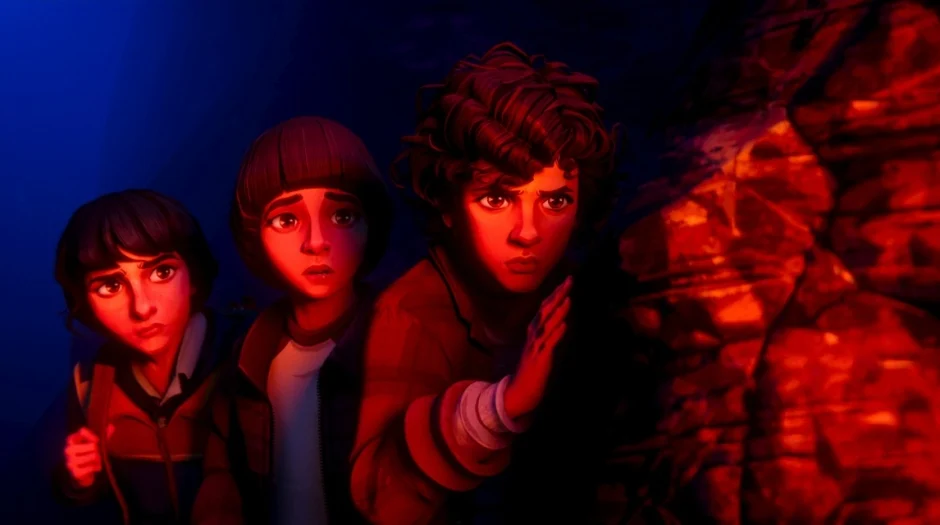
The Duffer Brothers, creators of the immensely popular live-action Stranger Things, envisioned this animated venture as a departure from their main narrative, aiming for a Saturday morning cartoon feel that allowed for expansive and uninhibited storytelling. Showrunner and executive producer Eric Robles elaborated on this directive, stating, "We don’t tell stories like the flagship. And those weren’t the marching orders from the Duffer Brothers. They wanted a Saturday morning cartoon spin-off series where the adventures and stories could be as big and as fun and as crazy as we wanted them to be. We are building new worlds and a new look. But the acting and these characters still had to hold up. We’ve had very serious scenes play out in these dramatic, bright colors. And it actually intensifies these moments. Plus, it’s the 80s. There’s going to be a lot of color.” This philosophy is evident in the series’ visual design, which meticulously recreates iconic Stranger Things locations with an eye for detail while imbuing them with a distinct animated flair.

The animation pipeline, handled by Flying Bark Productions, presented a unique challenge and opportunity. Co-EP Ian Graham shared the team’s excitement in approaching this project. "The idea of being able to go into that property and to tell new stories with these kids at a younger age, when they’re still a bit innocent, was awesome," Graham explained. "But strictly on the animation side, the challenge of doing a CG pipeline with a look that’s unique and has its own style and colors was a challenge we were very excited about.” He further drew parallels between the current animation renaissance and the exploratory spirit of the 1980s, noting, "We’re living in a time now in animation that kind of reminds me of the 80s, funnily enough, when the graphic novel came to comic books and all of a sudden there was all this exploration. You see that all across the animation industry now, this exploration of styles and technology that wasn’t there before. At least, not in this capacity. It’s allowing such creative freedom to people and all of us at Flying Bark saw a unique opportunity to build on that.”
Visual Language and Thematic Resonance
The visual design of Stranger Things: Tales From ’85 is a critical component in its narrative success. The character models, with their sharp, angular features reminiscent of wood carvings, lend themselves to dramatic lighting. Even the stylized representation of hair, clumped together with a tangible weight, contributes to the heightened realism of their animated forms. This deliberate aesthetic choice means that when dramatic lighting and color are employed, the resulting high contrasts and deep shadows are sharpened by the very structure of the character designs. Consequently, even the most vibrant hues—bright greens, purples, yellows, and pinks—can evoke an intense, almost ominous feeling, underscoring the show’s ability to juxtapose bright visuals with underlying peril.

Production Designer Benjamin Plouffe played a pivotal role in establishing this unique visual identity. "A lot of the foundation for this came from our production designer, Benjamin Plouffe," Robles stated. "First, we got all the photos from the actual sets of Stranger Things to make sure that every single detail in the animated sets was right. Whether it was Hopper’s cabin, the Palace Arcade or Mike’s basement, all the details in there are very much true to the specs of the live-action series. Then we added our stylized look and a color palette that is intriguing in its own right. We had this color theory within the show that whenever something Upside Down-ish started happening, you’d start feeling the color shifting into those more Kyle Lambert-type colors.”
This deliberate color theory is deeply rooted in the artistic legacy of the Stranger Things franchise. Kyle Lambert, the artist responsible for the iconic posters of the live-action series, is renowned for his work that features stark contrasts, pensive character expressions, and electrifying use of color. His style is often compared to that of Drew Struzan, a legendary poster artist known for his work on Star Wars, Harry Potter, and E.T. While Struzan’s posters tend to emanate warmth and a sunny glow, Lambert’s art leans into colder skin tones, allowing bold reds, blues, and pinks to dominate. The team at Flying Bark Productions embraced this distinctive vision, further stylizing Lambert’s aesthetic for the animated medium. Robles also cited the cinematic use of color by directors like Jean-Pierre Jeunet in films such as The City of Lost Children and Amélie as inspiration. "I admire how Jean-Pierre Jeunet uses color in his films The City of Lost Children and Amélie," notes Robles. "I remember watching [The City of Lost Children] and just feeling those colors. And they were not natural colors. I loved that as a viewer, but especially as an artist. So, what we’ve done with this show is really enhance these colors in a way that, hopefully, excites viewers and makes them want to freeze frame that moment. We set the tone with the early morning god rays and little dust particles falling in every scene but then lean into those arcade colors from the 80s.”

A Return to Winter of ’85
Stranger Things: Tales From ’85 transports viewers back to the winter of 1985, a period of relative calm in Hawkins following the events of the Upside Down. The narrative centers on Eleven, Mike, Will, Dustin, Lucas, and Max as they navigate a semblance of normalcy, indulging in Dungeons & Dragons, snowball fights, and the quiet rhythms of everyday life. However, this tranquility is shattered by the re-emergence of a terrifying presence, its origins shrouded in mystery—potentially linked to the Upside Down, the clandestine Hawkins Lab, or an entirely new, unknown source. The young heroes must once again band together to unravel this enigma and protect their town.
The voice cast brings a fresh energy to these beloved characters. The ensemble features Brooklyn Davey Norstedt, Jolie Hoang-Rappaport, Luca Diaz, Elisha EJ Williams, Braxton Quinney, and Benjamin Plessala, alongside the talents of Brett Gipson, Jeremy Jordan, Odessa A’zion, Janeane Garofalo, and Lou Diamond Phillips. The series is brought to life under the executive production of the Duffer Brothers and Hilary Leavitt through Upside Down Pictures, with Shawn Levy and Dan Cohen from 21 Laps also serving as executive producers.

Critical Acclaim and Future Prospects
The animated series has been met with considerable enthusiasm from both critics and fans, particularly for its innovative approach to visual storytelling and its faithful yet fresh interpretation of the Stranger Things universe. The success of Stranger Things: Tales From ’85 has already paved the way for its continuation, with the series having been renewed for a second season, slated for release this fall.
"We’re thrilled to return to the winter of ’85 for Season 2," stated Robles. "The Hawkins Investigators Club is back, and a new paranormal threat has emerged from the town’s abandoned silver mines. I can’t wait for fans to discover where this entity and the mysterious blue flower we last saw blooming in the Upside Down at the end of Season 1 take our young heroes.” This announcement has generated significant anticipation, as fans eagerly await the further exploration of the show’s unique visual style and its expanding narrative within the Stranger Things canon.

The collaborative spirit and artistic dedication of the production team were highlighted by Graham, who described the visual output as akin to being "a kid in a candy store." He emphasized the crucial role of color and music in conveying the emotional core of the series, stating, "Color, as well as music, holds the soul of the filmmaking and that’s been so critical to this series. And I think that, if anything, we hope we’ve created a unique voice here for Stranger Things that we can expand on through multiple seasons.” This sentiment underscores the ambition behind Stranger Things: Tales From ’85—to not merely replicate the success of its live-action counterpart but to carve out its own distinct artistic identity, enriching the overall Stranger Things experience for a global audience. The series stands as a testament to the evolving capabilities of animation and its potential to deliver complex, visually stunning narratives that resonate deeply with viewers.