The Super Bowl halftime show has long served as a lightning rod for cultural discourse in the United States, and the most recent performance featuring Puerto Rican global superstar Bad Bunny proved to be no exception. Following a record-breaking broadcast that reached more than 128 million live viewers, the Federal Communications Commission (FCC) became the repository for a surge of formal grievances. Data released following a Freedom of Information Act (FOIA) request by WIRED reveals that the agency received 2,155 complaints regarding the event, the vast majority of which targeted the halftime spectacle. These complaints, ranging from allegations of indecency to frustrations over the use of the Spanish language, highlight a deepening divide in the American sociopolitical landscape.
A Record-Breaking Spectacle and Its Immediate Aftermath
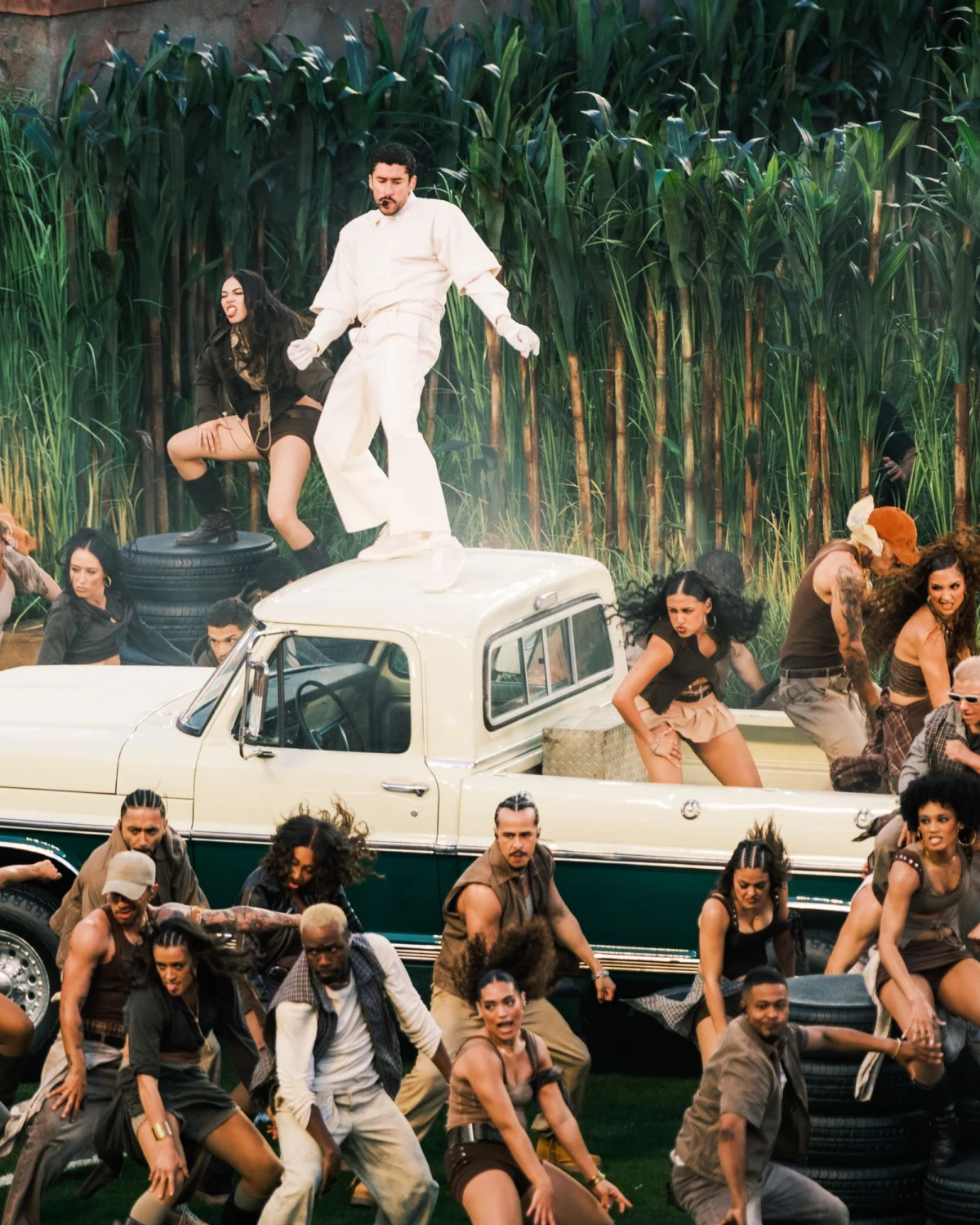
The halftime show, produced by Roc Nation and sponsored by Apple Music, was designed as a high-energy celebration of Caribbean culture and modern pop music. It featured an eclectic mix of guests, including a high-flying appearance by Lady Gaga, a live wedding ceremony on the field, and a cameo by Maria Antonia Cay, the proprietor of the Caribbean Social Club in Brooklyn. According to figures released by the NFL and Apple Music, the performance was a monumental success in terms of reach, garnering 4.157 billion views across broadcast television, YouTube, and various social media platforms.
However, the massive scale of the audience also ensured a massive scale of scrutiny. Even before Bad Bunny—born Benito Antonio Martínez Ocasio—stepped onto the stage, the performance was a subject of heated debate. Influencers associated with the MAGA movement voiced preemptive opposition, citing the artist’s previous public criticisms of U.S. Immigration and Customs Enforcement (ICE) and his steadfast commitment to performing almost exclusively in Spanish. This pre-performance tension set the stage for the wave of formal complaints that followed the broadcast on NBC.
Categorizing the FCC Grievances
The 2,155 complaints analyzed by WIRED offer a window into the specific anxieties of a segment of the American viewing public. The data shows a concentration of dissent in three primary states: Texas, Florida, and California. These states, which possess some of the largest Spanish-speaking populations in the country, also saw the highest volume of residents filing formal objections.
An analysis of the terminology used in the filings reveals several recurring themes:
- Vulgarity and Indecency: Approximately 497 complaints specifically utilized the word "vulgar." Many viewers took issue with the choreography, specifically "perreo," a style of dancing associated with reggaeton that involves rhythmic grinding and pelvic motions.
- Linguistic Friction: The word "Spanish" appeared in 735 complaints. Many filers expressed frustration that a major American sporting event featured a performance primarily in a language other than English.
- Direct Target: Bad Bunny’s name was explicitly mentioned in 919 of the filings, indicating that much of the animosity was directed at the artist himself rather than the production as a whole.
One viewer from Leighton, Alabama, provided a detailed critique, alleging that the dancers engaged in "simulating sex" through "intense grinding, hip thrusting, and twerking." The complaint further noted that camera close-ups amplified what the viewer described as the "explicit nature" of the performance.
The Language Barrier and Cultural Translation
A significant portion of the outcry centered on the artist’s use of Spanish lyrics. For some, the issue was a lack of comprehension; for others, it was the content of the lyrics once they were understood. Several parents reported that their children, who are fluent in Spanish, were exposed to language they deemed inappropriate for a family broadcast.
Conversely, some viewers who did not speak the language took the extra step of researching translations after the show concluded. A viewer from Indiana admitted to looking up the lyrics post-performance and subsequently filing a complaint based on the translated meaning. This suggests that the controversy was not merely a reaction to the immediate viewing experience but a sustained effort to find fault with the artist’s message.
The linguistic debate also veered into the political. One viewer from Yakima, Washington, characterized the broadcast on NBC and Peacock as an "illegal immigrant takeover to taunt ICE." This sentiment was echoed by a viewer in Raleigh, North Carolina, who claimed there were "illegals on my TV screen" and suggested that, despite not understanding Spanish, they "heard inappropriate language." These comments underscore a fundamental misunderstanding of Bad Bunny’s background; as a native of Puerto Rico, he is a United States citizen by birth.
Official Responses and Regulatory Standards
In the days following the February performance, the political pressure on the FCC intensified. Republican lawmakers, led by figures such as Representative Randy Fine, called for a formal investigation into the NFL and NBC. The request prompted FCC Commissioner Anna Gomez to review the transcripts of the performance to determine if any broadcast indecency rules had been violated.
The FCC’s mandate regarding indecency is governed by strict legal standards. Under U.S. law, "obscenity" is not protected by the First Amendment and is prohibited on broadcast television at all times. "Indecency," however, is defined as language or material that depicts sexual or excretory organs or activities in a patently offensive manner. It is prohibited on broadcast airwaves between 6 a.m. and 10 p.m., a window during which children are likely to be in the audience.
After a thorough review, Commissioner Gomez concluded that the performance did not breach these standards. In a statement to Reuters, she clarified, "I reviewed them carefully, and I found no violation of our rules and no justification for harassing broadcasters over a standard live performance." This decision reaffirmed the agency’s stance that artistic expression, even when provocative or non-English, does not inherently constitute a regulatory violation.
Historical Context: A Pattern of Halftime Controversy
The backlash against Bad Bunny is part of a long-standing tradition of Super Bowl halftime controversies. The event has historically served as a mirror for the nation’s cultural anxieties.
- 2004: The "wardrobe malfunction" involving Janet Jackson and Justin Timberlake remains the most famous instance of FCC intervention, leading to a massive fine for CBS (which was later overturned) and a permanent change in how live events are broadcast.
- 2020: The performance by Jennifer Lopez and Shakira drew over 1,300 complaints, with many viewers criticizing the "sexualized" nature of the dancing and the inclusion of pole dancing—despite Lopez’s performance being a nod to her role in the film Hustlers.
- 2025: Kendrick Lamar’s halftime show the previous year received 125 complaints. While significantly fewer in number, those grievances were largely focused on a perceived lack of racial diversity (specifically a lack of white performers) and the show’s emphasis on Diversity, Equity, and Inclusion (DEI) themes.
When compared to Kendrick Lamar’s 125 complaints, Bad Bunny’s 2,155 filings represent a significant escalation in viewer engagement with the FCC. This increase may be attributed to the specific intersection of linguistic, ethnic, and political tensions surrounding the artist.
Broader Implications and Cultural Shift
The sheer volume of complaints, while high in isolation, represents only a tiny fraction of the total viewership. With 128 million live viewers, the 2,155 complaints account for approximately 0.0016% of the audience. This disparity suggests that while a vocal minority was deeply offended, the vast majority of the public either enjoyed the performance or found it unremarkable enough to avoid filing a federal grievance.
Furthermore, the 30 complaints that included the phrase "Thank you for your attention to this matter"—a common sign-off used on the Truth Social platform—suggest a coordinated effort by specific political circles to flood the FCC with grievances. This indicates that the halftime show has become a theater for "culture war" tactics, where regulatory bodies are used to signal political displeasure.
The inclusion of LGBTQ+ representation also drew specific ire. Roughly 30 complaints referenced two men dancing together, with one viewer from Winstead, Connecticut, describing it as "depictions of gay sex openly on the screen." Such comments reflect a resistance to the increasing visibility of diverse identities in mainstream American media.
Conclusion
The Bad Bunny Super Bowl halftime show will likely be remembered as a milestone in the globalization of American sports entertainment. By featuring an artist who refuses to compromise on his linguistic or cultural roots, the NFL signaled a shift toward a more international and multicultural branding strategy. While this shift has clearly encountered resistance from segments of the domestic audience—manifesting as thousands of FCC complaints—the record-breaking viewership numbers suggest that the commercial and cultural reach of such performances far outweighs the regulatory or political blowback.
As the FCC continues to navigate the boundaries of "decency" in an increasingly diverse media environment, the Bad Bunny controversy serves as a case study in the challenges of regulating live entertainment in a polarized society. For now, the agency’s refusal to penalize NBC or the NFL reinforces the principle that cultural discomfort does not equate to a legal violation.