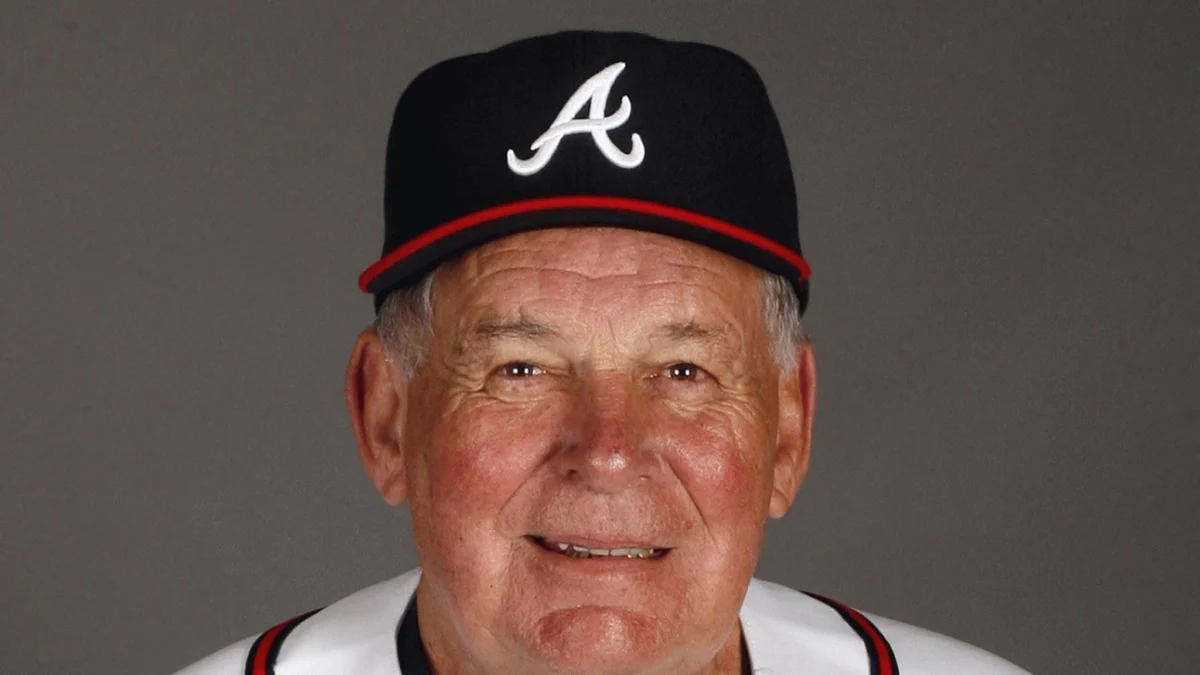
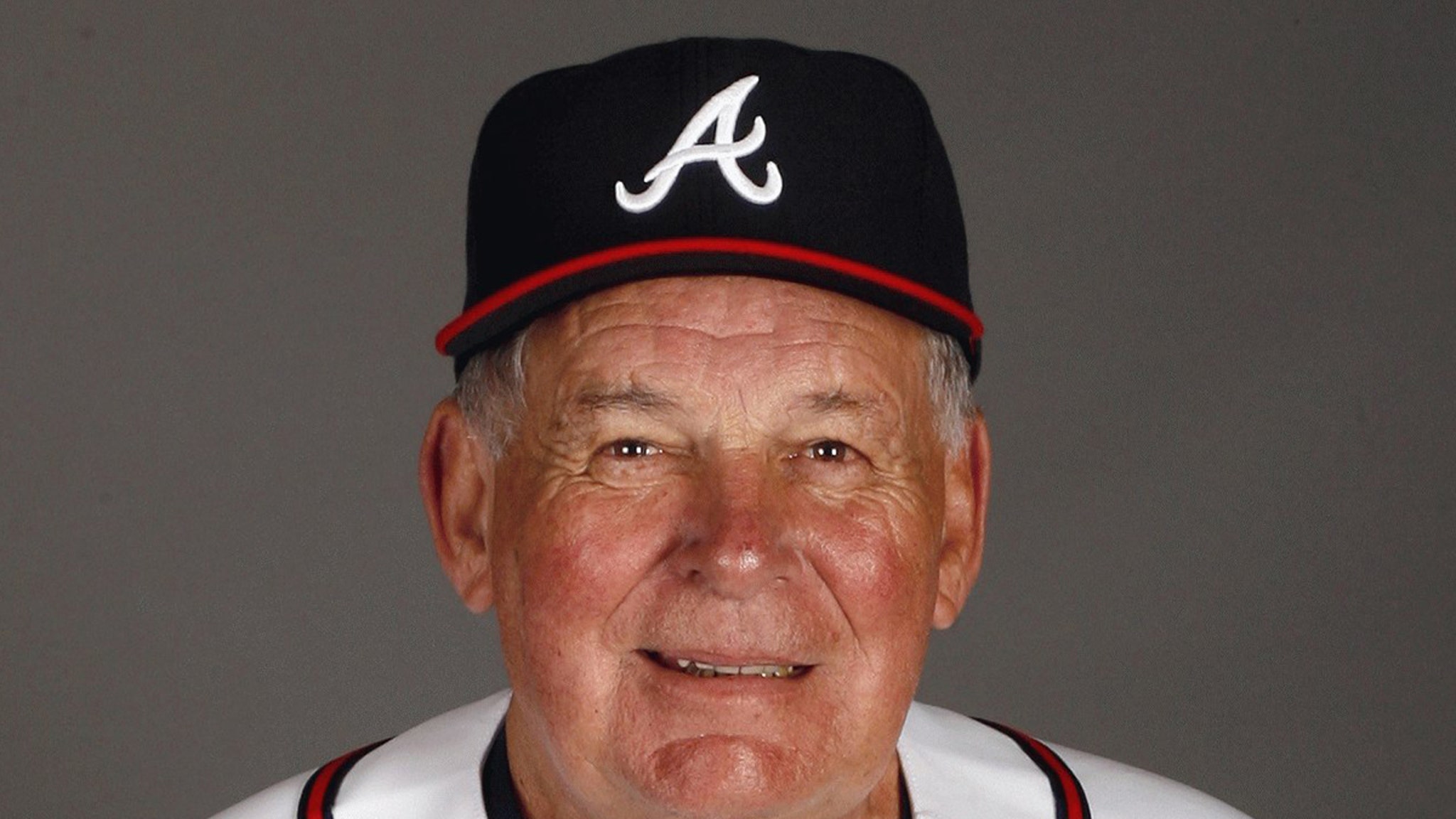
Atlanta, GA – Bobby Cox, the iconic Hall of Fame manager whose fiery passion and strategic brilliance sculpted the Atlanta Braves into a perennial baseball powerhouse, has passed away at the age of 84. The news was confirmed by the Atlanta Braves organization on Saturday, May 9, 2026, sending ripples of grief and reflection across the Major League Baseball landscape. Cox, renowned for holding the MLB record for most ejections by a manager, leaves behind an unparalleled legacy of leadership, player development, and an unwavering commitment to the game.
His passing marks the end of an era for a figure who was not just a manager but a patriarch for generations of players and a beloved icon for an entire fan base. The Atlanta Braves, in a heartfelt tribute posted on X (formerly Twitter), lauded Cox as a "wealth of knowledge on player development and the intricacies of the game," emphasizing that his profound passion for baseball was surpassed only by his deep devotion to his family. The organization extended its sincerest condolences to his widow, Pam, and their cherished children and grandchildren, acknowledging the profound personal loss alongside the public mourning.
Cox’s career spanned over five decades, marked by an uncommon journey that saw him rise from a brief playing career to become one of the most respected and successful managers in baseball history. His tenure with the Braves, split across two distinct periods from 1978 to 1981 and then a legendary run from 1990 to 2010, fundamentally reshaped the franchise’s identity, transforming them from a struggling outfit into a model of consistency and excellence. His legacy is etched in the annals of baseball, not merely for his record-setting wins and ejections, but for the culture of sustained excellence he cultivated.
Early Life and Formative Years in Baseball
Robert Joe Cox was born on May 21, 1941, in Tulsa, Oklahoma. His formative years were steeped in the sport, developing a keen understanding and love for baseball from an early age. His journey into professional baseball began when he signed with the Los Angeles Dodgers as an amateur free agent in 1959. For nearly a decade, Cox toiled in the minor leagues, primarily as an infielder. He was known more for his defensive prowess and gritty play than his offensive statistics, attributes that would later define his managerial approach.
His perseverance eventually led him to the Major Leagues with the New York Yankees. Cox made his MLB debut in 1968, playing 115 games that season, primarily at third base. He followed up with another 105 games for the Yankees in 1969, batting .229 across his two major league seasons. While his playing career was relatively short and modest, it provided him with invaluable insights into the daily grind, the pressures faced by players, and the competitive spirit required at the highest level. These experiences would later become a cornerstone of his empathetic and fiercely loyal managerial style.
Upon retiring as a player, Cox seamlessly transitioned into coaching, beginning his managerial journey in the Yankees’ minor league system. He quickly demonstrated an innate ability to connect with players, develop talent, and instill a winning mentality. His success in the minors did not go unnoticed, leading to his promotion to the major league coaching staff. In 1977, Cox served as a first base coach for the New York Yankees under manager Billy Martin, contributing to the team’s dramatic World Series championship victory over the Los Angeles Dodgers. This early taste of championship success fueled his ambition and further solidified his reputation as a rising star in baseball’s coaching ranks.
First Stint with the Atlanta Braves (1978-1981)
Cox’s impressive trajectory caught the attention of Atlanta Braves owner Ted Turner, a visionary and often unconventional figure in sports. Turner, seeking to inject new life into a struggling Braves franchise, hired Cox as manager before the 1978 season. At the time, the Braves were a far cry from the dominant force they would later become. They had finished last in their division in 1977 with a 61-101 record and were grappling with consistent underperformance since their move to Atlanta in 1966.
Cox inherited a team in need of a significant overhaul. During his initial four-year tenure, the Braves experienced modest improvements but struggled to break through as consistent contenders in the National League West division. They finished fourth, fifth, fourth, and fourth, respectively, from 1978 to 1981. His best finish was a 79-83 record in 1978. Despite these challenges, Cox began to lay some foundational pieces and demonstrated his strategic acumen, particularly in player development. However, the impatient nature of professional sports and the desire for immediate results ultimately led to his dismissal after the strike-shortened 1981 season, a decision that, in hindsight, proved to be merely a temporary detour in his profound relationship with the Atlanta organization.
Building a Contender in Toronto (1982-1985)
Following his departure from Atlanta, Bobby Cox found a new opportunity north of the border, taking the helm of the Toronto Blue Jays in 1982. This period, often overshadowed by his Braves legacy, was crucial in solidifying his reputation as a top-tier manager capable of transforming struggling franchises into contenders. When Cox arrived, the Blue Jays were a relatively young expansion team, having debuted in 1977 and yet to achieve a winning season or make a significant impact in the American League East.
Under Cox’s guidance, the Blue Jays embarked on a remarkable ascent. In his first season, 1982, the team finished with a respectable 78-84 record, a significant improvement. The progress continued steadily; in 1983, they posted their first winning season with an 89-73 record, finishing fourth in the formidable AL East. The team’s development culminated in a stellar 1985 season, where Cox led the Blue Jays to an impressive 99-62 record, capturing the franchise’s first-ever AL East division title. This achievement showcased Cox’s exceptional ability to develop young talent and mold a cohesive, winning unit. Key players like Tony Fernandez, George Bell, Jesse Barfield, and Dave Stieb flourished under his leadership, laying the groundwork for Toronto’s future successes, including their World Series championships in the early 1990s. Despite the division title, the Blue Jays narrowly lost the American League Championship Series to the Kansas City Royals in a thrilling seven-game series, falling just short of a World Series berth.
His success in Toronto firmly established Cox as one of baseball’s most respected field generals. His ability to build a winner from the ground up underscored his tactical understanding and his prowess in player management. However, the call of Atlanta proved too strong to resist, and in a move that would profoundly impact the Braves’ destiny, Cox returned to the organization in 1986, not as a manager, but as the General Manager.
The Architect of the Braves Dynasty: GM and Managerial Return
Cox’s return to Atlanta in a front office role was a pivotal moment for the franchise. As General Manager from 1986 to June 1990, he meticulously rebuilt the Braves from the ground up, demonstrating an astute eye for talent and a clear vision for sustained success. This period saw the acquisition and development of numerous future stars, including the drafting of Chipper Jones, the trade for John Smoltz (who would become one of the "Big Three" pitchers), and the cultivation of other key players through the farm system. Cox understood the importance of a strong farm system and a cohesive organizational philosophy, patiently laying the essential groundwork for what would become one of baseball’s most dominant dynasties.
By June 1990, despite Cox’s efforts in the front office, the Braves’ on-field performance remained lackluster. The team was languishing in last place with a dismal 25-40 record. In a bold and unprecedented move, Cox made the decision to step down from his General Manager position and return to the dugout as manager, effectively firing himself from the GM role to take over the managerial reins from Russ Nixon. This self-demotion, a testament to his belief in the team’s potential and his hands-on leadership style, ignited a remarkable turnaround.
While the Braves still finished last in 1990, the second half of the season showed glimmers of the greatness to come. The infusion of young talent, combined with Cox’s calm yet demanding presence, began to gel. What followed was one of the most remarkable transformations in sports history.
The Golden Era: 14 Consecutive Division Titles and a World Series Crown
Under Bobby Cox’s renewed leadership, the Atlanta Braves embarked on a period of unprecedented dominance that would define an entire generation of baseball. From 1991 to 2005 (excluding the strike-shortened 1994 season where no official division titles were awarded), the Braves captured an astonishing 14 consecutive division titles, a feat unparalleled in Major League Baseball history. This remarkable streak stands as a testament to Cox’s consistent leadership, his ability to manage diverse personalities, and his strategic prowess, transforming the Braves into the epitome of consistency.
The heart of this dynasty was its pitching staff, often referred to as "The Big Three": Greg Maddux, Tom Glavine, and John Smoltz, all future Hall of Famers who blossomed under Cox’s guidance. Maddux, known for his pinpoint control and masterful command, won three of his four consecutive Cy Young Awards with the Braves from 1992-1995. Glavine, a crafty left-hander, consistently delivered clutch performances and secured two Cy Young Awards (1991, 1998), while Smoltz brought a fierce competitive fire and a devastating splitter, excelling as both a starter (winning the Cy Young in 1996) and a closer during his illustrious career. Cox’s skill in handling these pitching aces, understanding their nuances, and optimizing their rotations was a cornerstone of the team’s success, allowing them to consistently lead the league in pitching metrics.
Complementing this legendary pitching staff was a lineup featuring future Hall of Famer Chipper Jones, a switch-hitting third baseman who became the face of the franchise. Other key contributors included first baseman Fred McGriff, outfielder David Justice, and catcher Javy Lopez, forming a formidable roster capable of both offensive firepower and defensive excellence. Cox’s ability to integrate these diverse talents into a cohesive unit, fostering a strong clubhouse culture while maintaining high standards, was central to their sustained success.
The pinnacle of this era came in 1995. After years of near misses, including dramatic World Series losses in 1991 to the Minnesota Twins and 1992 to the Toronto Blue Jays, the Braves finally broke through. They defeated the formidable Cleveland Indians in a memorable six-game World Series, bringing the first major professional sports championship to the city of Atlanta since the NFL Falcons won in 1969. This victory cemented Cox’s legacy and provided validation for years of hard work and consistent excellence. The image of Cox calmly overseeing his team’s triumph became an enduring symbol of Atlanta’s long-awaited baseball glory.
Beyond 1995, the Braves continued their relentless pursuit of championships, reaching the World Series again in 1996 and 1999, though falling short against the New York Yankees in both instances. Despite only securing one World Series title during their remarkable run, the Braves’ sustained dominance and their consistent presence in the postseason redefined what it meant to be a successful franchise in modern baseball, setting a benchmark for organizational excellence.
The Ejection King: A Managerial Trademark
Perhaps no statistic better encapsulated Bobby Cox’s fiery spirit and unwavering loyalty to his players than his record-setting 162 career ejections, an MLB record that stands as a testament to his passionate advocacy. Cox was famously ejected more times than any other manager in the history of Major League Baseball. These ejections were not born of recklessness but of a deep-seated protectiveness of his team. When he felt an umpire’s call was unjust, or that his players were being unfairly treated, Cox would often erupt from the dugout, launching into a passionate argument that frequently concluded with his removal from the game.
His players adored him for it. They knew that Cox would always have their back, acting as a shield against perceived injustices and absorbing pressure so they could focus on the game. This fierce loyalty fostered an incredibly strong bond between Cox and his clubhouse, creating an environment where players felt supported and empowered. His ejections became a badge of honor, a theatrical display of his commitment that resonated deeply with his team and the Braves faithful. It was an integral part of his identity, solidifying his reputation as a manager who truly cared, often sacrificing himself for the sake of his players and the integrity of the game.
Retirement and Hall of Fame Recognition
Bobby Cox managed his final game at the end of the 2010 season, concluding a remarkable 29-year career as a Major League manager. His retirement was met with an outpouring of appreciation from players, coaches, and fans across the league. He left the game with an impressive managerial record of 2,504 wins and 2,001 losses, placing him fourth all-time in managerial victories, behind only Connie Mack (3,731), John McGraw (2,763), and Tony La Russa (2,728). His consistency and longevity at the helm of winning teams cemented his place among the game’s elite leaders.
In recognition of his extraordinary contributions to baseball, Bobby Cox was overwhelmingly elected to the National Baseball Hall of Fame in 2014. He was inducted in Cooperstown alongside fellow managerial legends Tony La Russa and Joe Torre, a fitting tribute to a trio who collectively shaped the modern era of baseball leadership. His induction speech was characteristically humble, focusing on the players, coaches, and front office staff who helped him achieve success, underscoring his team-first philosophy. His presence in Cooperstown forever enshrines his place among the pantheon of baseball’s greatest figures.
A Legacy Beyond the Diamond
Bobby Cox’s passing leaves an indelible mark on the sport of baseball, particularly in Atlanta. His legacy extends far beyond the impressive statistics and numerous accolades. He instilled a culture of winning, professionalism, and family within the Braves organization that persists to this day. He was a mentor to countless players, many of whom went on to have successful careers and spoke fondly of his influence, often crediting him for teaching them not just how to play, but how to be professionals.
His impact on the city of Atlanta cannot be overstated. He transformed the Braves from a struggling franchise into a source of immense civic pride, uniting a diverse metropolitan area behind a team that consistently competed at the highest level. The 1995 World Series victory, achieved under his steady hand, remains a cherished memory for generations of Braves fans and a testament to the enduring power of sports to bring communities together.
Tributes from across the baseball world are expected to pour in, reflecting the profound respect and admiration Cox commanded. Former players like Chipper Jones, Greg Maddux, John Smoltz, and Tom