


Four years after his arrest in 2005 and subsequent hiatus from filmmaking, acclaimed Japanese director Toshiaki Toyoda re-emerged in 2009 with "Blood of Rebirth," a potent cinematic work that served as both a deeply personal testament and a bold artistic declaration. The film marked a significant departure from his earlier, acclaimed works like "Blue Spring" and "Hanging Garden," introducing a filmmaker navigating a markedly different creative landscape. Reportedly conceived and executed under stringent low-budget conditions, with production allegedly spanning a mere ten days, "Blood of Rebirth" daringly reimagines the classic Japanese joruri tale of Oguri Hangan, transforming it into a visceral, punk-infused spiritual allegory that resonated with a new urgency.
The genesis of Toyoda’s return was shrouded in the aftermath of his 2005 arrest on drug-related charges, an event that led to a temporary suspension of his directorial activities and a period of introspection. This enforced silence, however, appeared to fuel a creative resurgence, culminating in "Blood of Rebirth." The film’s abrupt production timeline, a testament to its raw, guerrilla filmmaking ethos, underscored the urgency and necessity of its creation for Toyoda. It was not merely a film; it was an exorcism of past demons and a vibrant assertion of artistic will.
A Punk-Infused Allegory of Rebirth
At its core, "Blood of Rebirth" adapts the centuries-old legend of Oguri Hangan, a narrative rich with themes of betrayal, suffering, and eventual resurrection. The story unfolds in a mythic, pre-human era, introducing Oguri, a gifted blind masseur. His life takes a catastrophic turn when he is summoned by a tyrannical king afflicted by an enigmatic illness. Oguri’s refusal to pledge fealty to the despotic ruler ignites the king’s wrath, leading to Oguri’s brutal execution after being drugged and forced to remain.
However, Oguri’s journey transcends the mortal coil. The narrative plunges into a liminal space between life and death, where he encounters a gatekeeper of the underworld. This spectral encounter marks the prelude to his return to the corporeal realm, albeit in a profoundly altered state, stripped of his former physical autonomy. It is within this shattered existence that he encounters Princess Terute, a figure who recognizes his plight and harbors deep affection for him. Princess Terute embarks on a quest to restore Oguri’s humanity, guiding him towards the mythical "resurrection bath." As their journey progresses, Oguri’s path becomes a complex tapestry woven with threads of revenge, spiritual rebirth, and a confrontational reckoning with the malevolent forces that govern both the living and the dead.
A Stylistic Watershed Moment
"Blood of Rebirth" is characterized by its departure from conventional narrative structures, opting instead for a sensory and spiritual immersion. Toyoda masterfully blends historical fantasy with avant-garde aesthetics, resulting in a cinematic experience that feels less like a linear story and more akin to a ritualistic performance. The film’s approach bears a striking resemblance to that of a music video, with an intense reliance on music and a deliberate sparseness of dialogue, signaling a conscious artistic choice to communicate through atmosphere and visual intensity.
The film’s aesthetic is further defined by its deliberate pacing, which, amplified by the extensive use of slow motion and Masaki Murakami’s hypnotic editing, creates an almost trance-like effect. This deliberate deceleration allows the audience to absorb the film’s potent imagery and the pervasive mood it cultivates. The visual palette is stark and evocative, with Toyotaro Shigemori’s cinematography capturing both the lush, untamed beauty of natural landscapes and the stark, dystopian elements of the film’s setting. The rendering of the color red, predominantly signifying blood, is particularly striking, adding a visceral layer to the unfolding drama.
The spiritual and metaphysical underpinnings of "Blood of Rebirth" are brought to the forefront, enhanced by its fragmented narrative and challenging allegories. The extended, naturalistic sequences set in forests, coupled with an emphasis on mood over plot, render the film a demanding, yet ultimately rewarding, viewing experience. The film’s unique approach to violence, presented with a ritualistic quality, contributes to its overall impact. Particularly memorable are the climactic sequences, including the surreal "floating head" battle, which injects an element of absurdist humor, and the poignant conclusion that masterfully interweaves tragedy with Toyoda’s distinctive dark humor, leaving an indelible impression on the viewer.
Performances Anchored in Raw Presence
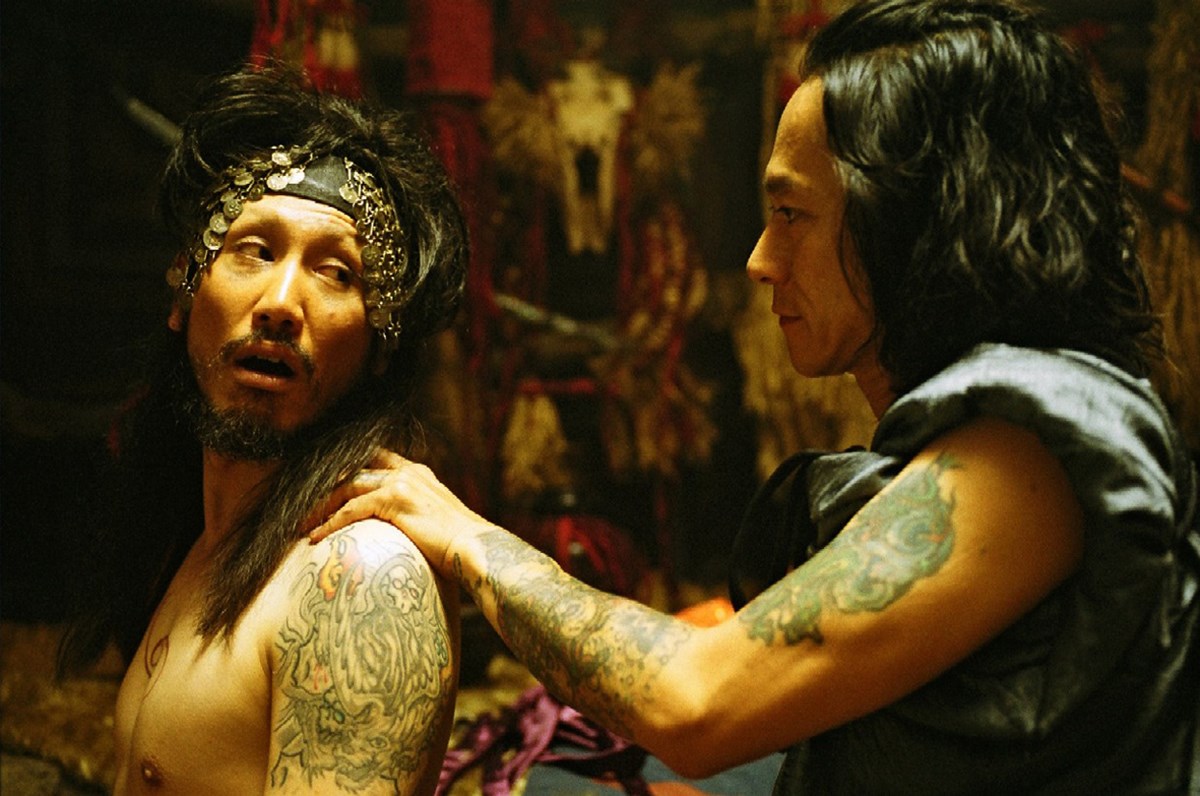
The performances in "Blood of Rebirth" are intrinsically linked to the film’s raw and unvarnished aesthetic. Tatsuya Nakamura, former drummer for the influential band BLANKEY JET CITY, steps into the lead role of Oguri with a performance that prioritizes presence and physicality over traditional acting techniques. His intense gaze and enigmatic aura serve as the film’s anchor, even as the narrative ventures into abstraction. Nakamura’s portrayal imbues Oguri with a primal energy, resonating with the character’s journey of suffering and resilience.
Kiyohiko Shibukawa delivers a compelling performance as the tyrannical king, embodying menace with an unsettling ease. His understated delivery amplifies the character’s unpredictability and menace, making him one of the film’s most captivating figures. Mayu Kusakari, as Princess Terute, offers a counterpoint of fragile sincerity amidst the surrounding chaos. Her performance provides an emotional grounding, highlighting the human element within the film’s more esoteric and violent passages. The ensemble cast, under Toyoda’s direction, collectively contributes to the film’s immersive and often unsettling atmosphere.
Sonic Landscape and Artistic Evolution
The sonic landscape of "Blood of Rebirth" is as crucial to its identity as its visuals. The score, primarily composed by the TWIN TAIL unit, which notably included Toyoda and Nakamura, is a dominant force in the film. Pounding drums and experimental compositions dictate the film’s pace and its pervasive, often aggressive, atmosphere. This integral use of music, functioning almost as a character in itself, underscores Toyoda’s evolving directorial style, where sound and image are inextricably linked to evoke emotional and psychological states.
The film’s production context is also noteworthy. Shot under low-budget conditions and reportedly completed in an astonishing ten days, "Blood of Rebirth" exemplifies a spirit of creative urgency and resourcefulness. This rapid production schedule likely contributed to the film’s raw, unpolished feel, enhancing its punk-rock ethos and its departure from more conventionally polished cinematic products.
A Precursor to Future Explorations
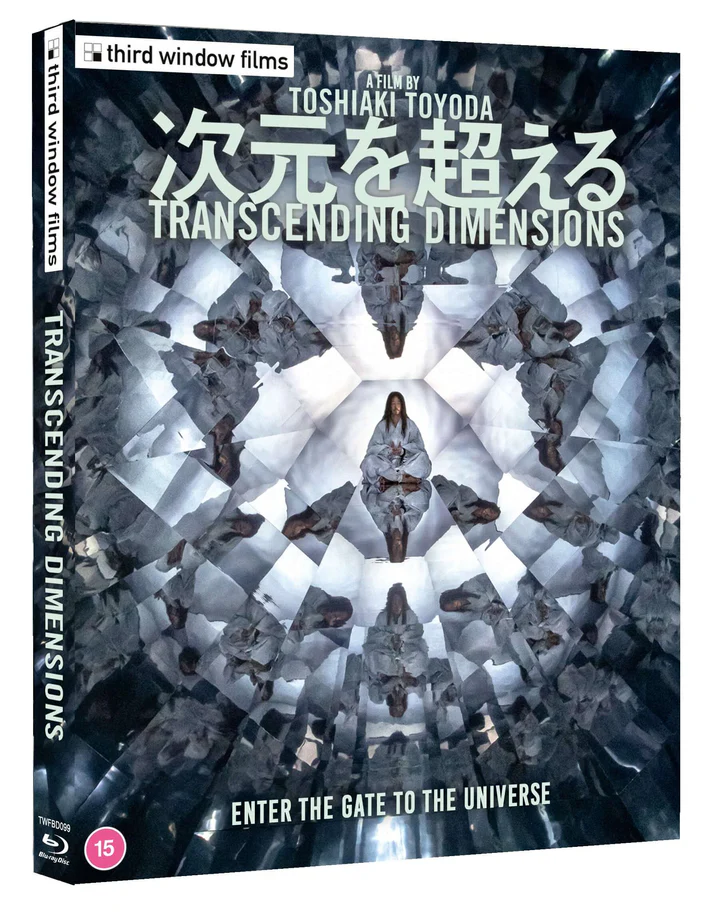
"Blood of Rebirth" is widely regarded as a pivotal work in Toshiaki Toyoda’s filmography, signaling a definitive shift in his thematic concerns and stylistic approach. The film’s profound engagement with spiritual and metaphysical themes marked a turning point, setting a precedent for his subsequent directorial efforts. It can be seen as a direct precursor to films like "The Day of Destruction" (2011) and "Transcending Dimensions" (2024), works that further delve into philosophical inquiries and explore the boundaries of human consciousness and existence.
The integration of elements like joruri, punk aesthetics, and spiritual allegory in "Blood of Rebirth" demonstrates Toyoda’s unique ability to synthesize diverse cultural and artistic influences into a cohesive and impactful cinematic vision. This innovative approach has cemented his reputation as a filmmaker who consistently pushes the boundaries of conventional storytelling, offering audiences challenging yet profoundly resonant works.
Broader Impact and Critical Reception
Upon its release, "Blood of Rebirth" garnered critical attention for its bold artistic choices and its director’s compelling return to form. While its unconventional narrative and experimental style made it a challenging watch for some, many critics lauded its visceral power, its striking visuals, and its thematic depth. The film’s reception underscored Toyoda’s status as a significant voice in contemporary Japanese cinema, capable of producing works that are both artistically ambitious and emotionally resonant.
The film’s impact extends beyond critical acclaim; it represents a powerful comeback for a director who faced significant personal and professional hurdles. "Blood of Rebirth" stands as a testament to Toyoda’s resilience and his unwavering commitment to his artistic vision. It is a film driven by instinct, anger, and an unbridled creative freedom, serving simultaneously as a declaration of his return and a harbinger of the new cinematic language he would continue to develop. For audiences willing to engage with its unconventional narrative and its raw, often confronting, aesthetic, "Blood of Rebirth" offers a uniquely powerful and unforgettable cinematic experience, solidifying its place as a significant work in the canon of independent Japanese cinema.