


Thematic Depth of House of Hope and its Global Resonance
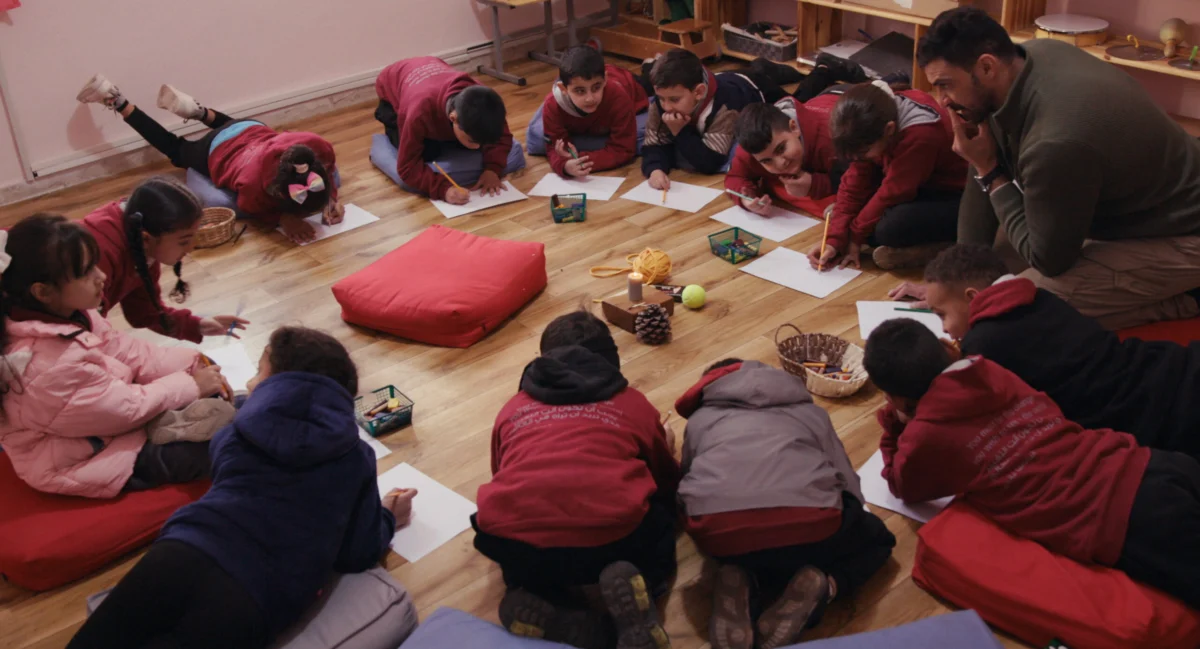
House of Hope delves into a subject of profound geopolitical and human significance, portraying the daily lives and extraordinary resilience of a Palestinian couple dedicated to fostering peace and non-violent principles amidst the complexities of the Israeli-Palestinian conflict. Set within an elementary school in the occupied West Bank, the film offers an intimate glimpse into an educational environment where children are taught not only academic subjects but also strategies for peaceful protest and resistance against occupation. The occupied West Bank, a territory with a population predominantly Palestinian, has been under Israeli occupation since 1967, a status widely contested internationally and subject to numerous United Nations resolutions. The daily realities for its inhabitants include significant restrictions on movement, access to resources, and profound impacts on socio-economic development, making the narrative of non-violent resistance particularly poignant and courageous.
Non-violent resistance, as depicted in the film, draws from a rich history of civil disobedience championed by figures like Mahatma Gandhi and Martin Luther King Jr. It emphasizes strategic, peaceful refusal to cooperate with an oppressive system, aiming to achieve political or social change without resorting to physical force. In the context of the West Bank, teaching such principles to children is not merely an academic exercise but a deeply political and ethical stance, seeking to empower a new generation with tools for advocacy and self-determination that prioritize human dignity and peaceful coexistence. The film’s ability to humanize this struggle, focusing on the agency of educators and the innocence of children, has undoubtedly resonated with the Hot Docs jury, highlighting the universal yearning for peace and justice. The co-production status with the Netherlands underscores the international solidarity and collaborative spirit often found in independent filmmaking, particularly when tackling sensitive global issues that require diverse perspectives and resources.
Hot Docs: A Beacon for Documentary Filmmaking
The Hot Docs Canadian International Documentary Festival, now in its 31st year, stands as a pivotal event in the global documentary landscape. Annually held in Toronto, Canada, it is the largest documentary festival in North America, renowned for its diverse programming, industry market, and commitment to showcasing compelling non-fiction cinema from around the world. The festival serves as a crucial platform for filmmakers to premiere their works, connect with audiences, and engage with industry professionals, including distributors, broadcasters, and funding bodies. Its reputation for curating a selection of thought-provoking, socially relevant, and artistically innovative films has solidified its status as an essential stop on the festival circuit.
The Hot Docs awards recognize excellence across various categories, celebrating both established and emerging talents. The jury, typically composed of accomplished filmmakers, critics, and industry experts, evaluates films based on their artistic merit, thematic depth, journalistic integrity, and overall impact. Winning a top prize at Hot Docs, especially the Best International Feature Documentary, significantly boosts a film’s profile, enhancing its chances for broader distribution and critical acclaim. For House of Hope, this accolade not only validates Busstra’s vision but also amplifies the urgent message embedded within its narrative, bringing the stories from the occupied West Bank to a wider global audience and, crucially, onto the radar of the Academy Awards.
Canadian Documentary Excellence and Emerging Voices
Beyond the international spotlight on House of Hope, Hot Docs also celebrated a vibrant array of Canadian and international talents, reflecting the diverse narratives and innovative approaches shaping contemporary documentary filmmaking. The prize for Best Canadian Feature Documentary was awarded to Kim Nguyen’s Saigon Story: Two Shootings in the Forest Kingdom. Nguyen, an Oscar-nominated director recognized for his compelling narrative features such as Rebelle (War Witch), brings his nuanced storytelling to the documentary format, exploring the complex legacies intertwined with Eddie Adams’ iconic 1968 photograph from the Vietnam War. Adams’ photo, depicting the summary execution of a Viet Cong officer by a South Vietnamese general, became a symbol of the war’s brutality and moral ambiguity, sparking intense public debate and contributing to anti-war sentiment. Nguyen’s film delves into the lives of two families irrevocably connected by this single, searing image, offering a deeply humanistic examination of history, trauma, and the enduring ripple effects of conflict.
Further highlighting Canadian storytelling, Banchi Hanuse received the Special Jury Prize for a Canadian Feature Documentary for her film Ceremony. This documentary offers an intimate portrayal of an Indigenous community located in Canada’s vast northern territories. Hanuse’s work is celebrated for its authentic representation and its contribution to the growing body of Indigenous cinema, which seeks to reclaim narratives and provide platforms for Indigenous voices and perspectives often marginalized in mainstream media. The film’s prior recognition with an audience prize at SXSW underscores its profound emotional resonance and ability to connect with diverse viewers, emphasizing the universal themes of community, cultural preservation, and resilience.
International Perspectives: Refugee Narratives and Historical Reflections
The festival’s commitment to global perspectives was further exemplified by the award for Best Emerging International Filmmaker, presented to Dawood Hilmandi for his film Paikar. A co-production from the Netherlands, Paikar stands as a powerful testament to the refugee experience. Hilmandi, himself a filmmaker living in exile in Amsterdam after fleeing the tumultuous landscapes of Iran and Afghanistan, offers a deeply personal reflection on life as a refugee. His work sheds light on the challenges, resilience, and profound sense of displacement experienced by millions globally, transforming personal narrative into a universal story of human endurance and the search for belonging. Films like Paikar are crucial in fostering empathy and understanding across borders, inviting audiences to engage with the complex realities of forced migration.
The Special Jury Prize for an International Feature Documentary went to Heidrun Holzfeind for The 49th Year. This film presents a unique historical and philosophical exploration, featuring an anarchist who has been imprisoned since 1980. Through a series of letters, the protagonist reflects on his radical past, his political convictions, and the passage of time spent behind bars. The 49th Year offers a rare glimpse into the mind of a long-term political prisoner, prompting audiences to consider questions of justice, ideology, and the evolution of political thought over decades. Such films contribute significantly to historical discourse, providing critical perspectives on social movements and their consequences.
Social Impact and Contemporary Resistance
The Best Social Impact Documentary trophy was collectively awarded to directors Chul Young Cho, Shin Wan Kim, and Jong Woo Kim for The Seoul Guardians. Hailing from South Korea, this film plunges viewers into a night of chaos and collective citizen resistance sparked by the declaration of martial law in 2024. The film captures the raw energy and unified spirit of ordinary citizens rising up against authoritarian measures, echoing South Korea’s rich history of democratic movements and civil protest, notably the Gwangju Uprising of 1980 and the Candlelight Revolution of 2016. The declaration of martial law in any democratic context is a grave constitutional crisis, signifying a temporary imposition of military rule over civilian government. The Seoul Guardians serves as a powerful and timely reminder of the enduring power of collective action and the unwavering commitment of citizens to protect their democratic freedoms, offering critical insight into contemporary forms of resistance in an era of global political volatility.
The Broader Impact of Documentary Film and Future Outlook
The diverse range of winning films at Hot Docs 2024 underscores the vital role of documentary cinema as a medium for social commentary, historical preservation, and cross-cultural understanding. These films, from narratives of non-violent resistance in the West Bank to personal accounts of exile and collective action against martial law, collectively highlight pressing global issues and champion human stories that often remain untold. They not only entertain but also educate, challenge perceptions, and inspire dialogue and action.
For filmmakers like Marjolein Busstra, the Oscar qualification for House of Hope represents a tremendous opportunity to reach an even wider global audience, potentially influencing public discourse and policy makers regarding the Israeli-Palestinian conflict and the importance of peaceful education. For all the winning filmmakers, these accolades from Hot Docs serve as significant career milestones, opening doors for further funding, distribution deals, and increased visibility for their future projects. The festival’s commitment to nurturing both established and emerging talent ensures a robust future for the documentary genre, continuing its legacy of bringing powerful, often challenging, truths to the forefront of public consciousness. Hot Docs will conclude its award announcements with the highly anticipated audience award winners on May 3, reflecting the popular choices of festival-goers and adding another layer of recognition to this year’s outstanding lineup of documentary films.