

Chong Keat Aun’s latest cinematic offering, "Mother Bhumi," a poignant exploration of rural Malaysian life interwoven with supernatural elements and sociopolitical commentary, has garnered significant international acclaim following its world premiere at the Tokyo International Film Festival in October. The film, which also marks Chong’s fourth directorial venture and his original screenplay, secured a remarkable eight nominations at the 62nd Golden Horse Awards, ultimately clinching three prestigious accolades: Best Cinematography, Best Original Film Song, and a highly celebrated Best Leading Actress award for its formidable star, Fan Bingbing.
A Tapestry of Tradition and Turmoil in Late 1990s Malaysia
The narrative of "Mother Bhumi" unfolds against the evocative backdrop of a northern Malaysian village bordering Thailand, during the late 1990s. This setting is crucial, as it is a region where Chinese, Malay, and Siamese communities have long coexisted, fostering a unique cultural fusion that permeates the film’s atmosphere. At its heart is Hong Im, a widowed farmer who, in the wake of her husband’s death, leads a life of apparent simplicity and quietude with her children. The family grapples with profound grief, holding a belief that her husband may have found reincarnation in the very buffalo they keep within their home—a striking image that immediately underscores the film’s blend of the mundane and the mystical.
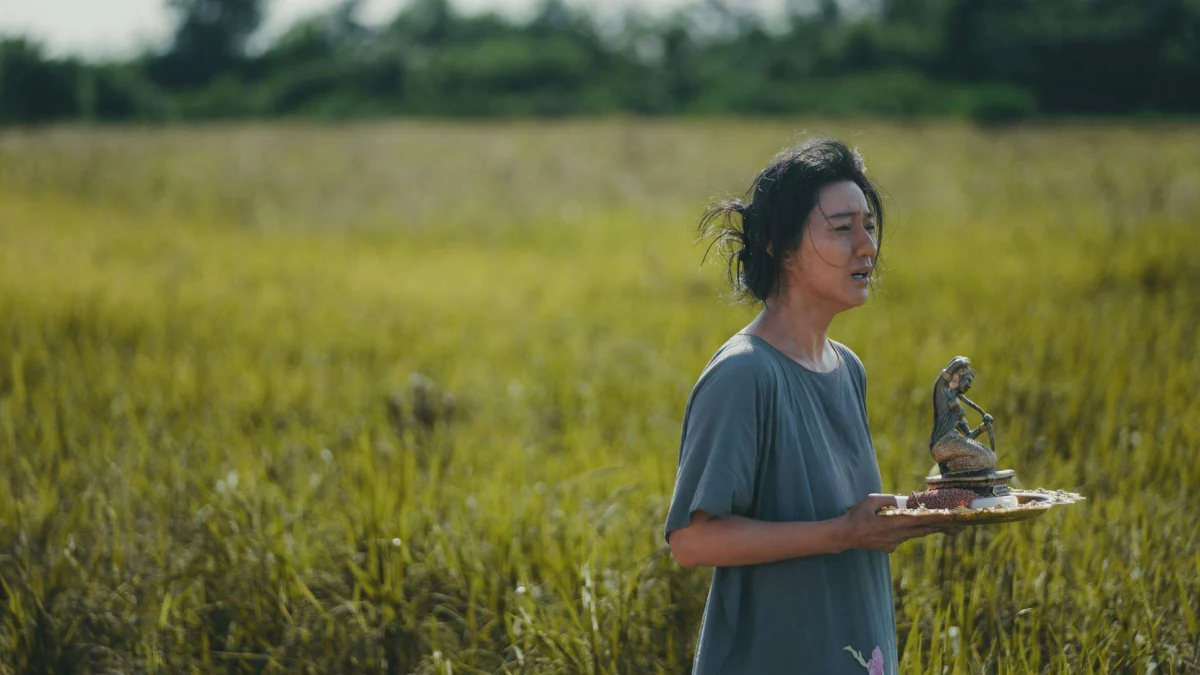
By day, Hong Im dedicates herself to the arduous labor of the paddy fields, a quintessential image of rural sustenance. However, as dusk settles, her role transforms. She becomes a ritual healer, tending to the ailments and misfortunes of her fellow villagers through the application of what appears to be magic. This duality in her character—the pragmatic farmer and the mystical healer—forms a central pillar of her identity and her impact on the community.
Navigating Bureaucracy and Betrayal
Beyond her spiritual duties, Hong Im remains deeply embedded in the fabric of her community, particularly in its struggle against encroaching bureaucratic changes concerning land ownership. The film highlights the pressures exerted by the Malaysian government, which was, during this period, implementing policies that often led to Chinese farmers being compelled to relinquish their land rights. Hong Im becomes a steadfast advocate, assisting these farmers by navigating the labyrinthine processes at the local household office—the very place where her husband had been employed before his enigmatic disappearance. This connection to her husband’s past work adds another layer of mystery to his fate, hinting at a narrative far more complex than initially perceived.
As land disputes escalate and a series of unsettling disappearances plague the village, the mystery surrounding Hong Im’s husband’s death is reawakened. The film masterfully interweaves these external conflicts with Hong Im’s internal struggle. Confronted with emerging truths that threaten to shatter her carefully constructed reality, she must confront her inner turmoil to find solace and provide resolution for herself and her children.
Adding to the familial tension is Hong Im’s daughter, Boon. The adolescent grapples with her own set of challenges, including academic difficulties exacerbated by her mother’s perceived supernatural practices, which Boon blames for her father’s absence. This strained mother-daughter relationship serves as a poignant microcosm of the broader generational and ideological divides within the community.
Chong Keat Aun’s Signature Vision
Director Chong Keat Aun has firmly established himself as one of Malaysia’s most compelling filmmakers, and "Mother Bhumi" further solidifies this reputation. His distinctive approach, characterized by a seamless fusion of the supernatural with astute political, historical, and social commentary, serves as the narrative’s robust backbone. The film adeptly weaves these thematic threads together, creating a narrative that is both thought-provoking and emotionally resonant. The dynamic between Hong Im and her children injects a vital element of family drama, enriching the overarching story with relatable human connections amidst extraordinary circumstances.
Within this intricate tapestry, Chong brings to the forefront critical issues such as the complex coexistence of diverse cultures and religions, the pervasive shadow of misogyny, and the enduring impact of ancestral theft across generations. These themes, deeply rooted in Malaysian history and societal evolution, are explored with nuance and sensitivity. A persistent question that hovers throughout the film, adding to its mystique, is the extent to which Hong Im’s alleged magical abilities are genuine, with the film carefully reserving its revelation until closer to its conclusion.
Narrative Pacing and Cinematic Craftsmanship
While "Mother Bhumi" excels in its thematic depth and character development, the review notes a slight falter in its narrative pacing towards the latter stages. It is suggested that Chong occasionally verges on excess, particularly in the heightened presentation of both dramatic and supernatural elements. This intensity is further amplified by the implicit requirement for viewers to possess some familiarity with specific historical and cultural contexts to fully appreciate certain narrative developments.
The critique also posits that crisper editing, potentially overseen by Erik Moh, could have enhanced the overall viewing experience by allowing the story to progress at a more dynamic pace and mitigate the aforementioned excesses. Furthermore, there is an observation that the focus on the protagonist, Hong Im, at times becomes excessively concentrated, a balance that could have been adjusted for a broader narrative scope.
Despite these minor observations, the review acknowledges that such adjustments would have presented a significant challenge, primarily due to the commanding presence of Fan Bingbing. Her performance is described as "truly impressive," masterfully embodying the multifaceted nature of a character who is simultaneously a devoted mother, a powerful shaman, a tenacious activist, and a vulnerable victim, all portrayed with unwavering conviction. Natalie Hsu also delivers a commendable performance as Boon, and the palpable contrast and chemistry between the two actresses, especially in their confrontational scenes, are highlighted as particularly effective.
Visual Storytelling and Enduring Impact
As is characteristic of Chong Keat Aun’s oeuvre, the visual presentation of "Mother Bhumi" is of the highest caliber. Leung Ming Kai’s cinematography is a standout element, meticulously capturing the serene beauty of the paddy fields, the intimate confines of domestic interiors, and the imposing presence of public buildings. Kai’s work fluidly transitions between evocative ritualistic imagery and an almost documentary-like realism, maintaining a remarkable sense of cohesion throughout. The framing, particularly in the voyeuristic sequences that offer a glimpse through the son’s perspective, is equally accomplished. The color palette is judiciously controlled, with the night scenes emerging as particularly striking.
While "Mother Bhumi" may not reach the same heights of contextual layering as some of Chong’s previous works, it remains a competent and deeply engaging film. Its enduring appeal lies in its potent visual strength and the compelling performances at its core, solidifying its place as a significant contribution to contemporary Malaysian cinema and a testament to Chong Keat Aun’s continued artistic prowess. The film’s success at the Golden Horse Awards, a benchmark of cinematic excellence in the Chinese-speaking world, underscores its critical reception and artistic merit on an international stage. The accolades for Fan Bingbing, in particular, signify a recognition of her powerful portrayal of a complex woman navigating extraordinary circumstances, a performance that has resonated deeply with both critics and audiences.