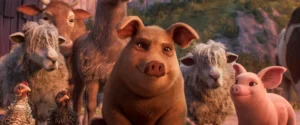



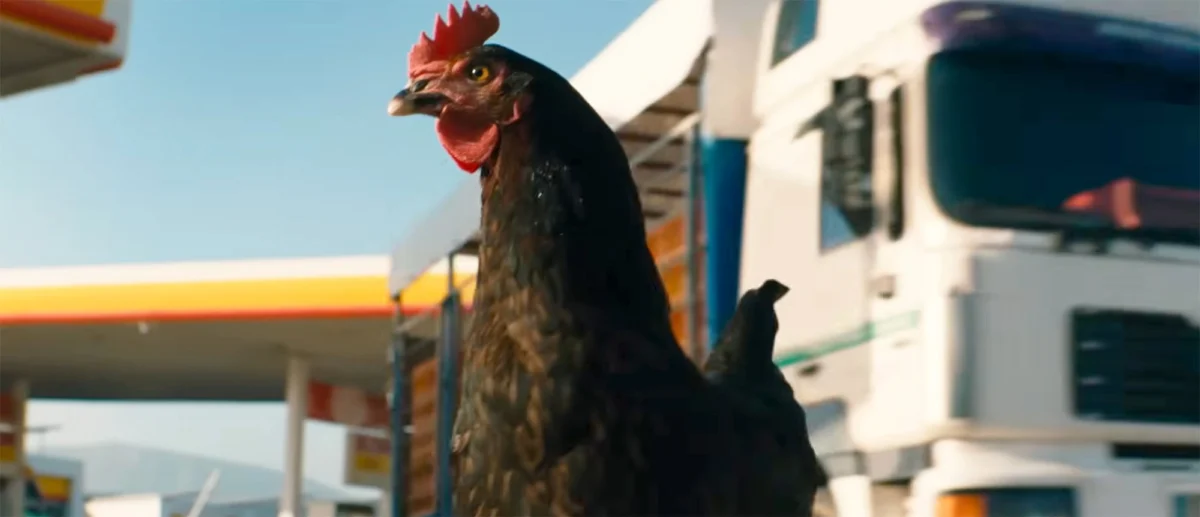
Australian distributor Madman Films has officially released the international trailer for Hen, or The Hen, a compelling new animal-centric film from renowned Hungarian filmmaker György Pálfi. This unique narrative, which centers on a resourceful Leghorn chicken’s journey through a treacherous human world, made its critically acclaimed debut at the 2025 Toronto International Film Festival (TIFF) and is slated for a European theatrical release this summer, with its premiere in Hungary having occurred in early April and a UK release set for May. The film promises a profound exploration of survival, instinct, and the complex interplay between the animal kingdom and human society, drawing comparisons to revered cinematic predecessors such as Jerzy Skolimowski’s Eo and Robert Bresson’s Au Hasard Balthazar.
A Chicken’s Odyssey: Narrative and Thematic Foundations
At the heart of Hen is the story of a determined Leghorn chicken, escaping the bleak confines of an industrial farm, a stark opening that immediately sets a tone of vulnerability and the quest for freedom. Her subsequent wanderings lead her to an unexpected refuge: a chicken coop nestled within a small, family-owned restaurant located in a picturesque Greek seaside village. This seemingly idyllic sanctuary, however, soon reveals itself to be a nexus of human drama and moral ambiguity, deeply entangled with a human smuggling ring. The film meticulously tracks the hen’s navigation of this precarious environment, where she must not only contend with the established pecking order among her avian counterparts but also unwittingly bear witness to the intricate, often dark, machinations of the human characters. As she valiantly fights to protect her eggs, symbolizing hope and the future, she becomes an silent observer of greed, illicit activities, and the pervasive impact of the ongoing migrant crisis.
The decision to portray such complex human narratives through the unblinking gaze of an animal is a deliberate and potent artistic choice. By divesting the primary perspective from human bias, Pálfi offers a raw, unfiltered lens on societal issues. The chicken’s objective observation strips away the layers of human justification and self-deception, presenting the stark realities of moral decay and humanitarian crises in a visceral manner. This narrative technique invites audiences to confront uncomfortable truths without the mediating filter of human emotional interpretation, instead relying on the primal instincts of survival and protection as a moral compass. The film’s title, Hen, or Kota in Greek, is deceptively simple, yet it encapsulates the universal struggle for life and dignity, whether animal or human.
György Pálfi: A Filmmaker of Unconventional Narratives
György Pálfi is no stranger to challenging cinematic conventions and exploring the depths of the human (and sometimes non-human) condition through a distinctive, often surreal, and visually arresting style. His filmography is marked by a consistent willingness to push boundaries, blending dark humor with profound social commentary. Pálfi first gained international recognition with his 2002 feature debut, Hukkle, a largely dialogue-free film that meticulously observes rural life in Hungary, revealing its intricate connections and hidden narratives through sound and imagery. This established his reputation for meticulous observation and unconventional storytelling.

He further solidified this reputation with the audacious Taxidermia (2006), a grotesque yet brilliant multi-generational saga exploring themes of gluttony, desire, and national identity through surreal body horror. Films like I Am Not Your Friend, Final Cut: Ladies & Gentlemen, Free Fall, His Master’s Voice, and Perpetuity have continued to showcase his unique vision, often characterized by experimental structures, striking visuals, and a keen sense of the absurd that underpins profound truths.
Hen appears to be a natural, albeit distinct, evolution in Pálfi’s oeuvre. While his previous works often focused on human eccentricities and societal dysfunctions, Hen shifts the primary point of view to an animal, yet it retains his signature incisive social critique. This pivot demonstrates Pálfi’s continued commitment to innovative narrative approaches and his ability to adapt his observational prowess to diverse subjects. The choice of an animal protagonist allows him to explore themes of innocence, resilience, and the inherent brutality of existence from a fresh perspective, aligning with his artistic philosophy of challenging audience perceptions. The film is poised to continue his legacy of crafting thought-provoking cinema that resonates long after the credits roll.
A Greek Canvas: Setting and Symbolism
The decision to shoot Hen entirely in Greece is more than a mere aesthetic choice; it imbues the film with significant thematic depth. Greece, with its ancient history, stunning coastlines, and contemporary struggles, particularly its role as a frontline country in the European migrant crisis, provides a potent backdrop for the narrative. The crumbling seaside restaurant, a microcosm of societal decay, becomes a potent symbol of a world in flux. Its connection to human smuggling is a direct reference to the humanitarian crisis unfolding across the Mediterranean, where countless individuals seek refuge and a better life, often falling prey to exploitation and dangerous journeys.
Through the eyes of the hen, the audience is exposed to the raw, unfiltered reality of these human struggles. The chicken’s own fight for survival, her instinctive drive to protect her eggs, mirrors the migrants’ desperate quest for safety and a future. This parallel evokes a powerful sense of empathy, transcending species boundaries. The contrast between the natural beauty of the Greek landscape and the moral squalor of the human activities within it creates a jarring visual and thematic tension, highlighting the disjunction between an idealized world and its harsh realities. The ‘pecking order’ within the chicken coop finds a stark echo in the hierarchical, often exploitative, structures of the human smuggling ring, further emphasizing the film’s allegorical power.
The Multi-Faceted Star: Eight Hungarian Hens
One of the most remarkable aspects of Hen is its unique casting: the lead role of "the hen" is brought to life by eight distinct Hungarian chickens, affectionately named Eszti, Szandi, Feri, Enci, Eti, Enikő, Nóra, and Anett. This creative decision not only underscores the film’s commitment to authenticity but also presents a fascinating logistical and artistic challenge. The use of multiple animals for a single character is a testament to the meticulous planning and dedication involved in the production.

From a production standpoint, working with animals, particularly birds, requires immense patience, specialized trainers, and strict adherence to animal welfare guidelines. The seamless portrayal of a single character by eight different individuals suggests extensive training and careful shot planning to maintain continuity and emotional coherence. This multi-hen approach likely allowed the filmmakers to capture a wider range of behaviors and expressions, leveraging each chicken’s individual temperament and natural inclinations for specific scenes. For instance, one hen might have been particularly adept at running, another at nesting, and yet another at displaying fear or curiosity. This collaborative "performance" by the avian ensemble aims to create a richer, more nuanced portrayal of the protagonist, making her journey feel profoundly real and relatable. The affectionate naming of each chicken also humanizes them, subtly encouraging the audience to connect with these creatures not just as props but as integral participants in the storytelling process.
A Lineage of Animal-Centric Cinema: Eo and Au Hasard Balthazar
Hen steps into a distinguished cinematic tradition of films that use animal protagonists to reflect on human morality and existence. The most immediate and contemporary comparison is to Jerzy Skolimowski’s 2022 masterpiece, Eo. Eo, which followed the odyssey of a donkey through modern Europe, garnered widespread critical acclaim, including an Academy Award nomination for Best International Feature Film. It was praised for its minimalist yet profoundly empathetic portrayal of animal suffering and resilience, sparking renewed discussions about animal rights and the ethical implications of human interactions with the natural world. Eo demonstrated the power of the non-human perspective to evoke deep emotional responses and offer incisive social commentary without explicit dialogue.
Further back in cinematic history, Robert Bresson’s 1966 French classic, Au Hasard Balthazar, stands as a foundational text in this genre. This stark and poignant film traces the life of a donkey named Balthazar, as he is passed from owner to owner, enduring both kindness and cruelty, ultimately serving as an allegorical figure for purity, suffering, and spiritual redemption. Bresson’s minimalist style and unwavering focus on the donkey’s experiences created a powerful, almost spiritual, meditation on the human condition.
Hen appears to inherit the narrative spirit of these films, utilizing an animal’s journey as a conduit for exploring complex human themes. Like Eo and Balthazar, Pálfi’s film seeks to strip away the anthropocentric view of the world, inviting audiences to experience life from a perspective often relegated to the background. By placing a chicken, an animal often seen as commodity rather than character, at the center of a story involving human trafficking and moral decay, Hen elevates the animal’s perspective to a position of profound importance. It suggests that perhaps the most objective and poignant observations on humanity’s shadow can come from those who are outside of it, yet inextricably linked to its fate. This lineage positions Hen not just as an animal film, but as a significant contribution to a rich and contemplative cinematic tradition.
International Co-production and Festival Buzz
Hen is a product of an international co-production, involving companies from Germany, Greece, and Hungary. This collaborative model is increasingly common in European cinema, allowing filmmakers to pool resources, talent, and diverse perspectives, often resulting in films with broader appeal and richer cultural nuances. The involvement of multiple countries in financing and production also facilitates access to various markets and festival circuits, amplifying the film’s reach.

The film’s premiere in the Platform section at the 2025 Toronto International Film Festival was a significant endorsement of its artistic merit. TIFF’s Platform section is dedicated to showcasing films with high artistic vision and unique directorial voices, often acting as a launchpad for future critical success and awards consideration. While specific critical reactions from TIFF 2025 have not been widely publicized, the selection itself, coupled with the comparisons to Eo, suggests that Hen garnered early praise for its innovative storytelling and thematic depth. Such festival exposure is crucial for independent and foreign-language films, generating buzz and attracting potential distributors for wider release.
With its initial release in Hungary in early April and a UK release scheduled for May, Hen is gradually making its way to European audiences throughout the summer. The staggered release strategy is typical for international independent films, allowing for targeted marketing and building momentum through word-of-mouth and critical reviews. As of the current date, a US release date has not yet been set. Independent foreign-language films often face challenges in securing immediate US distribution, requiring dedicated champions within the industry or further festival success to gain traction. However, given the growing appreciation for films like Eo and the compelling nature of Pálfi’s work, it is highly anticipated that Hen will eventually find its audience in North America, perhaps through specialized distributors or streaming platforms.
Broader Impact and Anticipation
Beyond its cinematic artistry, Hen carries the potential for significant broader impact. By centering its narrative on an escaped industrial farm chicken, the film inherently ignites a dialogue about animal welfare, the ethics of industrial farming, and humanity’s responsibility towards other species. The opening sequence, depicting the hen’s escape, serves as a poignant reminder of the often-unseen realities of modern food production and prompts viewers to consider the lives of the animals we consume.
Furthermore, the film’s indirect engagement with the migrant crisis through the hen’s observations offers a uniquely empathetic lens on one of the most pressing humanitarian issues of our time. By witnessing the desperation and exploitation without human emotional filters, audiences might find themselves more deeply moved and compelled to reflect on the complexities of human displacement and the moral obligations of society. The intertwining of animal and human struggles underscores a universal theme of vulnerability and the relentless pursuit of safety and survival in a world often marked by indifference and cruelty.
Hen is poised to be more than just a film; it is an experience designed to provoke thought, evoke empathy, and stimulate discussion. Its unique narrative, combined with György Pálfi’s distinctive directorial vision, positions it as a significant work in contemporary cinema. For audiences who appreciate arthouse films, thought-provoking social commentary, and stories told from unconventional perspectives, The Hen offers a compelling and unforgettable journey into the heart of both animal instinct and human morality. Its arrival in European theaters this summer is eagerly awaited, and its eventual global reach promises to further solidify its place as a powerful and resonant cinematic achievement.