Innovative Dreams, a pioneering production services company, has officially launched a hybrid studio model that integrates advanced artificial intelligence into every stage of the filmmaking process, from pre-production through post-production. Backed by strategic partnerships with Amazon Web Services (AWS) and the generative AI startup Luma, the venture represents a significant shift in how the entertainment industry approaches content creation during a period of intense economic volatility and technological transition. By combining traditional cinematography with virtual production, motion capture, and a suite of proprietary and third-party AI tools, Innovative Dreams aims to drastically reduce the time and capital required to produce high-end cinematic content.
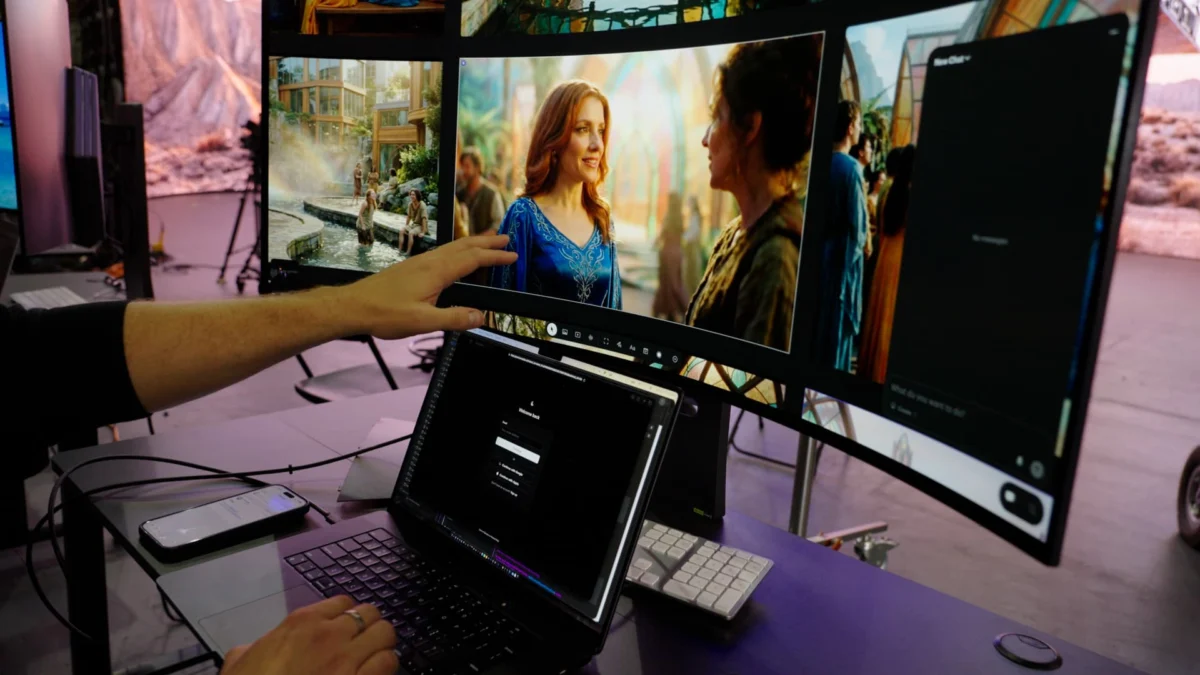
The studio’s methodology involves a sophisticated fusion of physical and digital workflows. On a dedicated soundstage equipped with massive LED walls—a technology popularized by series like The Mandalorian—performers engage in traditional acting while their movements are captured and mapped onto digital assets in real-time. This process utilizes a diverse ecosystem of AI tools, including Luma’s generative models, Google’s Nano Banana, and Bytedance’s SeeDream. Unlike pure generative AI, which creates video from text prompts, the Innovative Dreams model preserves the human element of filmmaking, including the actor’s nuanced performance, the director’s lens choices, and the cinematographer’s lighting preferences.
A New Framework for Production Efficiency
The genesis of Innovative Dreams can be traced back to the production of House of David, a historical epic produced by CEO Jon Erwin’s Wonder Project for Amazon Prime Video. During production, Erwin utilized AI to recreate complex historical settings and far-flung international locales without leaving the soundstage. The success of these techniques prompted the formalization of Innovative Dreams as a standalone service provider.
The studio’s first major test case under this new banner is The Old Stories: Moses, a three-part series starring Academy Award winner Ben Kingsley. The production metrics for the project are unprecedented: the entire series was filmed in a single week on a virtual soundstage. By utilizing AI-generated environments, the production team was able to place actors in 40 distinct locations across the globe using footage and digital recreations projected onto the LED screens. According to Erwin, a traditional production of this scale would typically require five to six weeks of principal photography and a budget far exceeding what was available for the project.
This efficiency is not merely a matter of speed but of economic survival. The ability to bypass the logistical nightmare of international location scouting, travel, and physical set construction allows mid-budget productions to achieve the "massive scale" typically reserved for tentpole studio blockbusters.
The Role of Infrastructure and Strategic Investment
The computational demands of real-time AI video generation and virtual production are immense, requiring a level of infrastructure that few independent studios can maintain. To solve this, Innovative Dreams partnered with AWS, which provides the cloud-based AI infrastructure necessary to power these real-time tools. AWS’s involvement is part of a broader strategic initiative to entrench its cloud services within the media and entertainment vertical as studios pivot toward data-heavy production methods.
Samira Bakhtiar, General Manager of Media, Entertainment, Games, and Sports at AWS, noted that the partnership is designed to provide filmmakers with tools that allow for collaboration at a scale previously impossible. By moving production cycles into the cloud, AWS and Innovative Dreams are attempting to accelerate the transition from sequential production (where editing and effects happen after filming) to parallel production (where visual effects are integrated during the shoot).
Luma, the other primary partner, brings a valuation of over $4 billion and a suite of "agent" tools to the table. These tools allow multiple AI services to operate within a collaborative workspace, enabling artists to iterate on digital assets in minutes rather than days. Erwin emphasized that the partnership is bidirectional; Innovative Dreams provides real-world feedback from the front lines of production, helping Luma and other tech companies refine their tools for professional cinematic use.

Economic Pressures and the Hollywood Labor Crisis
The launch of Innovative Dreams comes at a precarious moment for the Southern California film industry. Since 2022, Los Angeles County has lost more than 40,000 entertainment industry jobs. Production activity in the region has plummeted to its lowest levels since 1995, a decline exacerbated by the dual SAG-AFTRA and WGA strikes of 2023, the COVID-19 pandemic, and a broader industry "contraction" as streaming services prioritize profitability over volume.
Entertainment attorney Jonathan Handel points out that the industry is currently down 25% to 35% compared to pre-pandemic levels. The primary concern among labor unions is that AI will not only compromise intellectual property rights but will also eliminate the need for specialized roles in costuming, set design, and makeup. If a digital "wardrobe" can be applied to an actor via AI in post-production, the demand for physical costumers may inevitably shrink.
Erwin, however, argues that the adoption of AI is a necessary defense against "runaway production"—the trend of filming in foreign countries or other U.S. states to take advantage of tax incentives and lower labor costs. By making production in Los Angeles more affordable through technology, Erwin believes Innovative Dreams can help keep work in Southern California. "I think this is necessary to bring jobs back to LA," Erwin stated, characterizing the current traditional production model as "unsustainable."
Analysis of Implications for the Industry
The emergence of hybrid studios like Innovative Dreams suggests a three-tier future for the film industry. The first tier consists of high-budget, "prestige" productions that may continue to use traditional practical effects and location shooting as a mark of authenticity. The second tier involves pure AI-generated content, likely for short-form media and advertising. The third tier—where Innovative Dreams operates—is the "middle" market: television dramas, independent films, and mid-range features that require high production value but lack the budget for traditional global shoots.
The potential for "job augmentation" versus "job displacement" remains the central point of contention. While entry-level "on-ramps" for production assistants and junior craftspeople may be threatened by automated workflows, new roles are emerging for "AI artists," "virtual environment designers," and "prompt engineers" who understand the intersection of cinematic language and machine learning.
Furthermore, the data-centric nature of this model grants studios more control over their intellectual property. By creating digital assets (such as 3D scans of actors or custom-built digital environments), a studio builds a library of reusable "virtual sets" that can be deployed across multiple seasons or franchises, further driving down long-term costs.
Timeline of the AI Integration in Hollywood
The path to the current state of hybrid production has been marked by several key milestones:
- 2019-2020: The debut of "The Volume" (LED wall technology) for The Mandalorian proves the viability of virtual production.
- 2022: Generative AI tools like Midjourney and DALL-E 2 begin to influence pre-visualization and concept art.
- 2023: Hollywood writers and actors strike, resulting in new contractual protections regarding the use of "digital replicas" and AI in scripts.
- 2024 (Early): OpenAI previews "Sora," a text-to-video model, causing widespread concern regarding the future of traditional cinematography.
- 2024 (Spring): Innovative Dreams launches its hybrid soundstage, moving AI from the experimentation phase into a standardized production service.
As The Old Stories: Moses prepares for its debut this spring, the industry will be watching closely to see if the quality of the AI-augmented footage meets the standards of global audiences. If successful, the Innovative Dreams model could serve as a blueprint for a leaner, tech-driven Hollywood that prioritizes regional production through global-scale digital virtualization. For a region that has seen its dominance challenged by both economic shifts and technological disruption, the success of such hybrid models may determine whether Los Angeles remains the epicenter of the filmmaking world.