
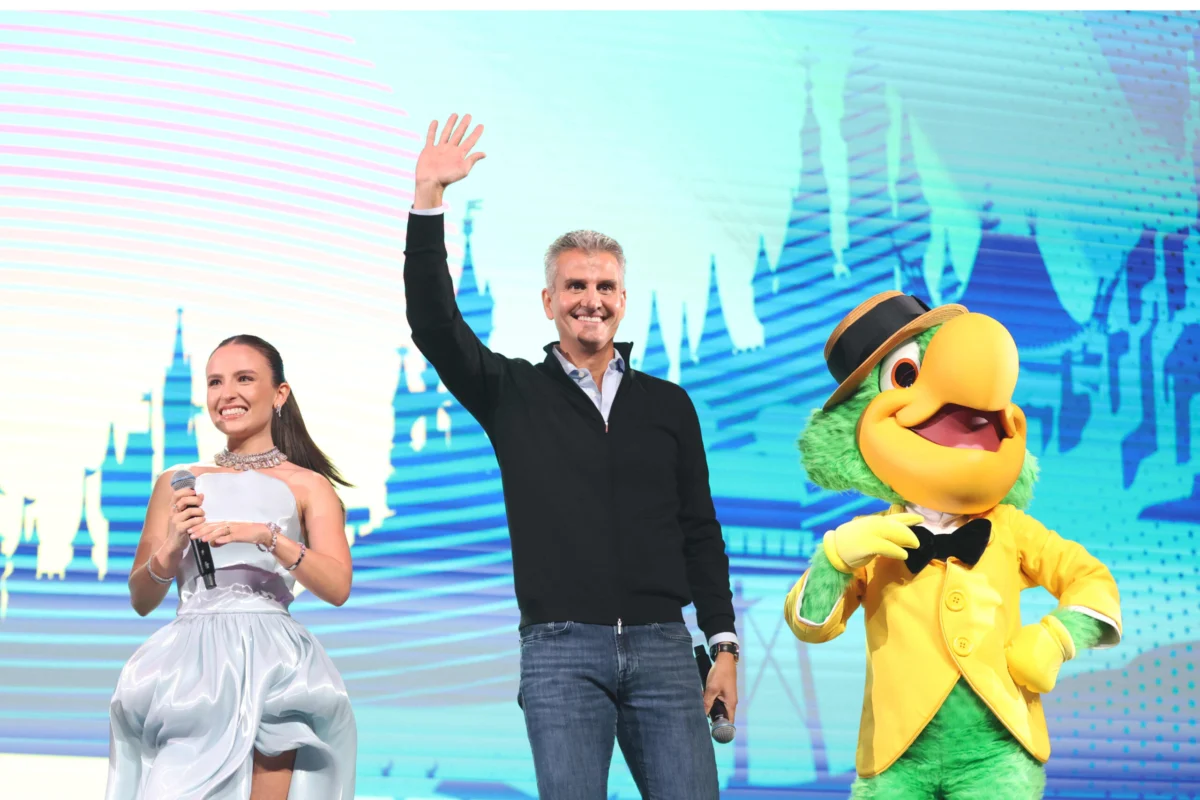
The Walt Disney Company entered a pivotal new era on Wednesday as Josh D’Amaro officially stepped into the role of Chief Executive Officer, taking the helm of the world’s most influential media and entertainment conglomerate. The transition, finalized during the company’s annual shareholder meeting, marks the conclusion of Bob Iger’s storied and multi-decade tenure. D’Amaro, a 28-year veteran of the company who most recently served as Chairman of Disney Experiences, inherits a legacy of creative dominance paired with the modern challenges of a rapidly shifting media landscape, a cooling stock price, and the ongoing integration of digital platforms.
In an internal memo distributed to Disney’s global workforce on Wednesday morning, D’Amaro expressed a sense of profound responsibility. He acknowledged the velocity of change within the industry, describing the current moment as both "daunting" and "exciting." D’Amaro’s elevation comes at a time when Disney is attempting to stabilize its valuation following a period of organizational restructuring and a succession process that has been closely scrutinized by Wall Street and industry analysts alike.
A Legacy of Operational Excellence and Strategic Growth
Josh D’Amaro’s ascent to the CEO position is widely viewed as a validation of the company’s "Experiences" division, which includes theme parks, cruise lines, resorts, and consumer products. Under his leadership as Chairman, this segment became the primary engine of Disney’s profitability. During a period where the traditional film and television sectors faced headwinds from the decline of linear cable and the high costs of streaming, the parks division consistently delivered record-breaking revenue and operating income.
D’Amaro’s tenure in the parks division was defined by aggressive expansion and the integration of high-value intellectual property (IP) into physical environments. From the opening of "Star Wars: Galaxy’s Edge" to the transformation of EPCOT and the expansion of the Disney Cruise Line fleet, D’Amaro proved his ability to translate Disney’s storytelling into high-margin, tangible experiences. This operational success made him the frontrunner in a succession race that included other high-profile Disney executives from the entertainment and streaming sectors.
The transition also marks the end of Bob Iger’s second stint as CEO. Iger, who originally led the company from 2005 to 2020, returned in late 2022 to replace his hand-picked successor, Bob Chapek, following a series of corporate missteps and internal friction. While Iger will remain as a senior advisor and board member until his final retirement on December 31, 2026, the day-to-day governance of the "House of Mouse" now rests entirely with D’Amaro.
The Financial Landscape and Wall Street’s Reception
Despite the internal enthusiasm surrounding D’Amaro’s appointment, the new CEO faces immediate pressure from the financial sector. Disney’s stock has seen a decline of more than 10% year-to-date, reflecting investor concerns regarding the long-term growth of the streaming business and the volatility of the global advertising market.
Analysts suggest that D’Amaro’s primary objective will be to convince investors that Disney can maintain its core growth while navigating the decline of traditional media. The company’s most recent quarterly earnings provided a roadmap for this strategy, showing significant strength in two key areas: theme parks and direct-to-consumer (DTC) streaming.
Disney’s streaming business, anchored by Disney+, recently achieved consecutive quarters of profitability—a milestone that was a top priority for Iger upon his return. D’Amaro has emphasized that Disney+ will serve as the "digital centerpiece" of the company. The full integration of Hulu into the Disney+ ecosystem, scheduled to be completed later this year, is expected to reduce churn and increase the average revenue per user (ARPU) by offering a more comprehensive content library to domestic and international subscribers.
A Chronology of Leadership and Succession
The path to D’Amaro’s appointment was shaped by years of internal shifts and strategic pivots. To understand the significance of this transition, it is necessary to look at the timeline of Disney’s leadership over the last decade:
- 2005–2020: Bob Iger leads Disney through a "Golden Age," acquiring Pixar, Marvel, Lucasfilm, and 21st Century Fox, while launching Disney+.
- February 2020: Iger steps down as CEO, appointing Bob Chapek to the role. Iger remains Executive Chairman.
- 2020–2022: Chapek’s tenure is marked by the COVID-19 pandemic, public disputes with talent, and organizational restructuring that centralized power away from creative heads.
- November 2022: The Disney Board of Directors fires Chapek and reinstates Iger as CEO on a two-year contract (later extended) to "set the strategic direction" and find a successor.
- 2023–2025: Iger initiates a $60 billion, 10-year investment plan for the Parks and Experiences division and refocuses the company on creative quality over content quantity.
- February 2026: Josh D’Amaro is officially named CEO during the annual shareholder meeting, following a rigorous vetting process by the Board’s succession committee.
Strategic Pillars for the Next Chapter
In his first official address to shareholders and employees, D’Amaro outlined three strategic pillars that will guide his leadership. These pillars reflect a desire to blend Disney’s traditional strengths with modern technological capabilities.

1. Creative Excellence as the North Star
D’Amaro reaffirmed that storytelling remains the company’s primary competitive advantage. This comes after a year (2025) in which Disney reclaimed the top spot at the global box office. Hits such as the live-action "Lilo & Stitch," the sequel to "Zootopia," and the third installment of the "Avatar" franchise demonstrated that Disney’s theatrical business has regained its momentum. D’Amaro noted that the company would continue to take "smart risks" to exceed audience expectations.
2. Technological Innovation and Integration
The new CEO intends to leverage technology not just for distribution, but to enhance the "immersive" nature of the Disney brand. This includes the use of artificial intelligence to streamline production and the development of more personalized experiences within the parks. D’Amaro’s background in "Experiences" suggests he will look to bridge the gap between digital engagement on Disney+ and physical engagement at Disney resorts.
3. The "One Disney" Philosophy
Perhaps the most significant shift in D’Amaro’s rhetoric is the emphasis on operating as a unified entity. He argued that Disney’s greatest advantage is the interconnectedness of its businesses. Under this "One Disney" model, a successful film launch should immediately trigger synergy across consumer products, streaming exclusives, and theme park attractions. This holistic approach is designed to maximize the lifetime value of every Disney fan.
International Expansion and Global Reach
D’Amaro is also inheriting a company that is increasingly focused on international growth. A key component of his strategy involves historic investments in emerging markets. This includes the development of a major theme park and resort in Abu Dhabi, United Arab Emirates, which represents a significant footprint in the Middle East.
Furthermore, Disney has ramped up its production of local-language originals. In 2025, the company released seven major original series produced outside the United States, targeting key growth regions in Asia and Europe. D’Amaro told shareholders that this global scale allows Disney to reach audiences "wherever they are," ensuring that the brand remains culturally relevant across diverse demographics.
Industry Reactions and Broader Implications
The media industry has reacted to D’Amaro’s appointment with a mixture of optimism and curiosity. Competitors in the streaming space, such as Netflix and Warner Bros. Discovery, are closely watching Disney’s next moves, particularly regarding the future of ESPN. D’Amaro has hinted at the continued transformation of ESPN into a "digital-first" sports powerhouse, a transition that is critical as the sports media landscape moves away from traditional cable bundles.
Industry analysts at major firms like Goldman Sachs and Morgan Stanley have noted that D’Amaro’s "people-first" leadership style—honed during his years managing tens of thousands of "Cast Members" at Disney parks—could be an asset in repairing internal morale following the layoffs and restructuring of the previous three years.
"Josh D’Amaro understands the ‘soul’ of Disney in a way that is essential for this role," said one veteran media analyst. "He has the operational discipline of a CFO but the showmanship of a creative director. The question will be how he manages the high-stakes politics of Hollywood and the complex demands of the streaming wars."
Conclusion: The Road Ahead
As Josh D’Amaro begins his first week as CEO, the expectations are immense. He must navigate the final stages of the Hulu integration, maintain the profitability of the streaming segment, and execute a massive global investment plan in the theme parks, all while keeping the company’s creative engines humming.
In his closing remarks to the staff, D’Amaro recalled his first visit to Disneyland as a child, riding "Peter Pan’s Flight" with his father. He used the memory to illustrate the "feeling of flying" that he hopes to bring to the company’s future. For the millions of shareholders, employees, and fans of The Walt Disney Company, the hope is that D’Amaro’s leadership will indeed allow the century-old giant to soar in an increasingly competitive and digital world. With Bob Iger remaining in the background for the remainder of the year to provide counsel, the transition appears to be the most stable and calculated handoff in the company’s modern history.