The landscape of the global media and entertainment industry underwent a seismic shift on Thursday as Netflix officially withdrew from the bidding process for Warner Bros. Discovery (WBD), clearing the path for Paramount Skydance to acquire the legacy media titan. The decision followed a determination by the Warner Bros. Discovery board of directors that a revised, all-cash offer from Paramount Skydance was financially superior to the agreement previously reached with Netflix. The conclusion of this high-stakes bidding war marks the end of a months-long saga that has captivated Wall Street and Hollywood alike, signaling a massive consolidation of content libraries, production studios, and linear broadcasting networks.
Under the terms of the finalized agreement, Paramount Skydance will acquire the entirety of Warner Bros. Discovery for $31 per share in an all-cash transaction. This valuation represents a significant premium over the previous deal brokered with Netflix, which had proposed acquiring only WBD’s studio and streaming assets for $27.75 per share. By opting for the Paramount Skydance proposal, WBD’s board has chosen a path that keeps the company’s vast portfolio—ranging from the historic Warner Bros. film lot and the Max streaming service to its influential linear networks like CNN, TBS, and TNT—under a single corporate umbrella.
The Final Pivot: How Paramount Secured the Deal
The turning point in the negotiations occurred earlier this week when Paramount Skydance raised its bid from $30 to $31 per share. This amendment was the latest in a series of aggressive maneuvers by Paramount, which had transitioned from a standard suitor to a hostile bidder in late 2025. The revised offer was designed specifically to unseat Netflix, which had been positioned as the frontrunner after months of exclusive discussions regarding WBD’s premium assets.
To facilitate a fair bidding process, Netflix had granted Warner Bros. Discovery a seven-day waiver last week, allowing the WBD board to re-engage with Paramount and evaluate the merits of their competing proposal. Following the formal declaration of Paramount’s offer as "superior," Netflix was granted a four-day window to match or exceed the terms. On Thursday, Netflix leadership confirmed they would not engage in a bidding war, citing a commitment to financial discipline.
The Paramount Skydance offer includes substantial financial safeguards to mitigate the risks associated with such a massive merger. Most notably, the deal features a $7 billion breakup fee, which Paramount would be required to pay if the transaction fails to receive the necessary regulatory approvals. Furthermore, Paramount has agreed to cover the $2.8 billion breakup fee that Warner Bros. Discovery now owes Netflix for terminating their previous preliminary agreement.

Netflix’s Strategic Withdrawal and Market Reaction
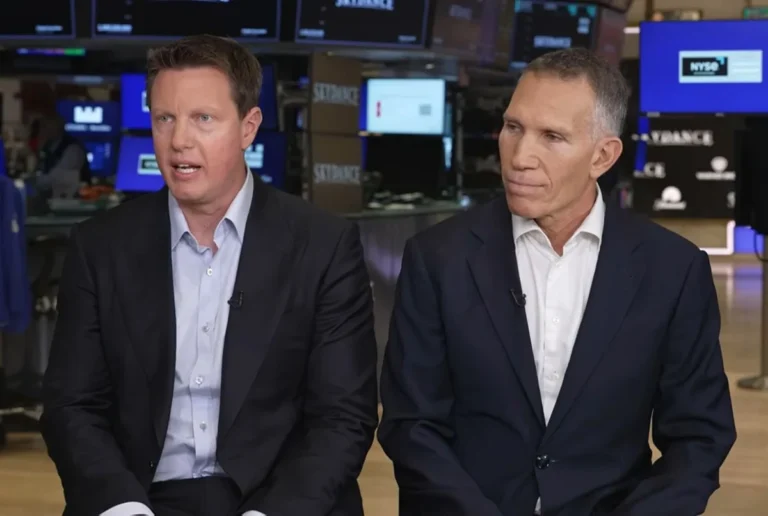
Netflix’s decision to walk away was met with immediate approval from the investment community. In extended trading on Thursday, Netflix shares spiked 10%, as investors expressed relief that the streaming giant would not overextend its balance sheet or take on the burden of declining linear television assets. Netflix co-CEOs Ted Sarandos and Greg Peters emphasized that while the Warner Bros. assets were attractive, they were not essential at any cost.
"The transaction we negotiated would have created shareholder value with a clear path to regulatory approval," Sarandos and Peters said in a joint statement. "However, we’ve always been disciplined, and at the price required to match Paramount Skydance’s latest offer, the deal is no longer financially attractive."
The "nice to have, not must have" philosophy reflects Netflix’s current position of strength. With over 260 million global subscribers and a pivot toward ad-supported tiers and live events, Netflix is less dependent on legacy studio acquisitions than its competitors. Analysts suggest that by avoiding the acquisition of WBD’s linear networks—assets Netflix has historically shunned—the company remains a "pure-play" streaming leader, unencumbered by the cord-cutting trends affecting traditional cable television.
Conversely, Paramount stock gained 5% on the news of the win, while Warner Bros. Discovery shares fell 2%. The slight dip in WBD stock is attributed to the inherent uncertainty of a long regulatory review process and the complexities of integrating two of the "Big Five" Hollywood studios.
A Chronology of the Warner Bros. Discovery Sale
The path to this merger has been characterized by volatility and strategic pivots. To understand the magnitude of the Paramount-WBD tie-up, one must look at the timeline of events that led to Thursday’s announcement:
- April 2022: WarnerMedia completes its merger with Discovery, Inc., forming Warner Bros. Discovery under CEO David Zaslav. The new entity begins a period of aggressive cost-cutting to manage over $40 billion in debt.
- Late 2025: Paramount Skydance, led by David Ellison and backed by RedBird Capital, launches a hostile bid for WBD after initial friendly overtures were rebuffed.
- January 2026: Netflix enters the fray, focusing specifically on WBD’s "crown jewels"—the Warner Bros. film and TV studios and the Max streaming platform—while excluding the debt-heavy linear networks.
- February 17, 2026: Netflix grants WBD a seven-day waiver to review a potential "superior offer" from Paramount, seeking to provide clarity for WBD shareholders.
- February 24, 2026: Paramount raises its all-cash bid to $31 per share for the entire company.
- February 26, 2026: Netflix officially declines to match the bid; WBD board prepares to adopt the Paramount merger agreement.
Regulatory Hurdles and the $7 Billion Breakup Fee
The most significant obstacle remaining for the Paramount-WBD merger is the scrutiny of antitrust regulators. The combination of two major film studios and a massive collection of cable networks will undoubtedly trigger a rigorous review by the Department of Justice (DOJ) and the Federal Trade Commission (FTC).

The $7 billion breakup fee included in Paramount’s bid is one of the largest in the history of the media industry. It serves as a "confidence payment" to WBD shareholders, signaling that Paramount is certain of its ability to navigate the regulatory environment. Industry experts suggest that the companies may be required to divest certain assets—potentially some of the smaller cable networks or regional sports networks—to satisfy concerns regarding market concentration.
The political climate also adds a layer of complexity. Ted Sarandos was reportedly at the White House on Thursday for meetings, highlighting the intersection of media consolidation and public policy. While the specifics of those discussions were not disclosed, the Biden administration has historically taken a skeptical view of massive corporate mergers that could reduce competition or impact labor markets in the creative industries.
Strategic Implications: The Birth of a New Media Powerhouse
The merger of Paramount and Warner Bros. Discovery creates a content powerhouse with an unprecedented library of intellectual property. The combined entity will own the rights to the DC Universe, the Wizarding World (Harry Potter), Game of Thrones, Star Trek, Mission: Impossible, and the vast archives of both the Warner Bros. and Paramount Pictures lots.
For David Zaslav, who will play a key role in the transition, the deal represents a fulfillment of his vision to scale WBD into a company capable of competing with the likes of Disney and Netflix. "Once our Board votes to adopt the Paramount merger agreement, it will create tremendous value for our shareholders," Zaslav stated. "We are excited about the potential of a combined Paramount Skydance and Warner Bros. Discovery and can’t wait to get started working together telling the stories that move the world."
The inclusion of CNN, CBS (via Paramount), and various sports broadcasting rights (March Madness, NFL on CBS, NBA on TNT) makes the new company the dominant player in live news and sports. This scale is seen as a defensive necessity in an era where tech giants like Apple and Amazon are increasingly outbidding traditional media companies for premium sports rights.
Impact on the Entertainment Workforce
While shareholders and executives focus on valuations and stock prices, the creative community remains wary of the implications of such a merger. The consolidation of two major studios often leads to "synergies"—a corporate euphemism for layoffs and the cancellation of redundant projects.

In their departing statement, Netflix’s Sarandos and Peters touched on this sentiment, claiming their deal would have "preserved and created more production jobs in the U.S." The Paramount-WBD merger will likely face pressure from Hollywood unions, such as the WGA, DGA, and SAG-AFTRA, to ensure that the consolidation does not lead to a reduction in original content spending or a further contraction of the labor market.
Conclusion: A New Era for Hollywood
The withdrawal of Netflix marks the end of an era where the "disruptor" was expected to simply consume the "incumbents." By walking away, Netflix has signaled that its path to dominance lies in its own platform’s growth rather than the acquisition of legacy baggage. For Paramount and Warner Bros. Discovery, the path forward is one of consolidation and scale, betting that the only way to survive the streaming wars is to become too large to fail.
As the legal and financial teams begin the arduous task of filing for regulatory approval, the industry prepares for a transition period that will redefine how movies are made, how news is reported, and how audiences around the world consume entertainment. The Paramount-WBD deal is not just a corporate transaction; it is a fundamental reconfiguration of the American media landscape.