




The anime adaptation of Paru Itagaki’s multi-award-winning manga, Beastars, has solidified its position as one of the most distinctive and influential anime productions of the 21st century. Since its debut in 2019, the series, brought to life by the innovative Studio Orange, has captivated international audiences, largely due to its bold and masterful utilization of CGI animation. This artistic choice, often met with skepticism by traditional anime enthusiasts at the time, ultimately became a hallmark of the show, setting a new benchmark for digital animation in the medium. Across its three seasons, culminating in the highly anticipated "Beastars Final Season" slated for release in 2026, the anime has garnered consistent critical acclaim, including the prestigious Anime of the Year award at the Tokyo Anime Award Festival and numerous high placements on international critics’ lists. Its unique synthesis of coming-of-age drama, noir elements, complex social allegory, and poignant romance has firmly cemented its legacy as a pivotal anime production of the past decade.
Genesis and Early Reception
The genesis of Beastars lies in Paru Itagaki’s critically lauded manga, which first began serialization in Weekly Shonen Champion in 2016. The manga quickly distinguished itself with its mature themes, sophisticated character development, and its exploration of a complex animal society. The anime adaptation, entrusted to Studio Orange, known for its experimental approach to CGI, faced the challenge of translating Itagaki’s distinctive art style and intricate world-building into a visually compelling animated format. The initial trailer, released in early 2019, generated significant buzz, showcasing a level of detail and fluidity in its CGI that immediately set it apart from previous attempts at digital animation in anime.
Upon its international debut via Netflix, Beastars rapidly garnered a global following. The series’ distribution on a major streaming platform provided unprecedented access to a wide audience, accelerating its path to international recognition. The initial reception was overwhelmingly positive, with critics praising its mature storytelling, the sophistication of its CGI, and its willingness to tackle challenging themes. While some initial reactions focused on the novelty of the CGI, the narrative depth and character complexity soon became the primary drivers of its acclaim.
The World of Cherryton Academy and Beyond
The narrative of Beastars is set in a meticulously crafted world populated by anthropomorphic animals, where a delicate social order is maintained by a strict prohibition on meat consumption. This fragile peace exists between carnivores and herbivores, a fundamental division that permeates every aspect of their society. The story’s initial setting is Cherryton Academy, a prestigious boarding school that serves as a microcosm of this larger societal tension. Within its walls, the inherent predatory instincts of carnivores and the vulnerability of herbivores create an ever-present undercurrent of fear and mistrust.
The central protagonist is Legoshi, a towering gray wolf whose outwardly timid and introspective demeanor belies the powerful predatory instincts that he constantly battles. His quiet existence is irrevocably shattered by the brutal murder of Tem, an alpaca student and member of the drama club. This shocking event serves as a catalyst, exposing the deep-seated fractures within the seemingly harmonious academy and mirroring the societal anxieties that plague the wider world. The investigation into Tem’s death becomes a focal point, forcing Legoshi and the other students to confront the uncomfortable truths about their coexistence.
Character Arcs and Societal Metaphors
Legoshi’s personal journey is deeply intertwined with his complex and evolving relationship with Haru, a small dwarf rabbit ostracized by her peers due to her promiscuous behavior. Their bond, forged in the crucible of mutual isolation and societal judgment, is a cornerstone of the series. It is characterized by a profound affection, yet perpetually shadowed by Legoshi’s internal struggle with his predatory urges and the terrifying possibility that he might harm the one he cares for most. This internal conflict is a powerful metaphor for the human struggle to overcome ingrained instincts and societal prejudices.
Parallel to Legoshi’s arc is that of Louis, a charismatic and ambitious red deer who serves as the star of the drama club. Louis grapples with his own set of societal pressures and personal aspirations, striving to transcend the perceived limitations of his herbivore identity in a world dominated by physical strength. His journey leads him down a darker path, eventually entangling him in the dangerous underbelly of society, particularly the Black Market.
As the series progresses, the narrative expands beyond the confines of Cherryton Academy, venturing into the sprawling metropolis of Zebuth City. Here, the stakes are raised considerably as organized crime, political corruption, and escalating interspecies tensions threaten to unravel the fragile societal balance. The introduction of Melon, a hybrid antagonist whose very existence challenges the established order, in the final season, promises to ignite widespread chaos and bring the series’ core conflicts to a dramatic head.
Thematic Depth: An Allegory for Human Society
Beastars operates as a profound and multifaceted allegory for human society, leveraging its anthropomorphic premise to explore universal themes with remarkable efficacy. The stark division between carnivores and herbivores serves as a potent metaphor for real-world systems of segregation, prejudice, and the inherent biases that divide communities. The series meticulously dissects the nature of identity, the challenges of discrimination, and the ongoing struggle for coexistence in a world rife with division.
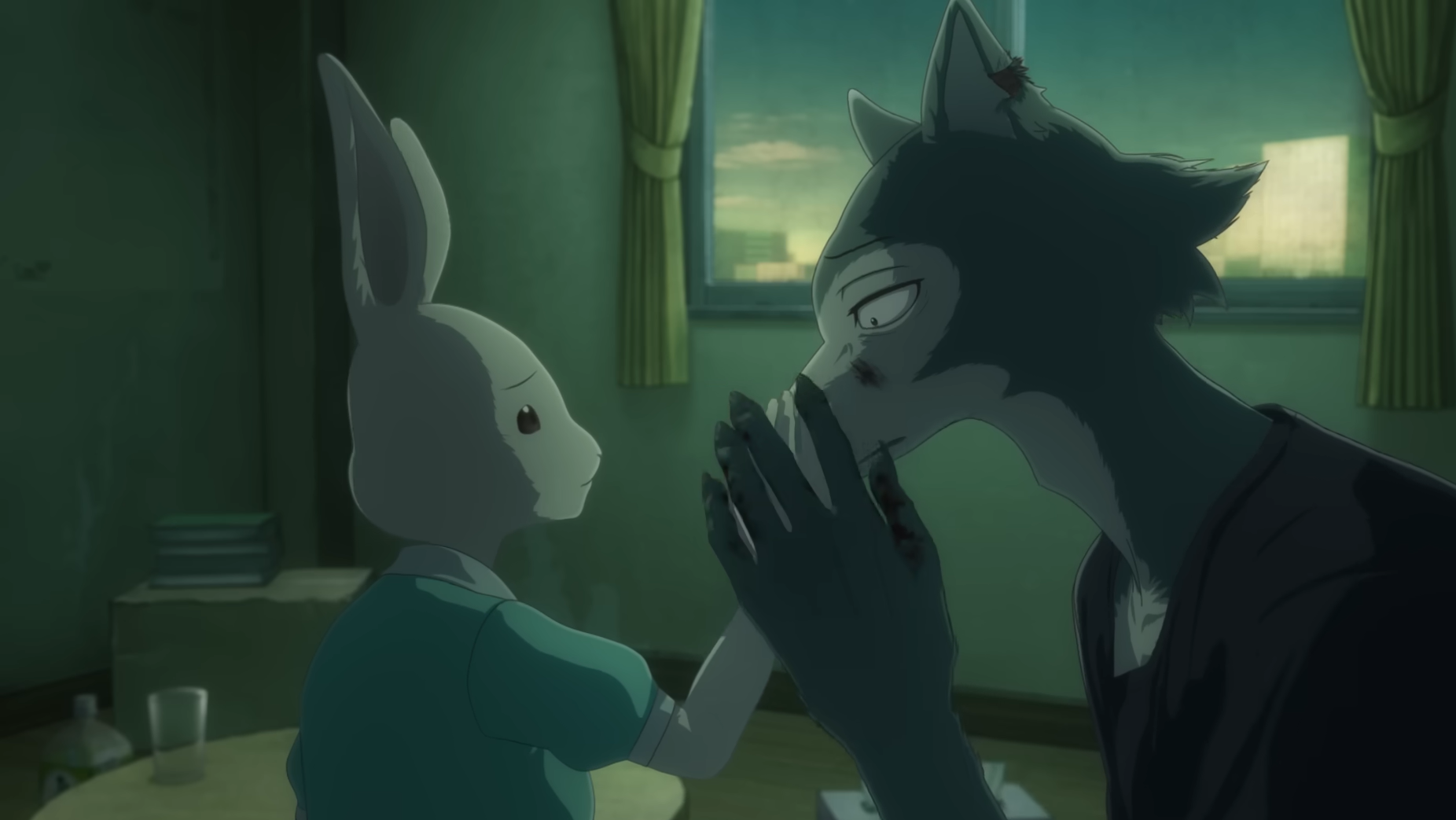
The introduction of hybrid characters in the later seasons adds further layers of complexity to these discussions, highlighting issues of belonging, marginalization, and the fluidity of identity in a society that often seeks to categorize and define individuals based on rigid binaries. At its core, Beastars continually poses the fundamental question of whether individuals can truly transcend their inherent nature. The series suggests that while personal growth and change are indeed possible, such transformations often come at a significant psychological and emotional cost, demanding immense self-awareness and resilience.
Sociopolitical Commentary and Mature Themes
Beyond its exploration of identity and prejudice, Beastars delves into a wide array of sociopolitical issues that resonate deeply with contemporary human society. The depiction of the Black Market, a clandestine realm where herbivores are tragically commodified as food, serves as a stark and unflinching commentary on exploitation, systemic inequality, and the dark consequences of unchecked consumerism. This element of the narrative forces viewers to confront the uncomfortable realities of power dynamics and the dehumanization that can occur within stratified societies.
Furthermore, the series thoughtfully examines the influence of media, public opinion, and political maneuvering in shaping societal narratives and influencing individual behavior. The complexities of these forces are particularly evident in the later stages of the story, demonstrating how public perception can be manipulated and how political agendas can exacerbate existing societal divisions.
Beastars also tackles themes of sexuality with a surprising degree of frankness, particularly in relation to adolescence and the exploration of burgeoning desires. The series handles these sensitive topics with nuance, integrating them into the characters’ internal struggles and their complex relationships, adding another layer of depth to their development. While the series occasionally employs familiar narrative tropes, such as providing tragic backstories for antagonists to elicit empathy, its overall thematic density and the sophisticated manner in which it addresses these multifaceted issues remain one of its most compelling strengths.
Technical Prowess and Artistic Innovation
From a technical standpoint, Beastars represents a landmark achievement in anime production. Studio Orange’s CGI animation is consistently lauded as among the finest in the industry, seamlessly integrating with hand-drawn elements to achieve fluid movement, expressive character interactions, and breathtaking visual fidelity. This innovative approach proves particularly effective in the series’ action sequences, where the inherent dynamism of digital animation enhances the choreography and kinetic energy of the fights. However, the studio’s skill extends beyond action; quieter, more intimate moments, such as subtle character interactions and emotionally charged exchanges, are rendered with equal care and precision, showcasing the remarkable versatility of their CGI techniques.
The character design, spearheaded by Nao Otsu and drawing inspiration from Itagaki’s unique artistic vision, is integral to the series’ success. Each character’s physical attributes not only accurately reflect their species but also serve as powerful extensions of their personalities, motivations, and narrative arcs. Subtle details, including posture, nuanced facial expressions, and even gradual changes in appearance over time, contribute to a palpable sense of realism that significantly enhances the viewer’s immersion in the world of Beastars. The deliberate use of color palettes, often favoring softer tones, complements the story’s mood and thematic undertones, while the subtle Victorian-inspired aesthetic found in certain settings adds a distinct and memorable visual identity to the series.
Musical Score and Experimental Aesthetics
The musical score of Beastars also plays a crucial role in its overall impact, expertly enhancing both moments of high tension and profound emotional resonance. The soundtrack is dynamically composed to underscore the narrative’s shifting tones, from the quiet introspection of Legoshi’s internal monologues to the visceral thrill of action sequences. Particular highlights emerge in the final season, where the audiovisual approach becomes more experimental and daring. The incorporation of techniques such as rotoscoping and surreal imagery serves to amplify the emotional weight and thematic significance of pivotal moments, pushing the boundaries of visual storytelling within the anime medium. These stylistic choices underscore the series’ unwavering commitment to innovation, both in its narrative delivery and its technical execution.
Pacing and Concluding Arcs: A Minor Caveat
While Beastars has been widely praised, a point of minor criticism has emerged concerning the pacing and resolution of its final arc. The concluding season, while successfully tying together numerous narrative threads and delivering several unforgettable sequences, has been noted by some viewers and critics for not entirely matching the audacious ambition that preceded it. The ending, while providing a sense of closure, has been described as opting for a somewhat safer or more conventional resolution than some might have expected, given the series’ consistently boundary-pushing nature. Nevertheless, this subtle divergence in the conclusion does little to diminish the series’ overall monumental achievement. The compelling narrative, rich thematic exploration, and technical brilliance ensure that the journey offered by Beastars remains profoundly impactful from its opening moments to its final scenes.
Legacy and Lasting Impact
Beastars stands as a remarkable testament to the evolving landscape of contemporary anime storytelling. It masterfully combines a highly original and thought-provoking premise with profound thematic exploration and cutting-edge animation technology. Its unparalleled ability to seamlessly merge compelling entertainment with incisive social commentary, all while maintaining a powerful emotional core, guarantees its lasting impact on the medium. Even if its ultimate conclusion might not have fully satisfied every individual expectation, the extraordinary journey it offers is more than sufficient to secure its indelible legacy as one of the most defining and important anime productions of its era. Its success has not only paved the way for greater acceptance of CGI in anime but has also demonstrated the potential for animation to tackle complex adult themes with nuance and artistic integrity.