
The Coachella Valley Music and Arts Festival of 2026 presented a landscape both profoundly familiar and strikingly transformed for long-time attendees. While the iconic desert backdrop and world-class musical acts remained central, the commercial ecosystem surrounding the event has evolved dramatically since 2014. What was once a smattering of brand partners and sponsored events has proliferated into a complex network of curated experiences, often dubbed "festivals within a festival." Amidst this heightened commercialization, a distinct trend emerged: a concerted effort by brands to foster genuine human connection, a strategy exemplified by Heineken’s innovative "The Clinker" device.
Heineken’s Innovation: Introducing ‘The Clinker’
At the forefront of this new wave of brand engagement was "The Clinker," a smart device unveiled by Heineken during Weekend One of Coachella 2026. Designed to wrap around a Heineken can, this ingenious gadget lights up upon contact with another Clinker, signaling music compatibility between two festivalgoers. By integrating with users’ Spotify or YouTube Music data, The Clinker allows individuals to instantly visualize their musical overlap, transforming a casual "cheers" into a meaningful conversation starter. Beyond initial interaction, the device facilitates the exchange of social media handles, enabling newfound connections to endure long after the desert dust settles. This technology represents a significant leap from passive branding to active facilitation of social interaction, aiming to replicate the organic serendipity of earlier Coachella iterations.
A Legacy of Partnership: Heineken’s Enduring Presence
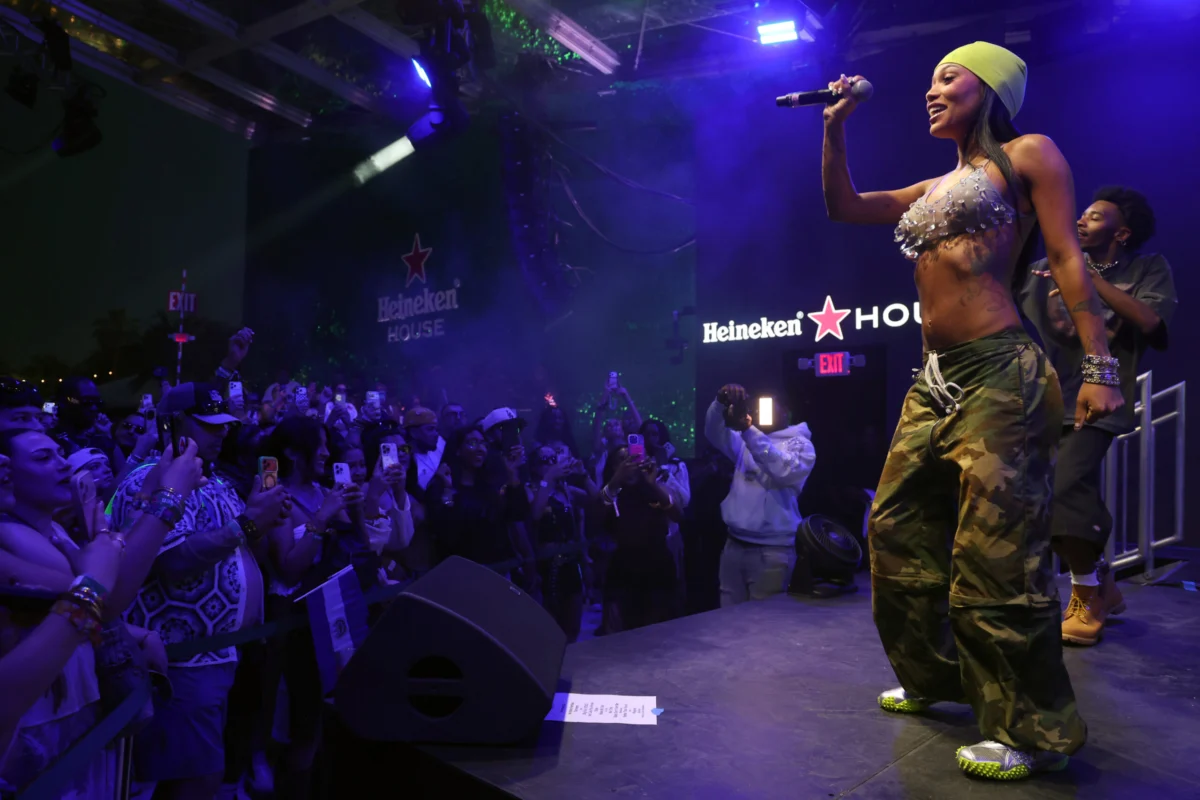
Heineken’s role at Coachella is far from new; the Dutch brewing giant holds the distinction of being the festival’s longest-standing brand partner, a relationship spanning 23 consecutive years. This enduring partnership predates many of the elaborate brand activations seen today. The brand’s dedicated music stage and beer garden, Heineken House, first debuted in 2014, quickly becoming a fixture for attendees seeking a more intimate musical experience within the vast festival grounds. For over two decades, Heineken has consistently adapted its approach, moving from simple sponsorship visibility to creating immersive environments. The introduction of The Clinker is the latest testament to this adaptive strategy, demonstrating a keen understanding of evolving consumer desires and the necessity to innovate beyond traditional advertising.
Alison Payne, Chief Marketing Officer for Heineken USA, underscored this strategic shift in an exclusive statement to The Hollywood Reporter. "Heineken developed the Heineken House to bring fans together over music with a beer in hand," Payne explained. "This year, we went a step further by creating something that actively brings people together in real time. ‘The Clinker’ turns a simple ‘cheers’ into a conversation starter, leaving festivalgoers with a new connection or memory that will live on once the dust settles from the festival." This statement highlights a deliberate move towards enhancing the attendee experience through technology-enabled social interaction, directly addressing the paradox of potential isolation within large crowds.

The Rise of Experiential Marketing at Festivals
The evolution of Coachella as a commercial platform has been meteoric. In 2014, while brands certainly had a presence, their activations were relatively modest. Fast forward 12 years to 2026, and the landscape is dominated by dozens of brand activations, many of which are exclusive, invitation-only events that operate as self-contained experiences. These "festivals within a festival," such as Revolve Fest, a fashion-centric event, or Kourtney Kardashian Barker’s wellness-focused Camp Poosh, offer attendees curated environments distinct from the main festival. This proliferation reflects a broader trend in marketing, where brands are increasingly investing in experiential strategies to build deeper, more memorable connections with consumers.
The rationale behind this surge in experiential marketing is multifaceted. Traditional advertising channels face saturation, and consumers, particularly younger demographics, are increasingly seeking authentic experiences over overt promotions. Festivals like Coachella, with their built-in audiences and cultural cachet, provide an ideal backdrop for brands to create immersive touchpoints. Data from industry reports consistently show that experiential marketing can generate higher engagement rates and foster stronger brand loyalty compared to passive advertising. In an environment as visually driven and socially shared as Coachella, these activations also provide invaluable user-generated content, extending their reach far beyond the physical event.
Insights from Industry Leaders: The Drive for Authenticity
The strategic imperative to foster community and connection at Coachella 2026 was a pervasive theme, echoing a sentiment among attendees who noted a feeling akin to the festival’s atmosphere in 2016. This "return to roots" suggests a collective recognition that while commercial partnerships are essential for the festival’s scale and production quality, they must not detract from the core communal experience. Brands that succeed are those that seamlessly integrate their presence into the festival’s spirit, adding value rather than merely imposing their identity.
Heineken House, for instance, not only introduced The Clinker but also maintained a robust lineup of artists for Weekend One, including Wale, Sean Paul, Coi Leray, Motion City Soundtrack, and Less Than Jake, with Big Boi slated for Weekend Two. As a closed-off space with a single entry point, Heineken House intentionally cultivates an intimate atmosphere, providing a counterpoint to the vastness of the main festival grounds. This deliberate design choice aligns with the broader objective of creating micro-communities where attendees can feel a sense of belonging and connection.
Other brands at Coachella 2026 similarly leaned into this strategy. Aperol, known for its spritz, opted for a sophisticated lounge-style day club, providing a relaxed social hub. Soho House replicated its signature private, elevated ambiance with The Hideout, offering members and invited guests an exclusive retreat. Absolut’s Heat Haus, located just across the grass, delivered a star-studded experience featuring throwback DJ sets and Absolut Tabasco Vodka cocktails. While accessible to all attendees over 21, these spaces were meticulously designed to feel personal and exclusive, illustrating the nuanced balance between inclusivity and curated intimacy.

Strategic Implications and Future Outlook
The strategic pivot towards fostering genuine connection through innovative technology and thoughtful experiential design carries significant implications for the future of festival marketing and brand engagement. "The Clinker" serves as a benchmark, demonstrating that technology can be leveraged not just for efficiency or entertainment, but specifically to enhance human interaction and social bonding. In an increasingly digital world where individuals can feel isolated even in crowded spaces, brands that actively facilitate real-world connections are likely to resonate more deeply with consumers.
This trend necessitates that brands move beyond merely sponsoring events or setting up branded lounges. The bar has been raised for authenticity and value addition. Future activations will likely need to integrate interactive elements, personalized experiences, and tangible opportunities for social engagement to stand out. The success of initiatives like The Clinker underscores a broader consumer desire for brands to play a role in creating memorable life experiences, rather than just selling products.
Economically, this shift could lead to increased investment in R&D for experiential technologies and more strategic collaborations between brands and festival organizers. For Goldenvoice, the company behind Coachella, these enhanced brand partnerships contribute significantly to the festival’s overall revenue and ability to attract top-tier talent. Moreover, by improving the attendee experience, these activations contribute to positive word-of-mouth and repeat attendance, solidifying Coachella’s position as a premier global cultural event.
The 2026 Coachella Festival serves as a microcosm of evolving consumer behavior and brand strategy. It highlights a critical understanding that in an era of abundant choice and digital saturation, the most valuable currency for brands is authentic connection. By designing experiences that actively bring people together, brands like Heineken are not just marketing their products; they are enriching the fabric of the festival itself, transforming temporary encounters into lasting memories. As the dust settles on another successful Coachella, the echoes of "The Clinker" lighting up, symbolizing new connections, point towards a more human-centric future for brand engagement at live events.