



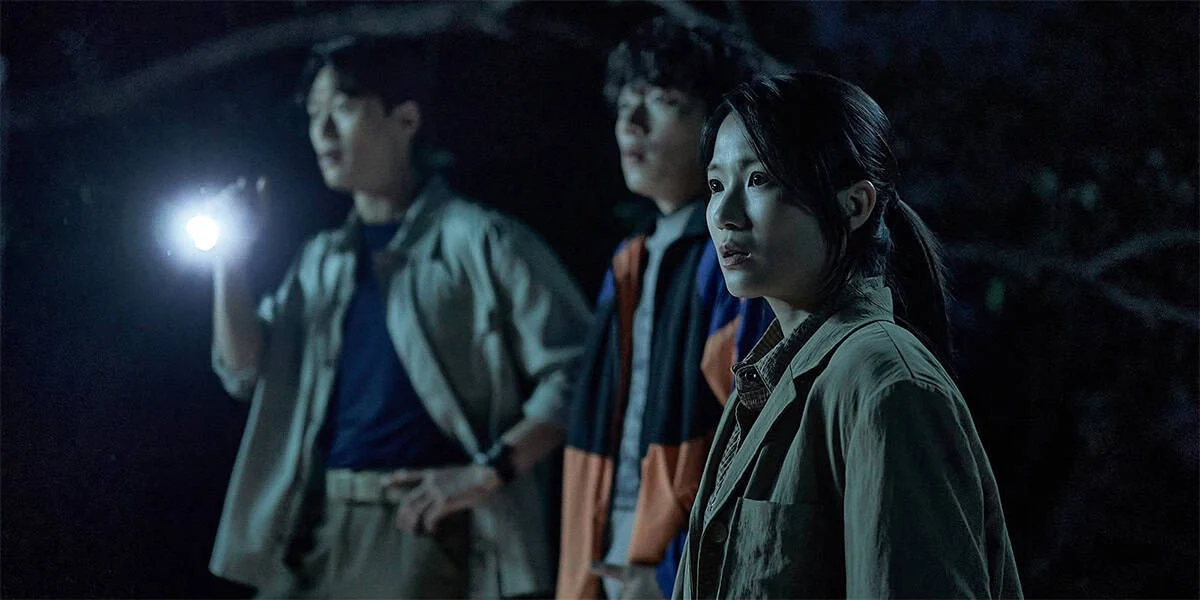
The chilling whispers of Salmokji, a notorious water reservoir nestled in Yesan County, South Korea, have long been the subject of local folklore and a breeding ground for supernatural urban legends. It is this very locale, steeped in an unsettling mystique, that director Lee Sang-min has chosen as the centerpiece for his feature film debut, "Salmokji: Whispering Water." Released in North American theaters by JBG Pictures USA, the film taps into the region’s inherent eeriness to deliver a fresh take on the supernatural horror genre.
The narrative kicks off with an anomaly that ignites immediate concern: a spectral image, resembling a ghostly visage, materializes on the street-view mapping of the Salmokji reservoir. This unsettling digital apparition triggers swift action from the local council, pressuring the company responsible for the street-view photography to rectify the situation with utmost urgency. In response, PD Han Su-in, a seasoned professional, volunteers for a critical mission to the reservoir. Her decision is compounded by the fact that her superior, Woo Gyo-sik, embarked on a similar photographic assignment to the same location days prior and has not been heard from since. Su-in assembles a team of four, tasked with capturing fresh imagery and, implicitly, uncovering the truth behind her superior’s disappearance.
Upon arriving at Salmokji, an palpable sense of dread permeates the atmosphere. The team, acutely aware of the inherent dangers and the missing senior, resolves to work with expeditious efficiency, aiming to depart the isolated location as swiftly as possible. However, fate intervenes in the form of their missing colleague, Woo Gyo-sik, whom they encounter under perplexing circumstances. This chance reunion, coupled with a series of escalating events, culminates in the team being compelled to spend the night at the reservoir. It is during this unplanned overnight stay that the waters of Salmokji begin to stir, their ancient secrets starting to surface and whisper their chilling tales.
Director Lee Sang-min, while marking his feature film directorial debut, is not a novice in the realm of horror. He previously helmed a segment for the horror anthology "App the Horror" last year, demonstrating a nascent command of the genre’s nuances. In "Salmokji: Whispering Water," Lee largely maintains a firm grip on the horror elements. He adeptly establishes the film’s unsettling world in its opening moments, skillfully calibrating the escalation of dread. His direction succeeds in unsettling both his characters and the audience, building a pervasive sense of unease before resorting to outright frights. This methodical approach is a key factor in why the film’s numerous jump scares, which are strategically deployed, feel earned and impactful rather than gratuitous. The director’s masterful use of the reservoir’s dark, reflective waters at night, a universally recognized source of primal fear, is particularly effective. The body of water itself is transformed into a character in its own right, far transcending its role as a mere setting, imbuing the narrative with a constant, menacing presence.
Background and Local Lore of Salmokji Reservoir
The Salmokji reservoir’s reputation as a locus of supernatural activity is not new. For decades, it has been a focal point for local ghost stories and urban legends, often involving tales of drowned spirits or mysterious disappearances. These narratives, passed down through generations, have cemented the reservoir’s status as a place to be avoided after dusk. The recurring theme in these legends often involves the water itself, described as having a sentient quality, capable of luring unsuspecting individuals or holding onto the souls of those who perish within its depths. This rich tapestry of local lore provided fertile ground for Lee Sang-min to explore his cinematic vision, drawing upon deeply ingrained cultural fears and superstitions. The film’s premise, triggered by a digital anomaly mirroring a spectral presence, cleverly bridges the gap between traditional folklore and modern technological anxieties.
Chronology of Events and the Investigation
The film’s plot unfolds with a distinct sense of urgency, driven by the unsettling discovery on the street-view mapping.
- Initial Anomaly: The appearance of a ghostly image on the street-view mapping of Salmokji reservoir serves as the catalyst. This digital anomaly immediately raises alarms within the mapping company and the local authorities.
- Council Intervention: The local council, likely fielding numerous complaints or driven by their own concerns about the reservoir’s reputation, exerts pressure on the mapping company for a swift resolution.
- PD Han Su-in’s Assignment: PD Han Su-in, a project director, volunteers to lead a team to Salmokji. Her motivation is twofold: to correct the photographic error and to investigate the unexplained disappearance of her superior, Woo Gyo-sik, who was last seen at the reservoir.
- Team Deployment: Su-in assembles a team of four, presumably equipped with professional photography gear and possibly some investigative tools, to travel to the remote location.
- Arrival and Initial Dread: The team arrives at Salmokji, immediately experiencing the oppressive atmosphere and palpable sense of unease that has long characterized the site.
- Encounter with Woo Gyo-sik: The team unexpectedly encounters their missing superior, Woo Gyo-sik, leading to a chain of events that forces them to stay the night.
- The Reservoir’s Awakening: As darkness falls and the team remains at the reservoir, the waters begin to exhibit supernatural phenomena, signaling the awakening of its hidden secrets.
Technical Aspects: Sound Design and Cinematography
The film’s success in building atmosphere relies heavily on its technical execution, particularly in sound design and cinematography. The soundscape of "Salmokji: Whispering Water" is meticulously crafted, playing a pivotal role in the gradual intensification of dread. The sound design team has achieved a remarkably high standard, with numerous sequences significantly elevated by their skillful use of auditory cues. In a darkened theater, these sonic elements are poised to further amplify the intended effect on the audience. A standout example of this auditory artistry is the stone-skipping scene. The gradual recession and subsequent crescendo of the sound of a skipping stone on the water create a profoundly unsettling auditory experience, effectively mirroring the escalating supernatural disturbances.
However, while the sound design effectively complements the darkness, the film is arguably hampered by its excessive use of shadow. The deliberate choice to employ deep darkness, while intended to heighten the sense of dread and immerse the audience within the characters’ terrifying night, sometimes proves counterproductive. In certain instances, the lack of visibility prevents viewers from fully appreciating the horror unfolding on screen. This is a particularly significant drawback, as the very darkness that should be enhancing the audience’s immersion inadvertently pulls them out of the moment due to insufficient visibility. This is doubly disappointing given the otherwise pleasing quality of the cinematography. The film’s visual approach also impressively incorporates high-tech equipment such as fish-eye lenses, night vision, and ghost boxes, which are expertly integrated into the narrative and skillfully captured by the camera work.
Character Dynamics and Performance
While the film prioritizes atmosphere and plot progression over extensive character development, the performances do contribute to the overall impact. The narrative’s conciseness and singular focus on the events at the reservoir do not place an overwhelming demand on the actors beyond the typical requirements of the genre – conveying fear and confusion. Despite this, Kim Hye-yoon, in the lead role of Su-in, delivers a compelling performance, making her presence felt throughout the film. Similarly, Lee Jong-won, portraying Su-in’s colleague Ki-tae, emerges as a strong presence, particularly in the latter half of the narrative, adding a significant layer to the unfolding events. The interpersonal dynamics within the group, specifically the relationships between the various team members and Su-in, offer an interesting subplot, even if the individual characters often fall into genre archetypes. This focus on the group dynamic, while not deeply explored, provides a relatable human element against the supernatural onslaught.
Box Office Success and Genre Rejuvenation
Despite the minor technical setbacks, "Salmokji: Whispering Water" has proven to be a formidable horror production. Its successful release in South Korean theaters, where it garnered significant audience attention and achieved box office success, is a testament to its effectiveness. In a current landscape where successful Korean horror films are relatively infrequent, Lee Sang-min’s debut stands out. The film adeptly checks all the essential boxes of the horror genre, delivering a convincing and impactful cinematic experience. It is arguable that "Salmokji: Whispering Water" represents a much-needed rejuvenation for the supernatural horror genre, offering a fresh perspective rooted in local mythology and amplified by modern filmmaking techniques. The film’s ability to resonate with audiences and achieve commercial success in its home country suggests a strong appetite for well-crafted horror narratives that tap into cultural specificities. This success could pave the way for further exploration of similar themes and locales within the South Korean film industry, potentially revitalizing a genre that has seen periods of stagnation. The film’s performance also indicates that audiences are receptive to horror films that balance traditional scares with atmospheric tension and a compelling, albeit focused, narrative.