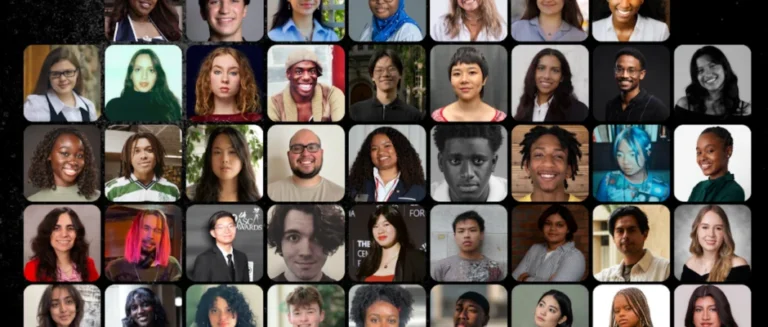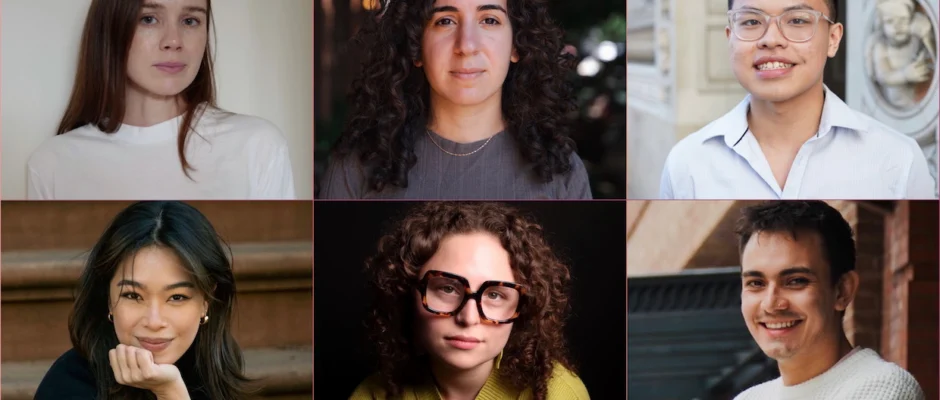
UFO, the non-profit organization dedicated to fostering independent cinema, has officially unveiled the selected participants for Cycle IV of its prestigious Short Film Lab, marking a significant expansion of its commitment to early-career directors. The 18-month program, which has rapidly become a cornerstone of the New York independent film scene, provides a comprehensive support structure designed to bridge the gap between emerging talent and the global festival circuit. For the upcoming cycle, UFO has selected three new fellows—Hana Elias, Katherine Clary, and Edward Nguyen—from a record-breaking pool of 287 applicants. These individuals will join three continuing fellows from the previous cycle, Daisy Friedman, Carin Leong, and Emilio Subía, to form a collaborative cohort that emphasizes both narrative innovation and documentary rigor.
The UFO Short Film Lab is distinguished from other development programs by its duration and the depth of its financial and technical commitment. Each participant is awarded $20,000 in direct funding, divided into two $10,000 grants intended to cover the production of two original short films over the course of the 18-month residency. This financial injection is complemented by a suite of high-end technical resources, most notably an exclusive partnership with ZEISS that grants fellows access to the company’s latest cinema lenses. Furthermore, the program’s educational component is anchored at the Brooklyn Academy of Music (BAM), where fellows participate in seminar-style workshops and receive one-on-one creative mentorship from the UFO leadership team and a rotating roster of industry professionals.
A Highly Competitive Selection Process and Growing Industry Demand
The selection of Elias, Clary, and Nguyen follows an exhaustive review process that highlights the immense demand for structured support in the short film format. With 287 applications vying for just three available slots, the acceptance rate for Cycle IV stands at just over one percent, a figure that rivals the selectivity of elite academic institutions and top-tier film residencies. This surge in applications—a record for the organization—underscores a broader trend in the film industry where short films are increasingly viewed not merely as student exercises, but as sophisticated "calling cards" that can define a filmmaker’s aesthetic and thematic voice before they transition to feature-length projects.
Industry analysts suggest that the scarcity of direct funding for short films has made programs like the UFO Short Film Lab essential. While feature films have established pipelines for private equity and tax incentives, short-form content often relies on self-funding or crowdsourcing. By providing $20,000 and high-grade equipment, UFO effectively removes the primary barriers to entry for filmmakers who might otherwise be limited by financial constraints. The program’s success is already evident in its track record; since its inception in 2023, films developed within the lab have secured placements at premiere international festivals including Sundance, SXSW, and Palm Springs ShortFest.
Profiling the Cycle IV Fellows: A Convergence of Non-Fiction and Scripted Surrealism
The incoming fellows for Cycle IV represent a diverse array of perspectives, ranging from investigative documentary to queer surrealism. Their projects reflect a shared interest in the intersection of personal memory, state power, and the evolution of visual archives.
Katherine Clary brings a background in philosophical inquiry and journalism to the lab. Based in New York but rooted in Arizona, Clary’s work often explores how loss and grief reshape our perception of historical and institutional landscapes. Her previous work has been recognized at the Camden International Film Festival and Telluride, with her debut short, A Desert is an Ocean, premiering in 2023. For the UFO Lab, Clary is developing a non-fiction project set in the Arizona desert. The film juxtaposes two disparate yet geographically overlapping sites: a potter’s field for the unclaimed dead and an elite U.S. Air Force training ground for fighter pilots. Through this study, Clary aims to examine how state power and private mourning occupy the same physical terrain.
Hana Elias is a filmmaker and journalist whose work spans the geography between Palestine and New York. Her practice is deeply rooted in the use of archives and inherited memory as tools for resilience. Elias has previously received accolades from the IF/Then x The Redford Center Nature Access Pitch and the Arab Film Festival. Her upcoming project for the lab focuses on the work of photographer Adam Rouhana. Using a vintage large-format camera, the documentary short follows Rouhana as he sets up mobile studios across Palestinian cities. The film serves as an interrogation of the photographic medium itself, exploring how the act of being photographed allows individuals to reclaim their image and project their collective imagination.
Edward Nguyen, a graduate of Yale University, represents the scripted component of the new cohort. Based between New York and Austin, Nguyen’s work frequently explores the intersections of the Vietnamese diasporic experience, queerness, and the surreal. Influenced by the "slow cinema" traditions of Southeast Asia, his films often grapple with national trauma and the complexities of contemporary identity. His first short, Mồ Hôi (Sweat), premiered at BFI Flare in 2026. His project for the UFO Lab is described as a "phantasmagoric" queer drama following a construction worker who ventures into the Vietnamese jungle, seeking anonymous pleasure but instead finding a surreal confrontation with his own psyche.

Continuing the Momentum: The Role of Overlapping Cohorts
The UFO Short Film Lab utilizes an overlapping cycle model, which ensures that institutional knowledge and creative momentum are maintained across years. Continuing their residency alongside the new fellows are Daisy Friedman, Carin Leong, and Emilio Subía. These three filmmakers were selected in the spring of 2025 and are currently in the midst of developing their second projects under the lab’s umbrella.
This structure allows for a unique peer-mentorship environment. As Friedman, Leong, and Subía move toward the completion of their 18-month tenure, they provide a roadmap for the incoming Cycle IV fellows. The collaborative atmosphere is further enhanced by the seminar sessions at BAM, which serve as a forum for the six fellows to critique each other’s work-in-progress, share technical insights, and discuss the logistical hurdles of independent production.
Strategic Partnerships: ZEISS and the Brooklyn Academy of Music
A critical component of the UFO Short Film Lab’s value proposition is its strategic alliance with industry leaders. The partnership with ZEISS is particularly noteworthy, as it provides fellows with access to high-end cinema glass that is often financially out of reach for independent short productions. By using top-tier optics, fellows are able to achieve a "big screen" aesthetic that enhances their films’ competitiveness in the festival circuit.
The residency’s physical home at the Brooklyn Academy of Music (BAM) also provides significant cultural capital. As one of the oldest performing arts centers in the United States, BAM offers a storied environment for creative development. The seminar-style workshops hosted there allow filmmakers to engage with the medium in a scholarly and rigorous fashion, moving beyond the technical aspects of directing to address the thematic and social implications of their work.
Proven Success and the Path to the Academy Awards
The efficacy of the UFO Lab’s model was recently validated on a global stage. UFO Fellow Arielle Knight’s film, The Boys and the Bees, was a standout success at the 2026 Sundance Film Festival, where it received the Short Jury Award for Non-Fiction. This prestigious win has significant implications; it officially qualifies the film for consideration for the 2027 Academy Awards.
The success of Knight’s project serves as a "proof of concept" for UFO’s mission. It demonstrates that the combination of sustained financial support, high-end technical resources, and rigorous creative mentorship can produce work that meets the highest standards of the industry. For the new fellows, the trajectory of The Boys and the Bees provides both inspiration and a tangible goal for the projects they will develop over the next year and a half.
Broader Implications for the Independent Film Ecosystem
The announcement of the Cycle IV fellows comes at a time of transition for the independent film industry. As streaming platforms recalibrate their content strategies and traditional distributors become more risk-averse, the role of non-profit labs and incubators has become more vital than ever. UFO’s commitment to the short film format is a strategic bet on the future of the industry, recognizing that the directors of tomorrow are currently honing their craft in the short-form space.
By funding two films per fellow, the lab also encourages experimentation. The 18-month timeline allows filmmakers to take risks with their first project, knowing they have the resources and support to apply those lessons to a second film. This "iterative" approach to filmmaking is rare in the high-stakes world of production, where a single failure can often derail a career.
As Cycle IV begins next month, the eyes of the independent film community will be on Hana Elias, Katherine Clary, and Edward Nguyen. Their work, along with that of the continuing fellows, will likely populate festival programs for the 2027 and 2028 seasons, continuing UFO’s mission to elevate voices that challenge the status quo and expand the boundaries of cinematic storytelling. The Lab stands as a testament to the idea that when filmmakers are given the time, tools, and community they need, the results can reach the highest echelons of artistic achievement.