Italian filmmaker Francesco Sossai has officially released the trailer for his second feature film, The Last One for the Road, signaling the arrival of a distinctive voice in contemporary European cinema to American audiences. Distributed by Music Box Films, the feature is scheduled to begin its domestic theatrical run on May 1, 2024, with primary engagements at the IFC Center and Film at Lincoln Center in New York City. Following its metropolitan debut, the film is slated for a staggered rollout across additional North American markets, bringing Sossai’s atmospheric exploration of the Venetian countryside to a broader viewership.
The Last One for the Road arrives in the United States following an extensive and prestigious international festival circuit. The film had its world premiere in the Un Certain Regard section of the Cannes Film Festival in 2023, a category specifically designed to highlight films with unique perspectives and innovative storytelling. Its reception at Cannes facilitated its subsequent selection for the Toronto International Film Festival (TIFF) and the New York Film Festival (NYFF) during the autumn of 2023. This trajectory underscores the film’s standing as a significant work within the "New Italian Cinema" movement, which seeks to reconcile the country’s rich neorealist heritage with the fragmented realities of modern globalization.
Narrative Structure and Character Dynamics
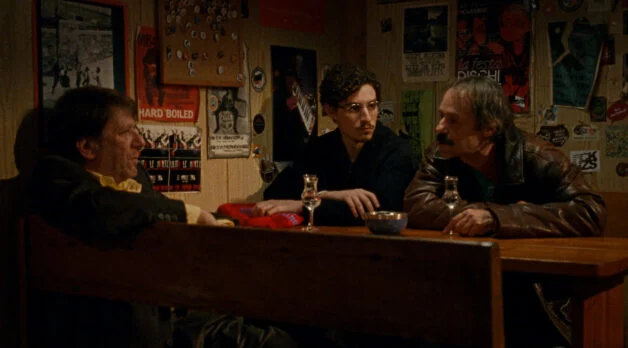
The Last One for the Road is described as a "scruffy intergenerational odyssey" that blends elements of the road movie with the tropes of a casual crime caper. The narrative centers on an unlikely trio traversing the landscape of Northern Italy. The protagonists, Carlobianchi and Doriano, are portrayed as two small-time criminals whose lives have stalled in the wake of the 2008 global financial crisis. Carlobianchi is played by veteran actor Sergio Romano, known for his nuanced performances in Italian television and film, while Doriano is played by Pierpaolo Capovilla. Capovilla, a prominent figure in the Italian alternative music scene as the frontman of the band One Dimensional Man, makes his cinematic debut in this role, bringing a raw, unpolished energy to the character.
The duo’s stagnant existence is disrupted by the return of a former associate who has spent years in exile in Argentina. This return sparks a quest for long-buried illicit riches, serving as the catalyst for a "slow-motion, alcoholic grand tour" of the Veneto region. Along their journey, they encounter Giulio, a soft-spoken and shy architecture student portrayed by Filippo Scotti. Scotti, who gained international acclaim for his breakout role in Paolo Sorrentino’s Academy Award-nominated The Hand of God, serves as the film’s moral and observational anchor. The reluctant friendship that develops between the cynical, aging criminals and the idealistic student provides the film’s emotional core, allowing for a dialogue-heavy exploration of generational shifts and the erosion of local culture.
Socio-Economic Context and the Veneto Landscape
The film is deeply rooted in the geography and socio-economic history of the Veneto region. Once a powerhouse of small-scale industrial manufacturing—a phenomenon often referred to as the "Veneto Miracle"—the region has undergone significant transformation over the last two decades. Sossai utilizes the backdrop of roadside taverns and fading industrial zones to illustrate a "vanishing industrial Italy."
The 2008 financial crisis serves as a pivotal historical marker for the characters. In the years following the crash, Italy experienced a prolonged economic contraction, with its GDP shrinking by nearly 9% between 2008 and 2013. For characters like Carlobianchi and Doriano, this period represented the end of an era where "honest scams" and informal economies provided a viable, if precarious, livelihood. Their subsequent descent into alcoholic mediocrity reflects a broader societal malaise found in the Italian "rust belt," where the promises of globalization have failed to reach the working class and petty criminal underworld.
The architectural student, Giulio, represents the "new" Italy—educated, globalized, yet somewhat adrift in a landscape that no longer reflects the grand designs he studies. The film’s focus on architecture is not incidental; it highlights the contrast between the historic beauty of the Venetian hinterland and the utilitarian, often ugly, sprawl of modern commercial development.
Production Background and Director’s Vision
Francesco Sossai, a native of the Veneto region, drew heavy inspiration from his own upbringing and personal observations of the local inhabitants. Sossai’s transition from short films to feature-length narratives has been marked by a commitment to regional specificity. His previous work often explored the intersection of childhood innocence and the harsh realities of adult life in provincial Italy.
In interviews following the Cannes premiere, Sossai noted that the film was born out of a desire to capture the "rhythm of the province"—a pace of life that is often overlooked in the high-speed narratives of urban cinema. By choosing to focus on two alcoholics and a student, Sossai creates a vacuum where time feels fluid, allowing the characters to engage in lengthy rants about the "folly of globalization" and the "decline of local color." This focus on dialogue and atmosphere over traditional plot progression has led critics to compare the film to the works of the late Claudio Caligari or the early films of Jim Jarmusch.
Cast and Performance Analysis
The casting of The Last One for the Road is a strategic blend of established dramatic talent and counter-cultural influence. Sergio Romano provides a grounded, weary performance that captures the physical toll of a life spent on the margins. His chemistry with Pierpaolo Capovilla is essential to the film’s tragicomic tone. Capovilla’s transition from the stage to the screen has been noted for its lack of artifice; his portrayal of Doriano is described as "sodden" and "scruffy," embodying the physical and mental decay of a man who has replaced ambition with beer.
Filippo Scotti’s involvement adds a layer of contemporary prestige to the production. Having worked under the direction of Paolo Sorrentino, Scotti brings a refined sensibility to the role of Giulio. His character acts as a surrogate for the audience, navigating the erratic behavior of his older companions with a mix of fascination and trepidation. The intergenerational dynamic allows the film to examine the "broken handoff" between the generation that lived through Italy’s post-war boom and the youth who are left to navigate its aftermath.
Distribution and Market Implications
The acquisition of the film by Music Box Films is a testament to the distributor’s commitment to high-quality international cinema. Music Box Films, based in Chicago, has a history of successful North American releases for foreign-language titles, including the original The Girl with the Dragon Tattoo trilogy and the Academy Award-winning Ida.
The decision to open the film at the IFC Center and Film at Lincoln Center is a calculated move to capture the New York cinephile market. These venues are traditionally the primary testing grounds for foreign features; a strong performance in these theaters often dictates the scale of the subsequent national rollout. For Music Box Films, The Last One for the Road represents a gamble on a "mood-driven" narrative in a market that is increasingly dominated by high-concept or genre-specific independent films.
Chronology of Key Events
- May 2023: The Last One for the Road premieres at the 76th Cannes Film Festival in the Un Certain Regard section.
- September 2023: The film makes its North American debut at the Toronto International Film Festival (TIFF) in the Centrepiece program.
- October 2023: New York City audiences get a first look at the film during the 61st New York Film Festival (NYFF) at Lincoln Center.
- April 2024: Music Box Films releases the official US trailer and promotional materials.
- May 1, 2024: The film begins its official US theatrical run at the IFC Center and Film at Lincoln Center.
Broader Cultural Impact
The Last One for the Road contributes to a growing body of work that critiques the "Euro-crisis" and its long-term psychological effects on the European populace. By framing these heavy themes within the context of a "casual caper" and a "free-flowing bender," Sossai manages to avoid the pitfalls of didactic social realism. Instead, the film offers a sensory experience of a specific place and time.
The film’s focus on the "last drink" and the "one for the road" serves as a metaphor for a culture that is struggling to move past its previous peaks. As the characters move from one roadside tavern to the next, the promise of "one last scam" or "one last drink" becomes a cycle of deferment, mirroring the economic stagnation of the region they inhabit.
As the film prepares for its May release, it stands as a significant entry in the 2024 independent film calendar. It challenges the viewer to find beauty in the "scruffy" and the "sodden," and to recognize the profound human connection that can exist even in the most unlikely of circumstances. For fans of Italian cinema, Sossai’s sophomore feature offers a poignant, darkly humorous, and visually striking look at a nation in transition.