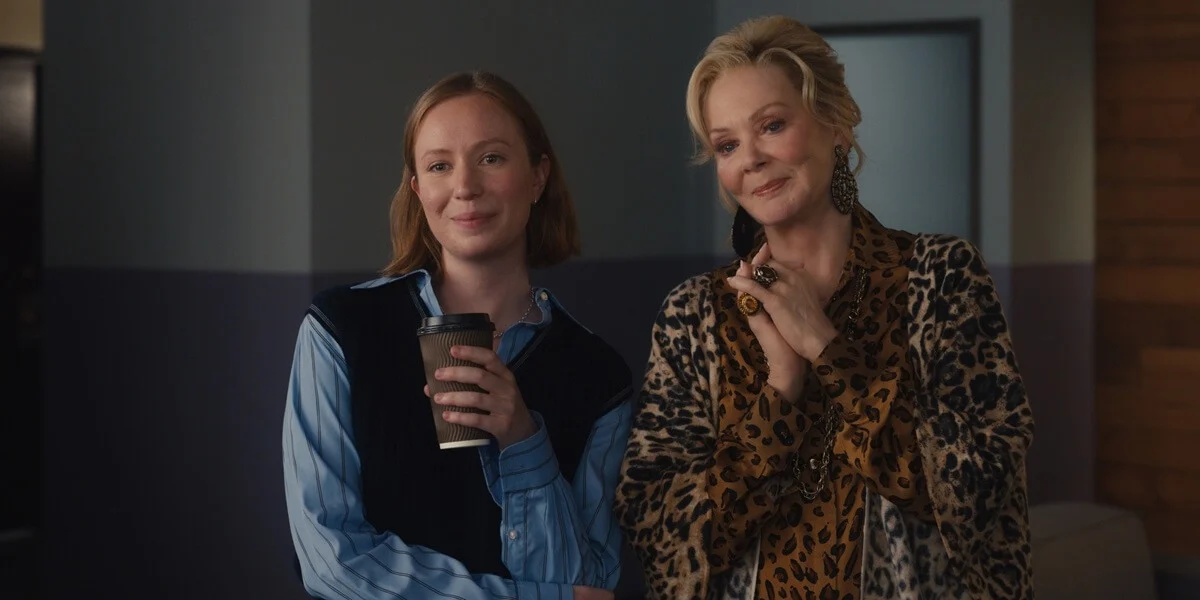
The acclaimed HBO Max series "Hacks" has returned for its fifth and final season, propelling veteran comedian Deborah Vance and her sharp-witted protégé Ava Daniels back into the spotlight of Las Vegas. Following a tumultuous period marked by a false report of Deborah’s demise and a subsequent ban from comedy-related activities, the duo is more resolute than ever to solidify Deborah’s indelible mark on the entertainment industry. The season, which premiered on [Insert Date of Premiere Here], sees Vance, portrayed by the incomparable Jean Smart, and Daniels, brought to life by the dynamic Hannah Einbinder, navigating the intricate landscape of legacy-building amidst unexpected personal and professional challenges.
The narrative trajectory of "Hacks" has consistently centered on the complex, evolving relationship between Deborah Vance and Ava Daniels. Their dynamic, characterized by sharp insults, legal battles, and moments of genuine vulnerability, has been the engine driving the show’s success. Over four seasons, viewers have witnessed their adversarial yet symbiotic partnership blossom, pushing each other to artistic and personal growth. The conclusion of the previous season, particularly the events depicted in "A Slippery Slope" and "Heaven," suggested a profound shift in their bond, signaling a move away from internal conflict towards a shared mission. This final season appears to honor that evolution, focusing less on interpersonal friction between the central pair and more on their collective pursuit of Deborah’s enduring legacy. This strategic choice, while potentially less volatile, promises a more emotionally resonant send-off for a relationship that has captivated audiences for years.
The Spark of Legacy: Deborah Vance’s Post-Banishment Crusade
The premise of "Hacks" Season 5 is firmly rooted in Deborah Vance’s determined effort to reclaim her standing and secure her comedic legacy. Twelve months after a dramatic on-air resignation from her late-night show and an ensuing 18-month prohibition from all comedy-related endeavors, Vance finds herself prematurely declared deceased by a misinformed media landscape. This false obituary, a bizarre twist of fate, serves as a powerful catalyst for her final act. Her mission is clear: to etch her name into the annals of comedy history by any means necessary. The season explores a range of ambitious goals, from achieving an EGOT (Emmy, Grammy, Oscar, Tony) to setting new ticket sales records at iconic venues, and even the construction of a colossal statue of herself, a testament to her larger-than-life persona.
Despite being seemingly boxed in by professional setbacks and public perception, Vance’s unyielding ambition knows no bounds. Her refusal to accept a future without achieving her aspirations is a central theme. The narrative skillfully navigates the question of what Deborah Vance truly desires in this final chapter of her career, a quest that culminates in a profoundly satisfying payoff within the season’s closing episodes. While this central thematic thread provides a compelling throughline, some episodes occasionally meander, feeling tangentially connected as the season grapples with this core existential question. Nonetheless, "Hacks" largely succeeds in delivering a poignant and fitting conclusion.
A Season of Contrasts: Humor, Heart, and Occasional Stumbles
While "Hacks" has consistently been lauded for its masterful blend of sharp humor and unexpected tenderness, this final season presents a more nuanced, albeit sometimes uneven, execution of that formula. The show’s ability to elicit genuine laughter while simultaneously tugging at heartstrings remains a hallmark, and in moments, the sentimentality is exceptionally well-handled. The episodes that delve deeply into the bond between Deborah and Ava are consistently rewarding, offering the emotional anchor the series is known for. However, not every comedic beat lands with the same impact as in previous seasons.
An episode focusing on Deborah’s flirtation with rock star Nico Hayes (played by Christopher Briney) is noted for its comparative lack of comedic momentum. The accompanying B-plot, dealing with sex work, is perceived by some critics as feeling somewhat out of touch and culminates in an unexpectedly bizarre fashion. This highlights a broader observation: the writing in Season 5 is more of a "hit-or-miss" affair compared to the consistently sharp writing of its predecessors. The lessons the characters are intended to learn often feel more explicitly signposted and occasionally forced, which, while not derailing the season entirely, prevents it from reaching the unparalleled heights of its second or third outings. Despite these occasional dips, the latter half of the season, particularly the final four episodes, is described as unambiguously fantastic, ensuring a strong and satisfying conclusion to the series.
The Unstoppable Force: Jean Smart and Hannah Einbinder’s Reign
The enduring success of "Hacks" can be largely attributed to the extraordinary talent of its lead actresses, Jean Smart and Hannah Einbinder. Both performers are operating at the zenith of their craft in this final season. While specific episodes from earlier seasons might have offered more prominent individual showcases for each actress, Season 5 excels in amplifying their on-screen chemistry, which has become the very soul of the show.
Jean Smart’s portrayal of Deborah Vance continues to be a masterclass in comedic timing and emotional depth. Her signature laugh alone has earned widespread critical acclaim, and her performance in this season is no exception. Vance is depicted at perhaps her most vulnerable, and Smart navigates the delicate balance between earnestness and sentimentality with remarkable skill. She embodies the resilience and ambition of a legendary comedian facing the twilight of her career with unwavering conviction.

Hannah Einbinder, renowned for her sharp, millennial-infused delivery, distinctive line readings, and brilliantly awkward physical comedy, elevates these elements even further in the final season. However, it is the profound pathos she imbues into Ava Daniels that truly cements her as the emotional core of the series. The depth of Ava’s care for Deborah is palpable, often conveyed through a single, meaningful glance. Individually, both actresses deliver phenomenal comedic performances, but together, they create an electrifying synergy that is both rare and captivating. The prospect of saying goodbye to this series is amplified by the farewell to one of the decade’s most iconic on-screen duos.
The Business of Comedy: Jimmy and Kayla’s Winding Road
Beyond the central Deborah-Ava axis, the supporting characters also receive compelling arcs that provide closure to their respective storylines. Jimmy (Paul W. Downs) and Kayla (Megan Stalter), the ambitious agents navigating the cutthroat world of talent management, confront the harsh realities of their business. Despite their unwavering dedication to their clients, their agency, Schaeffer & Lusaque, faces significant financial strain. While their comedic interactions might not reach the same frequency as in previous seasons, their narrative arc feels earned and provides a satisfying conclusion to their journey. Their dynamic continues to entertain, but this season imbues their partnership with an added layer of emotional resonance, mirroring the heightened heart found in the main duo’s relationship. This focus on character development, a consistent strength of "Hacks," remains a defining feature of its final season.
A Fitting Farewell: Analyzing the Season’s Impact
The fifth season of "Hacks," while not necessarily the most groundbreaking installment of the series, offers a deeply satisfying conclusion. The show’s creators, Lucia Anello, Paul W. Downs, and Jen Statsky, faced the considerable challenge of concluding a narrative without fracturing the central relationship that has defined the series. Their decision to focus on the evolving bond and shared future of Deborah and Ava, rather than introducing artificial conflict, allows for a more mature and poignant exploration of their journey. The uncertainty surrounding their futures, rather than immediate interpersonal drama, becomes the primary driver of the plot, creating a distinct but ultimately immensely rewarding viewing experience.
The series’ consistent excellence over its four preceding seasons sets an incredibly high bar, making it challenging for any subsequent installment to surpass. However, the writing in Season 5, while occasionally less sharp, successfully navigates the delicate task of bringing these beloved characters to a meaningful close. The roadbumps and adversities these characters have faced have, in turn, forged a stronger, more resilient bond between them, making their evolution a captivating spectacle to behold. The season ultimately provides the characters with the endings they have demonstrably earned, cementing "Hacks" as one of the decade’s most significant comedy series and a testament to the power of enduring relationships.
Looking Ahead: Emmy Prospects and Critical Acclaim
The final season of "Hacks" is poised to be a strong contender in the upcoming awards season. The series has consistently garnered critical acclaim and numerous accolades throughout its run, and Season 5 is unlikely to be an exception. The performances of Jean Smart and Hannah Einbinder are universally praised, with both actresses expected to vie for nominations in the Outstanding Actress and Outstanding Supporting Actress in a Comedy Series categories, respectively. The ensemble cast, including Paul W. Downs and Megan Stalter, also presents strong cases for nominations in the Outstanding Supporting Actor and Actress categories.
Beyond individual performances, the series’ writing and direction are also likely to be recognized. The intricate plotting, sharp dialogue, and emotional depth of the final season provide ample material for nominations in Outstanding Writing for a Comedy Series and Outstanding Directing for a Comedy Series. The show’s overall quality and its powerful conclusion make it a strong candidate for Outstanding Comedy Series. The show’s ability to blend sharp humor with profound emotional resonance has solidified its place in television history, and its final season serves as a fitting capstone to a remarkable run.
The Good: Jean Smart and Hannah Einbinder deliver powerhouse performances that are consistently watchable. The series concludes on a high note, unafraid to explore emotional depth and tug at the heartstrings of its audience.
The Bad: Certain episodes exhibit less nuanced writing and can feel somewhat heavy-handed in their thematic delivery, a slight departure from the show’s typically seamless blend of humor and sentiment.
The Final Score: 8/10