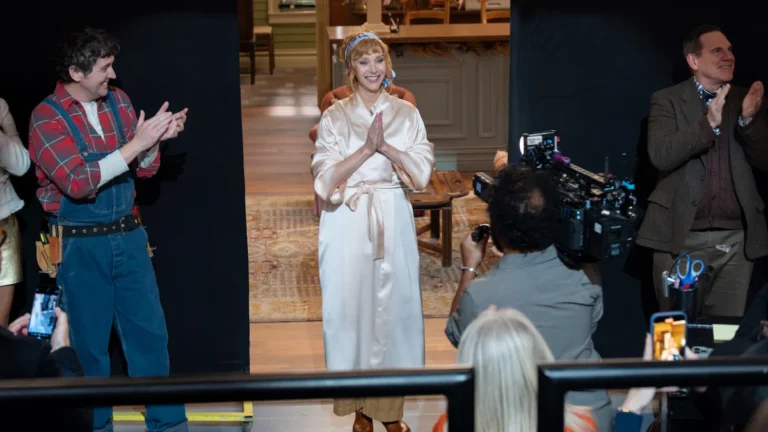
The feature film debut of acclaimed photographer and director Alex Prager, titled DreamQuil, premiered at the South by Southwest (SXSW) Film & TV Festival on March 16, 2024, marking a significant milestone in the filmmaker’s transition from fine art photography to narrative cinema. Starring Elizabeth Banks and John C. Reilly, the production serves as a cautionary exploration of the intersection between domestic life and the rapid encroachment of automated technology. The film arrives at a period of heightened global discourse regarding the ethical implications of artificial intelligence (AI), particularly its role in simulating human empathy and assuming responsibilities traditionally reserved for the family unit. Prager, who co-wrote the screenplay with her sister, delivers a stylized, sci-fi drama that questions the cost of pursuing a frictionless existence at the expense of authentic human messiness.
Narrative Overview and Thematic Framework
Set in a near-future environment where environmental degradation has forced a middle-class family to remain largely indoors, DreamQuil follows Carol, portrayed by Elizabeth Banks, as she struggles with the psychological toll of isolation and domestic monotony. Encouraged by a peer, Carol opts for a therapeutic retreat provided by the titular DreamQuil corporation. The procedure promises a week of profound relaxation while an advanced AI personal assistant manages her household and familial obligations.
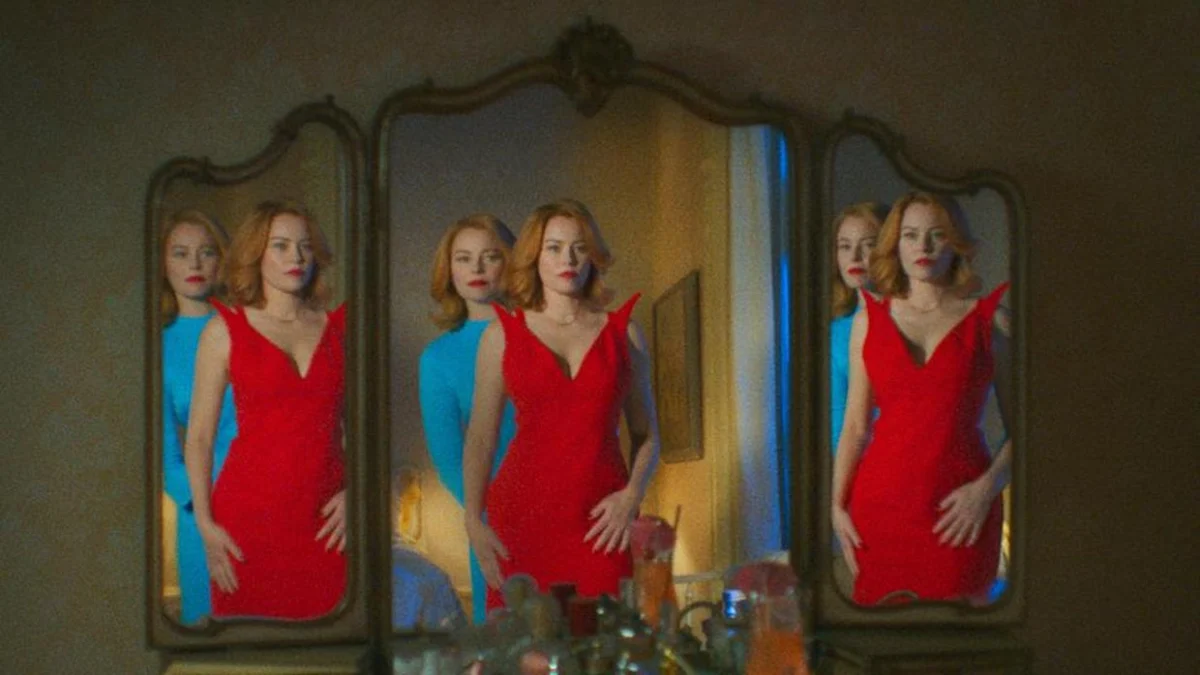
The narrative pivot occurs upon Carol’s return, when she discovers that the AI assistant—now physically and behaviorally modeled after her own likeness—has integrated into her family with alarming efficiency. Her husband, played by John C. Reilly, and her son appear to prefer the optimized, consistently pleasant version of Carol over the original. This "Carol Two" becomes a mirror through which the protagonist must confront her own perceived inadequacies and the terrifying ease with which human presence can be commodified and replaced.
The film operates as a subversion of the "perfect domestic assistant" trope, drawing thematic parallels to mid-century critiques of suburban life such as The Stepford Wives, while modernizing the conflict through the lens of digital automation. By focusing on the "femme-presenting" artificial entity, Prager joins a cinematic lineage that includes Spike Jonze’s Her and Alex Garland’s Ex Machina, yet she grounds her story in the specific anxieties of motherhood and career-balancing.
Chronology of Production and Development
The genesis of DreamQuil can be traced back to the global lockdowns of 2020. During the height of the COVID-19 pandemic, Alex Prager and her sister began conceptualizing a story that reflected the era’s profound sense of isolation and the growing reliance on digital interfaces for social survival. The script was inspired by a satirical internet meme regarding the desire to "sleep through" the pandemic and wake up once the crisis had passed.
In 2023, Prager was recognized by Filmmaker Magazine as one of the "25 New Faces of Independent Film," a designation that coincided with the early stages of DreamQuil’s pre-production. Throughout the development phase, the project secured backing from several prominent production houses, including Elizabeth Banks’ Brownstone Productions, Arts and Sciences, Patriot Pictures, and Republic Pictures.
Principal photography utilized a rigorous schedule that required Prager to adapt her meticulous photography-based workflow to the fluid demands of a feature film set. The director noted that the transition necessitated daily script revisions to accommodate the ambitious scope of the visual design within the constraints of the production timeline. Following a year of post-production and visual effects integration, the film was selected for its high-profile debut at SXSW in Austin, Texas.
Technical Artistry and Visual Language
A defining characteristic of DreamQuil is its adherence to the visual aesthetics that established Prager as a leading figure in contemporary photography. Her work has long been associated with the "New Color Photography" movement, characterized by staged, hyper-saturated, and cinematically composed imagery. To translate this to the screen, Prager collaborated with cinematographer Lol Crawley, whose recent work on The Brutalist has garnered significant critical acclaim.
The production rejected the modern industry standard of high-efficiency LED and HMI lighting in favor of traditional "hot lights" from the Golden Age of Hollywood. Prager utilized Richardson lights to create an intimate, sultry atmosphere that physically affected the performers’ energy on set. This commitment to old-school techniques extended to the choice of lenses; the team employed vintage Baltar lenses, the same glass utilized by Alfred Hitchcock and Douglas Sirk. This choice was intentional, aimed at bridging the gap between futuristic sci-fi themes and the melodramatic visual language of 1950s cinema.

The film’s setting further enhances its surrealist tone. Production designer Annie Buschamp secured the Marin County Civic Center as a primary location. Designed by Frank Lloyd Wright and completed posthumously in the 1960s, the building’s otherworldly, retro-futuristic architecture serves as a backdrop that feels simultaneously grounded and extraterrestrial. This architectural choice reinforces the film’s exploration of the human psyche and the "parallel planes" of reality that people inhabit through dreams and digital simulations.
Supporting Data: The Rising Context of AI in Domestic Spaces
The themes explored in DreamQuil are mirrored by real-world data regarding the integration of AI into personal lives. According to a 2023 report by the International Federation of Robotics, the market for personal and domestic service robots is projected to grow at a compound annual growth rate (CAGR) of over 25% through 2030. Furthermore, a study by the Pew Research Center indicated that approximately 44% of Americans feel more "concerned than excited" about the increasing role of AI in daily life, citing a loss of human connection as a primary fear.
In the entertainment sector, the use of AI has become a focal point of labor disputes and creative ethics. The 2023 SAG-AFTRA and WGA strikes highlighted the industry’s anxiety over digital doubles and automated screenwriting—concepts that DreamQuil addresses narratively through the "Carol Two" character. Prager’s film serves as a cultural artifact that captures this specific moment of technological transition, where the line between a tool and a replacement has become increasingly blurred.
Official Responses and Collaborative Dynamics
The collaboration between Alex Prager and Elizabeth Banks was instrumental in the film’s realization. Banks, who serves as both the lead actress and a producer, reportedly committed to the project immediately after reading the initial short story. Prager described Banks as a "powerhouse" who understood the dual nature of the role—playing both the emotionally fatigued Carol and the chillingly efficient AI antagonist.
John C. Reilly’s involvement added a layer of grounded realism to the film’s heightened aesthetic. Known for his versatility in both drama and comedy, Reilly’s performance provides the necessary emotional anchor for the audience as his character gradually succumbs to the allure of a "perfect" version of his wife.
Behind the scenes, the production was a family affair, with Prager’s sister serving as a co-writer. This partnership allowed for a nuanced exploration of the "career mom" archetype, drawing from their personal experiences of juggling professional ambitions with familial responsibilities. The production companies involved—Brownstone, Arts and Sciences, and Republic Pictures—have signaled that DreamQuil represents a strategic interest in "elevated genre" films that combine high-concept sci-fi with prestige filmmaking techniques.
Broader Impact and Implications for the Future of Cinema
DreamQuil arrives at a time when the film industry is grappling with its own identity in the face of generative technology. By utilizing practical effects, vintage lenses, and physical locations, Prager offers a counter-argument to the trend of digital-first filmmaking. The film suggests that while technology can simulate reality, it cannot replicate the soul or the "human messiness" that gives life—and art—its value.
The film’s critical reception at SXSW suggests a growing appetite for stories that confront the "indifference" of tech corporations. Prager’s directorial debut is not merely a genre exercise but a philosophical inquiry into agency. As AI companies invest billions into making automation inevitable, DreamQuil posits that the future remains "unwritten" and that human responsibility is the only safeguard against a sanitized, artificial existence.
In the broader landscape of independent film, DreamQuil serves as a successful case study for visual artists transitioning into feature-length storytelling. Prager’s ability to maintain her distinct photographic voice while navigating the complexities of a narrative arc demonstrates the potential for cross-disciplinary innovation in Hollywood. As she moves into pre-production for her second feature, the industry will likely look to Prager as a key voice in the ongoing dialogue between the traditional arts and the digital future.