The cinematic landscape of contemporary Italy has long been defined by a tension between its storied past and a precarious present, a theme that Italian director Francesco Sossai navigates with meticulous precision in his second feature film, The Last One for the Road. Following a successful run through the international festival circuit, including a prestigious world premiere in the Un Certain Regard section of the Cannes Film Festival, the film is set to make its American theatrical debut via Music Box Films. Scheduled to open at the IFC Center and Film at Lincoln Center in New York on May 1, the release marks a significant milestone for Sossai, whose work has been characterized by a deep, almost anthropological fascination with the Veneto region of northern Italy. The film serves as both a character study of two aging petty criminals and a melancholic eulogy for a socio-economic era that has been systematically dismantled by the forces of globalization and the lingering aftereffects of the 2008 financial crisis.
Narrative Structure and the Veneto Setting
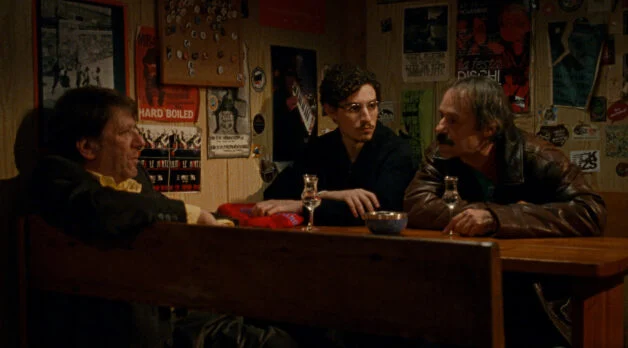
The Last One for the Road centers on an unlikely trio whose lives intersect against the backdrop of the Venetian countryside—a landscape far removed from the romanticized canals of Venice. The story follows Carlobianchi, portrayed by veteran actor Sergio Romano, and Doriano, played by Pierpaolo Capovilla in his film debut. The two are small-time crooks who have found themselves increasingly marginalized in a world that no longer has room for their brand of low-stakes chicanery. Having struggled to mount a successful scam since the global economic downturn of 2008, the pair faces the "impending mediocrity of middle age," a state of existence defined by stagnation and a heavy reliance on the local tavern culture.
The narrative engine is jump-started by the return of a former partner-in-crime who has spent years in exile in Argentina. This return brings with it the promise of "long-buried riches," offering the protagonists a final opportunity to reclaim their lost stature. However, their journey is less a high-octane heist and more a "slow-motion, alcoholic grand tour." Along the way, they encounter Giulio, a soft-spoken architecture student played by Filippo Scotti. Scotti, who gained international recognition for his lead role in Paolo Sorrentino’s The Hand of God, provides a generational foil to the two older men. As Giulio reluctantly joins their odyssey, he becomes an audience to their alcohol-fueled rants concerning the decline of local culture and the "folly of globalization."
A Chronology of International Recognition
The path of The Last One for the Road to its United States release has been paved with critical acclaim across several of the world’s most influential film festivals. The film’s journey began in May 2023 at the Cannes Film Festival, where it was selected for the Un Certain Regard section. This category is specifically designed to highlight films with unique styles and non-traditional narratives, making it a fitting home for Sossai’s sophomore effort. During the festival, Sossai engaged in extensive discussions regarding the film’s roots in his own personal experiences and his desire to capture the specific atmosphere of the Veneto region—a place he describes as being in a state of perpetual transition.
Following its Cannes premiere, the film traveled to North America in the fall of 2023. It was featured in the contemporary world cinema program at the Toronto International Film Festival (TIFF), where it resonated with audiences interested in the "new wave" of European regional filmmaking. Shortly thereafter, the film was screened at the New York Film Festival (NYFF), further solidifying its status as a significant work of contemporary Italian cinema. The May 1 release date at the IFC Center and Film at Lincoln Center represents the culmination of this year-long journey, providing the American public with its first broad access to Sossai’s vision.
Socio-Economic Context: The Legacy of the 2008 Crisis
To fully understand the motivations of Carlobianchi and Doriano, one must look at the broader economic history of northern Italy. The Veneto region was once the heart of the "Italian Economic Miracle," characterized by a dense network of small-to-medium-sized family-owned enterprises (PMIs) that specialized in manufacturing and high-quality craftsmanship. However, the 2008 financial crisis hit this region particularly hard, leading to a wave of bankruptcies and a subsequent decline in the traditional social fabric.
The film uses the protagonists’ inability to "mount an honest scam" as a metaphor for the broader economic stagnation of the region. In a world of digital finance and globalized trade, the analog, face-to-face deceptions of the past are no longer viable. Sossai’s characters are relics of an era where business—legal or otherwise—was conducted in roadside taverns and through personal connections. By centering the film on these "scruffy" individuals, Sossai highlights the human cost of economic shifts, focusing on those who have been left behind by the march of progress.
Cast and Production Background
The casting of The Last One for the Road brings together a diverse range of talents that reflect the film’s intergenerational themes. Sergio Romano, who plays Carlobianchi, is a seasoned professional known for his versatility in Italian television and cinema. His performance provides a grounded, weary dignity to a character who could easily have descended into caricature.
In contrast, Pierpaolo Capovilla’s casting as Doriano represents a bold choice by Sossai. Capovilla is best known as the frontman of the influential Italian noise-rock band One Dimensional Man and the founder of Il Teatro degli Orrori. His transition to the screen brings a raw, erratic energy to the film, mirroring the character’s volatile relationship with sobriety and the world around him.
Filippo Scotti’s involvement as Giulio adds a layer of contemporary relevance. Having worked under the direction of Paolo Sorrentino, Scotti is often viewed as the face of the new generation of Italian actors. In Sossai’s film, he serves as the observer, his quiet demeanor allowing the audience to process the chaotic world of Carlobianchi and Doriano through a more objective lens.
Directorial Vision and Aesthetic Choices
Francesco Sossai has stated in various interviews that The Last One for the Road is "loosely inspired" by his own life and his observations of the people in his home region. His directorial style eschews the glossy, high-contrast look of many modern productions in favor of a more textured, naturalistic aesthetic. The film is often described as a "free-flowing bender through time and space," a description that hints at its loose narrative structure and its willingness to linger on moments of quiet reflection or drunken camaraderie.
The film’s cinematography emphasizes the "vanishing industrial Italy" mentioned in its synopsis. Wide shots of the Venetian countryside often feature abandoned factories or modern infrastructure encroaching on traditional rural landscapes. This visual storytelling reinforces the theme of "local color" being eroded by the forces of modernization. The roadside tavern, a recurring setting in the film, serves as a sanctuary for the characters—a place where time seems to stand still, even as the world outside continues to change at an unrelenting pace.
Distribution and the State of Foreign Cinema in the U.S.
The acquisition of The Last One for the Road by Music Box Films is a testament to the distributor’s ongoing commitment to bringing high-quality international cinema to American audiences. Based in Chicago, Music Box Films has built a reputation for handling titles that require a nuanced marketing approach, such as the Academy Award-winning Ida and the critically acclaimed Drive My Car.
The decision to launch the film at the IFC Center and Film at Lincoln Center is a strategic one. These venues are cornerstones of the New York independent film scene, catering to a demographic that values auteur-driven storytelling and international perspectives. Following the New York opening, the film is expected to expand to other major metropolitan areas, including Los Angeles, Chicago, and San Francisco. This rollout strategy is common for foreign-language films that rely on critical word-of-mouth and specialized theatrical runs to find their audience.
Broader Implications and Cultural Impact
The Last One for the Road arrives at a time when Italian cinema is undergoing a period of intense self-reflection. While major productions often focus on the historical grandeur of Rome or the crime-ridden streets of Naples, Sossai joins a growing group of filmmakers who are turning their cameras toward the "provinces." This shift allows for a more granular exploration of Italian identity, moving away from national myths and toward the specificities of regional life.
The film’s exploration of "intergenerational odyssey" also touches on a global phenomenon: the disconnect between older generations who remember a more localized, tangible world and younger generations who have come of age in a digital, globalized reality. Through the character of Giulio, the film asks what the youth can learn from the "rants" and failures of their elders, suggesting that while the world of Carlobianchi and Doriano may be vanishing, its lessons regarding the importance of place and human connection remain relevant.
As The Last One for the Road begins its theatrical life in the United States, it stands as a poignant reminder of the power of regional cinema to speak to universal truths. By documenting the "slow decline of local color" in the Veneto, Francesco Sossai has created a work that resonates far beyond the borders of northern Italy, offering a "last drink" to a world that is rapidly fading into history.