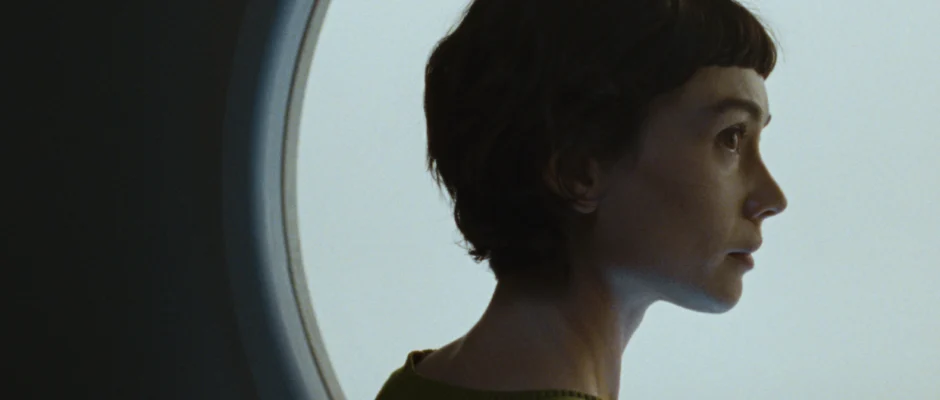
The 2024 South by Southwest (SXSW) Film & TV Festival served as the launchpad for Anima, a contemplative lo-fi science fiction feature that challenges the prevailing cultural narrative surrounding artificial intelligence and the digitization of the human experience. Directed by Brian Tetsuro Ivie, the film marks a significant departure from his established career in documentary filmmaking, presenting a narrative that is as much a spiritual inquiry as it is a road-trip odyssey. Starring Sydney Chandler and Takehiro Hira, the production has garnered attention for its rejection of high-gloss futurism in favor of a tactile, 16mm aesthetic that emphasizes the impermanence of life.
The narrative follows Beck (Chandler), a young woman starting a new job who is tasked with transporting Paul (Hira) to a specialized facility for an "end-of-life" procedure. In the world of Anima, death is no longer a definitive end; instead, individuals have the option to upload their consciousness into a cloud-based system, allowing loved ones to interact with a digital facsimile of their personality indefinitely. What begins as a routine logistical assignment evolves into an existential journey as Paul repeatedly diverts their course to seek reconciliation with those he has wronged, seeking a form of moral absolution before transitioning into a silicon-based afterlife.
Theological Foundations and the Parable of the Rich Fool
Director Brian Tetsuro Ivie has explicitly identified the Gospel of Luke’s "Parable of the Rich Fool" (Luke 12:13–21) as a primary narrative catalyst for the film. In the biblical text, a man accumulates great wealth and builds larger barns to store his harvest, only to be told by God that his life will be demanded of him that very night, rendering his material security meaningless. Ivie modernizes this concept by replacing physical barns with digital servers. The "Rich Fool" of the 21st century is not merely hoarding grain, but time and identity, attempting to circumvent the "theft" of death through technological preservation.
Ivie, who was raised in a Catholic household and has previously helmed faith-adjacent documentaries such as The Drop Box and Emanuel, sought to bridge the gap between spiritual tradition and contemporary science fiction. He posits that the current drive toward digital consciousness stems from a materialist worldview that views human beings as data sets rather than "ensouled creatures." By framing the film as a dialogue between the material and the immaterial, Ivie challenges the audience to consider whether a digitized persona can truly carry the "anima"—the soul—of a human being, or if it is merely a sophisticated shadow.
The Aesthetic of Imperfection: Shooting on 16mm Film
A defining characteristic of Anima is its visual language. Eschewing the digital clarity common in the sci-fi genre, Ivie and his cinematography team opted to shoot entirely on 16mm film. This choice was not merely an aesthetic preference but a philosophical statement. Film is a chemical process susceptible to light leaks, grain, and degradation—qualities that Ivie describes as a "chemical miracle" and a "broken reflection of life."
The use of 16mm serves as a counterpoint to the film’s central technology. While the characters within the story strive for the sterile, unchanging permanence of a digital cloud, the medium of the film itself is decaying and organic. This tactile quality grounds the futuristic premise in a "lived-in" reality, reminding the viewer of the beauty inherent in physical presence and aging. Ivie, who founded the production company Kebrado with the mission of maintaining humanity through the arts, views the slower, more deliberate process of shooting on film as a form of creative prayer, emphasizing the "human mistakes" that AI and digital processes seek to eliminate.
Performance and Character Archetypes
Sydney Chandler’s portrayal of Beck provides the emotional anchor for the film’s exploration of grief and transaction. Beck is initially presented as a character defined by "quiet rage" and a transactional view of human interaction, a byproduct of past abandonment. Her professional detachment from Paul’s impending "upload" reflects a broader societal desensitization toward the sanctity of life in a world where technology offers a bypass for mourning.
Takehiro Hira’s performance as Paul introduces a layer of vulnerability that complicates Beck’s detachment. As the two travel together, the film explores the concept of "discordant personalities finding harmony." Chandler noted in interviews that the process of filming allowed for an organic discovery of the character’s boundaries. A pivotal scene involving Paul’s final moments was marked by an unscripted emotional breakthrough from Chandler, which she attributed to the deep personal connection formed between the performers—a human element that she argues cannot be replicated by artificial intelligence.

Production Ethics and the "Crew Careline"
The production of Anima also sought to implement a more humane approach to independent filmmaking. Drawing from his background in documentaries, where the subject’s well-being is often paramount, Ivie introduced a "Crew Careline" item into the film’s budget. This fund was specifically allocated to ensure the physical and mental health of the production staff, providing for better accommodations, transportation, and nutritional needs.
This ethical framework aligns with the film’s overarching theme: that individuals should not be sacrificed on the "altar of ambition." By prioritizing the dignity of the workers behind the camera, the production mirrored the film’s message about the value of the human soul over the final product. This approach is increasingly relevant in an industry that has recently seen labor disputes—such as the 2023 SAG-AFTRA and WGA strikes—centered on the protection of human likenesses and creative output against AI exploitation.
Contextualizing the Digital Afterlife in Modern Technology
The premise of Anima is less speculative than it may have seemed a decade ago. The film arrives at a time when "grief tech" is a burgeoning industry. Companies like StoryFile and HereAfter AI already offer services that allow individuals to record their memories and personalities, creating interactive avatars that can "speak" to survivors after the subject’s death.
Industry data suggests that the market for AI-driven memorialization is growing, driven by advancements in Large Language Models (LLMs) and deepfake technology. However, Anima serves as a cautionary analysis of this trend. The film suggests that while technology can preserve information, it cannot preserve the "mystery" of the human experience. By removing the finality of death, the film argues, we risk stripping life of its color and meaning.
SXSW Reception and the Future of Human-Centric Sci-Fi
The premiere of Anima at SXSW on March 12, 2024, placed it at the center of a festival increasingly preoccupied with the implications of artificial intelligence. While other presentations at the festival focused on the efficiency and generative capabilities of AI, Anima stood as a defense of the "human mistake."
The film joins a growing canon of "intimate sci-fi"—a subgenre that uses futuristic concepts to conduct deep-dive studies into human psychology and connection. Similar to films like After Yang or Eternal Sunshine of the Spotless Mind, Anima prioritizes emotional truth over technological exposition. Sydney Chandler’s academic background in genre work—specifically art that emerges in the aftermath of crisis—informs the film’s resonance. Just as horror and surrealism flourished after the World Wars, Anima reflects the modern angst surrounding the potential obsolescence of the human soul in a digital era.
Implications for the Film Industry and AI Integration
As the film industry grapples with the integration of AI in screenwriting, acting, and post-production, Anima offers a compelling argument for the endurance of human-led art. The film’s reliance on 16mm grain, unscripted emotional reactions, and theological inquiry highlights the limitations of algorithmic creativity. AI can synthesize existing data to create a facsimile of art, but it cannot "yearn" or "ache"—qualities that Ivie identifies as essential to the human condition.
The film’s journey from the Gospel of Luke to the 16mm cameras of a modern indie set suggests that the questions we ask about technology are, at their core, the same questions we have always asked about our mortality. Anima does not provide a definitive answer to the mystery of what lies beyond the "veil," but it reinforces the idea that the mystery itself is what makes life worth living. As it moves from its festival run into broader distribution, Anima stands as a testament to the idea that art is not a data set to be uploaded, but an experience to be felt, shared, and eventually, let go.