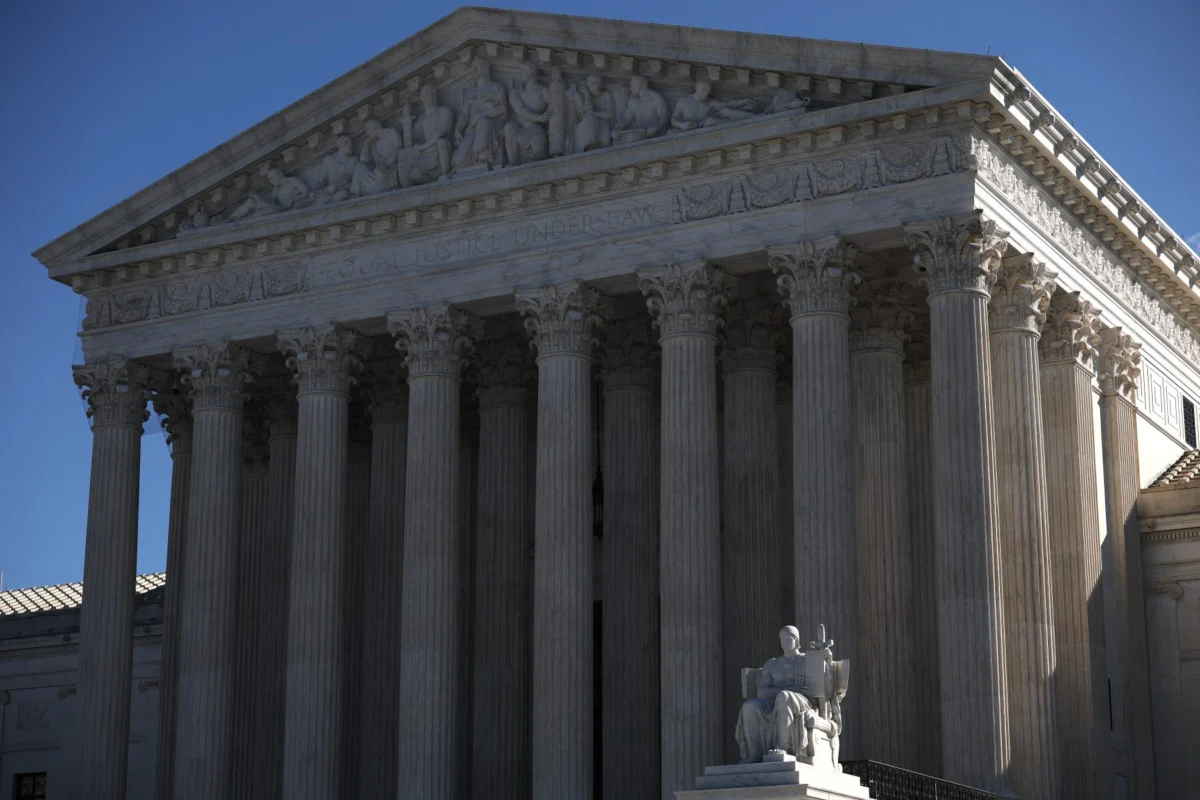
In an unprecedented legal strategy, the world’s largest music companies are poised to directly confront a landmark court decision that significantly empowers artists and songwriters by acquiring the rights to the case from the original defendant. This unconventional maneuver allows Universal Music Group, Warner Music Group, Sony Music Entertainment, and BMG to petition the U.S. Supreme Court to overturn a ruling that could fundamentally reshape global music copyright ownership.
The pivotal decision, handed down in January, introduced a novel legal interpretation: artists can leverage U.S. copyright termination rights not only to reclaim their domestic copyrights but also to assert ownership over their song’s international rights. This ruling directly challenges decades of established legal precedent and industry practices that have historically allowed music companies to retain control of overseas rights even after an artist’s U.S. copyright reverts.
The Genesis of a Landmark Ruling
The case originated with songwriter Cyril Vetter, who sought to regain control of his 1963 hit song, "Double Shot (Of My Baby’s Love)." Under the long-standing interpretation of U.S. copyright law, termination rights—often referred to as a "second bite at the apple"—allowed authors to reclaim their rights after a statutory period, typically 35 to 40 years. However, this provision was widely understood to apply solely to U.S. copyrights, leaving foreign rights under the purview of the original agreements. This meant that even if an artist successfully terminated their U.S. rights, the music publisher or label could continue to exploit the song internationally, effectively holding significant leverage in negotiations and cross-border projects.

Vetter’s legal team, spearheaded by attorney Tim Kappel, argued that Congress’s intent behind the termination statutes was to address imbalances in bargaining power between creators and industry entities. They contended that limiting the reclamation of rights solely to the U.S. market would mean authors only received "half of the apple," undermining the very purpose of copyright termination.
The U.S. Court of Appeals for the Fifth Circuit ultimately sided with Vetter, a decision that was immediately hailed by artist advocacy groups as a monumental victory. The Music Artists Coalition (MAC), founded by Irving Azoff, declared it a "seismic shift" that would "fundamentally alter the economic landscape" for musicians. For creators, the ruling promised the potential to reclaim full global control and economic benefit from their work, a prospect that had been largely unattainable for generations.
Industry Giants’ Response: An Unorthodox Acquisition
However, the ruling sent ripples of concern through the major music labels and publishers. The Recording Industry Association of America (RIAA) and the National Music Publishers’ Association (NMPA) had previously warned that such a decision would disrupt "a half-century of settled industry norms." Their primary challenge was that, as neither a major label nor a publisher was a direct party to the Vetter case, they lacked the standing to directly appeal the ruling.
Faced with this obstacle, the major music companies embarked on a unique strategy. In a court filing dated March 26, 2026, obtained and first reported by Billboard, representatives for Universal Music Group, Warner Music Group, Sony Music Entertainment, and BMG revealed that they had purchased the disputed copyright from Robert Resnik, the owner of the small music publisher who had lost the case against Vetter. This acquisition effectively placed the major entities in Resnik’s shoes, granting them the legal standing to pursue an appeal.

The filing explicitly stated the purpose of this transaction: "The publishers have made this acquisition for purposes of filing a petition for a writ of certiorari in this matter," referring to the formal request to have the Supreme Court review the case. They further argued, "The court should grant such a substitution here, thereby allowing the publishers to protect their newly acquired interest by seeking Supreme Court review."
Implications of the Legal Maneuver
This tactic of buying out a losing defendant to gain access to the appellate process is highly unusual. Typically, companies concerned about the implications of a landmark case might file amicus curiae ("friend of the court") briefs, offering their legal arguments and highlighting potential collateral damage. They might also discreetly fund legal defenses for smaller litigants to carry important cases through the appeals process. However, by directly acquiring the copyright and stepping into the shoes of the defendant, the major music companies have signaled the extreme importance they place on this ruling.
One plausible reason for this direct intervention is that Robert Resnik, having lost at the appellate level, may not have had the resources or the inclination to pursue a Supreme Court appeal. By intervening, the major labels ensure that a decision they believe could undermine their business model is vigorously challenged at the highest judicial level. The deadline for filing a petition for a writ of certiorari with the Supreme Court is April 13, 2026, though the filing indicates an intention to request an extension.
Artist Advocate’s Perspective
Tim Kappel, attorney for Cyril Vetter, acknowledged the significance of the music companies’ actions. "It’s a reflection of what we already knew about the importance of this case," Kappel stated in a comment to Billboard. "It’s not a shock that legacy music publishers are concerned. Their deals were designed to maintain perpetual control over assets like [Vetter’s song]. But their intentions are irrelevant. It’s only the intentions of Congress that matter, and on that front, we continue to believe that Cyril has the stronger arguments no matter who we’re up against."

The core of the dispute lies in the interpretation of congressional intent. While the major labels and publishers argue that the established practice of retaining foreign rights is integral to industry stability and the complex ecosystem of global music licensing, artist advocates maintain that the termination statutes were designed to rectify historical power imbalances and ensure creators receive fair compensation and control over their life’s work.
The Broader Context of Copyright Termination
Copyright termination provisions, introduced in the U.S. Copyright Act of 1976, were a response to concerns that authors, often in a weaker bargaining position at the inception of their careers, were signing away their rights in perpetuity. These provisions allow authors or their heirs to reclaim ownership of their copyrighted works after a specified period, providing an opportunity to renegotiate terms or benefit from the continued success of their creations.
Historically, the application of these termination rights has been limited to U.S. copyrights. This created a bifurcated system where an artist could regain control of their song within the United States but would still be subject to international licensing agreements managed by their former publishers or labels. This dynamic has had significant implications for artists seeking to independently manage or exploit their music globally, and it has provided publishers with a substantial bargaining chip, particularly in the lucrative international markets.
The Fifth Circuit’s ruling in the Vetter case fundamentally challenged this long-held interpretation. By asserting that the legislative intent behind copyright termination was to grant authors full control over their creations, the court suggested that the termination of U.S. rights should logically extend to all rights associated with that work, regardless of geographical boundaries.

Economic Landscape and Future Implications
The potential ramifications of this ruling, if upheld by the Supreme Court, are far-reaching. For artists and songwriters, it represents a significant opportunity to regain control over their intellectual property and potentially secure a larger share of the global revenue generated by their music. This is particularly relevant in the era of digital streaming, where catalog values and licensing revenues continue to grow, making the ownership of rights increasingly valuable.
Conversely, the music industry’s established players view the ruling as a threat to their business models and the stability of existing contractual frameworks. They argue that the current system, while perhaps imperfect, has facilitated decades of investment, promotion, and global distribution of music. The uncertainty introduced by a potential shift in ownership could disrupt ongoing licensing agreements and impact the valuation of music catalogs, which are significant assets for major corporations.
The RIAA and NMPA’s pre-decision filing highlighted this concern: "[The] decision unsettles the bedrock understanding of foreign exploitation rights against which tens of thousands of agreements respecting recorded music and music publishing copyrights have been drafted, negotiated, and executed."
The upcoming legal battle in the Supreme Court will therefore hinge on the interpretation of congressional intent and the balance between protecting creators’ rights and maintaining stability in a complex global industry. The major music companies’ bold acquisition of the case from Robert Resnik ensures that this critical debate will receive a thorough review at the nation’s highest court, with potentially profound consequences for the future of music copyright.