

Narrative Framework and Conceptual Origins
The central conceit of the film involves a supernatural discovery made during a specialized couples therapy summit. Charlie and Julie realize that their collective moods act as a catalyst for environmental changes; positive synchronization results in fortuitous events, while interpersonal conflict or individual anxiety triggers destructive external consequences. This "manifestation" mechanic serves as a literalization of the psychological concept that one’s internal state colors their perception of the world, though in Parkes’ vision, the effect is objective rather than subjective.
The inspiration for this premise originated from Parkes’ exploration of self-help culture, specifically the "manifesting" movement popularized by Rhonda Byrne’s 2006 book and film, The Secret. Parkes noted that while the movement presents the idea of thought-driven reality as empowering, the actual implications for someone struggling with clinical anxiety are inherently harrowing. The filmmaker sought to subvert the "positive vibes" trope by treating it as a high-stakes liability. What began as a comedic observation regarding the pressure to remain happy eventually evolved into a dramatic exploration of the "diverging natures" of two people trying to maintain a partnership under the weight of cosmic responsibility.
Production Chronology and Development
The development of the project spanned several years, rooted in a long-standing collaborative relationship between Parkes and lead actor Lewis Pullman. The two had previously worked together on short films, establishing a creative shorthand that allowed for experimentation during the writing phase. The production gained significant momentum with the involvement of producers Matt Smith and Dan Gedman, who were instrumental in finalizing the lead casting and securing the resources necessary for a location shoot in the Pacific Northwest.
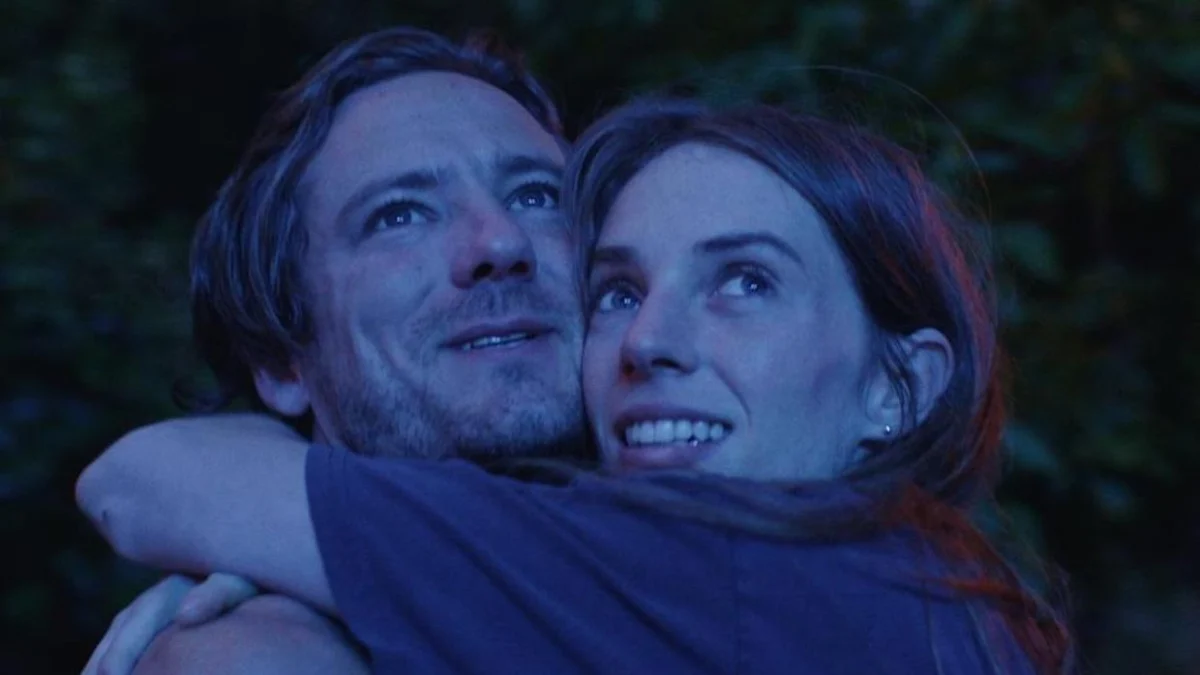
A pivotal moment in the production timeline occurred three years prior to filming, during a chance encounter between Parkes and a passenger on a flight from Los Angeles to New York. The individual was later revealed to be the manager for Maya Hawke. This serendipitous connection facilitated Hawke’s casting as Julie, a role Parkes and his producers felt she was uniquely suited for. Despite a condensed pre-production schedule that allowed for only a single day of rehearsal with both leads, the chemistry between Pullman and Hawke became the foundational element of the film’s emotional resonance.
Principal photography took place on location in Portland, Oregon. The city’s distinct atmospheric qualities—characterized by its overcast skies and lush greenery—were leveraged by Director of Photography Christopher Ripley to create a visual palette that feels both intimate and expansive. The filming process was described by Parkes as "Supermarket Sweep" directing, a fast-paced approach that prioritized capturing a high volume of footage and improvisational moments over traditional perfectionism. This method was designed to facilitate a "directing for the edit" philosophy, ensuring a wealth of raw emotional material for the post-production phase.
Technical Execution and Visual Language
A defining technical characteristic of the film is its innovative use of split-screen cinematography. Far from being a mere stylistic flourish, the split-screen serves a narrative function, reinforcing the film’s status as a "two-hander." Parkes and Ripley utilized the technique to present simultaneous perspectives, ensuring that neither Charlie nor Julie’s viewpoint dominated the narrative. This visual duality is intended to reflect the shared yet distinct experiences inherent in a long-term relationship.
The technical complexity of these sequences involved:

- Double Exposure Imagery: In early split-screen moments, the production utilized double exposures where images moved in opposing directions to signal the onset of the couple’s manifestation powers.
- Compositional Alignment: Certain shots featured split compositions of the Portland skyline where clouds were visually aligned across the frame. While some of these were enhanced through visual effects (VFX), the creative team aimed for a "found" aesthetic to maintain the film’s lo-fi sci-fi tone.
- Perspective Shifts: The film employs side-by-side point-of-view (POV) shots, allowing the audience to witness the same event through the eyes of both protagonists simultaneously.
The film’s visual rhythm also shifts to mirror the characters’ mental states. The first half of the movie utilizes longer lenses and more chaotic framing to simulate an "escalating panic attack." As the narrative progresses and the characters are forced to confront the reality of their situation, the cinematography transitions toward a more stabilized, slower pace, allowing for moments of stillness and reflection.
Supporting Data and Festival Context
The success of the film at SXSW places it within a storied tradition of independent cinema. The SXSW Film & TV Festival is a premier global event, typically receiving over 2,000 narrative feature submissions annually. Winning the Narrative Feature Prize is a high-level distinction that often serves as a precursor to commercial distribution and critical awards season recognition. Recent winners of the top prize at SXSW have gone on to achieve significant cultural impact, highlighting the festival’s role as a tastemaker in the "indie" sector.
The casting of Maya Hawke and Lewis Pullman further elevates the project’s profile. Hawke, known for her breakout role in Stranger Things and appearances in films like Asteroid City, brings a significant following and critical pedigree. Pullman, following his high-profile turn in Top Gun: Maverick and the series Lessons in Chemistry, represents a rising tier of talent capable of anchoring complex genre-bending narratives. Their involvement reflects a growing trend of established young actors seeking out unconventional, auteur-driven projects in the independent space.
Implications for Modern Romance and Genre Cinema
The film arrives at a time when "lo-fi sci-fi"—genre films that prioritize human emotion and practical effects over high-budget spectacles—is seeing a resurgence. By using a supernatural conceit to discuss the "inherent nature" of individuals within a relationship, the movie addresses contemporary anxieties regarding agency and emotional labor.
Parkes’ thematic conclusion suggests a pragmatic approach to love. Rather than offering a traditional Hollywood resolution where the characters "fix" their problems to save the world, the film posits that some temperaments and moods are immutable. The narrative arc emphasizes the necessity of "adjusting the sails to the winds" rather than attempting to change the wind itself. This realistic, albeit melancholic, outlook on compatibility and mental health distinguishes the film from more idealistic romantic dramas.
Industry analysts suggest that the film’s victory at SXSW will likely spark a competitive bidding war for distribution rights. Its blend of high-concept premise and "Gen Z" and "Millennial" appeal makes it a strong candidate for both theatrical release and premium streaming platforms. Furthermore, the film’s exploration of mental health and anxiety through a genre lens aligns with current audience interests in stories that tackle complex psychological themes without sacrificing entertainment value.
Official Responses and Future Outlook
Following the premiere, the creative team has expressed a sense of catharsis regarding the project’s reception. Parkes noted that while the story was informed by his personal vulnerabilities, the process of collaboration transformed those private emotions into a universal narrative. The chemistry between the leads and the technical contributions of the crew have been cited as the primary reasons the film’s "happy accidents" successfully translated to the screen.
As the film prepares for its wider festival circuit run, it stands as a testament to the viability of original, mid-budget storytelling. In an era dominated by established franchises, the success of a feature debut like Wishful Thinking provides a blueprint for how emerging filmmakers can utilize genre elements to explore the intricacies of the human condition. The film not only marks the arrival of Graham Parkes as a director to watch but also reinforces the enduring power of the romantic drama when revitalized with a bold, speculative edge.