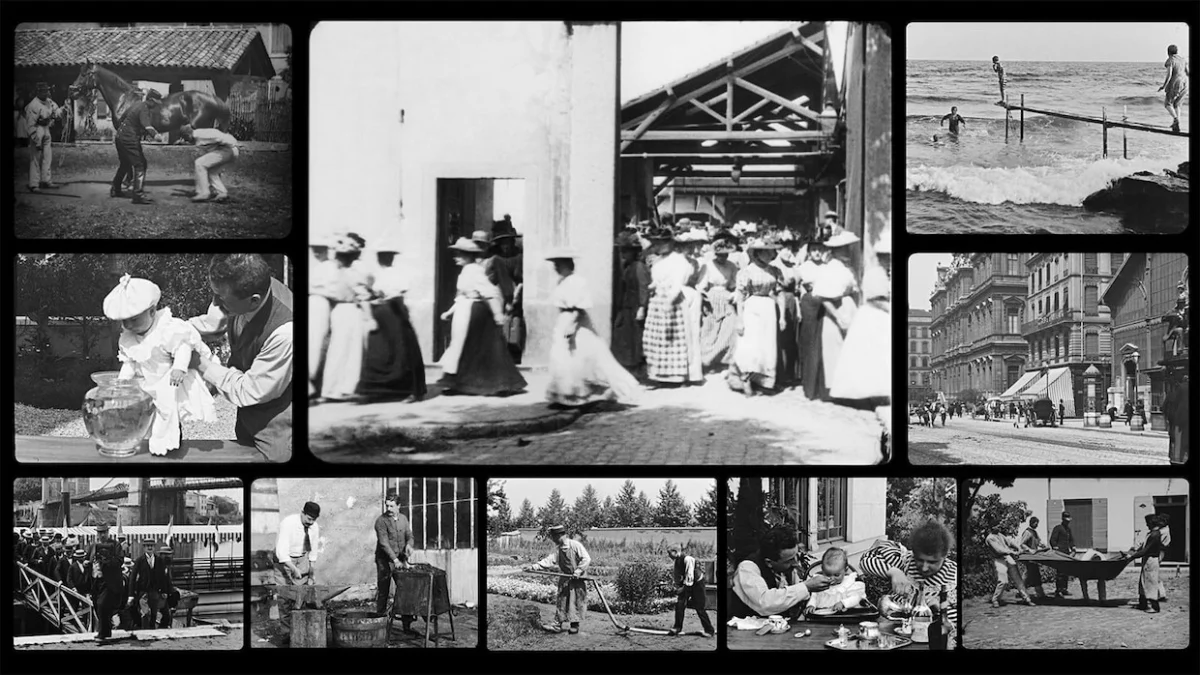
Thierry Frémaux, the 65-year-old director of the Cannes Film Festival and the Lumière Institute, occupies a unique position in the global cinematic landscape, serving as both the gatekeeper of contemporary prestige cinema and a primary steward of its historical origins. As the film world prepares for the 79th edition of the Cannes Film Festival, Frémaux has released a new documentary project titled Lumière, Le Cinema! The film, an essayistic exploration of the foundational works of Auguste and Louis Lumière, serves as a sequel to his 2016 project, Lumière! The Adventure Begins. By utilizing approximately 100 restored short films from the brothers’ vast catalog of over 2,000 works, Frémaux provides a meditative voiceover that bridges the gap between the 19th-century birth of the moving image and the complex, fragmented digital landscape of the 21st century.
The release of this documentary coincides with a pivotal moment for the film industry, as traditional theatrical exhibition faces unprecedented competition from streaming platforms and artificial intelligence. Frémaux’s work at the Lumière Institute in Lyon, where the Cinématographe was first developed, informs his perspective on these modern challenges. His dual role allows him to analyze contemporary trends through a lens of historical continuity, arguing that the fundamental "language of the shot" remains the medium’s most vital asset.
The Cinematographic Foundation: Simplicity and the First Fiction
The Lumière brothers are often categorized as documentarians due to their famous "actualities," such as Workers Leaving the Lumière Factory (1895). However, Frémaux emphasizes that their contribution to storytelling was immediate and profound. He points to L’Arroseur Arrosé (The Waterer Watered), a comedic short from 1895 involving a gardener and a mischievous child, as one of the first instances of narrative fiction. This film established that cinema could be used not just to record reality, but to construct it for the purpose of entertainment.
Frémaux draws a parallel between the Lumières’ early aesthetic and the artistic philosophy of Pablo Picasso, who famously sought to "draw like a child." The simplicity of the early Lumière shots—fixed frames with deep staging and natural movement—represents what Frémaux calls the "pure language of cinema." In a modern era characterized by rapid-fire editing and complex digital manipulation, Frémaux suggests that contemporary filmmakers often lose sight of the power inherent in a single, well-composed shot. For Frémaux, the history of cinema is not a history of evolving technology or increasing complexity, but a history of "efficient shots" that capture the essence of the world.
Historical Chronology: From the Cinématographe to the Screening Room
The timeline of cinema’s birth is marked by a fierce rivalry between French and American inventors, a conflict Frémaux believes is being re-enacted today. In the early 1890s, Thomas Edison developed the Kinetoscope, a "peep-show" device that allowed one person at a time to view moving images by inserting a coin. Conversely, the Lumière brothers focused on projection, leading to the first commercial public screening at the Salon Indien du Grand Café in Paris on December 28, 1895.
This distinction is crucial to Frémaux’s analysis of the current industry. He describes the Lumières’ true "second invention" as the screening room itself—the concept of collective viewing. While Edison viewed cinema as an individual, transactional experience, the Lumières wagered on the social desire to gather in the dark.
Chronology of Key Milestones in the Lumière Legacy:
- 1892: Thomas Edison patents the Kinetoscope.
- 1895: The Lumière brothers patent the Cinématographe, a portable camera that also serves as a projector and printer.
- December 1895: The first public, paid screening of Lumière films takes place in Paris.
- 1896-1905: The Lumières send "cinematographists" around the world, capturing the first moving images of Russia, Japan, and the Americas.
- 1982: The Lumière Institute is founded in Lyon at the site of the brothers’ former factory.
- 2016: Frémaux releases his first major documentary compilation of Lumière films.
- 2024: Release of Lumière, Le Cinema! amid global debates on the survival of the theatrical window.
The Digital Shift and the "Revenge of Edison"
The rise of platforms such as Netflix, Amazon Prime, and Disney+ has fundamentally altered consumption patterns, moving the audience away from the "Lumière model" of collective screening and back toward the "Edison model" of individual viewing. Frémaux notes that while Jean-Luc Godard famously speculated on the "death of cinema" in the 1980s, the medium has actually expanded. Cinema is now ubiquitous, found in Instagram posts, TikTok videos, and YouTube clips. However, Frémaux distinguishes between the "world of images" and the "cinema industry."

Statistical data supports the gravity of this shift. According to industry reports, while global box office revenue reached approximately $33.9 billion in 2023—a significant recovery from the pandemic lows—it still trailed behind the 2019 peak of $42.5 billion. Meanwhile, streaming subscriptions globally have surpassed 1.5 billion. Frémaux argues that the current struggle of the theatrical industry is essentially a fight to protect the Lumière legacy of the big screen against what he calls the "revenge of Thomas Edison"—the return to isolated, small-screen consumption.
Cannes and the Modern Selection Process
As the head of the Cannes Film Festival, Frémaux applies his historical perspective to the thousands of submissions he receives annually. He observes a generational shift in how filmmakers perceive the medium. Unlike the directors of the French New Wave or the "New Hollywood" era—who were deeply rooted in film history—today’s younger filmmakers often had their first cinematic experiences on television or mobile devices rather than in a theater.
Despite this, Frémaux remains optimistic. He notes that the demand for the big-screen experience at Cannes remains higher than ever, with the festival continuing to serve as the primary platform for global auteurs. He also addresses the logistical changes in the festival’s operations. In previous decades, films had to be finished months in advance for physical shipping. Today’s digital workflows allow directors to make adjustments up until a week before their premiere, a flexibility that has led to Cannes announcing its lineup later and more fluidly than other major festivals.
Official Responses and Industry Support
The preservation of the theatrical experience is a point of consensus among several high-profile industry figures cited by Frémaux. Tom Rothman, Chairman and CEO of Sony Pictures Motion Picture Group, has been a vocal advocate for the exclusive theatrical window, a sentiment echoed by 2024 Oscar-winning director Sean Baker, who used his platform to champion the importance of physical cinema spaces.
In France, the government’s "cultural exception" policy provides a robust safety net for the industry. The National Centre for Cinema and the Moving Image (CNC) imposes taxes on ticket sales and streaming revenue to fund local production and support independent theaters. Frémaux acknowledges that his optimism is partly rooted in this supportive French environment, but he insists that the survival of cinema globally will ultimately depend on the quality of the work produced by artists.
The Impact of Artificial Intelligence
As generative AI begins to impact film production, Frémaux maintains a firm stance on the necessity of human consciousness in art. While acknowledging that technology can assist in the writing and editing processes, he asserts that the "brain" of an artist—the unique spark that drove figures like Hemingway, Proust, or Scorsese—cannot be replicated by an algorithm.
The implication of Frémaux’s analysis is that cinema is entering a period of "hyper-definition." As the "world of images" becomes increasingly saturated with AI-generated content and short-form social media clips, the "cinema of the big screen" must become more specific and more artistic to justify its existence. For Frémaux, the films of the Lumière brothers serve as a reminder that the medium’s power lies in the human gaze and the intentionality of the shot.
Conclusion: The Persistence of the Image
Lumière, Le Cinema! is more than a historical retrospective; it is a defense of a specific mode of existence for the moving image. By looking back 130 years, Frémaux identifies the core elements that have allowed cinema to survive the advent of television, video, and the internet. His conclusion is that while the "Edison model" of individual consumption may dominate the business landscape, the "Lumière model" of collective, large-scale viewing remains the definitive form of the art.
As the industry moves toward the 80th anniversary of the Cannes Film Festival and beyond, the tension between these two models will likely define the next era of media. Frémaux’s work suggests that as long as there are artists capable of creating "good, beautiful, and efficient shots," the screening room—the second invention of the Lumière brothers—will remain a vital part of the human experience.