The highly anticipated release of Crimson Desert, the open-world action-adventure title from South Korean developer Pearl Abyss, has been met with a wave of controversy and technical instability that threatens to overshadow its ambitious scope. Long positioned as a flagship title for the studio behind the successful Black Desert Online, Crimson Desert is now facing intense scrutiny from its player base. These criticisms are centered on two primary fronts: the alleged integration of unrefined generative artificial intelligence (AI) in art and localization, and a series of critical technical failures that have rendered the game unplayable for a significant segment of the PC gaming community.
As players navigate the vast world of Pywel, reports have surfaced across social media platforms, including Reddit and Bluesky, detailing what many describe as "hallucinations" typical of generative AI models. These visual anomalies, ranging from anatomically impossible character models to distorted environmental textures, have led to a growing consensus among the community that the developer may have relied on AI tools to expedite the creation of background assets and dialogue scripts. When coupled with a launch-day technical crisis—including a lack of support for Intel Arc graphics cards and a massive 120GB mandatory patch—the sentiment among fans has shifted from excitement to frustration.
The Evidence of Generative AI in Visual Assets
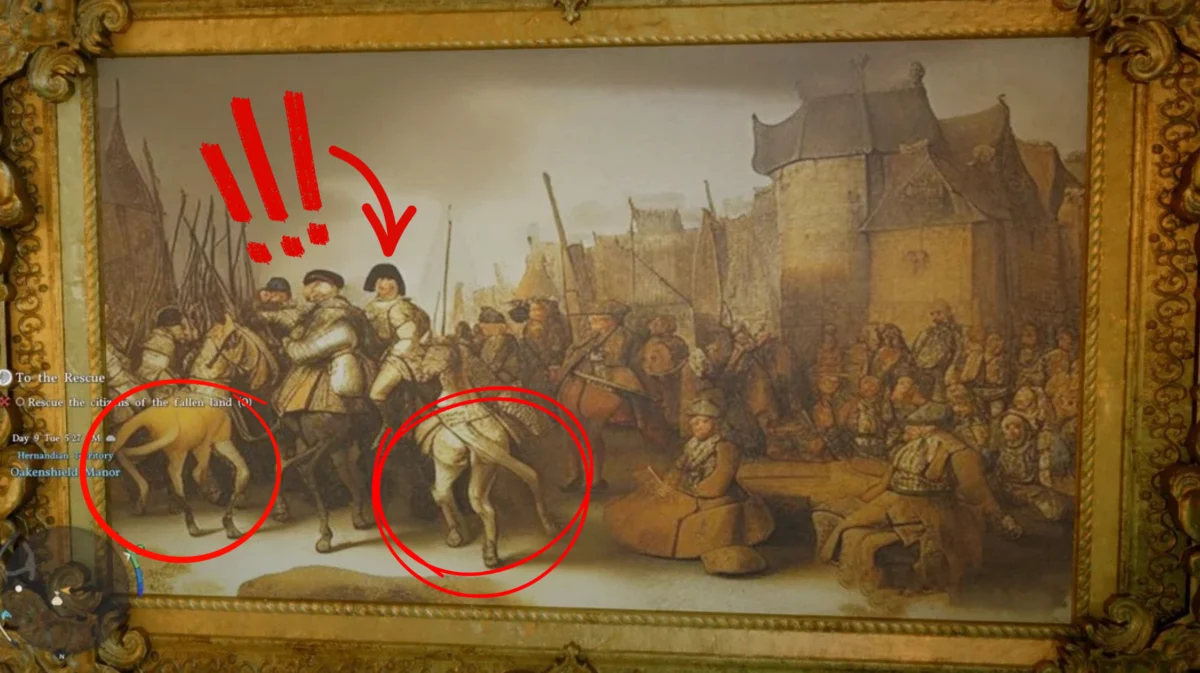
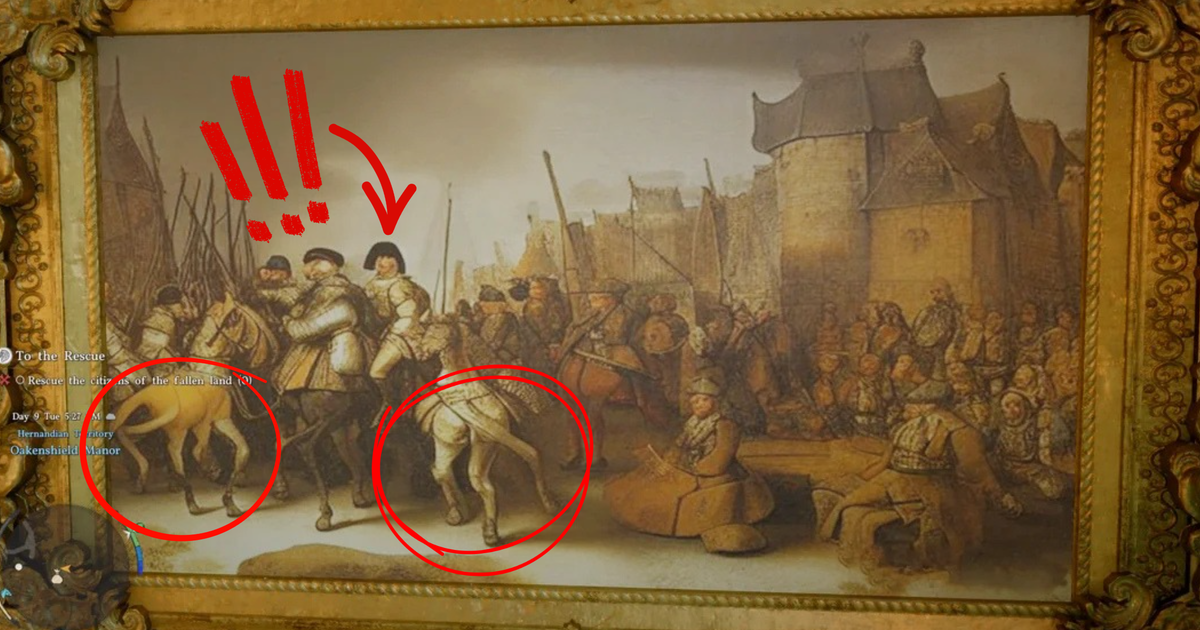
The most prominent allegations regarding the use of generative AI involve the game’s environmental art and secondary assets. Within the first 48 hours of launch, players began documenting "immersion-breaking" visual glitches that bear the hallmarks of AI-generated content. On the Crimson Desert subreddit, users have shared screenshots of in-game paintings and murals where human figures appear to "melt" into the bodies of horses, a common error in early-to-mid-generation AI diffusion models that struggle with overlapping biological subjects.
Further evidence cited by the community includes character portraits and background NPCs exhibiting "extra or missing fingers," a classic symptom of generative AI’s difficulty with human extremities. While some defenders of the game suggest these could be placeholder assets or the result of a rushed development cycle, the sheer volume of repetitive, distorted images has caused concern. Users have noted that the same AI-styled paintings are frequently recycled within the same rooms, sometimes with identical orientation, highlighting a perceived lack of manual oversight in the game’s level design. One player remarked that while low-priority assets are often reused in large-scale open worlds, the "uncanny" nature of these specific images makes the world feel "fake" and disrupts the narrative atmosphere Pearl Abyss worked for years to establish.
Linguistic Anomalies and Scripting Concerns
Beyond visual assets, the game’s localization and narrative structure have also come under fire. Native speakers, particularly within the German-speaking community, have reported that the translation feels "mechanical" and lacks the nuance of professional human localization. Critics point to phrasing that mirrors the output of Large Language Models (LLMs) like ChatGPT, characterized by a specific type of verbosity and a repetitive "comparative" sentence structure.
In various dialogue sequences, players have noted that random NPCs often deliver lines that are overly deep or verbose without clear narrative justification. This "ChatGPT-style" writing is described by users as a "lackluster" attempt to provide depth, where the AI attempts to mimic a sophisticated tone but fails to align with the context of the situation or the character’s established persona. The concern among players is that the use of AI for script-writing and translation represents a cost-cutting measure that undermines the cultural and emotional resonance of the game’s story. While Pearl Abyss has not officially confirmed the use of AI tools in their writing process, the linguistic patterns observed by the community have fueled the ongoing debate regarding the "AI-ification" of AAA game development.
Technical Barriers and the Intel Arc GPU Crisis
While the AI controversy focuses on the game’s aesthetic and narrative integrity, a more immediate problem has emerged regarding the game’s technical performance. Crimson Desert has launched with significant compatibility issues, most notably a total lack of support for Intel Arc graphics cards. This omission has left tens of millions of potential players unable to launch the game, despite meeting other hardware requirements.
Intel has taken the unusual step of issuing a public statement via Eurogamer to address the situation. The company expressed deep disappointment that Crimson Desert does not currently launch on systems utilizing Intel GPUs. Intel’s engineering teams stated they remain "deeply committed" to assisting studios in delivering optimized experiences and emphasized that they provide open tools and documentation to ensure broad compatibility. The statement further noted that Intel remains ready to assist Pearl Abyss in resolving these issues, implying that the lack of support may have been a result of the developer’s failure to utilize available resources during the QA phase.
In addition to the GPU crisis, the launch has been hampered by a 120GB day-one patch on some platforms, which has been described by players as "unprecedented" and "frustrating." Users on the Xbox app and various PC storefronts have reported that the patch frequently fails to install correctly, leading to "infinite loops" of data verification and, in some cases, requiring a full reinstallation of the game.
Chronology of Development and Launch Woes
The current state of Crimson Desert is a stark contrast to its initial reveal. To understand the depth of the current controversy, one must look at the game’s protracted development timeline:
- 2019: Crimson Desert is officially announced at G-Star as a flagship MMORPG and a spiritual successor to Black Desert Online.
- 2020: Pearl Abyss announces a major pivot in direction, transforming the project into a single-player, open-world action-adventure game with an emphasis on narrative and cinematic combat.
- 2021–2023: The game suffers multiple delays. While high-quality trailers at events like Gamescom and The Game Awards generate massive hype, the lack of a concrete release date begins to worry investors.
- Late 2025: Pearl Abyss ramps up marketing, promising a revolutionary engine (the BlackSpace Engine) capable of high-fidelity physics and lighting.
- March 2026: The game launches to a polarized reception. While the core combat mechanics receive praise, the discovery of AI-generated assets and the Intel GPU lockout spark an immediate backlash.
Analysis of Broader Industry Implications
The situation surrounding Crimson Desert is a microcosm of a larger tension currently felt throughout the video game industry. As development costs for AAA titles continue to soar, studios are increasingly looking toward generative AI to reduce overhead in asset creation, localization, and NPC dialogue. However, the reaction to Crimson Desert suggests that the gaming public is highly sensitive to the perceived "devaluation" of craft.
The "slop" vs. "tool" debate is at the heart of this controversy. While AI can be a powerful tool for procedural generation (such as terrain or foliage), its use in creating specific artistic assets like paintings or character dialogue is often seen as a shortcut that sacrifices quality. In the case of Crimson Desert, the visible "hallucinations" in the art assets have become a lightning rod for criticism, with some fans calling it "the final nail in the coffin" for a game that was already struggling with technical stability.
Furthermore, the technical failures at launch highlight the risks of modern "live-service" style deployment for single-player games. The reliance on massive day-one patches and specific hardware optimizations means that any oversight in the QA process can lead to a PR disaster. For Pearl Abyss, a company that built its reputation on the technical prowess of Black Desert Online, the inability to support a major GPU manufacturer like Intel at launch is a significant blow to its prestige.
Future Outlook and Developer Response
As of this report, Pearl Abyss has not issued a comprehensive response to the allegations regarding AI-generated art or the specific concerns regarding the German translation. The studio’s immediate priority appears to be technical stabilization, as they work to address the installation bugs and platform-specific crashes that have plagued the first week of release.
The long-term impact on the Crimson Desert brand will likely depend on how the developer handles these criticisms. If Pearl Abyss moves quickly to replace the controversial AI assets with handcrafted art and revises the localization with professional human translators, they may be able to regain the trust of their core audience. However, if these elements remain in the game, Crimson Desert may become a cautionary tale for the industry regarding the over-reliance on generative AI in high-budget productions.
For now, the world of Pywel remains a place of contradiction: a visually stunning landscape marred by "melted" horses and broken translations, and a high-tech marvel that cannot run on millions of modern PCs. The coming weeks will be a critical period for Pearl Abyss as they attempt to salvage the reputation of what was once their most promising project.