



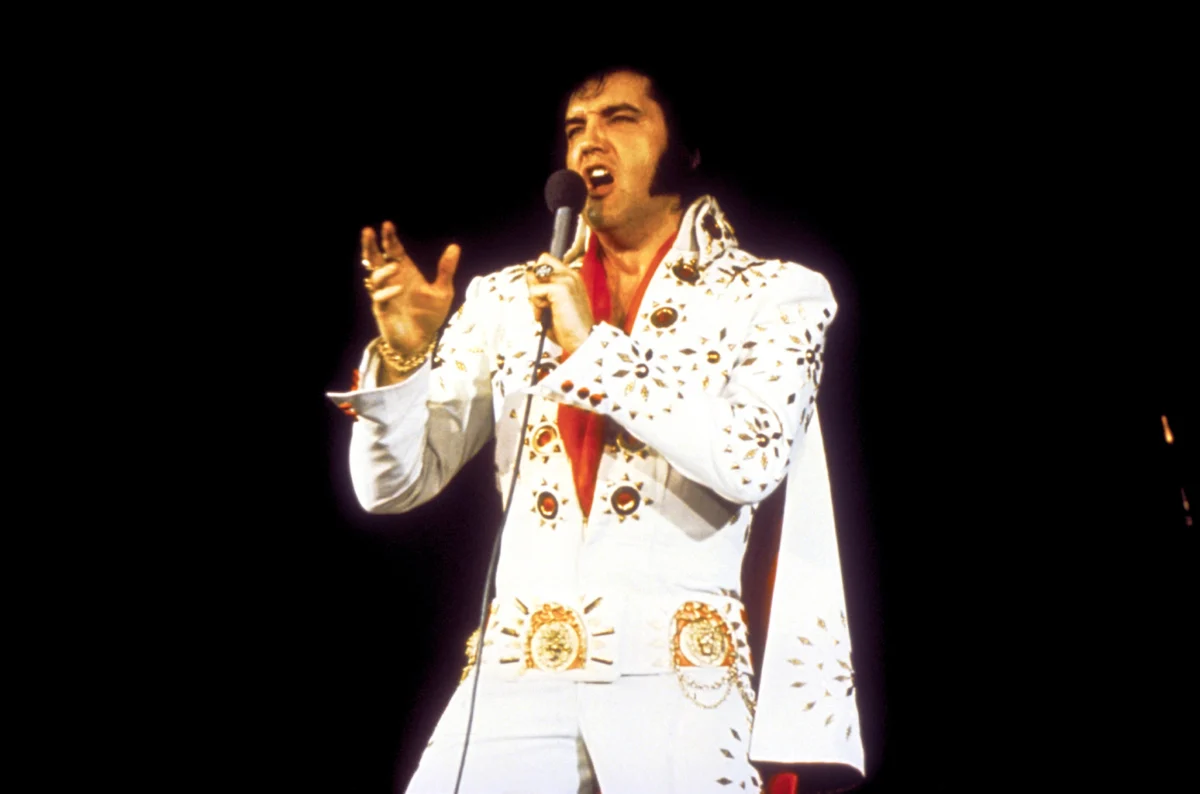
The intellectual property rights holders for Elvis Presley have dramatically escalated the music industry’s ongoing confrontation with generative artificial intelligence, launching a sweeping federal copyright lawsuit against tech behemoth Anthropic. Filed in federal court, the legal action alleges that the creators of the conversational AI model Claude systematically ingested, stored, and utilized hundreds of the rock-and-roll icon’s definitive recordings and compositions without authorization or compensation. This high-stakes legal challenge marks a significant milestone as the first major AI copyright litigation spearheaded on behalf of an individual artist’s estate, placing one of the most culturally enduring catalogs in music history at the epicenter of the debate over machine learning and intellectual property rights.
The complaint specifically targets the alleged unauthorized use of 274 copyrighted musical works associated with Presley. Among the iconic tracks cited in the legal filings are mid-century masterworks that defined the genre, including Can’t Help Falling in Love, Don’t Be Cruel, A Little Less Conversation, All Shook Up, Return to Sender, and (You’re The) Devil in Disguise. According to the plaintiff’s legal team, the defendants built a commercial artificial intelligence system predicated on mass copyright infringement on a scale previously unseen within the creative sector.
Background and Legal Representation
The lawsuit was formally initiated by an operating unit of Authentic Brands Group, the prominent global brand development and licensing firm that holds primary control over Elvis Presley’s commercial rights, including trademark portfolios, brand assets, and the posthumous rights to the artist’s name, image, and likeness. A collective of other specialized entities holding shared stakes in the Presley catalog joined the filing.
To spearhead the litigation, the estate retained prominent entertainment attorney Richard Busch. Busch brings a formidable track record in landmark music copyright disputes, having previously represented rap artist Eminem in foundational digital distribution litigation during the 2000s and successfully representing the estate of Marvin Gaye in the heavily debated infringement lawsuit targeting Robin Thicke and Pharrell Williams over the track Blurred Lines.
In the complaint, Busch outlines the central thesis of the plaintiffs’ case, asserting that the lawsuit is designed to enforce statutory exclusive rights against a corporate entity that established its commercial enterprise around the systematic harvesting of protected works. The legal filing emphasizes that the estate remains fiercely protective of Presley’s cultural legacy and the enduring value of his recorded output.
Chronology of the AI Music Litigation Landscape

The confrontation between the music industry and artificial intelligence developers has accelerated rapidly over the preceding years, transitioning from preliminary industry warnings to aggressive courtroom battles.
In mid-2024, the three major multinational record labels—Universal Music Group, Sony Music Entertainment, and Warner Music Group—filed coordinated federal lawsuits against prominent AI-driven song generators Suno and Udio. Those initial complaints alleged that the developers trained their neural networks on vast databases of copyrighted audio files scraped from the internet without licensing agreements or royalties.
As the litigation progressed, the legal front began to diversify. In late 2024 and early 2025, major music publishers and independent copyright administrators turned their attention toward large language model developers, including Anthropic, filing parallel actions over the unauthorized reproduction of lyric databases and sheet music used to train conversational models.
The entry of the Elvis Presley estate in October represents a distinct evolution in this chronology. While prior publisher and label lawsuits addressed corporate catalogs collectively, this filing centers directly on the legacy and commercial output of a single historical artist, signaling that individual heritage catalogs are prepared to litigate independently to protect their digital footprints.
Supporting Data and Fair Use Defense
At the heart of the legal controversy is the technical process known as "model training," wherein artificial intelligence systems ingest billions of parameters of text, code, imagery, and audio to develop predictive algorithms capable of generating new content. Technology companies generally maintain that this ingestion phase falls safely within the boundaries of the fair use doctrine under United States copyright law, characterizing the transformation of data into statistical patterns as non-infringing analytical processing.
Copyright holders and major entertainment conglomerates strongly reject this interpretation. They argue that training an AI model on copyrighted material without a license creates unauthorized digital copies, circumvents standard licensing markets, and ultimately floods the commercial marketplace with unlicensed derivative works that directly compete with the original creators.
With billions of dollars in potential statutory damages at stake across multiple active lawsuits, federal courts have yet to establish a definitive precedent regarding whether training generative AI on copyrighted creative works constitutes fair use. The resolution of these cases is expected to permanently shape the economic and legal framework governing the intersection of technology and intellectual property.

Industry Responses and Legal Precedents
As the broader litigation ecosystem has evolved, industry stakeholders have pursued varying strategies to address the disruption caused by generative AI. Suno, one of the primary targets of early label litigation, eventually reached a significant settlement agreement with Warner Music Group, incorporating licensing discussions into its business model while continuing to defend its technology against ongoing claims from Universal Music and Sony Music.
Anthropic, which commands a substantial share of the enterprise artificial intelligence market through its Claude platform, has faced continuous scrutiny across multiple creative industries. In addition to the emerging music sector complaints, the company has defended itself against copyright infringement lawsuits brought by bestselling authors, prominent journalists, and major literary publishers over the ingestion of copyrighted text.
Representatives for Anthropic did not immediately issue a public statement or return requests for comment following the filing of the Presley estate’s lawsuit.
Broader Implications for Heritage Catalogs and AI Policy
The inclusion of Elvis Presley’s catalog in active federal litigation carries profound implications for the management and valuation of historic musical assets. As digital technology advances, the monetization of heritage catalogs has become a core driver of the global music economy, with institutional investors and private equity firms spending billions to acquire master recordings and publishing rights.
If courts ultimately rule that training AI models on protected sound recordings and compositions constitutes copyright infringement, tech firms will be forced to negotiate formal licensing agreements with copyright holders, establishing a sustainable royalty stream for creators and heritage estates alike. Conversely, a legal victory for Anthropic and other AI developers could devalue traditional publishing assets by establishing that historic master catalogs can be freely utilized to train competitive generative systems without ongoing compensation.
For the estate of Elvis Presley, the lawsuit serves as both a defensive measure and a boundary-setting exercise. By taking direct legal action against one of the industry’s premier artificial intelligence developers, the custodians of the King of Rock and Roll have underscored that the legal protections governing human artistic expression must be rigorously enforced, regardless of how advanced the technological medium becomes.