


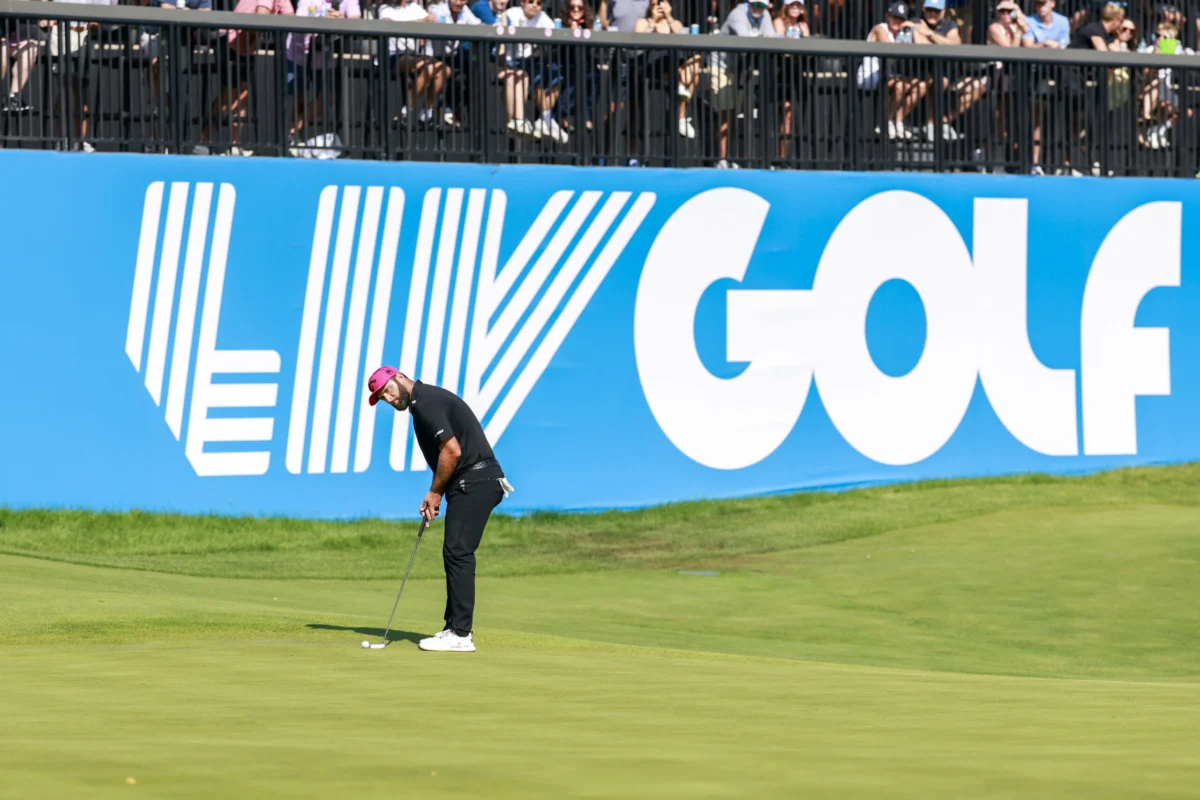
LIV Golf, the professional circuit that fundamentally disrupted the global golf landscape, officially filed for Chapter 11 bankruptcy protection in the U.S. Bankruptcy Court for the District of New Jersey on Tuesday. The move marks a seismic shift for the venture, which was launched in 2022 with the backing of Saudi Arabia’s Public Investment Fund (PIF). The filing follows months of financial uncertainty triggered by a looming "funding cliff" as the PIF signaled its intention to cease capital injections at the conclusion of the 2026 season.
The restructuring support agreement, finalized with BC Partner Advisors LP—the credit arm of the private equity giant BC Partners—serves as the primary vehicle for LIV’s financial rehabilitation. Under the terms of the proposal, which remains subject to judicial oversight and approval, the league aims to transition into a player-owned entity. This shift toward a player-first ownership model is designed to stabilize the organization’s long-term fiscal health while providing a pathway for the league to continue operations beyond the current calendar year.
A Chronology of Financial Volatility
The trajectory of LIV Golf has been defined by high-stakes gambles and rapid, aggressive expansion. Since its inception, the league sought to challenge the dominance of the PGA Tour by luring top-tier talent with unprecedented signing bonuses and lucrative tournament purses. However, the reliance on continuous, high-volume funding from the PIF created a precarious financial structure.
The timeline of the league’s struggle is marked by several critical inflection points:
- 2022: LIV Golf launches its inaugural schedule, aggressively recruiting marquee players such as Phil Mickelson, Dustin Johnson, and Brooks Koepka.
- June 2023: In a stunning reversal, the PGA Tour and the PIF announce a framework agreement to merge their commercial interests, aiming to end the protracted legal and competitive rivalry.
- 2024–2025: Despite the framework agreement, the proposed merger faces significant regulatory scrutiny and internal resistance from both the PGA Tour membership and U.S. lawmakers.
- April 2026: CNBC reports that the PIF has formally communicated its decision to end direct funding to LIV Golf at the conclusion of the 2026 season, prompting a scramble for alternative capital.
- May 2026: LIV Golf initiates a private investor roadshow, attempting to raise $350 million to bridge the gap left by the PIF’s impending withdrawal.
- June 2026: CEO Scott O’Neil addresses concerns regarding the "funding cliff," reaffirming the organization’s commitment to completing the 2026 season while publicly expressing trust in the PIF’s continued support through the transition.
- August 2026: The formal Chapter 11 filing is executed, accompanied by a $49.6 million bankruptcy financing commitment from the PIF to ensure liquidity during the restructuring period.
The Financial Mechanics of Restructuring
The transition to a player-owned model is arguably the most significant structural change in the history of professional golf. By pivoting away from a sovereign-backed entity to one owned by its stakeholders, LIV is attempting to mirror the equity-based models often seen in tech startups or professional sports franchises that rely on private equity participation.
The involvement of BC Partner Advisors LP provides a lifeline that the league desperately lacked as the 2026 season drew to a close. According to the court filings, the $49.6 million provided by the PIF is categorized as "debtor-in-possession" (DIP) financing. This type of credit is prioritized under bankruptcy law, ensuring that the league can maintain its staff, tournament operations, and contractual obligations to players and vendors while the restructuring plan is finalized.
Financial analysts note that this strategy is intended to insulate the league from the immediate shocks of the PIF’s withdrawal. "The goal here is to shift from a burn-rate model to a sustainable commercial model," said an analyst familiar with the proceedings. "By bringing in institutional players like BC Partners, they are essentially trying to legitimize the league as a self-sustaining asset rather than a state-sponsored branding vehicle."
Official Responses and Strategic Vision
In a formal statement released on Tuesday, LIV Golf CEO Scott O’Neil framed the bankruptcy filing not as a failure, but as a strategic pivot.
"This process gives us the structure and time to pursue a landmark transaction and begin the next chapter of LIV Golf—one built around the fans, an innovative, player-first ownership model, and a part of the global golf ecosystem," O’Neil stated. "We are excited about what lies ahead and yet, there is still much to accomplish in the months ahead."
The emphasis on being "a part of the global golf ecosystem" suggests that the league may be attempting to signal a willingness to finally integrate with the established structures of the sport, including the DP World Tour and the PGA Tour, despite the failure to finalize the 2023 merger.
Market Implications and the Future of Golf
The implications of this bankruptcy filing extend far beyond the balance sheets of a single league. The event highlights the inherent risks of "sportswashing" and sovereign wealth investment in professional sports, where the lack of an immediate path to profitability can lead to abrupt shifts in strategic support.
Impact on Players
For the athletes involved, the transition to ownership may provide a sense of stability, but it also introduces significant risk. Many players signed contracts based on the guarantee of Saudi-backed capital. If those players are now expected to take equity in a restructuring entity, they become stakeholders in the league’s long-term commercial success, rather than simply beneficiaries of guaranteed salary payments.
Impact on the PGA Tour
The PGA Tour remains in a complex position. The ongoing stalemate regarding the merger has left the sport in a state of suspended animation. With LIV seeking its own path to solvency, the bargaining power between the two entities may shift. If LIV successfully emerges from bankruptcy as a leaner, player-owned entity, it may prove to be a more formidable long-term competitor, or conversely, it may find itself forced to accept terms that bring it under the umbrella of a unified global governance structure.
Broader Economic Lessons
The "funding cliff" experienced by LIV Golf serves as a case study for sports finance. The rapid inflation of player contracts, driven by the injection of billions in sovereign capital, created a market that the traditional economics of professional golf could not support. The bankruptcy filing is, in many ways, an acknowledgment that the "arms race" model of sports investment has its limits.
Moving Forward: The Path to Reorganization
The court-supervised process will now move to the discovery and negotiation phase. LIV Golf must present a formal plan of reorganization that satisfies both its creditors and the bankruptcy court. This will likely involve a rigorous audit of the league’s commercial contracts, including media rights, sponsorship agreements, and venue leases.
Observers are watching closely to see whether the proposed ownership model will attract sufficient institutional interest to move beyond the current $49.6 million cushion. If the restructuring fails to attract enough third-party interest, the league could face liquidation, which would effectively end the experiment of the Saudi-backed golf venture.
As the legal proceedings in New Jersey unfold, the golfing world remains in a state of uncertainty. While the league’s leadership maintains a posture of optimism, the reality of the filing underscores the difficulty of disrupting a century-old sports hierarchy. For now, the focus shifts from the 12th green at Chatham Hills to the courtroom, where the final, decisive chapter of the LIV Golf story is currently being written.