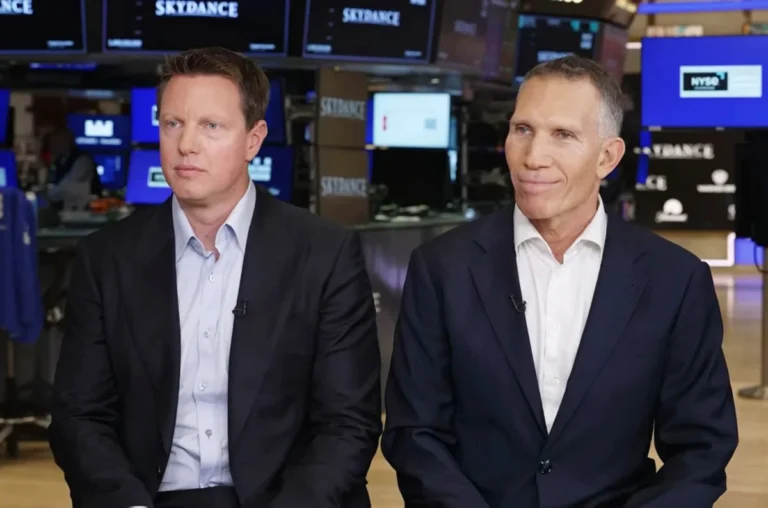



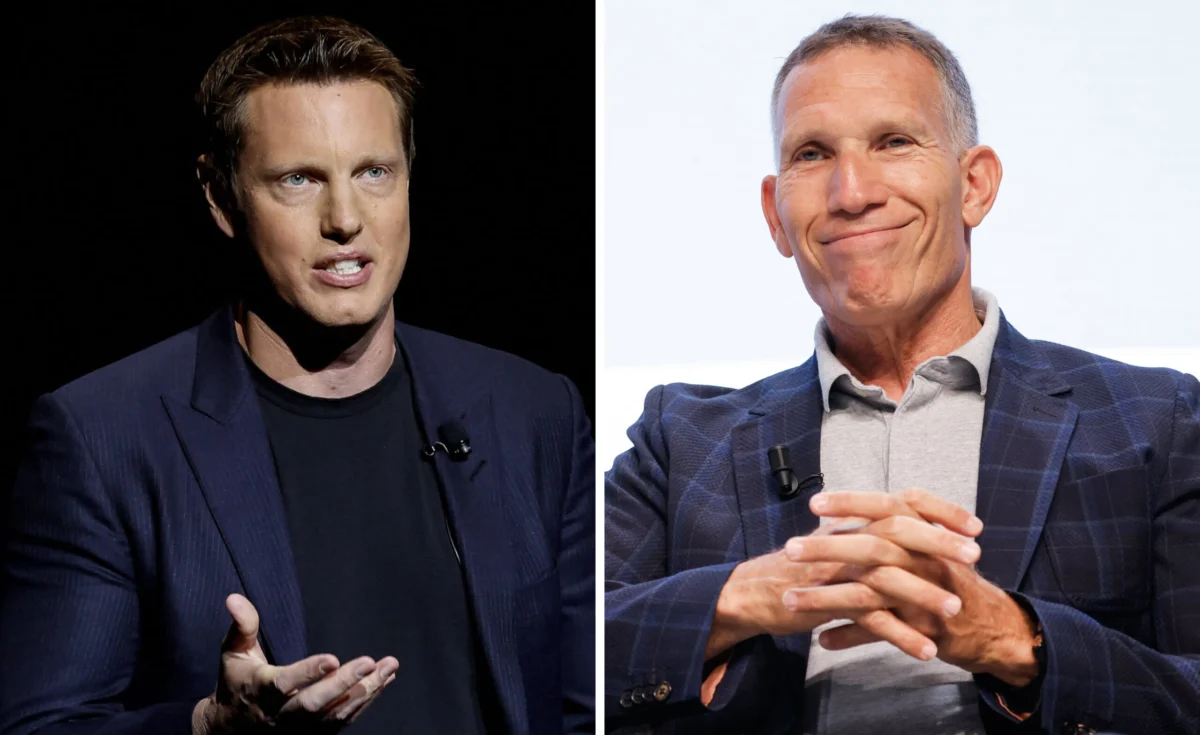
The landscape of the global entertainment industry is set for a seismic shift as Paramount Skydance CEO David Ellison confirmed on Wednesday the appointment of Ynon Kreiz, the outgoing Chief Executive Officer of Mattel, as the co-CEO of the entity resulting from the merger between Paramount and Warner Bros. Discovery. This strategic leadership pairing is designed to helm what is being positioned as a "next-generation" media titan, with the $110 billion merger officially scheduled to close on October 6. The appointment of Kreiz, who steps down after an eight-year tenure at Mattel, marks a significant infusion of operational expertise into a deal that has endured over a year of regulatory scrutiny, bidding wars, and intense boardroom negotiations.
A Dual-Leadership Structure
The governance model for the combined enterprise will be split between creative vision and operational execution. Under the new arrangement, David Ellison will spearhead the organization’s long-term strategic trajectory, creative content development, talent relations, and capital allocation. This division of labor underscores Ellison’s focus on the "content-first" ethos that has defined his tenure at Skydance.
Conversely, Ynon Kreiz will assume primary responsibility for the day-to-day management of the sprawling media operations and the complex integration of the two legacy businesses. By bringing in a veteran executive with a track record of corporate transformation, Ellison aims to mitigate the execution risks inherent in merging two massive media entities. Kreiz will also be seated on the company’s board of directors, ensuring that operational priorities are directly represented at the highest level of governance.
Chronology of a Mega-Merger
The path to this consolidation has been characterized by high-stakes corporate maneuvering and legal hurdles. The timeline of events leading to this week’s announcement highlights the complexity of modern media M&A:
- September 2025: David Ellison officially sets his sights on Warner Bros. Discovery, initiating an aggressive pursuit of the company to bolster the Skydance-Paramount portfolio.
- Late 2025: A competitive bidding environment emerges, with Netflix notably entering the fray as a potential suitor, complicating the negotiation process and forcing a re-evaluation of valuation models.
- July 2026: Antitrust concerns reach a flashpoint as a coalition of state attorneys general files a lawsuit aimed at blocking the $110 billion transaction, citing concerns over market concentration and viewer choice.
- September 21, 2026: Paramount reaches a pivotal settlement with the state attorneys general, clearing a major hurdle that threatened to derail the merger entirely.
- September 30, 2026: Mattel announces the departure of Ynon Kreiz, signaling the end of his eight-year tenure and providing the first hint of his transition to the new media giant.
- October 1, 2026: A federal judge formally enters an order allowing the merger to proceed. On the same day, David Ellison formally announces the appointment of Kreiz as co-CEO.
- October 6, 2026: The official closing date for the merger, marking the birth of the combined entity.
The Kreiz Factor: Transforming Legacy Media
Ynon Kreiz arrives at the combined Paramount-Warner Bros. Discovery entity with a reputation for bold, brand-driven revitalization. His tenure at Mattel is best defined by his successful pivot of the toymaker into a multimedia powerhouse. His strategy culminated in the 2023 release of the "Barbie" film, which became the highest-grossing domestic release of that year. This success served as a proof-of-concept for the "IP-first" model, which Ellison is clearly seeking to emulate on a larger scale.
By leveraging Kreiz’s operational discipline, the new management team aims to streamline the legacy silos of Paramount and Warner Bros. Discovery. The integration process is expected to be a significant undertaking, requiring the synchronization of disparate streaming platforms, film studios, and broadcast assets. Investors will be watching closely to see how quickly the new leadership can achieve synergies and stabilize the balance sheet of the combined firm.
Market Implications and Strategic Analysis
The $110 billion merger stands as one of the most significant consolidations in the history of the media sector. In an era where streaming competition is fierce and the traditional cable model is in secular decline, the combination creates a behemoth capable of challenging the dominance of Netflix and Disney.
The implications for the industry are profound. First, the size of the combined entity gives it massive leverage in licensing and distribution negotiations. Second, the dual-CEO structure suggests a recognition that the modern media conglomerate is too complex for a single executive to manage effectively. By bifurcating the roles, Ellison and Kreiz are essentially separating the "Creative Studio" from the "Utility Company"—a model that may become the standard for future media mergers.
Furthermore, the appointment of a seasoned CEO like Kreiz suggests that the board is prioritizing stability and profitability. While Ellison brings the "Hollywood" credibility and content pipeline, Kreiz brings the "Fortune 500" experience required to satisfy institutional investors and manage the rigorous demands of a publicly traded media company.
Official Responses and Stakeholder Sentiment
In his statement, David Ellison emphasized the necessity of a multifaceted leadership approach. "Bringing together Paramount and Warner Bros. Discovery to create a next-generation global media company is a transformational moment for our industry," Ellison said. "Leading it takes a rare combination of strategic vision, operational depth, and experience running a public company at the highest levels of media. Ynon brings all three."
The market reaction to the announcement has been one of cautious optimism. Analysts note that while the antitrust settlement was a necessary precursor, the success of the merger will ultimately be measured by the ability of the new leadership team to reduce debt and innovate within the streaming space. The selection of Kreiz is viewed as a signal to the Street that the company is serious about operational efficiency.
The Road Ahead: Challenges and Opportunities
As the merger date of October 6 approaches, the focus now shifts to the integration phase. The combined company faces several immediate challenges:
- Debt Management: Managing the combined debt load of both Paramount and Warner Bros. Discovery remains a primary concern for creditors and shareholders.
- Streaming Integration: Harmonizing the technical infrastructure and content libraries of the various streaming services operated by the two companies will be a multi-year project.
- Culture Clash: Merging the distinct corporate cultures of a legacy film studio like Paramount with the diversified assets of Warner Bros. Discovery requires delicate change management.
- Regulatory Compliance: Even with the current settlement, the combined entity will remain under the watchful eye of federal regulators, necessitating a transparent approach to market competition.
Despite these hurdles, the union creates a powerhouse with an unparalleled depth of intellectual property. From the DC Universe and Harry Potter to the deep archives of Paramount Pictures, the entity possesses the assets required to dominate the box office and the streaming charts simultaneously.
The appointment of Ynon Kreiz is more than just a personnel move; it is a declaration of intent. It signals that the era of experimentation in the media sector is transitioning into an era of professionalized, highly disciplined management. As David Ellison and Ynon Kreiz prepare to take the helm, the global media industry watches with anticipation to see if their combined vision can effectively navigate the turbulent waters of the digital age. The merger not only reshapes the competitive map of Hollywood but also sets the tone for future industry consolidation, proving that in the modern entertainment economy, scale is no longer just an advantage—it is a prerequisite for survival.