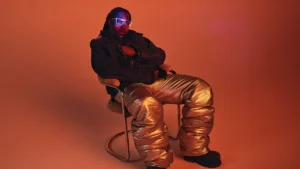
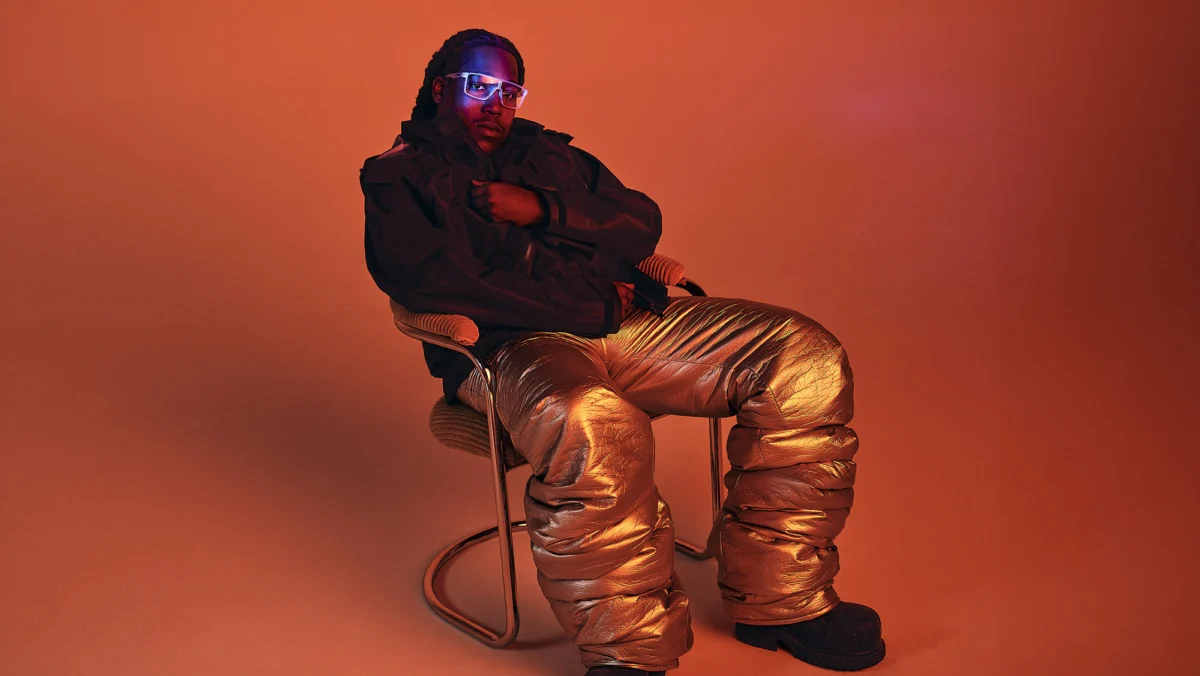
Most recording artists, when discussing the pinnacle of a chart-topping debut, lean into a script of performative humility. They speak of surprise, gratitude, and the serendipitous nature of public favor. Don Toliver, however, operates from a different playbook entirely. For the Houston-born artist, his recent ascent to the top of the Billboard 200 with his fifth studio album, Octane, was not a stroke of luck—it was a calculated maneuver in a landscape he felt had grown stagnant.
“I swear, I planned the whole shit,” Toliver says with a matter-of-fact confidence during a break from his ongoing Octane arena tour. For an artist who has spent years perfecting a distinct, melodic trap aesthetic, the release of 2024’s Hardstone Psycho was merely the setup. Sensing a vacuum in the hip-hop ecosystem, Toliver pivoted immediately. “I went right into Octane mode, and I felt like I just needed to crank it up. Octane was supposed to be the package for the game because the game was quiet.”
The State of the Industry: A Calculated Opportunity
Toliver’s assessment of the “quiet” state of modern hip-hop is backed by shifting consumption trends. While rap has reigned as the dominant force in American popular music for over a decade, the cultural hegemony it enjoyed in the late 2010s—an era defined by the massive commercial output of Kendrick Lamar, Drake, and J. Cole—has seen a noticeable shift.
Market data from the last three years indicates a broadening of the mainstream. Genres such as Regional Mexican, Latin pop, and country have seen explosive growth in streaming share, often crowding out the traditional dominance of urban music. Furthermore, the pipeline for “global superstars” in hip-hop has appeared to slow; whereas the industry previously saw a steady stream of breakout talent like Juice WRLD, XXXTentacion, and Roddy Ricch, the current landscape has been defined by a lack of new, high-volume contenders.
Toliver viewed this lull not as a signal of hip-hop’s decline, but as a strategic opening. He spent months monitoring his peers, waiting for a movement that never arrived. “There were a couple guys I was worried about,” he admits. “They didn’t pop out, and I was able to do my thing.” By moving when the market was most vulnerable, Toliver secured the first No. 1 album of his career, validating his belief that modern chart success is as much about timing as it is about talent.
From Alief to Astroworld: A Chronology of Growth
The path to Octane began long before the charts recognized his name. Born Caleb Zackery Toliver, he was raised in Alief, a working-class enclave of southwest Houston that has historically fostered a unique, localized sound. His musical education was intimate and hands-on; his father, known as Bongo, was a figure in the local scene, having recorded with artists on the legendary Swishahouse label.
Toliver’s early experiments were rudimentary, involving rhymed verses scribbled into school notebooks and recorded through the low-fidelity microphone of a PlayStation console. His early performances were marked by a commitment to the artists he admired, notably Kanye West. By his freshman year of high school, Toliver was already commanding school talent shows with renditions of tracks like “See You in My Nightmares.”
The turning point occurred in 2018. After years of independent grinding, Toliver caught the attention of fellow Houstonian Travis Scott. His feature on Scott’s monumental Astroworld album served as the primary catalyst for his professional career, leading to a signing with Scott’s Cactus Jack label. Reflecting on that pivotal transition, Toliver is quick to credit the mentorship—and the persistence—required to survive in that ecosystem.
“I didn’t know what Travis was possibly going to be able to do for me,” Toliver says. “I just knew where I wanted to go, how I wanted to do it and what it probably took to do it. And Travis, he dealt with me. I probably annoyed the shit out of him. But he answered the phone when he could and showed me love.”

Architectural Ambition: Constructing the Octane World
For Octane, Toliver moved beyond the traditional studio approach, aiming to build an immersive experience that extended into the visual and physical realms. His vision was centered on rally culture, high-speed aesthetics, and the raw mechanics of automotive performance.
Initially, the project was intended to be housed within a custom-built geodesic dome in the wilderness, surrounded by the very vehicles that inspired the album’s sound. However, the practicalities of production budget and logistics forced a pivot. Toliver eventually settled on the Mount Wilson Observatory in the San Gabriel Mountains above Los Angeles. The site’s brutalist architecture, towering telescope domes, and industrial aesthetic provided the perfect backdrop for both the recording process and the visual roll-out.
“When I build a world, it’s an opportunity to say, ‘Hey, I’m this person, this is where I’m at,’” Toliver explains. “This is where I reside, and these are the things that happen in this world while you’re getting this soundtrack.” For Toliver, the observatory supplied the specific “industrial, old shit, brutalist-type feels” required to ground the project’s high-octane themes.
The Personal Shift: Fatherhood and Future Legacy
The creation of Octane also marked a significant milestone in Toliver’s personal life. As his first project conceived and completed since the birth of his son with partner and singer Kali Uchis in 2024, the album carries a different weight.
Toliver describes the process of making the album as providing a “jolt of energy,” an infusion of motivation derived from his new role as a father. While his son is not yet old enough to parse the lyrical nuances of his father’s discography, the long-term impact on Toliver’s creative output is evident. He is no longer just chasing industry metrics; he is building a catalogue that he hopes will withstand the test of time.
“If my son is 10, 15 years old and he’s still like, ‘Yo, my dad is the best artist in the world.’ That’s my goal,” he says. “That’s all I care about.”
Broader Implications for the Genre
The success of Octane serves as a case study for the modern rap artist. It demonstrates that in an era of hyper-fragmented streaming and declining physical sales, the ability to curate a cohesive "world" or "aesthetic" remains a vital differentiator. By tying his music to a specific subculture—rally and automotive design—and ensuring the visual branding at Mount Wilson matched the sonic profile of the album, Toliver was able to capture a loyal audience that rewards depth over transient viral moments.
Furthermore, Toliver’s ability to seize the No. 1 spot in a climate where rap is no longer the automatic default for the mainstream listener suggests a shift in the artist’s role. The modern superstar must be a strategist, a project manager, and a world-builder.
As Toliver continues his arena tour, the industry will be watching to see if his tactical approach sets a new standard for independent-minded artists navigating a changing pop culture landscape. For now, the Houston native has proven that while the game may go quiet, the artists who are best prepared to fill the silence are the ones who will ultimately define the next chapter of music history.