



The global film community mourns the loss of Sam Neill, an actor whose versatility spanned decades, genres, and continents. Passing away at the age of 78, Neill leaves behind a legacy defined not merely by his commercial blockbusters, but by his quiet dedication to his craft, his environmental activism, and his deep connection to his New Zealand roots. While millions will remember him as the steady paleontologist in Jurassic Park or the cynical investigator in In the Mouth of Madness, his career was characterized by an uncommon range that moved effortlessly from arthouse psychological thrillers to high-concept studio horror.
Main Facts and Career Overview
Over a career spanning more than fifty years, Sam Neill established himself as one of the most reliable and magnetic leading men of his generation. Born in Northern Ireland and raised in New Zealand, Neill’s breakthrough came in the late 1970s and early 1980s, swiftly earning him international acclaim. He possessed a rare screen presence that allowed him to play both the reassuring, rational hero and the deeply unsettling villain with equal conviction.

Unlike many contemporary actors who sought to brand themselves within a single archetype, Neill embraced unpredictability. He transitioned smoothly from gritty survival dramas to supernatural epics, working alongside some of international cinema’s most demanding auteurs, including Steven Spielberg, John Carpenter, Andrzej Żuławski, and Jane Campion. His performances were consistently praised for their grounded humanity, injecting emotional truth into even the most fantastical or lurid narratives.
Chronology of a Multifaceted Filmography
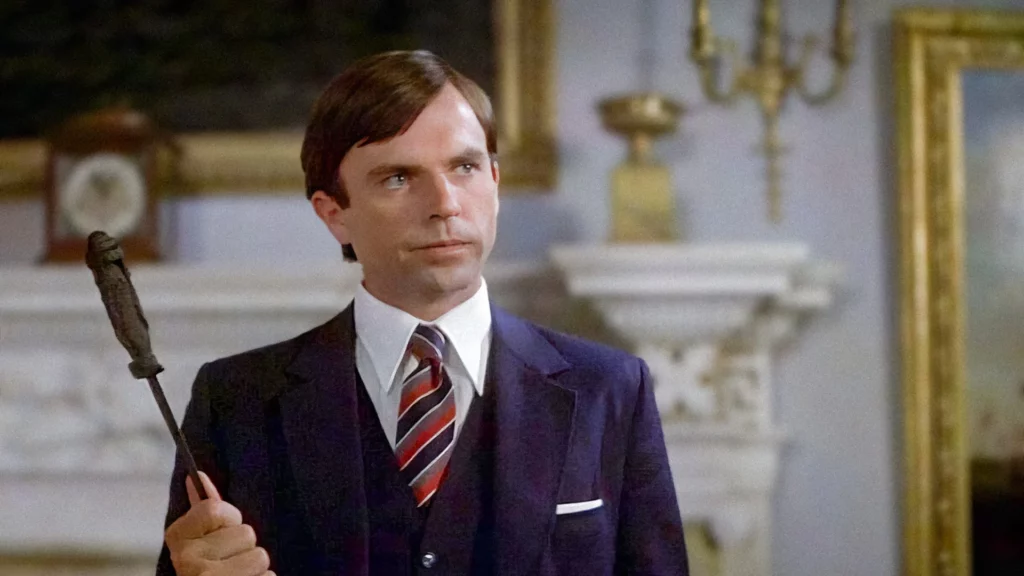
Neill’s ascension in international cinema began in earnest in 1979 with Gillian Armstrong’s acclaimed Australian period drama My Brilliant Career, starring opposite Judy Davis. The performance caught the attention of veteran actor James Mason, who recommended Neill for what would become his first major American studio role: the adult Damien Thorn in The Omen III: The Final Conflict (1981).
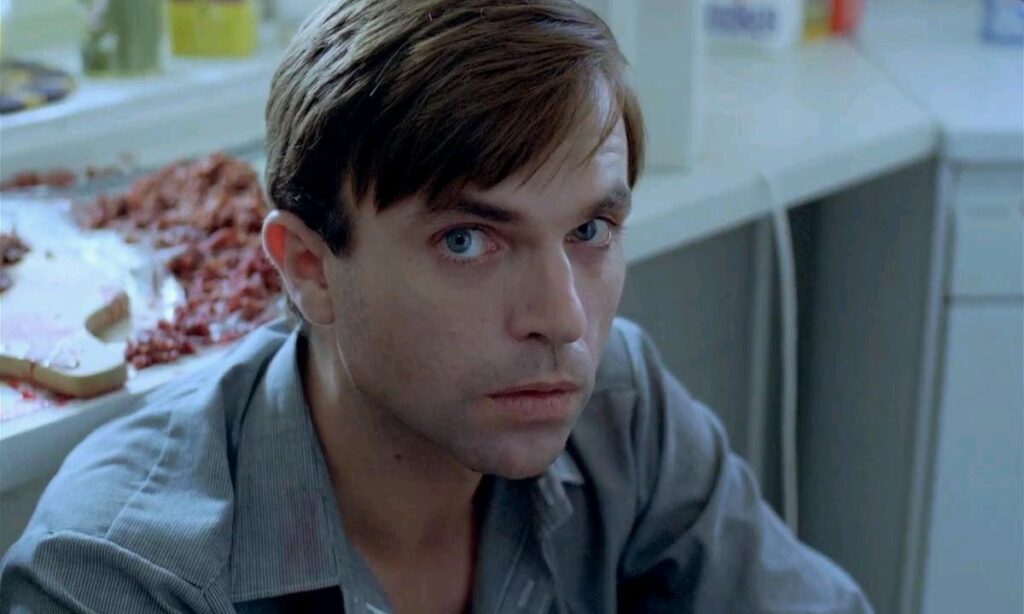
That same year, Neill delivered one of his most intense and unsettling performances in Andrzej Żuławski’s psychological horror film Possession, playing a husband tracking his wife’s increasingly erratic and grotesque descent into madness. Throughout the 1980s, Neill continued to build a formidable resume, showcasing his romantic lead potential in films like A Cry in the Dark (1988) with Meryl Streep and Phillip Noyce’s tense maritime thriller Dead Calm (1988) alongside Nicole Kidman.

The defining commercial milestone of Neill’s career arrived in 1993 with Steven Spielberg’s blockbuster adaptation of Michael Crichton’s Jurassic Park. As Dr. Alan Grant, Neill anchored the unprecedented computer-generated and animatronic special effects with an everyman charisma that resonated with global audiences. Rather than fading into typecasting, Neill used the leverage of his blockbuster success to explore darker, idiosyncratic projects throughout the remainder of the decade. This period produced some of his most memorable genre work, including John Carpenter’s Lovecraftian meta-horror In the Mouth of Madness (1994) and Paul W.S. Anderson’s sci-fi horror film Event Horizon (1997).
Supporting Data and Cultural Impact
While Neill’s cinematic footprint is massive—spanning over 150 film and television credits—his cultural impact extended far beyond the silver screen. In his native New Zealand, he was a fierce advocate for local art and culture. In 1995, he co-directed Cinema of Unease, a feature-length documentary exploring the dark, psychological undercurrents and religious repressions historically present in New Zealand cinema.
Furthermore, Neill was a committed agriculturalist and environmentalist. He established Two Paddocks, an acclaimed organic wine estate in Central Otago, New Zealand. His public persona on social media platforms, where he frequently shared candid updates featuring his farm animals—particularly his affinity for ducks—cemented his reputation as a grounded, self-deprecating figure who remained entirely unaffected by Hollywood celebrity culture.
Official Responses and Tributes
Following the announcement of his death, directors, co-stars, and cultural figures shared tributes highlighting his professionalism and warmth.
Director John Carpenter, who directed Neill in In the Mouth of Madness, released a statement reflecting on their collaboration: "The world has lost a remarkable actor, father, farmer, and friend. I’m heartbroken to hear about Sam. We made two movies together, and every day on set was a masterclass in collaboration."
Gillian Armstrong, who directed his breakout performance in My Brilliant Career, noted his lasting charm and ability to elevate his co-stars. Similar sentiments echoed from across the industry, with numerous actors noting his generosity as a scene partner and his steadfast dedication to the collaborative nature of filmmaking.
Broader Implications and Later Years
In his later years, Neill faced significant health challenges with characteristic candor. Following a diagnosis of non-Hodgkin lymphoma in 2022, he spoke openly about his mortality during the promotional tour for his 2023 memoir, Did I Ever Tell You This? Rather than retreating from public life, he continued to act in acclaimed television series and maintained an active engagement with his fans and agricultural pursuits.
"I’m not afraid of dying," Neill stated in a 2023 interview with the BBC. "What I don’t want to do is to stop living, because I really enjoy living."
Sam Neill’s legacy is ultimately defined by his refusal to be categorized. Whether navigating prehistoric jungles, battling cosmic entities, or tending to his New Zealand vineyards, he approached every aspect of his life with intellectual curiosity, emotional depth, and a wry sense of humor. As audiences continue to revisit his vast filmography, his work stands as a testament to an actor who brought sincerity and intelligence to every world he inhabited.