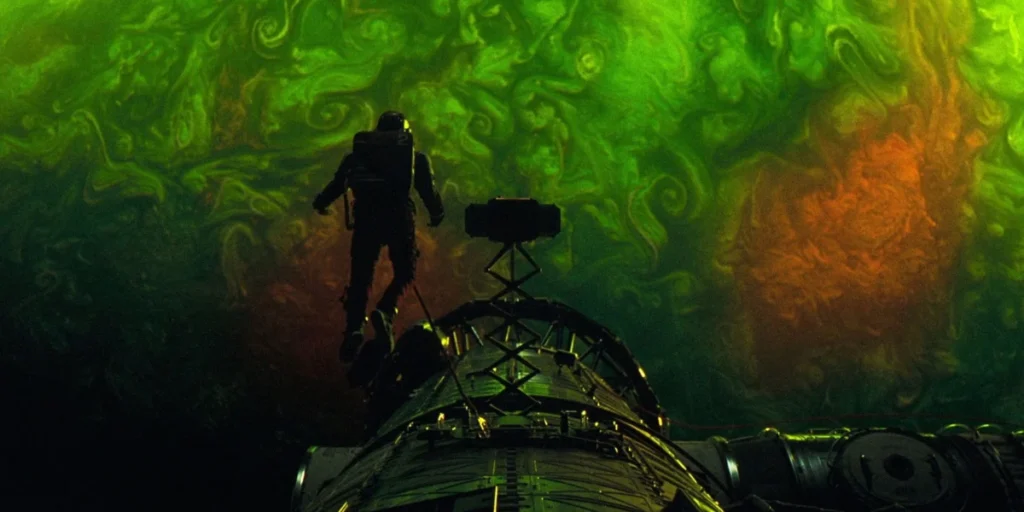




Following months of heightened industry anticipation, Alejandro González Iñárritu’s latest feature, Digger, finally held its world premiere in London on September 22, triggering a polarized reception among the critical community that has cast doubt on its initial standing as a premier awards season contender. The 129-minute satirical dark comedy, which serves as Iñárritu’s first theatrical release since his 2015 Academy Award-winning The Revenant, now faces an uncertain path toward the Oscars as pundits weigh its technical brilliance against a divisive narrative structure.
The Genesis and Evolution of the Project
The conceptual foundations of Digger trace back to 2015, immediately following the grueling production of The Revenant. Iñárritu, a filmmaker noted for his rigorous commitment to technical precision and existential thematic inquiry, spent the subsequent years developing a screenplay that would eventually shift his focus from the brutal landscapes of the American frontier to a contemporary, satirical examination of power and global collapse.
Following the 2022 release of Bardo, False Chronicle of a Handful of Truths—a project distributed through Netflix—Digger marks a strategic return to traditional theatrical exhibition. Warner Bros. secured the distribution rights, positioning the film as a tentpole entry for their fall awards campaign. The production boasts a formidable ensemble cast led by Tom Cruise in the titular role of Digger Rockwell, a figure described as the world’s most powerful man who inadvertently triggers an apocalyptic event while attempting to engineer his own legacy.
The supporting cast includes Riz Ahmed as the scientist Ganesh, John Goodman as President Compson, Michael Stuhlbarg as the Vice President, Sandra Hüller as Rockwell’s business partner and half-sister Emma, and Jesse Plemons in an enigmatic role central to the film’s narrative arc.
A Technical Marvel Amidst Narrative Discord
The film reunites Iñárritu with three-time Oscar-winning cinematographer Emmanuel Lubezki, whose visual contributions have been a hallmark of the director’s career. Early reactions from the London premiere confirmed that Lubezki’s work remains a primary asset, with critics frequently citing the film’s visual ingenuity as a standout element.
However, the narrative execution—specifically the film’s attempt to blend high-stakes satire with an end-of-the-world scenario—has been identified as a significant point of contention. Critics have questioned whether the script successfully balances its thematic weight with its comedic aspirations. While some segments of the press have hailed the film as a bold, innovative departure for Iñárritu, others have labeled the humor as ineffective, suggesting that the film’s tonal shifts may alienate mainstream audiences and Academy voters alike.
Critical Reception and the Awards Season Calculus
The discourse surrounding Digger has been characterized by a lack of consensus, a factor that complicates its trajectory through the upcoming awards circuit. Initial reactions shared across social media platforms reflect a distinct schism: a segment of the critical community views the project as a potential film-of-the-year contender, while others have dismissed it as a thematic misfire.
In terms of individual performances, Tom Cruise remains the focal point of the conversation. His portrayal of Digger Rockwell has received moderate praise, though industry analysts note that the response has not reached the level of universal acclaim typically required to guarantee an Academy Award nomination. Given that Cruise has yet to win a competitive Oscar, his performance is being scrutinized not only for its merit but for its ability to carry a film that is otherwise struggling to find broad critical support.
Riz Ahmed has also emerged as a critical darling, with some reviewers arguing that his performance as Ganesh is the film’s most nuanced contribution. Conversely, the screenplay has faced harsh critique. IndieWire’s David Ehrlich publicly noted the director’s difficulty in landing the film’s satirical beats, a sentiment echoed by Next Best Picture’s Matt Neglia, who characterized the script as "imbalanced" and "unfunny."
Industry Perspectives and Expert Analysis
The broader implications for Warner Bros. and the film’s production team are significant. In a landscape where awards-season films rely heavily on consistent critical momentum, the mixed reviews present a substantial hurdle.
- Positive Indicators: Supporters, including Variety’s Jazz Tangcay, have emphasized the visionary nature of Iñárritu’s direction and the high quality of the production design, suggesting that the film could remain a strong contender in craft categories such as Cinematography, Production Design, and potentially Best Actor.
- The Challenges: The lack of a unified positive consensus on the film’s narrative core—specifically the satirical elements—threatens its viability in major categories like Best Picture, Best Director, and Best Original Screenplay. The "unfunny" nature of the satire, as noted by several prominent critics, suggests that the film may fail to connect with the Academy’s preference for cohesive, tonally consistent narratives.
Clayton Davis, Chief Awards Editor at Variety, observed that the film’s unpredictable reception is indicative of the current challenges in gauging audience and voter sentiment for high-concept, auteur-driven projects. The film’s ability to "stay the course" will depend on whether subsequent screenings—and eventually, wider public release—can generate enough positive word-of-mouth to counteract the initial critical volatility.
Historical Context and Statistical Implications
Iñárritu’s history with the Academy is substantial, characterized by multiple wins for Best Director and significant recognition for his past work. However, the Academy’s history with satirical, genre-bending films is notoriously inconsistent. While movies like Dr. Strangelove or Don’t Look Up have historically engaged with similar themes of global collapse through satire, they often rely on a precise tonal balance that critics suggest may be absent here.
Furthermore, the 129-minute runtime poses a challenge in maintaining the narrative momentum necessary for a biting satire. As the industry moves into the late-fall phase of the awards calendar, the window for Digger to recalibrate its marketing and narrative positioning is narrowing. The studio must now decide whether to lean into the film’s "divisive" nature as a badge of artistic courage or attempt to emphasize its more conventional, performance-driven aspects to broaden its appeal.
Future Outlook and Conclusion
As the awards season progresses, the scrutiny on Digger will likely intensify. The absence of widespread audience reactions—which typically follow the initial, exclusive critical screenings—leaves a gap in the film’s overall profile. Without the moderating influence of general viewer sentiment, the film remains at the mercy of a critical establishment that is clearly divided on its merits.
Whether Digger will evolve into a "must-see" cultural event or fade into a footnote in Iñárritu’s filmography remains to be seen. For Tom Cruise, the film represents a high-stakes professional gamble; a successful awards run could solidify his reputation as a dramatic force beyond his action-heavy repertoire, while a failure could relegate the project to a curiosity of the 2024 season.
As of late September, the industry remains in a "wait-and-see" pattern. With upcoming film festivals and regional screenings on the horizon, the true reception of the film among the broader Academy voting bloc will become clearer. Until then, the project serves as a prime example of the risks inherent in high-concept, auteur-driven cinema when the execution fails to bridge the gap between creative ambition and narrative clarity. Investors and studio heads will be watching the next few weeks closely, as the window to build critical consensus for an Oscar campaign is rapidly closing.