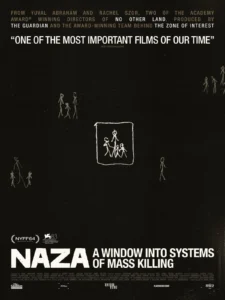



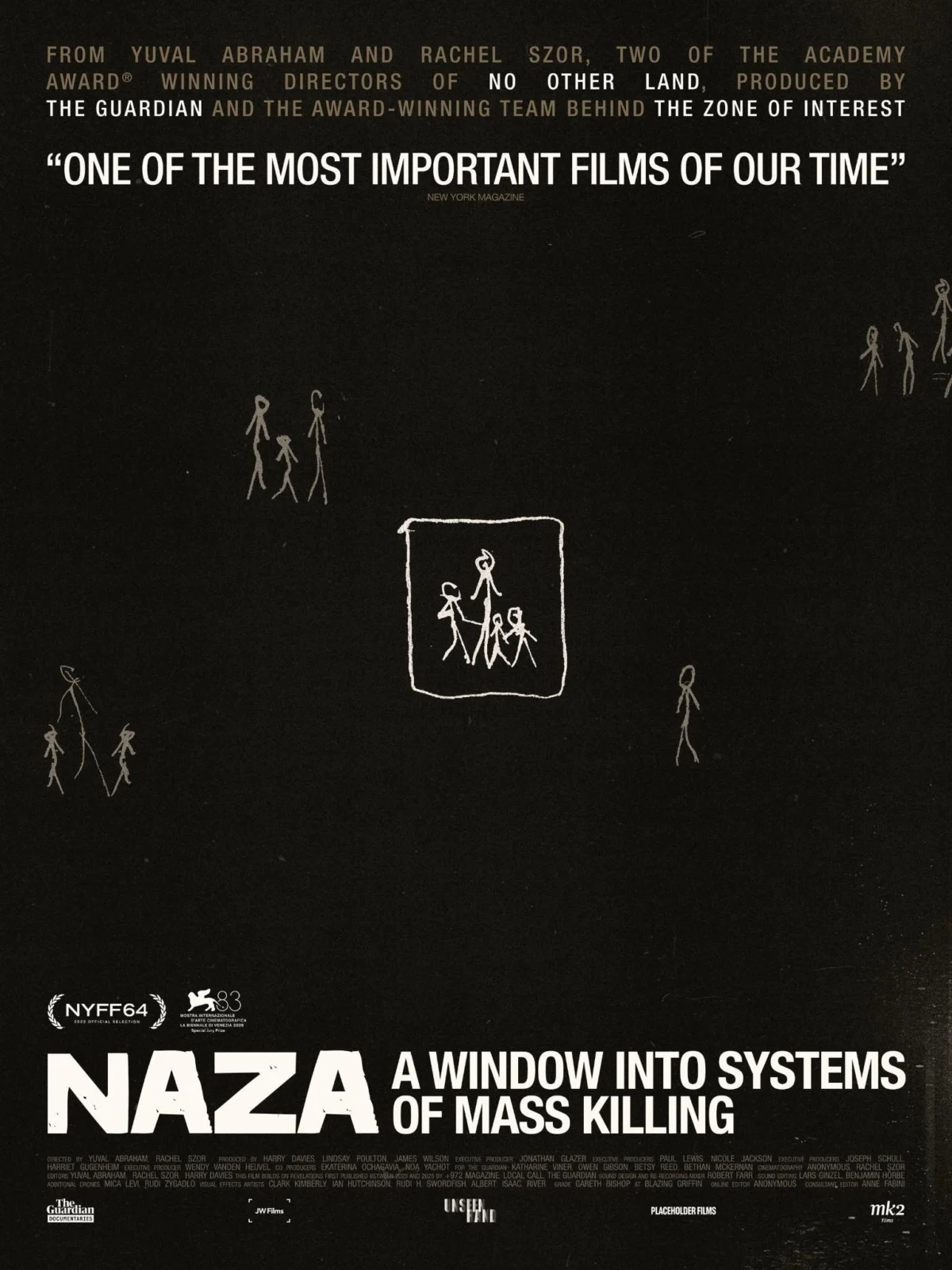
Following its critically acclaimed world premiere at the 2026 Venice Film Festival, Mk2 Films has released the official trailer for NAZA, a harrowing investigative documentary directed by Israeli filmmakers Yuval Abraham and Rachel Szor. The feature-length project delivers a stark, unyielding examination of modern military operations, focusing heavily on the integration of artificial intelligence systems in targeted killings and the subsequent civilian casualties in Gaza. Produced by an international coalition including The Guardian, JW Films, Placeholder Films, and Unseen Hand, and executive produced by Academy Award-winning filmmaker Jonathan Glazer, the documentary has rapidly emerged as one of the most politically charged and scrutinized cinematic releases of the year.
The film is scheduled for a theatrical release in select United States cinemas beginning September 30, 2026, followed by a free global streaming release hosted by The Guardian in November 2026.
Background Context and Investigative Origins
The genesis of NAZA is deeply intertwined with the geopolitical fallout of the October 7, 2023, attacks led by Hamas and the subsequent military campaign launched by Israel in the Gaza Strip. In the months immediately following the escalation, investigative journalists and media outlets began uncovering the heavy reliance on automated target-generation systems by military forces. Much of the preliminary reporting was spearheaded by The Guardian in collaboration with +972 Magazine and Local Call—outlets where co-director Yuval Abraham has previously published extensive investigative pieces.
Unlike standard print journalism, NAZA attempts to bridge the gap between hard data and the psychological architecture of modern warfare. Filmed covertly over a three-year period, primarily from the nighttime rooftops of Tel Aviv, the documentary features accounts from the individuals who designed, programmed, and operated the algorithmic systems responsible for selecting military targets. By capturing these testimonies, the filmmakers sought to expose the chilling detachment that digital warfare affords its operators, where human lives are systematically processed through data points and automated recommendations.

Chronology of Production and Festival Reception
Production on the documentary spanned multiple years, capturing the shifting technological and political landscape before and after the outbreak of the current conflict. The filmmakers operated under severe constraints, navigating the security apparatus and societal pressures within Israel while documenting the secretive layers of algorithmic military infrastructure.
The project culminated in September 2026, when NAZA was selected for competition at the Venice Film Festival. The screening drew intense international media attention, prompting fierce debates among critics, festival attendees, and industry professionals regarding the ethical boundaries of documentary filmmaking and the accountability of state actors. Reviewers highlighted the film not merely as a cinematic achievement, but as an urgent historical document. It was subsequently named among the standout features of the festival, praised for its unflinching exposure of systems that typically remain classified or obscured beneath layers of military euphemisms.
Technical Implications: AI in Modern Warfare
Beyond its immediate geopolitical relevance, NAZA serves as a cautionary exploration of the intersection between artificial intelligence and warfare. The documentary details how advanced machine learning algorithms, vast biometric surveillance networks, and automated decision-making tools have transformed military strategy.
According to cybersecurity and defense analysts observing the deployment of such technologies globally, automated targeting systems significantly accelerate the speed of combat operations, often outpacing human oversight and ethical deliberation. The film illuminates the mechanics of these platforms, demonstrating how access to unprecedented volumes of personal data allows systems to designate targets at a scale previously unimaginable. The implications extend far beyond the immediate conflict in Gaza, raising profound questions for international humanitarian law, accountability in automated warfare, and the future governance of artificial intelligence by sovereign states.
Statements from the Filmmakers
In their official statement accompanying the trailer release, co-directors Yuval Abraham and Rachel Szor articulated the moral imperative that drove the creation of the project:

"We made this film out of a sense of obligation to use our position as Israeli filmmakers and journalists to examine the systems behind the mass killing of Palestinian civilians for which our country is responsible. While filming members of Israel’s military on rooftops at night in Tel Aviv over the past three years, we found ourselves asking the very questions that were asked by our grandparents’ generation and throughout the 20th century: how does one group of people allow the total dehumanisation of another? What do the inner workings of such a system look like?"
The directors emphasized that while their previous investigative reporting successfully brought specific algorithmic mechanisms to light, the documentary medium offered a distinct capacity to confront the prevailing silence surrounding these operations. "The doc film lets us explore something deeper than we could in our investigative journalism alone: not only the words being said but also those that are not said, the silence. It is up to all of us to break that silence."
Production Team and Distribution Strategy
NAZA was brought to the screen through a collaborative production effort involving prominent investigative journalism institutions and independent film production houses. The core production team includes Harry Davies, Lindsay Poulton, and James Wilson, working alongside The Guardian. Executive producer Jonathan Glazer, who won the Academy Award for Best International Feature Film for The Zone of Interest—a film that similarly examined the bureaucratic compartmentalization of mass atrocities—lent his creative and institutional weight to the project, underscoring its thematic alignment with historical examinations of institutional complicity.
Following its theatrical rollout in the United States starting September 30, 2026, the producers have prioritized accessibility over traditional box-office exclusivity. In an unprecedented move for a major investigative documentary of this scale, the film will be made available to stream entirely free of charge via The Guardian’s digital platforms in November 2026. This distribution strategy is designed to ensure maximum global reach, allowing audiences, policymakers, and legal scholars worldwide to examine the evidence presented by the filmmakers without financial barriers.