

The Genesis of an American Classic
Eugene O’Neill’s Long Day’s Journey into Night stands as the definitive autobiographical achievement of 20th-century American drama. Posthumously published in 1956—three years after the playwright’s death, despite his instructions that it remain sealed for 25 years—the play earned the Pulitzer Prize for Drama. Its narrative, which mirrors the tensions and neuroses of the O’Neill family, has become a cornerstone of theatrical repertoire.
The allure for performers is universal; the roles of the four Tyrones are considered "mountains" in the acting world. Mary Tyrone, in particular, is frequently compared to the complexity of Shakespearean protagonists like Lady Macbeth or Hamlet. Historically, the role has been occupied by titans of the stage and screen, including Katharine Hepburn, who starred in the 1962 film adaptation, and Vanessa Redgrave, who earned a Tony nomination for the 2003 Broadway revival. Jessica Lange’s involvement in this current iteration continues a storied legacy, as she previously inhabited the role in the 2016 Broadway production, also directed by Kent, for which she secured the Tony Award for Best Actress.
A Tortuous Path to Production
The journey of this film adaptation has been as fraught with difficulty as the play itself. Production commenced in 2022 with the aim of capturing the intimacy of the stage play within a cinematic framework. However, the project encountered significant fiscal instability as the production budget depleted, forcing creative pivots and logistical compromises.
The timeline of the film’s development was further complicated by the industry-wide upheaval in 2023. The dual strikes by the Writers Guild of America (WGA) and the Screen Actors Guild (SAG-AFTRA) effectively halted Hollywood, placing the film in a state of post-production and distribution limbo for an extended period. For a passion project that relied heavily on the star power and reputation of its lead, the uncertainty surrounding its release led to concerns regarding whether the footage would ever reach a wider audience. The eventual resolution of these labor disputes, coupled with new distribution agreements, has finally allowed the film to emerge, though it bears the unmistakable marks of its constrained financial origins.
Cinematic Constraints and Theatrical Roots
Running at 109 minutes, this adaptation is significantly shorter than the traditional theatrical runtime, which frequently exceeds three and a half hours. This condensation was a necessary tactical decision to align with modern film distribution standards, yet it represents a departure from the rhythmic, slow-burn pacing that defines O’Neill’s original text.
Director Jonathan Kent, in his feature film debut, leans heavily into his background in theatrical direction. The result is a film that prioritizes character-driven performance over expansive cinematography. The visual language of the film is notably spare, utilizing a minimalist aesthetic that emphasizes the isolation of the Tyrone household. While some critics may point to the lack of exterior establishing shots or complex blocking as a sign of the production’s limited budget, others argue that this austerity mirrors the psychological enclosure of the Tyrone family. By keeping the camera focused tightly on the actors, Kent creates a suffocating environment that forces the viewer to confront the emotional wreckage of the protagonists.
The Performance Landscape
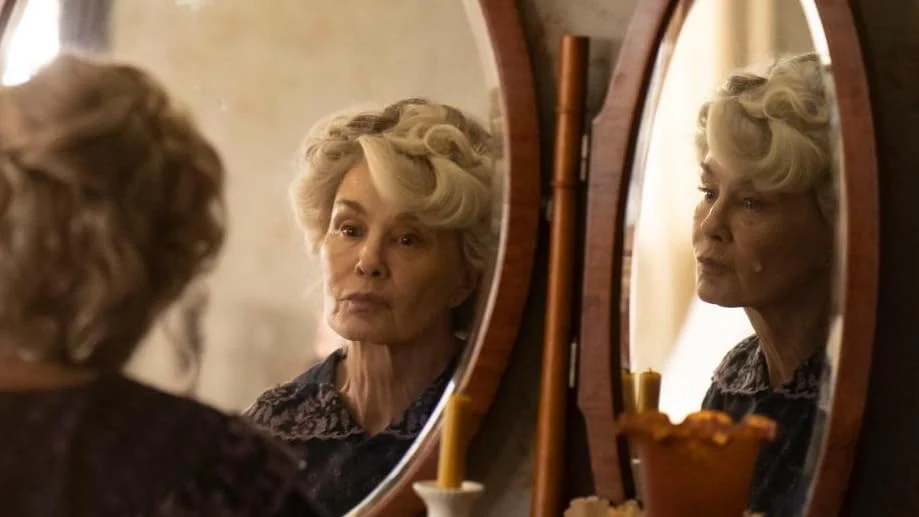
The success of the film rests almost entirely on the shoulders of its ensemble. Jessica Lange’s portrayal of Mary Tyrone is the gravitational center of the film. Her performance is characterized by an acute sensitivity to the character’s descent into drug-induced delusion. Unlike her stage performance, which required sustained vocal projection, the medium of film allows Lange to utilize subtle physical cues—the twitching of fingers, the vacant gaze, and the sudden shifts in posture—to convey the internal fracturing of a woman trapped between past memories and current despair.
Ed Harris, portraying the patriarch James Tyrone Sr., provides a counterbalance of rigid, fading authority. Harris captures the tragic irony of a man who values material wealth and legacy above all else, only to find his family life utterly bankrupt. Ben Foster and Colin Morgan round out the cast as Jamie and Edmund, respectively. Foster navigates the cynical, resentful nature of the eldest son with a raw, confrontational energy, while Morgan delivers a performance of desperate, intellectual yearning as the sickly Edmund. Together, they form a unit that feels authentically broken, despite the film’s truncated narrative.
Analytical Implications and Legacy
The release of this adaptation serves as a case study in the challenges of transposing "great" theater to the screen. O’Neill’s work is famously dependent on the "weight of time"—the way the characters’ repetitive arguments and long silences build into a crescendo of tragedy. By compressing the play into less than two hours, the filmmakers have necessarily sacrificed some of this cumulative effect. The loss of certain monologues and scene transitions means the audience sees less of the "arc" and more of the "highlights."
However, the film’s existence serves a vital cultural function: accessibility. By moving the play out of the high-cost, geography-dependent world of Broadway and into a widely distributed cinematic format, the production team has granted a global audience access to a classic that would otherwise remain sequestered in major theatrical hubs. The financial hurdles faced during production are undeniably visible—the film lacks the production value typically associated with big-budget period dramas—but the core integrity of O’Neill’s dialogue remains intact.
Conclusion
As the industry continues to evaluate the intersection of stage and screen, this version of Long Day’s Journey into Night will likely be remembered for its resilience. It is a work that fought to exist, and its eventual release is a victory for the preservation of classic literature in a digital age. While the film may not replace the experience of a live, three-hour theatrical performance, it offers a distinct, intimate, and deeply human study of a family in crisis. It provides a platform for four seasoned actors to engage with some of the most challenging material in the Western canon, ensuring that O’Neill’s portrait of addiction and familial trauma remains relevant for a new generation of viewers. In the final analysis, the film is an imperfect but essential document, capturing a rare moment where the intensity of the theater is preserved, however briefly, within the lens of the camera.