
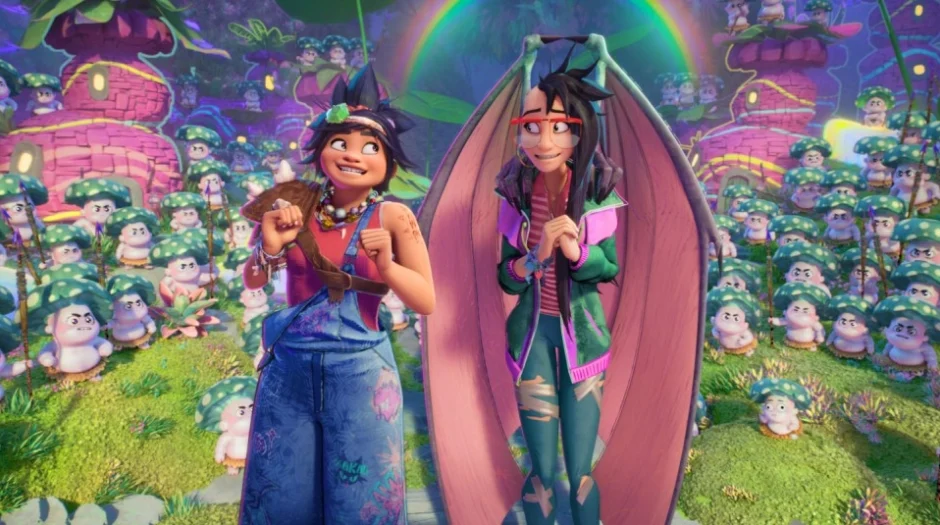
DreamWorks Animation has officially released its latest theatrical feature, Forgotten Island, hitting cinemas nationwide. Directed by the creative team behind the Academy Award- and BAFTA-nominated Puss in Boots: The Last Wish, the film marks a significant departure for the studio by introducing an entirely original narrative rather than a sequel or a literary adaptation. Helmed by co-directors Joel Crawford and Januel Mercado and produced by Mark Swift, the production combines contemporary themes of transition and memory with the rich, underrepresented landscape of Philippine folklore.

The film follows two grade-school best friends, Jo (voiced by H.E.R.) and Raissa (voiced by Liza Soberano), who are spending their final all-nighter together in 1990s Manila before Raissa departs for Caltech. A mysterious time-space portal drops the pair onto Nakalimutan, or Nakali for short—a mythical island populated by Aswang, the collective term for the diverse creatures of Filipino folklore. Awakened with complete amnesia regarding how they arrived, the protagonists must navigate a perilous environment alongside a colorful and eccentric ensemble of companions, including a puberty-stricken weredog named Raww (Dave Franco), an eight-foot demon baby named Bungi Tiyanak (Manny Jacinto), a narcissistic merman named Prince Mermahn (Kevin McCann), and a terrifying antagonist, The Dreaded Manananggal (Lea Salonga). Additional voice talent includes Jenny Slate, Dolly de Leon, Jo Koy, and Ronny Chieng.

Development Chronology and Production Background
The conceptualization of Forgotten Island began in early 2020 as Crawford and Mercado completed production on The Croods: A New Age. Following a brief hiatus to direct Puss in Boots: The Last Wish, the filmmakers returned to the project, shifting their creative approach from established intellectual properties to deeply personal subject matter. Unlike their previous franchise entries, which relied on pre-existing audience recognition, this original venture required the team to build characters, visual aesthetics, and cultural touchstones entirely from scratch.

To ensure authentic cultural representation, key members of the production team, including Crawford, Mercado, Swift, production designer Ryan Carlson, and art director Chris Grun, undertook a 10-day research expedition across the Philippines in the spring of 2025. The trip included travels through Manila and various islands, during which Mercado’s relatives hosted a traditional block party that ultimately inspired Raissa’s cinematic going-away celebration. Furthermore, the filmmakers integrated familial ties directly into the production; Mercado collaborated on the script alongside his ailing father, utilizing familial guidance to refine cultural details and linguistic nuances in Tagalog.

Visual Design and Technical Innovations
Forgotten Island distinguishes itself through a deliberate rejection of a singular house animation style, embracing a multifaceted visual vocabulary that blends 1990s aesthetics with diverse animation techniques. The production team utilized wide-angle framing to emphasize expansive horizons, intentionally contrasting grand environmental scales with intimate interpersonal moments, such as the protagonists posing on the hood of a vintage jeepney.

A defining technical aspect of the film is its incorporation of anime-inspired artistic expressions. Head of character animation Ludo Bancho spearheaded the integration of manga-derived visual tropes, including expressive facial reactions, exaggerated tear streams, and stylized animated stickers. Additionally, the film features three distinct flashback sequences—one for each member of the supporting creature pack—rendered in unique anime styles by Manila-based studio Snipple Animation.

The complexity of the project is further demonstrated by the technical execution of its characters. The antagonist, the Manananggal, required one of the most sophisticated rigging systems in DreamWorks history. Able to detach at the waist, the character utilizes dual functional rigs combined with nearly 10,000 rigging controls and highly intricate wing mechanics. To visually represent the character’s profound sense of alienation and cognitive frustration—likened by the directors to the experiences of individuals suffering from dementia—animators implemented a jittery, reactive line effect around the character’s silhouette, which was later acoustically matched with specialized sound design at Skywalker Ranch.

Cultural Integration and Musical Composition
The sonic landscape of Forgotten Island was curated by composer Nathan Matthew David, whose heritage heavily influenced the musical direction. Rather than relying on a generalized orchestral score, David traveled to indigenous communities in the Philippines, recording authentic instrumentation and vocal traditions. The score incorporates performances by Talaandig cultural leader Waway Saway, T’boli chanter Jennilyn فada utilizing the rare bamboo sludoy instrument, and traditional drums such as the T’boli Tnonggong and Kalinga tongatong. For the Manananggal, David employed the Maguindanao kulintang gong ensemble, utilizing low gandingan gongs to translate specific narrative phrases into traditional musical language.

The voice cast also contributed directly to the musical identity of the film. H.E.R. composed and performed the end-credits theme, "BRB," alongside Liza Soberano, creating a thematic bridge that reinforces the narrative core of enduring friendship.

Industry Implications and Box Office Outlook
As original animated features face increasingly competitive theatrical landscapes, Forgotten Island represents a calculated risk for Universal Pictures and DreamWorks Animation. By prioritizing cultural specificity, auteur-driven visual experimentation, and mature thematic explorations of memory and identity, the studio is testing audience appetite for high-budget original animation outside of established cinematic universes.

Industry analysts note that the film’s success could signal a broader industry shift, demonstrating that culturally specific folklore, when paired with universal coming-of-age narratives, can achieve broad international resonance. By grounding fantastic elements in genuine personal history and rigorous cultural research, the creative team has delivered a production that expands the technical and narrative boundaries of contemporary studio animation.