


Production Overview and Narrative Scope
The narrative centers on a cohort of medical professionals who travel to the Amazon rainforest under the guise of a humanitarian mission. The team, led by Dr. Miguel, played by Juan Pablo Shuk, includes American aid workers Alli (Jessica Rothe) and Callum (Will Close), alongside a boat mechanic named Lena (Kiana Madeira). Their journey is quickly derailed by the presence of two opportunistic brothers, Brennan (Logan Marshall-Green) and Shawn (Jackson Bews), whose illicit activities force the group to flee into the uncharted depths of the jungle.
It is within this isolated environment that the characters encounter the Boiúna—a legendary, serpentine entity rooted in the folklore of the Amazon basin. Unlike traditional monsters that serve as one-dimensional antagonists, the Boiúna is presented as a territorial guardian, a nuance that aligns with contemporary shifts in creature-feature storytelling where the "beast" acts as a reactionary force against human encroachment.
Chronological Development and Structural Pacing
The film follows a deliberate, if contentious, narrative structure. For the first 60 minutes, the film prioritizes character development and interpersonal friction, keeping the titular antagonist largely obscured from the audience. This "Jaws-style" approach—the withholding of the monster to build dread—is a staple of the suspense genre, yet it requires rigorous atmospheric tension to remain effective.
- The Arrival (0–20 minutes): The medical team establishes its base, and the audience is introduced to the underlying tensions between the humanitarian mission and the clandestine motives of the secondary characters.
- The Inciting Incident (20–40 minutes): A violent confrontation between the medical team and the encroaching opportunists serves as the catalyst that drives the survivors into the deeper, more dangerous regions of the rainforest.
- The Escalation (40–80 minutes): The Boiúna begins to make its presence felt through environmental cues, culminating in the first full reveal of the creature.
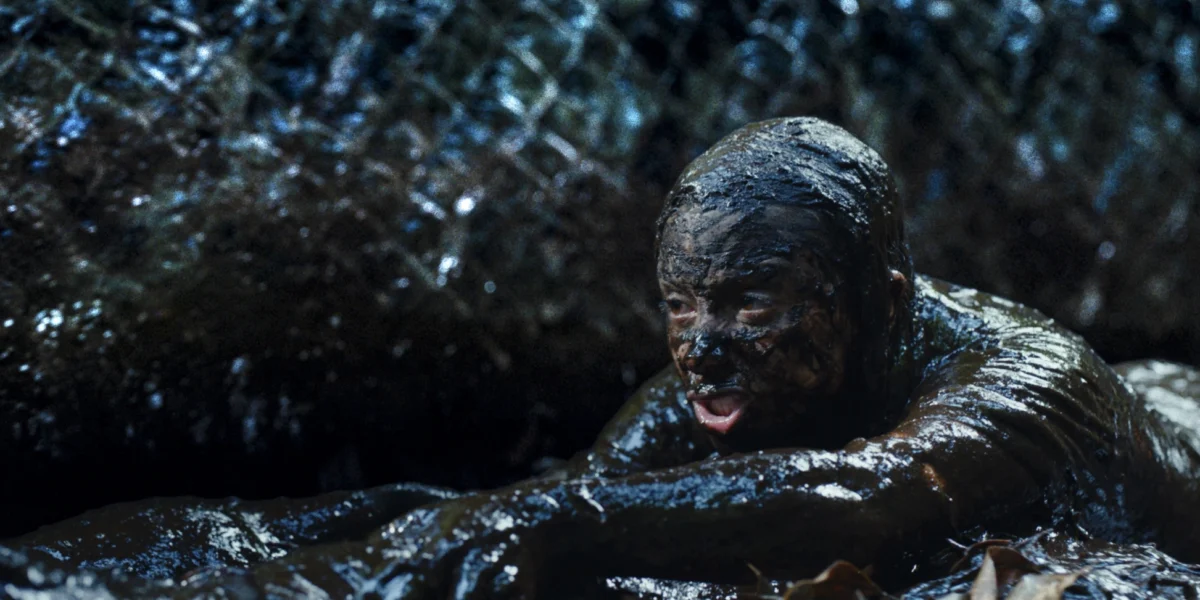
- The Climax (80–104 minutes): A high-stakes survival sequence in a mud-pit setting, which serves as the film’s most sustained moment of tension.
Technical Analysis: CGI and Practical Effects
A significant portion of the film’s budget was allocated to the visual effects required to render the Boiúna. The creature, which is depicted as being of immense scale, poses unique challenges for digital integration. While the film’s post-production team successfully composited the snake into naturalistic environments—utilizing real-world elements like swaying foliage and disrupted water surfaces to ground the beast—critics have noted a lack of practical, tactile elements.
In comparison to the 1970s and 80s creature features, which relied heavily on animatronics and physical models to create a sense of tangible threat, Beware Boiúna leans almost exclusively on computer-generated imagery. This decision has sparked debate among industry analysts regarding the "uncanny valley" effect, where the lack of physical interaction between actors and the creature can occasionally diminish the perceived stakes of the survival scenarios.
The Mythological Context of the Boiúna
To understand the premise, one must look toward the folklore of the Amazon. In regional legends, the Boiúna is often depicted as a giant, shape-shifting snake capable of inhabiting both water and land. Traditionally, it is described as a creature of immense power that can sink ships and terrorize riverine communities.
By integrating this cultural myth, the film attempts to provide a sense of authenticity that differentiates it from generic western monster movies. The creative team consulted with regional ethnographic experts to ensure the depiction of the Amazonian landscape felt accurate, even if the creature itself remains a hyperbolic invention of cinematic fiction.
Performance and Characterization
The film’s strength lies in its performances, particularly that of Kiana Madeira, whose portrayal of the guarded and resourceful Lena provides the emotional anchor for the audience. Jessica Rothe, known for her prior work in the horror genre, contributes a performance characterized by high-intensity panic, effectively contrasting with the more calculated, stoic demeanor of Logan Marshall-Green.
The decision to avoid dark humor—a stylistic pivot from director Mike P. Nelson’s previous work on the Silent Night remake—indicates a desire to treat the subject matter with grave sincerity. While this choice adds a layer of grit, some industry observers suggest that a more sardonic tone might have better served the absurdity of the premise, allowing the film to lean into its more fantastical elements.
Market Implications and Industry Standing
The release of Beware Boiúna arrives at a time when the monster-movie subgenre is experiencing a resurgence in popularity. However, the film faces a crowded marketplace. Data from the last three years suggests that audiences are increasingly seeking "elevated" horror, or conversely, creature features that embrace their B-movie roots with high levels of camp. Beware Boiúna finds itself in a precarious middle ground: it is neither a grim, character-driven thriller in the style of 1970s cinema nor a self-aware, fun-focused creature feature.
Statistically, films that struggle to define their tonal identity often face challenges in long-term audience retention. Despite the high production values and the pedigree of the director-writer duo, the film’s reliance on foreshadowing and its lack of effective jump scares may limit its impact on the modern horror canon.
Critical Reception and Future Outlook
Early responses indicate that while the film is technically proficient, its narrative pacing remains its greatest hurdle. The decision to delay the appearance of the Boiúna for such a significant portion of the runtime is a gamble that, according to some market analysts, may alienate viewers expecting a faster-paced spectacle.
Conversely, the film succeeds in its most focused sequence: the mud-pit confrontation. By prioritizing a single, confined space, the filmmakers demonstrated that they are most effective when the scope is narrowed and the psychological pressure on the characters is allowed to build organically. This suggests that future projects from this team might benefit from tighter, more contained narratives rather than the sprawling, expansive scale attempted here.
Conclusion: The Legacy of the Snake
Beware Boiúna serves as a reminder of the enduring power of the "unknown" in storytelling. While the film may not achieve the iconic status of genre pioneers, it successfully brings a piece of Amazonian mythology to a global audience. The production stands as a testament to the ongoing evolution of visual effects and the challenges of maintaining narrative tension in a contemporary film market that is increasingly difficult to satisfy.
As the film moves into its wider release, its success will likely be measured by its ability to engage audiences beyond the horror-enthusiast demographic. Whether or not it leaves a lasting impression, Beware Boiúna confirms that the appetite for large-scale, high-stakes monster cinema remains undiminished, even as the bar for narrative complexity and visual innovation continues to rise. The film is currently available for viewing in major markets, with ongoing discussions among film critics regarding its long-term viability as a cult classic.