

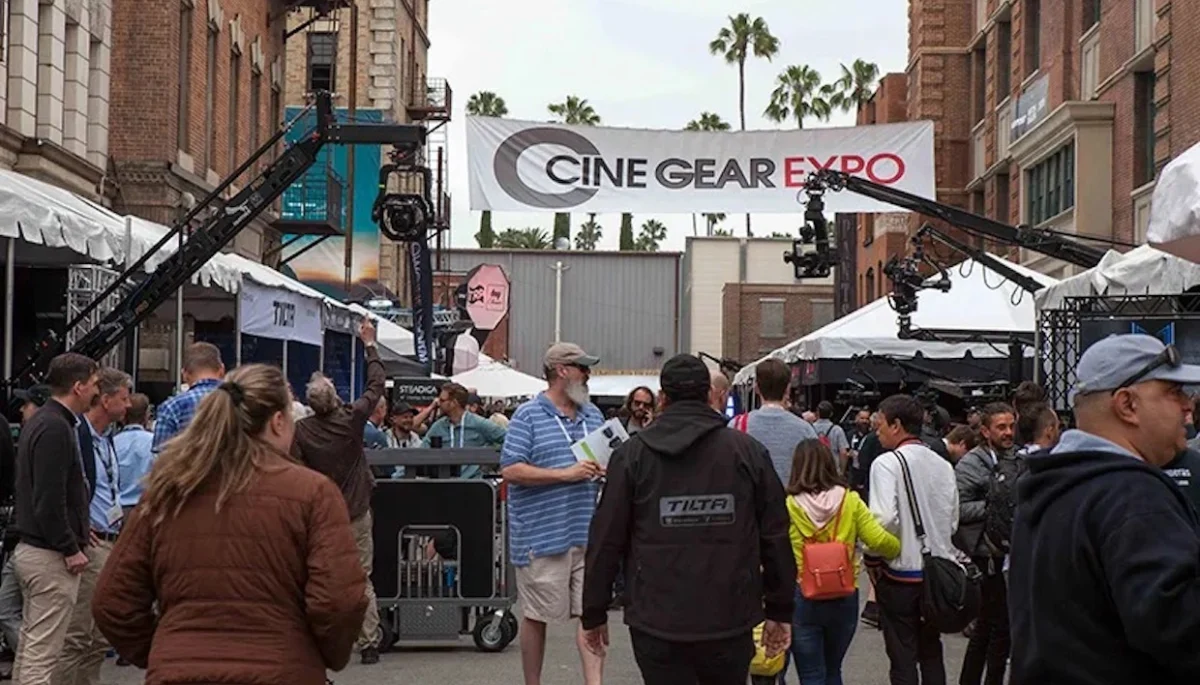
The annual Cine Gear Expo returned to the Universal Studios Lot for its 2026 installment, drawing thousands of cinematographers, gaffers, lighting technicians, and industry professionals for a two-day immersion in motion picture technology. Unlike the massive, broad-market trade shows that often induce existential reckonings about cinema’s standing within the broader video landscape, Cine Gear maintains a dedicated focus on the art and craft of filmmaking. Set against the operational backdrop of a historic studio lot, the event serves as a vital networking and technological hub for Los Angeles’s production community, bridging the gap between legacy analog techniques and rapid advancements in digital and LED innovation.
Background Context and Event Logistics
Established decades ago as a localized gathering for Southern California camera and lighting professionals, Cine Gear Expo has evolved into one of the preeminent international showcases for filmmaking hardware and techniques. The 2026 iteration, following previous runs on the Warner Bros. lot, utilized the sprawling grounds of the Universal Studios Lot. While the backlot environment offered an authentic Hollywood atmosphere, the physical layout presented logistical hurdles for attendees. Navigating the expansive grounds required utilizing shuttle transit between the seminar areas—where high-profile panels drew massive crowds queuing in direct sunlight—and the vendor-packed tents on the lower backlot.
Despite these spatial challenges, the event successfully replicated the community-centric ambiance of major independent film festivals. Attendees crowded walkways to collect industry swag, most notably the oversized yellow Insta360 tote bags that quickly became ubiquitous across the lot. Friday’s opening crowd skewed heavily toward film school undergraduates and freelance creatives—a demographic staple of the Los Angeles creative economy—while Saturday attracted a more seasoned, union-card-carrying cohort of working industry professionals.
Chronology of Key Panels and Masterclasses
The weekend’s programming was anchored by high-profile panels featuring members of the American Society of Cinematographers (ASC). The annual ASC dialogue kicked off with a sweeping visual montage celebrating the society’s centennial history, highlighting iconic cinematography such as John Toll’s Oscar-nominated work on 1998’s The Thin Red Line.
The panel featured a robust lineup of 15 ASC members, including Jeff Cronenweth, Rachel Morrison, Karl Walter Lindenlaub, and Natasha Braier. Due to the sheer size of the panel, individual speaking times were limited, yet the participating cinematographers offered profound insights into their artistic philosophies. Steven Fierberg emphasized the importance of physical intuition on set, stating, “When you’re standing on the set, where does your body want to go with that camera? Often you don’t know why.” Braier connected her approach to her background growing up under a military dictatorship in Argentina, where communication was heavily reliant on subtext, noting how it informed her ability to tap into the unconscious through visual storytelling.
The educational programming concluded on the final day with a masterclass led by M. David Mullen, presented in partnership with Red Digital Cinema. Mullen dissected the intricate mechanics of a complex multi-camera tracking shot from the third season of The Marvelous Mrs. Maisel, detailing the precise positioning and movement of four concurrent camera systems. These masterclasses underscored Cine Gear’s core mission: pairing cutting-edge technical exhibitions with deep pedagogical discussions on visual narrative construction.
Lighting Innovations: LEDs and Advanced Console Control
On the exhibition floor, lighting vendors demonstrated the accelerating shift toward advanced solid-state illumination. Industry professionals, including Local 728 gaffers Drew Moe, Jeffrey Taylor, and Ryan Oppedisano of boutique rental house Canary Yellow, used the expo to evaluate new additions for their equipment fleets. Moe noted the stark contrast between historical lighting timelines—which transitioned slowly from tungsten to HMIs and fluorescent units—and the current pace of LED development, which sees manufacturers updating chipsets and attachments on an annual basis.
Aputure emerged as a focal point for many technicians, drawing praise for its proprietary Blair CG color engine, a technology designed to expand color accuracy and fidelity in professional lighting environments. Meanwhile, lighting control software saw significant upgrades. Ian Peterson demonstrated Version 3 (V3) of the Blackout Lighting Console to rental house operators, highlighting the software’s transition toward intuitive visual control mechanics managed via iPad interfaces. Industry analysts project that V3’s streamlined workflow could disrupt the established lighting control software market upon its commercial release later in the year.
The Return of Analog: The Cinelux Sixteen Prototype
Perhaps the most talked-about hardware development on the backlot was the exhibition of the Cinelux Sixteen, a hybrid 16mm motion picture camera developed by Cinelux Cinema Tools and showcased at the CSLA rental house booth. Designed as the first newly engineered film camera in years, the prototype addresses a long-standing logistical and financial hurdle for modern productions: the ability to shoot on celluloid while simultaneously recording digital proxies to an SD card at 3.2K resolution.
Chief Engineer Caz Voorhees explained that the camera applies a real-time film-emulation LUT to the digital proxy files, streamlining the creation of dailies for producers hesitant to commit fully to an all-film workflow. While the digital capture components utilized readily available Sony sensor technology, the primary engineering challenge centered on the physical film magazine. Designing a mechanism capable of transporting film smoothly within a tight one-to-two-inch threshold with zero friction consumed two and a half years of development.
In a departure from traditional proprietary manufacturing models, the Cinelux team has incorporated open-source elements into the project. Voorhees confirmed plans to publish digital blueprints online, allowing users to 3D-print replacement magazines in the field. The prototype currently on display represents the third iteration of the design, with the development team targeting mid-2027 for final commercial release.
Evolution of Glass: Rehousing Vintage Optics and Anamorphic Advancements
The lens exhibition spaces showcased both the revival of historic glass and the expansion of modern large-format optics. Zero Optik, a prominent lens rehousing firm, highlighted its ongoing efforts to adapt vintage photographic lenses for modern digital cinema standards. Operations Manager Alex Baxter noted that once-discarded photographic lenses—such as Bausch & Loma Ultra Baltar lenses from the late 1930s and 1940s—have found a lucrative second life in digital production. These specific lenses have become signature tools for cinematographers like Ed Lachman, who utilized them on El Conde and Maria.
Zero Optik’s portfolio also includes a commission from the ASC to restore a rare set of Todd-AO 65mm prime lenses discovered in the society’s archives, originally used on Hollywood classics like Oklahoma! and The Sound of Music. Working in consultation with cinematographer Greig Fraser to ensure optical consistency across the set, Zero Optik’s rehoused archive lenses are now available for exclusive rental through Keslow Camera.
Concurrently, Atlas Lens Co. detailed the ongoing expansion of its anamorphic lens lines. Co-founder Dan Kanes, whose background spans lighting technician work, DIT roles, and the development of wireless HD video transmitters, channeled his industry earnings into the creation of specialized anamorphic glass. Since presenting their first prototype at the 2017 NAB Show, Atlas lenses have been deployed on major feature films, including Babylon, Dune: Part Three, and Project Hail Mary.
Atlas showcased its flagship Orion series, prized for bringing a 1970s and 1980s aesthetic to digital sensors while minimizing the severe field curvature traditionally associated with vintage anamorphics. This optical design allows multiple actors to remain in sharp focus across a wide frame without significant peripheral drop-off. Furthermore, the company’s newly released Kaizen series anamorphic lenses—designed specifically for large-format sensors like the Fujifilm GFX Eterna 55, Arri Alexa 265, and Blackmagic Design Ursa Cine 17K—began shipping to the global rental market following their initial announcement earlier in the year.
Broader Industry Impact and Implications
The convergence of legacy analog preservation, hybrid capture technology, and rapid LED hardware iteration at Cine Gear Expo 2026 reflects a broader transitional phase within the motion picture industry. As production budgets face increasing scrutiny and digital workflows demand greater efficiency, manufacturers are under pressure to provide tools that honor traditional cinematic aesthetics while minimizing operational friction on set.
The strong turnout of both seasoned union professionals and emerging independent filmmakers underscores the enduring appeal of physical trade shows in an increasingly virtualized industry. The event concluded with the annual ASC Clubhouse barbecue in Hollywood, offering a communal environment for attendees to reflect on the state of the art. As evidenced by the enthusiastic reception of hardware innovations ranging from open-source film camera prototypes to advanced lighting consoles, the appetite for hands-on technical exploration remains robust, ensuring Cine Gear’s continued relevance as a premier calendar fixture for the global cinematography community.