


The cinematic landscape of 2026 has welcomed a striking debut with the release of Leviticus, a feature-length horror film directed by Adrian Chiarella. Set against the stark, industrial backdrop of the Australian boondocks, the film blends genre conventions with social commentary, utilizing supernatural horror as a profound metaphor for systemic homophobia and conversion therapy. By resurrecting the classic tropes of midnight cinema and filtering them through the contemporary realities of queer youth, Chiarella’s debut has quickly emerged as one of the most talked-about independent releases of the year, sparking critical discussions about representation, historical genre allegories, and the resurgence of targeted bigotry in modern society.
Main Facts and Conceptual Framework
At its core, Leviticus introduces an insidious supernatural entity born from a local church-sanctioned hex intended as a form of conversion therapy for gay teenagers. This spectral predator operates on a psychological and physical level: it targets individuals when they are isolated, manifesting as the person its victim desires most before launching a fatal attack.
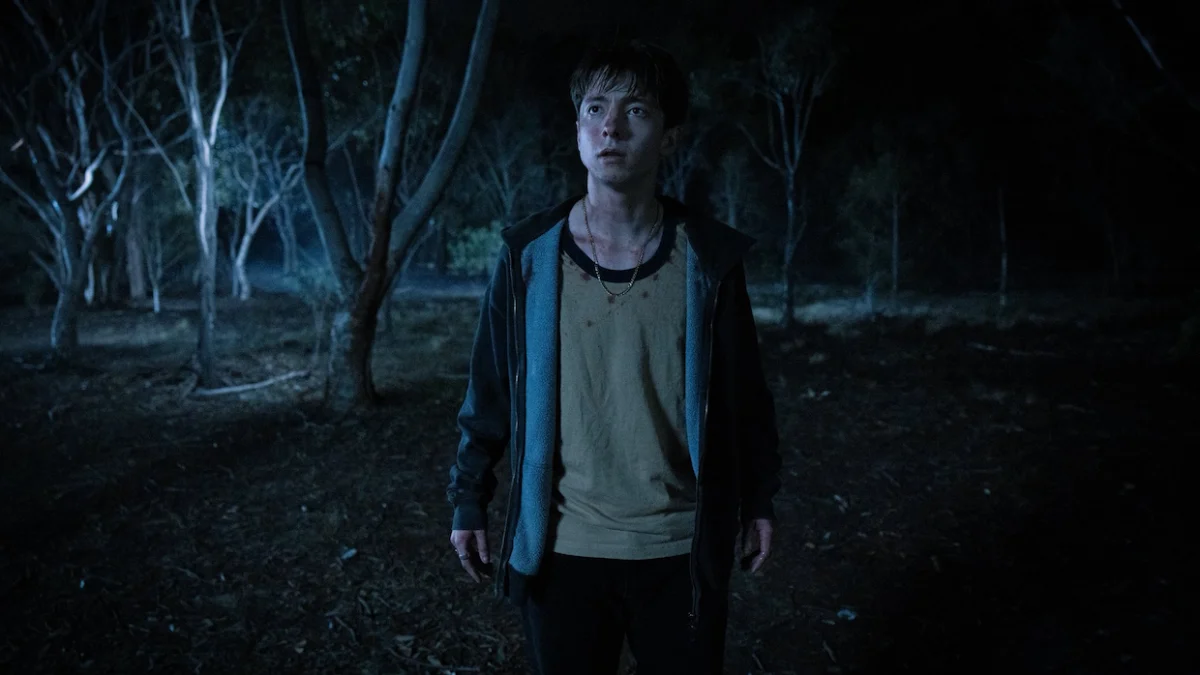
The narrative centers on Naim, played by Joe Bird, a reserved newcomer to a religiously conservative industrial town. Naim finds himself drawn to Ryan, portrayed by Stacey Clausen, a charismatic and unapologetic classmate. Their burgeoning relationship is complicated by the intrusion of Hunter, played by Jeremy Blewitt, the closeted son of the town’s prominent preacher. Driven by jealousy and fear of exposure, Naim commits a transgression by reporting the illicit dynamics to local authorities, unwittingly unleashing a chain of events that traps the teenagers in a web of paranoia, isolation, and inescapable dread.
The film stars a notable cast, including an appearance by Mia Wasikowska as Naim’s mother, whose character blurs the lines between maternal protection and psychological oppression. The feature draws heavy visual and thematic inspiration from iconic 1980s horror milestones, specifically Wes Craven’s A Nightmare on Elm Street 2: Freddy’s Revenge (1985) and John Carpenter’s The Thing (1982), both of which have long been studied by film scholars for their closeted subtexts and explorations of paranoia, identity, and the "other."
Background Context and Evolution of Queer Horror
The release of Leviticus arrives at a complex juncture in the evolution of LGBTQ+ representation in media. Over the past decade, mainstream queer cinema and television have largely trended toward aspirational narratives, focusing on coming-out stories, romantic triumphs, and stories transcending historical crisis. However, this progress has coincided with a measurable global resurgence in anti-LGBTQ+ rhetoric, legislative pushback, and a regressive slide in social safety metrics for queer youth.
Chiarella has noted that the creative impetus for Leviticus was a direct reaction to this socio-political climate. Rather than leaning into the sanitized comfort of contemporary prestige drama, the director returned to the horror genre—a medium that has historically provided a sanctuary for marginalized audiences.
Historically, horror has offered a coded language for outsider communities. The subtext of queer alienation has permeated the genre for decades, from the subversion of normative family structures in classic monster movies to explicit allegories of the AIDS epidemic in 1980s and 1990s vampire cinema. Leviticus deliberately strips away the subtlety of these historical codes, transforming the metaphorical closet into a literal monster that preys upon the vulnerability of youth forced to suppress their authentic identities.
Chronology and Narrative Progression
The structural rhythm of Leviticus mirrors the inescapable nature of its central metaphor, unfolding through a meticulous escalation of tension:
- The Cold Open: The film establishes its high-stakes premise through the murder of a lesbian lifeguard in a poolside shower, seduced and killed by the shape-shifting entity born from religious condemnation.
- The Encounter: Naim and Ryan navigate their initial hostility and mutual attraction in an abandoned building, culminating in a charged confrontation and kiss that immediately triggers Naim’s internal panic and self-loathing.
- The Transgression: Hunter’s involvement in a violent tryst with Ryan prompts Naim to break the code of silence, acting out of jealousy and expecting a minor reprimand rather than spiritual excommunication.
- Isolation and Investigation: Shunned and hunted by a monster that exploits solitude, Naim and Ryan attempt to track down the surviving partner of the opening scene’s victim at a local hospital, only to find that false allyship and predatory love surround them at every turn.
- The Climax and Ambiguous Resolution: The narrative eschews a neat Hollywood conclusion. Instead of destroying the monster permanently, the film closes on an ambiguous note suggesting that trauma does not simply vanish—an artistic choice intended to reflect the enduring psychological scars of prejudice.
Statements and Artistic Intent
In interviews surrounding the festival circuit and theatrical rollout, Chiarella has elaborated on the intentionality behind the film’s atmospheric design and narrative architecture.
"I started thinking about what would be personal for me, and horror movies were something that I turned to as a young queer teenager," Chiarella explained. "The genre has been important to the community for a very, very long time."
Reflecting on the dualities present within the setting—which contrasts harsh industrial infrastructure with desolate pastoral landscapes—the director emphasized the thematic clash between humanity and institutionalized dogma. "We wanted to play with this theme of what’s man-made and what comes from the universe," he noted, highlighting the tension between innate human emotion and the rigid edicts enforced by religious authorities.
Furthermore, Chiarella addressed the film’s distinctive visual grammar, where characters are frequently observed through reflective surfaces, windows, and the impassive gaze of bystanders who refuse to acknowledge the supernatural threat. This visual strategy intentionally mimics the willful ignorance often experienced by queer youth, whose lived realities are frequently dismissed as performative or influenced by external actors.
Broader Impact and Critical Implications
As Leviticus continues to screen for audiences and critics, its cultural footprint extends far beyond traditional genre appreciation. Cultural analysts have pointed out that the film bridges a generational gap in queer storytelling, successfully weaponizing the visceral mechanics of horror to articulate the very real terror experienced by marginalized demographics under threat of institutional erasure.
The film’s refusal to offer a cleanly resolved, optimistic finale has been a primary point of critical discussion. By concluding with the implication that the trauma inflicted by systemic bigotry may never fully dissipate, Leviticus rejects the formulaic catharsis typically expected from modern social-issue thrillers. Instead, it positions trauma as an enduring shadow that requires vigilance, solidarity, and resilience to navigate.
In doing so, Chiarella’s debut establishes a new benchmark for how horror cinema can engage with socio-political realities. By taking the pious warning often weaponized against queer youth—that their desires will destroy them—and literalizing it within a supernatural framework, Leviticus subverts the oppressive messaging of the past, transforming a historical weapon of fear into a modern instrument of cinematic resistance.