
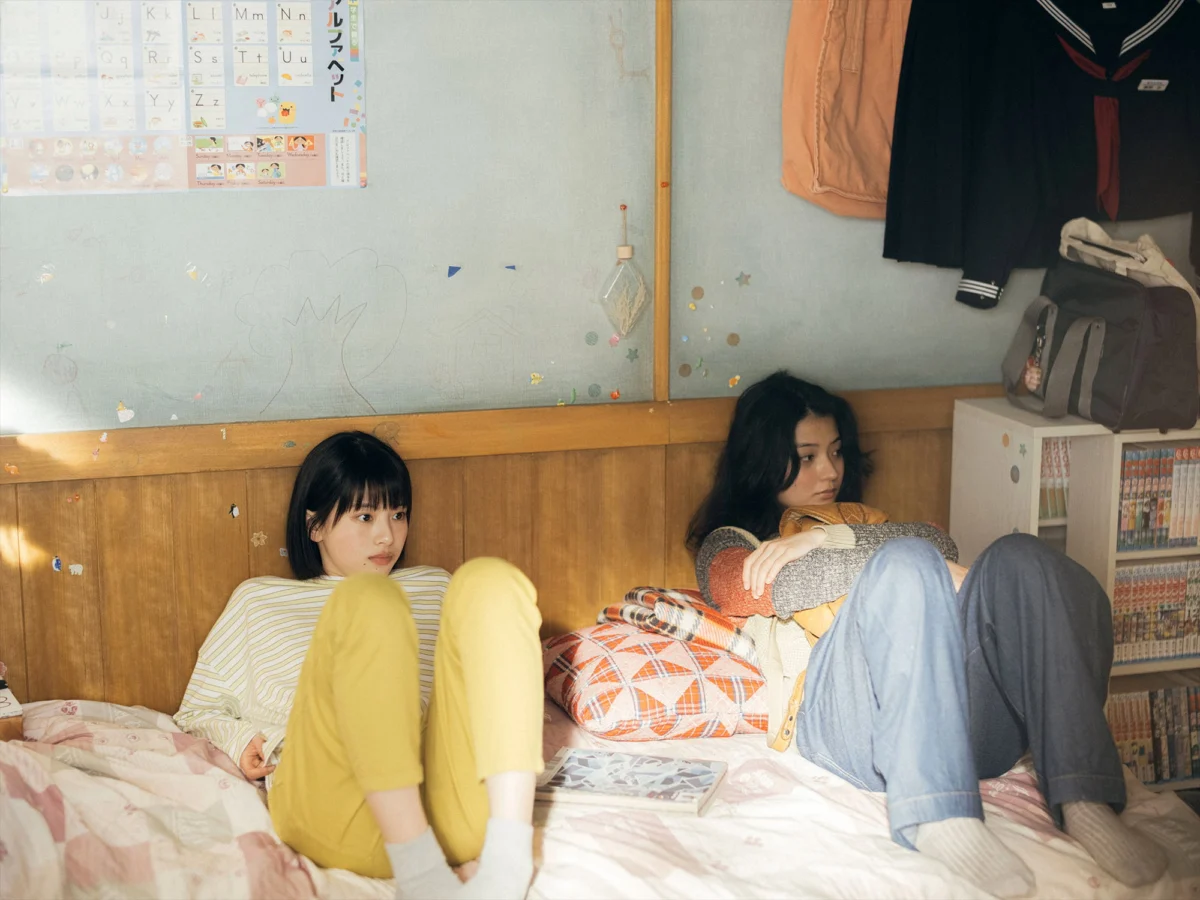
The 83rd Venice International Film Festival served as the global stage for the world premiere of Look Back, a live-action feature adaptation directed by acclaimed Japanese filmmaker Hirokazu Kore-eda. Exhibited in the main competition selection on September 12, 2026, the film adapts the celebrated 2021 manga by Tatsuki Fujimoto, which previously inspired a critically acclaimed anime adaptation. Kore-eda, renowned for his humanist dramas examining unconventional family structures and youth, presents a narrative centered on the formative years of two young artists whose lives intertwine through a shared dedication to illustration. The premiere drew positive attention from international critics, positioning the project as a notable highlight of the festival’s late-stage lineup and providing a distinct tonal counterweight to Kore-eda’s earlier 2026 release, Sheep in the Box, which debuted at the Cannes Film Festival earlier in the year.
Chronology and Background of the Adaptation
Tatsuki Fujimoto’s original manga, published via Shueisha’s Shonen Jump+ platform in July 2021, achieved widespread commercial success and critical acclaim for its meta-textual narrative and poignant exploration of creative compulsion. The property was subsequently adapted into an animated feature film released in Japanese theaters in June 2024, grossing significant box office returns and establishing a dedicated international following.
Building upon this source material, Hirokazu Kore-eda initiated production on the live-action adaptation in late 2024, undertaking both writing and editing duties. Cinematographer Senzo Ueno joined the production to establish the visual language of the film, balancing intimate, static interior compositions with dynamic tracking shots that mirror the energetic movement of the central characters.
The narrative follows Fujino, a confident schoolgirl who serializes a four-panel comic strip (yonkoma manga) for the school newspaper, and Kyomoto, a severely reclusive student who refuses to attend classes but maintains an exceptional talent for background art. Their initial rivalry transforms into a profound collaborative partnership after they meet face-to-face, united by mutual admiration for each other’s artistic capabilities. The narrative tracks their progression from elementary school into high school, charting the evolution of their creative endeavors against the backdrop of familial skepticism regarding the viability of artistic careers.
Cast and Production Details
The casting process for Look Back required distinct pairings to accurately portray the characters across different developmental stages of their lives. Young actors Furi Nanase and Rokka Okada were cast to portray Fujino and Kyomoto during their formative years in elementary school, establishing the foundational dynamic of the friendship. As the characters mature into high school and early adulthood, Natsuki Deguchi and Aju Makita assume the roles of the older Fujino and Kyomoto, respectively.

Kore-eda’s established proficiency in eliciting authentic performances from young casts remains a central element of the production. Industry analysts note that the director’s restrained approach allows the central relationship to develop naturally, minimizing artificial dramatic tension in favor of observational realism during the first two acts. The film’s acoustic landscape is shaped by composer Yuta Bandoh, whose orchestral and ambient score underscores the emotional transitions of the narrative without overwhelming the dialogue.
Narrative Structure and Thematic Analysis
The structural trajectory of Look Back diverges from traditional coming-of-age formulas by introducing a significant, abrupt tonal shift in its final third. While the initial acts focus on domestic creativity, collaborative artistic output, and the therapeutic nature of shared passions, the latter portion of the narrative incorporates existential twists and speculative storytelling elements characteristic of Tatsuki Fujimoto’s original writing.
Critics at the Venice Film Festival noted that Kore-eda maintains the thematic core of the source material—emphasizing the vital importance of human connection and mutual encouragement in artistic pursuits—while navigating the complex metaphysical turns of the conclusion. The editing choices in the final act, which employ non-linear framing and temporal backtracking, invite varied interpretations regarding memory, regret, and alternative life paths. Despite the inherently tragic elements embedded within the plot, the overarching sentiment of the film remains focused on resilience and the enduring impact of formative friendships.
Industry Implications and Festival Reception
The premiere of Look Back at the Venice International Film Festival underscores a broader trend of cross-media adaptations gaining prominence within major European film festivals. The successful translation of a contemporary manga property into a live-action arthouse feature by an established Palme d’Or-winning director indicates an evolving approach to intellectual property within international cinema markets.
Box office analysts and distribution specialists anticipate robust international interest following the Venice screening, driven by the global fanbase of the original manga and anime, coupled with Kore-eda’s established prestige among arthouse audiences. The film’s examination of artistic isolation, validation, and collaboration resonates strongly within contemporary cultural discussions surrounding youth mental health and creative expression in digital environments.
As the 2026 festival circuit concludes, Look Back stands as a critical success for Hirokazu Kore-eda, reinforcing his versatility as a filmmaker capable of bridging contemporary pop culture properties with classical, humanist cinematic storytelling.