
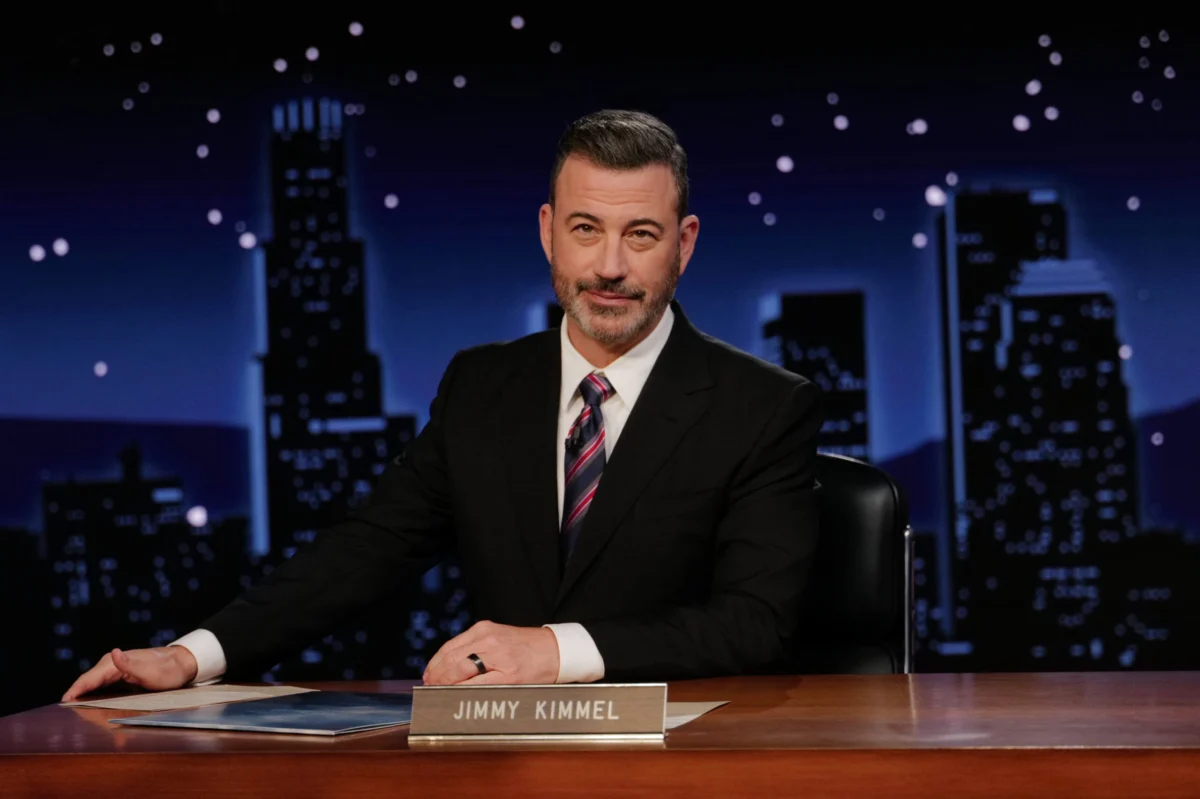
Late-night television host Jimmy Kimmel has announced a significant shift in his programming strategy, opting to move an upcoming interview with Texas Democratic Senate candidate James Talarico from the national ABC broadcast to a digital-only format on YouTube. This decision comes as the long-running program navigates a period of unprecedented regulatory pressure from the Federal Communications Commission (FCC) under the current Trump administration. Kimmel, citing threats against the show, its parent network Disney-owned ABC, and local affiliates, framed the move as a protective measure intended to shield regional broadcasters from potential legal or regulatory entanglements.
The controversy centers on the interpretation of "bona fide" news programming. Under long-standing FCC regulations, television programs that qualify as legitimate news broadcasts are typically exempt from "equal time" rules, which require stations to provide comparable airtime to all qualified candidates for political office. By questioning whether late-night talk shows meet the criteria for such exemptions, the current FCC leadership—under Chairman Brendan Carr—has effectively created a regulatory climate that incentivizes networks to curtail political discourse to avoid costly licensing disputes or enforcement actions.
A Chronology of Regulatory Friction
The tension between the Trump administration and Disney’s broadcast arm has escalated significantly over the past 18 months, evolving from ideological disagreements into formal administrative challenges.
In September 2025, the relationship reached a breaking point when Kimmel delivered a monologue following the killing of political activist Charlie Kirk. The segment triggered a massive backlash, leading to a temporary suspension of the show and a decision by several ABC-affiliated station owners to pull the program from their lineups. While Kimmel later clarified that his remarks were not intended to minimize the gravity of the incident, the event served as a catalyst for renewed scrutiny of ABC’s programming standards.
By early 2026, the scrutiny transitioned from station-level boycotts to federal oversight. In April, the FCC initiated an early renewal process for ABC-owned broadcast licenses. While the agency cited an investigation into the company’s internal diversity, equity, and inclusion (DEI) practices as the primary impetus, the move was widely viewed by media analysts as a strategic effort to leverage the network’s future operating viability.
The situation intensified in August 2026, when Disney filed a federal lawsuit against the FCC. The litigation alleges that the agency’s investigation and the accelerated license renewal process constitute a "retaliatory campaign" aimed at punishing the network for the content of its political commentary. The lawsuit asserts that these actions infringe upon First Amendment protections and represent a weaponization of federal regulatory power against a private media entity.
The Stakes of the Texas Senate Race
The interview that prompted the current controversy involves James Talarico, a Texas state representative currently engaged in a highly contentious race for the U.S. Senate. Talarico is challenging Texas Attorney General Ken Paxton, a candidate who has received the explicit endorsement of President Donald Trump.
The race has become a flashpoint for broader national political debates. Paxton, whose tenure as Attorney General has been marked by significant legal challenges, including a high-profile impeachment trial in the Texas House of Representatives over corruption allegations, remains a polarizing figure. Despite his acquittal by the state Senate, his political future remains a focal point of national interest. Public polling data suggests a narrow lead for Talarico, underscoring the high stakes for both the Republican and Democratic parties as they look toward the November elections. By pulling the interview from the national stage, Kimmel’s production team is effectively attempting to avoid a scenario where the FCC could force ABC to grant an equal amount of airtime to Paxton, a move that would be logistically and legally difficult for a comedy-centric program.
Legal Implications and Broadcasting Standards
The core of the dispute rests on the FCC’s evolving definition of what constitutes a "news" program. Traditionally, programs like The View and Jimmy Kimmel Live! have operated under the assumption that their interview segments—which have historically featured guests ranging from sitting presidents to international dignitaries—fall under the umbrella of news and public affairs.
Legal scholars note that the FCC’s recent skepticism could set a dangerous precedent for the entire broadcast industry. If the commission successfully reclassifies late-night talk shows as entertainment-only programs, they would be subject to the full weight of the Communications Act’s equal-time provisions. This would force networks to either abandon political interviews entirely or provide dozens of candidates with free, prime-time access during election cycles, a requirement that would be functionally impossible to implement.
"The FCC is testing the boundaries of its discretionary authority," said one media law analyst. "By narrowing the definition of what is ‘news,’ the commission can effectively stifle political debate on broadcast television without ever formally censoring a specific segment. It creates a ‘chilling effect’ where the network self-censors to avoid the cost of litigation."
Official Responses and Industry Outlook
To date, the FCC has remained largely silent on the specifics of the Kimmel case. When reached for comment, agency representatives declined to discuss ongoing investigations or internal policy deliberations. However, Chairman Brendan Carr has previously maintained that the FCC’s role is to ensure that broadcasters serve the public interest and adhere to federal standards of fairness.
Within the industry, the move by Kimmel has prompted a mix of concern and tactical resignation. ABC executives have publicly maintained their commitment to the First Amendment, asserting in legal filings that the government cannot use the licensing process to punish a broadcaster for editorial decisions.
"We are witnessing a fundamental shift in the relationship between the government and the fourth estate," said a veteran broadcast executive. "If a major network like Disney-ABC can be pressured into moving content to the internet to avoid FCC intervention, it signals that the traditional broadcast model is under significant strain."
The Road to November
As the November election approaches, the pressure on television networks is expected to intensify. The strategy of shifting content to digital platforms—where FCC jurisdiction is virtually non-existent—is likely to become a template for other broadcasters facing similar scrutiny.
The digital migration of the Talarico interview highlights the widening gap between traditional terrestrial broadcasting and the unregulated digital sphere. While YouTube offers a platform free from the constraints of the FCC’s broadcast rules, it also removes the program from the massive, multi-million viewer reach that characterizes prime-time network television. For Kimmel, this trade-off is a necessary sacrifice to ensure that the content is produced at all, rather than being scrapped entirely under the threat of regulatory action.
As the litigation between Disney and the FCC proceeds, the industry remains in a state of uncertainty. The outcome of the lawsuit will likely determine the extent to which the federal government can influence the editorial direction of American media. For now, the "Jimmy Kimmel Live!" studio remains a focal point of this constitutional battle, serving as both a venue for comedy and a battleground for the future of free speech in broadcasting. The decision to move the Talarico interview to YouTube is not merely a programming change; it is a symptom of a broader, ongoing transformation in how political discourse is managed, restricted, and consumed in the modern American media landscape.