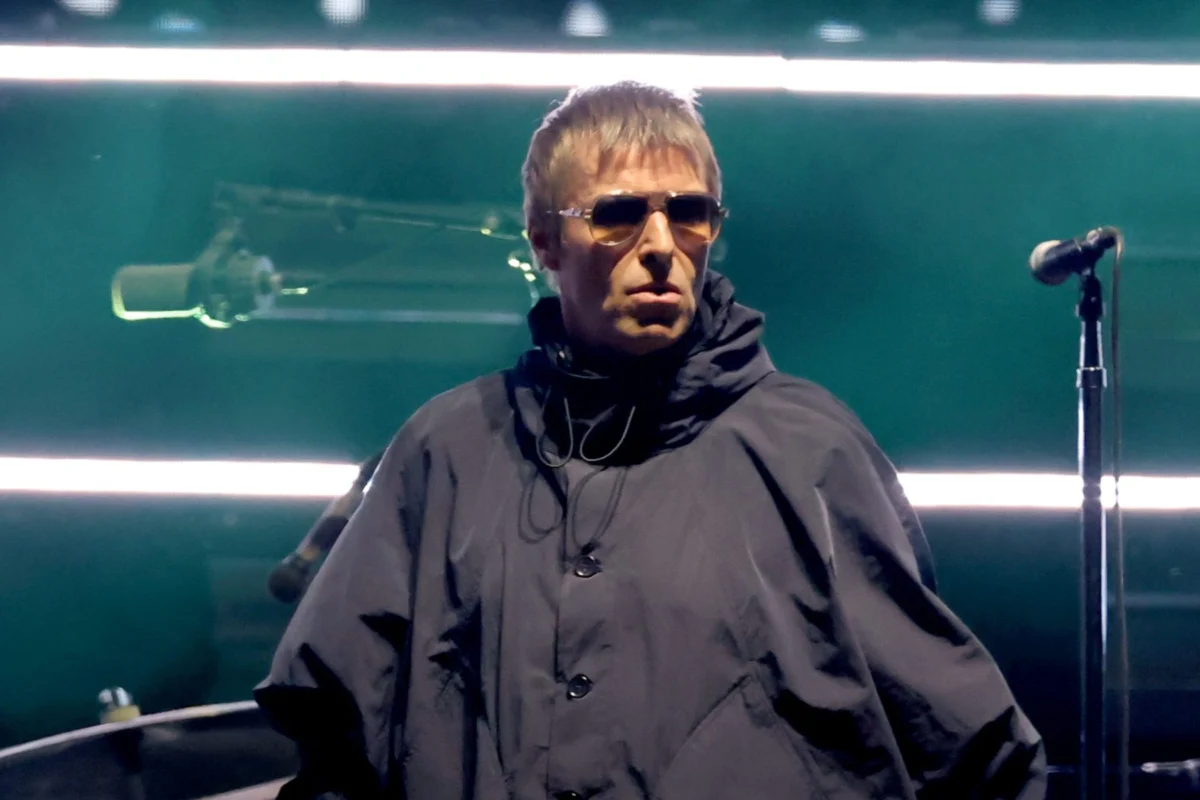
The inaugural halftime performance at a FIFA World Cup final, a spectacle intended to elevate the tournament’s entertainment value to unprecedented heights, has drawn a notably sharp critique from Oasis frontman Liam Gallagher. The ambitious production, which unfolded during the climactic Spain-Argentina match at New York New Jersey Stadium in East Rutherford, N.J., on Sunday, July 19, 2026, featured a star-studded lineup of global music icons and performers. However, for Gallagher, the experience proved to be far from celebratory, eliciting a blunt and dismissive assessment shared on the social media platform X.
The highly anticipated halftime show, meticulously curated by Coldplay’s Chris Martin, aimed to fuse diverse musical genres and cultural influences into a cohesive, stadium-filling performance. This marked a significant departure for the FIFA World Cup, which has historically focused on pre-match ceremonies and post-match celebrations rather than a dedicated mid-game musical extravaganza akin to the Super Bowl’s iconic halftime tradition. The event was designed to be a landmark moment, bridging the gap between elite athletic competition and mainstream popular culture on a global scale.
Gallagher, known for his unvarnished opinions and rock-and-roll authenticity, did not hold back in his assessment. Shortly after the performance commenced, he tweeted, "This is like a bad trip." This initial remark set the tone for his subsequent commentary. The sentiment was further elaborated upon in a follow-up post, where he added, "It’s a good job I’ve got my spiritual socks on or that halftime entertainment could have tipped me over the edge." The use of such stark language underscores Gallagher’s perception of the show as overwhelming and disorienting, rather than entertaining.
The diverse roster of performers aimed to capture a broad spectrum of musical tastes and global appeal. The eleven-and-a-half-minute show kicked off with Madonna, a legendary figure in pop music, performing her 2000 Billboard Hot 100 No. 1 hit, "Music." This was followed by a cascade of performances from an eclectic array of artists, including K-pop sensations BTS, pop superstar Justin Bieber, Colombian singer Shakira, Nigerian Afrobeat artist Burna Boy, and the renowned conductor Gustavo Dudamel, who led an ensemble featuring musicians from the New York Philharmonic and the Simón Bolívar Symphony Orchestra of Venezuela. The show also incorporated elements from British rock band The White Stripes, with Dudamel conducting an rendition of their anthem "Seven Nation Army."
Further bolstering the performance’s international reach, Shakira and Burna Boy collaborated on "Dai Dai," the official World Cup song and a recent chart-topper on the Billboard Global 200. BTS delivered a high-energy rendition of their global hit "Dynamite," while Justin Bieber offered an acoustic interpretation of "Everything Hallelujah." The inclusion of the PS22 Chorus, a well-regarded children’s choir known for their uplifting performances, and beloved Muppet characters Kermit the Frog and Miss Piggy, added a family-friendly and whimsical dimension to the spectacle. The grand finale featured a massive "LOVE" stage formation illuminated by fireworks, with many of the earlier performers returning to the field.
The decision to stage such an elaborate halftime performance represents FIFA’s strategic move to enhance the World Cup’s broader entertainment appeal, aligning it more closely with the commercial and cultural impact of events like the NFL’s Super Bowl. For decades, the Super Bowl halftime show has been a cornerstone of American sports entertainment, consistently drawing massive global audiences and launching artists into new stratospheres of fame. FIFA’s adoption of a similar model suggests a desire to capture that same level of cultural resonance and commercial opportunity for its flagship tournament.
The integration of such a music-heavy segment into the World Cup final’s broadcast is a significant development. The tournament, while celebrated for its sporting drama, has traditionally reserved its most significant entertainment moments for the opening and closing ceremonies, and the trophy presentation. The introduction of a dedicated halftime show signifies a shift towards a more sustained and integrated entertainment experience throughout the event.
Liam Gallagher’s reaction is particularly noteworthy given Oasis’s own deep-seated connection with football culture. The band’s anthems, such as "Wonderwall" and "Don’t Look Back in Anger," have become ubiquitous in stadiums worldwide, frequently sung by crowds at football matches and often adopted as unofficial club anthems. This long-standing relationship between Oasis’s music and the sport adds an interesting layer to Gallagher’s critique, suggesting a potential disconnect between his own artistic sensibilities and the curated pop spectacle presented by FIFA.
Oasis has recently embarked on a significant global stadium tour, the "OASIS LIVE ’25" tour, which has seen them perform across the United Kingdom, Ireland, North America, Mexico, Asia, Australia, and South America. This tour underscores the band’s enduring appeal and their continued ability to command massive audiences in large-scale venues. Gallagher’s personal engagement with stadium culture through his touring commitments might have informed his expectations for a performance of this magnitude.
The inclusion of diverse artists like Burna Boy and BTS also reflects a broader trend in global music consumption, where genre boundaries are increasingly blurred and artists from non-Western markets are achieving unprecedented international success. The Billboard Global 200, for instance, has become a key indicator of worldwide music popularity, and "Dai Dai" topping this chart demonstrates the growing influence of global hits.
The financial and logistical undertaking of producing such an event is substantial. While specific figures for the World Cup halftime show’s budget were not immediately released, similar productions for the Super Bowl often run into the tens of millions of dollars, encompassing artist fees, staging, lighting, sound production, and security. FIFA’s investment in this performance signals a commitment to elevating the tournament’s spectacle beyond the pitch.
The reactions to the halftime show are likely to be varied, with many viewers appreciating the diverse lineup and the attempt to bring a Super Bowl-esque experience to the World Cup. However, the critical response from a figure like Liam Gallagher, who embodies a more raw and traditional rock ethos, highlights the subjective nature of entertainment and the challenge of satisfying all audience segments with a single, large-scale performance.
The long-term implications of this new halftime show format for the FIFA World Cup remain to be seen. If successful in captivating a broad audience and generating significant media attention, it could become a permanent fixture, influencing future tournament planning and artist selection. Conversely, if it fails to resonate with fans or is perceived as overly commercialized or inauthentic, FIFA may reassess its strategy. The event also raises questions about the balance between sporting purity and commercial entertainment in major global sporting events. As the football world digests the spectacle, the stark assessment from Liam Gallagher serves as a reminder that even the most meticulously planned events can elicit deeply personal and unvarnished reactions. The "bad trip" comment, while blunt, encapsulates a sentiment that may be shared by a segment of the audience who prefer a more direct and less manufactured form of entertainment. The ongoing dialogue surrounding such performances will undoubtedly shape how major sporting events integrate popular culture in the future.