


Comcast Corporation officially announced on Monday a comprehensive plan to spin off its premier media and entertainment assets into a new, independent, publicly traded company. This strategic realignment involves the separation of NBCUniversal and Sky, marking one of the most significant structural changes in the telecommunications and media giant’s history. The move is designed to decouple Comcast’s high-growth connectivity and networking businesses from its content-heavy media divisions, allowing each entity to pursue distinct strategic priorities in an era defined by aggressive streaming competition and rapid industry consolidation.
The separation, which is structured as a tax-free spinoff to Comcast shareholders, is expected to be finalized within approximately one year, pending customary regulatory approvals and final board authorization. Upon completion, Comcast shareholders will hold pro-rata shares in both the remaining Comcast entity and the newly formed NBCUniversal. This bifurcation is intended to unlock shareholder value by providing investors with the choice to invest in two distinct business models: one focused on the steady cash flows of broadband and wireless infrastructure, and the other on the dynamic, investment-heavy world of global content production and distribution.
Strategic Rationale and Leadership Vision
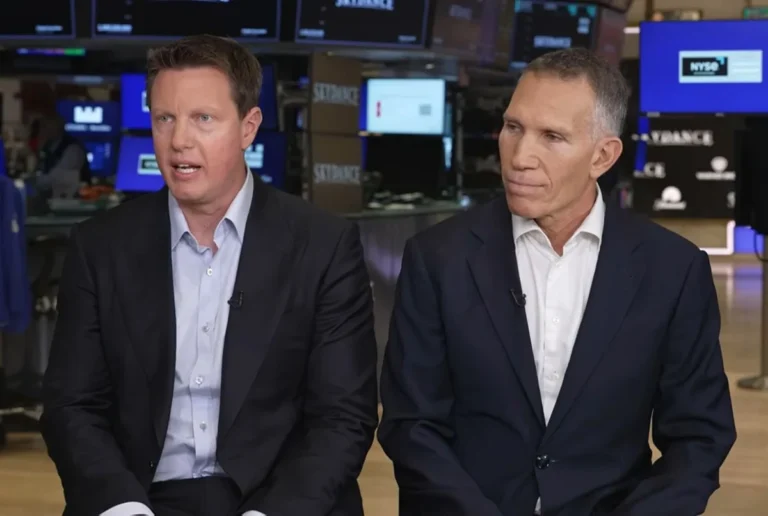
The decision to split the company comes at a pivotal moment for the legacy media industry. Brian Roberts, co-CEO and Chairman of Comcast, articulated the rationale during a conference call with investors on Monday, emphasizing that the technological and media landscapes have diverged to a point where they require specialized management. Roberts noted that as the company looks ahead, it has become clear that the technology and media businesses each possess compelling opportunities that are distinct in nature and best pursued with dedicated focus, strategic flexibility, and tailored investment priorities.
Under the new organizational structure, Mike Cavanagh, currently co-CEO of Comcast, will transition to become the Chief Executive Officer of the independent NBCUniversal. Michael Angelakis, the former Chief Financial Officer of Comcast and a veteran of the company’s strategic investment arms, will step in as the CEO of the remaining Comcast entity. Brian Roberts will maintain a central role, continuing to be actively involved in the leadership and strategic direction of both companies. Roberts indicated he would work closely with both Cavanagh and Angelakis to ensure a smooth transition and to capitalize on the "exciting new chapter" for both organizations.
The market responded with initial volatility to the news. Comcast shares experienced a sharp surge of up to 17% in early trading following the announcement, reflecting investor enthusiasm for the potential unlocking of value. However, the gains were partially pared back as the day progressed, with the stock ultimately closing up approximately 4.5%. This reaction underscores a cautious optimism among Wall Street analysts who have long argued that Comcast’s diverse portfolio was undervalued when bundled together.
Defining the Two New Entities
The spinoff will result in two lean, focused organizations with clear operational mandates. The new NBCUniversal will be a global media powerhouse, housing a vast array of content assets and physical destinations. This entity will include the Universal film and television studios, the NBC and Telemundo broadcast networks, the Peacock streaming service, and a portfolio of popular cable brands such as Bravo. Furthermore, it will encompass the Universal theme parks division—a consistent high-performer for the company—and the European media giant Sky, which provides a significant footprint in the United Kingdom, Germany, and Italy.

By housing these assets under one roof, the new NBCUniversal aims to compete more effectively against pure-play content giants and streaming leaders like Netflix and Disney. The inclusion of the theme parks is seen as a critical component of the new company’s financial stability, providing a physical "flywheel" for the intellectual property generated by the film and television studios.
The remaining Comcast company will pivot its focus almost exclusively to its core competencies in connectivity. This includes the Xfinity-branded cable and residential broadband services, its growing wireless division, and its robust business services arm. By shedding the volatile media segment, this entity is expected to trade more like a traditional utility or technology infrastructure company, focusing on capital returns, network upgrades, and the expansion of its 5G and fiber-optic capabilities.
A Response to Industry-Wide Disruption
The timing of this separation is not coincidental. Comcast’s share price has faced significant headwinds over the past year, declining by approximately 30% as the "cord-cutting" phenomenon accelerates. The traditional television bundle, once the bedrock of Comcast’s profitability, is eroding as consumers migrate to direct-to-consumer streaming platforms. This shift has placed immense pressure on legacy media companies to scale their streaming services while simultaneously managing the decline of their linear television networks.
Mike Cavanagh addressed these pressures directly on Monday, acknowledging that the media and telecom landscapes have become increasingly competitive and that the pace of change continues to accelerate. He stated that the company does not see these conditions changing anytime soon, necessitating a proactive shift in corporate structure rather than a reactive one.
This move follows a smaller, precursor transaction completed earlier this year. Comcast previously spun off a specific portfolio of cable TV networks and digital assets—including the financial news powerhouse CNBC and MS NOW—into a separate public entity known as Versant Media. That move was viewed by many industry observers as a "test run" for the much larger separation of NBCUniversal and Sky announced this week.
The Broader Landscape of Media Consolidation
Comcast’s decision to split is part of a wider wave of consolidation and restructuring sweeping through the entertainment sector. As the cost of content production skyrockets and the battle for subscriber attention intensifies, legacy players are seeking scale at any cost.
Recent months have seen several transformative deals. Paramount Global recently completed its merger with Skydance Media, a move designed to shore up its balance sheet and enhance its production capabilities. More recently, the Department of Justice cleared a $110 billion deal for Warner Bros. Discovery, further concentrating the industry’s power. Additionally, Fox Corporation reached an agreement to acquire the streaming platform Roku for $22 billion, highlighting the premium placed on distribution technology in the modern era.

In this context, Comcast’s spinoff allows NBCUniversal the "strategic flexibility" to participate in future consolidation. As an independent entity, NBCUniversal could more easily merge with another media player or acquire smaller content libraries without the regulatory and financial complexities of being tethered to a massive cable and broadband provider.
Financial Considerations and Future Outlook
As part of the spinoff process, Comcast has announced a temporary pause on its share repurchase program. This move is intended to preserve capital and ensure that both resulting companies have strong balance sheets at the time of the separation. Cavanagh noted that the company would provide more granular details regarding the dividend policies for each entity as the completion of the deal draws closer.
A notable detail in the transaction structure is Comcast’s intention to retain a minority stake of up to 19.9% in the new NBCUniversal for a period of up to one year following the spinoff. The company plans to monetize this position over time in a tax-efficient manner, providing a secondary source of capital for the remaining Comcast entity to invest in its network infrastructure.
The success of the spinoff will largely depend on Peacock’s ability to achieve profitability and the continued resilience of the Universal theme parks. While Peacock has seen steady subscriber growth, it continues to operate at a loss—a common trait among newer streaming entrants. As an independent company, NBCUniversal will be under increased pressure to demonstrate a clear path to streaming profitability without the "safety net" of Comcast’s broadband revenues.
The regulatory environment will also be a key factor. While the spinoff is expected to be viewed favorably as it does not involve a merger of competitors, it will still undergo rigorous review by the Federal Communications Commission (FCC) and the Department of Justice.
In conclusion, Comcast’s decision to bifurcate its empire represents a definitive acknowledgement that the era of the "mega-conglomerate" may be drawing to a close in the media sector. By creating two specialized companies, Comcast is betting that focus and agility will be more valuable than sheer size in surviving the ongoing digital transformation of global entertainment and connectivity. As the media industry continues to consolidate, the new NBCUniversal stands ready as a formidable independent player, while the remaining Comcast doubles down on the infrastructure that powers the digital age.