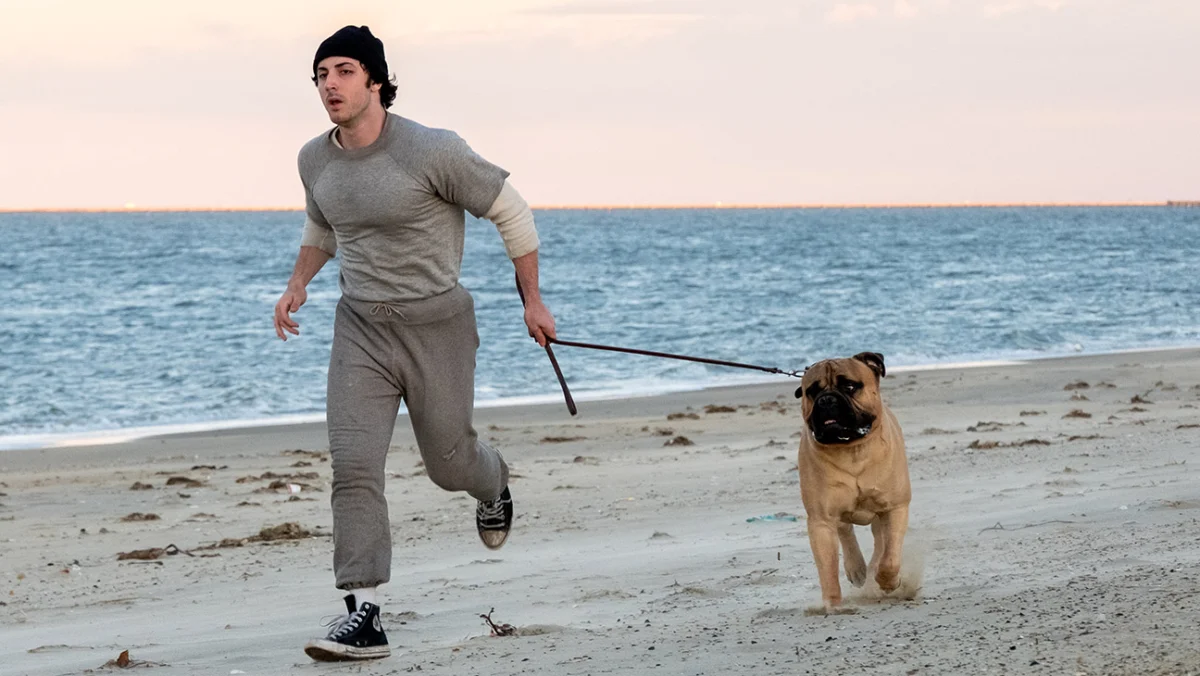
The cinematic world is abuzz with the release of the trailer for I Play Rocky, an Amazon MGM Studios production that delves into the remarkable true story behind the creation and casting of one of Hollywood’s most iconic figures, Sylvester Stallone, and his seminal work, Rocky. The forthcoming biopic features Anthony Ippolito in the pivotal role of a young Sylvester Stallone, meticulously recreating his journey from an unknown, struggling actor and writer to the unlikely star of the 1976 instant-classic film that catapulted him to global stardom. The trailer offers a compelling glimpse into Ippolito’s transformative performance, particularly noting his striking physical resemblance and uncanny vocal approximation of Stallone during his formative years. Critics and audiences alike have already pointed out the impressive accuracy of Ippolito’s portrayal, with the trailer itself highlighting his distinct, gravelly voice—described evocatively as sounding like "you’ve got rocks in your mouth"—a characteristic hallmark of Stallone’s vocal delivery.
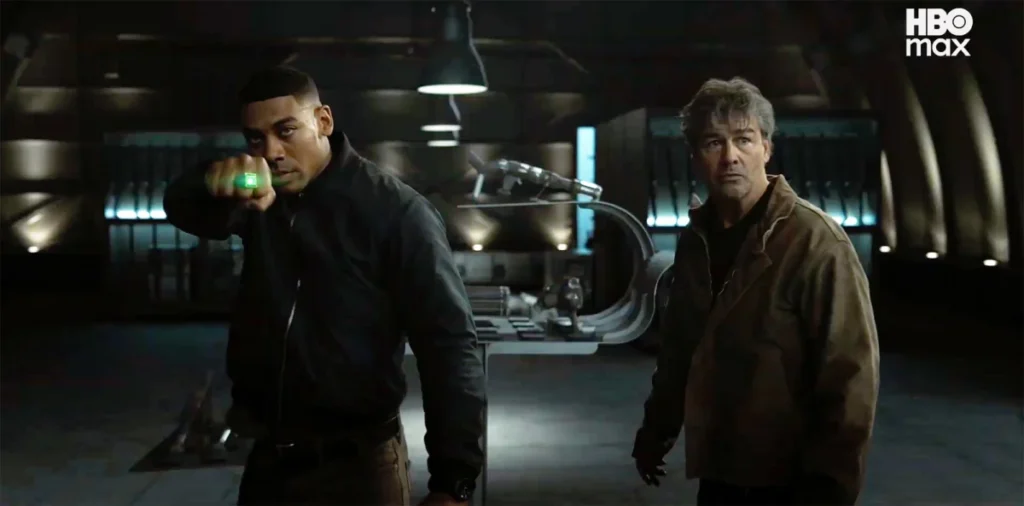
Beyond Ippolito’s central performance, the film promises an ensemble of talented actors bringing to life the key figures in Rocky‘s development. Stephan James is set to portray the legendary Carl Weathers, who famously played Apollo Creed opposite Stallone’s Rocky Balboa. James’s depiction in the trailer has been lauded for its pitch-perfect capture of Weathers’ charisma and physical presence, suggesting a faithful and respectful homage to the late actor. The narrative arc of I Play Rocky centers on the unwavering belief of an unknown actor who not only penned the screenplay for Rocky but also adamantly insisted he was the only one fit to portray the titular character, Rocky Balboa. This insistence, against seemingly insurmountable odds and industry skepticism, forms the emotional core of what is billed as "the ultimate underdog story behind the ultimate underdog movie."
The Genesis of an Icon: Sylvester Stallone’s Unyielding Vision
The story of Rocky is as legendary as the film itself, a testament to sheer willpower and an unshakeable belief in one’s own vision. In the early 1970s, Sylvester Stallone was a struggling actor living in poverty in New York City. His acting career was stalled, marked by minor roles and countless rejections. The inspiration for Rocky struck him after watching a boxing match between then-heavyweight champion Muhammad Ali and journeyman fighter Chuck Wepner in March 1975. Wepner, a relatively unknown boxer, managed to knock Ali down and lasted a full 15 rounds, defying all expectations. This display of grit and resilience profoundly resonated with Stallone, who saw in Wepner’s underdog spirit the makings of a compelling narrative.
Fueled by this inspiration, Stallone famously penned the screenplay for Rocky in a remarkable three-and-a-half days. The script was a raw, authentic portrayal of a small-time club fighter from Philadelphia, a man with heart and untapped potential, living a life of quiet desperation. Stallone envisioned himself in the role of Rocky Balboa, believing that only he could authentically convey the character’s nuanced blend of vulnerability, determination, and working-class charm. When he began pitching the script to studios, it quickly garnered significant interest. Several production companies were eager to acquire the screenplay, offering Stallone substantial sums, with one offer reportedly reaching $360,000—an astronomical figure for a struggling writer at the time. However, each offer came with a crucial caveat: the studio wanted a more established star, such as Burt Reynolds, Robert Redford, or James Caan, to play Rocky Balboa.
Stallone, despite his desperate financial situation, refused to budge. He famously held out, rejecting increasingly lucrative offers, resolute in his demand that he, and only he, would play Rocky. His conviction was so strong that he was willing to walk away from life-changing money if it meant sacrificing his vision for the role. This unwavering commitment ultimately led to a deal with producers Irwin Winkler and Robert Chartoff, who, impressed by Stallone’s tenacity and belief, agreed to let him star, albeit on a shoestring budget of approximately $1 million. This pivotal moment, where Stallone "bet everything on himself," is the dramatic crux that I Play Rocky aims to explore, highlighting the profound personal and professional risks he undertook to bring his character to life.
The Phenomenon of Rocky: Critical Acclaim and Cultural Impact
Upon its release in December 1976, Rocky transcended its humble origins to become a cultural phenomenon. Directed by John G. Avildsen, the film was an immediate critical and commercial success. Made for a modest budget, it grossed over $225 million worldwide, making it the highest-grossing film of 1976. Its impact, however, went far beyond box office numbers. Rocky resonated deeply with audiences globally, who embraced its themes of perseverance, self-belief, and the pursuit of dreams against all odds. The film’s message, encapsulated by Rocky Balboa’s iconic line, "It ain’t about how hard you hit. It’s about how hard you can get hit and keep moving forward," became a mantra for millions.
The critical reception was overwhelmingly positive. Reviewers praised Stallone’s raw and authentic performance, his surprisingly sophisticated screenplay, and Avildsen’s masterful direction, which imbued the gritty urban drama with an uplifting, almost fairy-tale quality. Rocky received widespread acclaim, earning a remarkable 92% approval rating on Rotten Tomatoes, with critics consistently hailing it as one of the greatest sports films ever made. Its triumph culminated at the 49th Academy Awards in 1977, where Rocky achieved the extraordinary feat of winning three Oscars, including the coveted Best Picture award.
The 1977 Academy Awards ceremony was famously competitive, featuring a truly stacked field of cinematic masterpieces. Rocky triumphed over cinematic giants such as Sidney Lumet’s satirical masterpiece Network, Martin Scorsese’s gritty psychological thriller Taxi Driver, and Alan J. Pakula’s gripping political drama All the President’s Men. These films, each iconic in their own right, represented the pinnacle of 1970s filmmaking, a period often referred to as the "New Hollywood" era, characterized by complex narratives and morally ambiguous protagonists. For Rocky, a relatively low-budget film with an unknown lead, to emerge victorious against such formidable competition was a monumental achievement, solidifying its place in cinematic history.
Furthermore, Sylvester Stallone received dual Academy Award nominations for Best Actor and Best Original Screenplay, an exceptionally rare honor that underscored his extraordinary talent and vision. While he did not win in either of these individual categories (Peter Finch won Best Actor posthumously for Network, and Paddy Chayefsky won Best Original Screenplay for Network), his nominations were a powerful validation of his unique contribution to the film. This recognition cemented his status not just as an actor, but as a formidable creative force in Hollywood, a trajectory that I Play Rocky will undoubtedly highlight.
The Enduring Legacy of the Rocky Franchise
The rocketship success of Rocky did not just secure Stallone’s career; it birthed one of the most enduring and beloved film franchises in cinematic history. The original film’s narrative of triumph against adversity resonated so deeply that audiences clamored for more. To date, the Rocky universe comprises six main Rocky films and three highly successful Creed spin-off movies, with a fourth Creed installment reportedly in development. This expansive cinematic universe has explored themes of legacy, redemption, and the evolving nature of the fighting spirit across generations.
Stallone remained intimately involved in the franchise’s creative direction. He wrote or co-wrote all six Rocky films, demonstrating his deep connection to the character and the narrative arc. His commitment extended to Creed II, which he also co-wrote, guiding the story of Adonis Creed (Michael B. Jordan), the son of his former rival and friend, Apollo Creed. In Creed II, Stallone’s character, Rocky Balboa, takes on a mentor role, eventually making a poignant exit from the series, a narrative decision that allowed the franchise to evolve while honoring its roots. The Creed films, critically and commercially successful in their own right, have extended the Rocky legacy to a new generation of viewers, proving the timeless appeal of its core themes. The franchise’s collective box office gross runs into the billions, a testament to its sustained global appeal and cultural relevance over five decades.
Anthony Ippolito: Hollywood’s Go-To for Young Legends
Anthony Ippolito’s casting as young Sylvester Stallone is not merely a stroke of luck; it marks a pattern in his burgeoning career. As the original article astutely observes, Ippolito is fast becoming "Hollywood’s go-to for portraying young, Italian, breakout movie stars in ’70s films." This reputation was solidified by his acclaimed performance as a young Al Pacino in the Paramount+ limited series The Offer. That series meticulously chronicled the tumultuous production of Francis Ford Coppola’s The Godfather, another iconic 1970s film that launched the career of a young, intense Italian-American actor into superstardom.
In The Offer, Ippolito demonstrated an impressive ability to capture Pacino’s early intensity, ambition, and the specific challenges he faced in breaking into the industry. His portrayal garnered significant attention for its accuracy and depth, drawing parallels between Pacino’s early struggles and those of other emerging talents of that era. The similarities between Pacino’s trajectory (a talented, intense stage actor struggling for a big break, eventually cast in a career-defining role) and Stallone’s (a struggling writer/actor fighting for the lead in his own script) are striking. Ippolito’s repeated casting in such roles suggests a unique aptitude for embodying the raw ambition, specific cultural context, and transformative period of these iconic figures during a pivotal decade for American cinema. This specialization positions him as a significant talent in the realm of historical biopics, capable of breathing life into the origins of legendary careers.
The Filmmaking Team: Vision and Execution
I Play Rocky boasts a formidable team behind the camera, signaling a production of significant ambition and quality. The film is directed and produced by Peter Farrelly, a filmmaker renowned for his diverse portfolio. While widely known for his comedic hits like Dumb and Dumber and There’s Something About Mary alongside his brother Bobby, Farrelly earned critical acclaim and an Academy Award for Best Adapted Screenplay for his 2018 drama Green Book. That film, which also explored themes of unlikely friendships and overcoming adversity, won Best Picture, demonstrating Farrelly’s capability to helm compelling, character-driven narratives that resonate with critics and audiences. His involvement suggests that I Play Rocky will not shy away from the dramatic depth and emotional authenticity required to tell Stallone’s challenging story.
Alongside Farrelly, the producing team includes Christian Baha, Toby Emmerich, and Paul Currie, bringing a wealth of industry experience to the project. The screenplay is credited to Peter Gamble, who takes on the daunting task of structuring Stallone’s real-life struggle into a cinematic narrative. However, as the original article rightly points out, an "honorable mention" must be extended to Sylvester Stallone himself, whose original Rocky screenplay serves as the foundational anchor for this biopic. It is Stallone’s own words and his profound understanding of the Balboa character that gave birth to the story now being revisited.
The wider cast includes several notable names, promising a strong ensemble performance. Matt Dillon, AnnaSophia Robb, P.J. Byrne, Toby Kebbell, Tracy Letts, Jay Duplass, and Kiki Seto are all part of the film, although their specific roles have not yet been fully detailed. The caliber of this cast further underscores the production’s commitment to delivering a high-quality, nuanced portrayal of this pivotal period in Hollywood history.
Broader Implications: The Enduring Allure of Biopics
The production of I Play Rocky speaks to the enduring appeal of biopics, particularly those that peel back the curtain on the creative process and the personal struggles behind celebrated works of art. Hollywood has a long-standing fascination with its own legends, and stories of overcoming adversity to achieve greatness resonate universally. Films like I Play Rocky offer audiences a chance to witness the human drama behind the myths, providing context and deeper appreciation for the artists and the art they created.
In an era saturated with superhero franchises and spectacle-driven blockbusters, I Play Rocky represents a commitment to compelling storytelling rooted in real-life events. It taps into the timeless theme of the underdog, a narrative deeply embedded in the American psyche and one that Rocky itself so brilliantly capitalized on. The film serves as a reminder that behind every iconic character and every groundbreaking film, there is often a story of immense personal sacrifice, unwavering belief, and sheer tenacity. As the trailer promises, it is indeed "the ultimate underdog story behind the ultimate underdog movie," a narrative that continues to inspire and captivate audiences across generations.