The cinematic landscape of contemporary Vietnam is increasingly being shaped by narratives that explore the complexities of love, loss, and the indelible impact of history. Following the nuanced exploration of fantasy and desire in Leon Quang Le’s "Song Lang" (2018), director Trương Minh Quý’s "Việt and Nam" (also known by its Vietnamese title, "Trong Lòng Đất," 2024) offers a starkly different, yet equally profound, examination of these themes. Set against the gritty backdrop of a northern Vietnamese coal-mining town, the film plunges viewers into the intimate world of two lovers, Việt and Nam, whose romance unfolds amidst the lingering shadows of war and the precariousness of an uncertain future. This analysis delves into the film’s masterful use of its setting, its intricate weaving of memory and dream, and its allegorical resonance, positioning "Việt and Nam" as a significant contribution to discussions of LGBTQ+ representation and post-war trauma in Vietnamese cinema.
The Unfinished Echoes of War and Departure
"Việt and Nam" centers on the tender, yet fraught, relationship between Việt (Đỗ Duy Báo) and Nam (Phạm Thanh Hà). Their love story is not one of simple romantic unfolding, but is deeply interwoven with the unresolved grief of Nam’s father, a casualty of the war, and Nam’s own impending departure to seek fortune abroad. This duality of mourning – for the past and for a future separation – casts a long shadow over their connection, imbuing their stolen moments with a poignant urgency. The film adeptly frames this emotional landscape within the physical reality of the coal mine, a setting that becomes as much a character as the human protagonists.
The opening sequences of "Việt and Nam" immediately establish the film’s visual and thematic preoccupations. The screen is plunged into an almost absolute darkness, broken only by the rhythmic sound of dripping water. This deliberate use of sound and gradual illumination mirrors the struggle of the human eye to adapt to profound darkness, a metaphor that extends to the characters’ emotional states and the hidden aspects of their lives. An indistinct figure emerges, carrying an unconscious person, moving through water. The obscurity of this initial image challenges the viewer, demanding active engagement and foreshadowing the film’s exploration of veiled truths and subjective realities. This figure, unidentifiable at first, gradually resolves into a human form, hinting at the personal burdens carried by the characters, a theme that will echo throughout the narrative. The sound of their progress through water, heard over the opening credits, further immerses the audience in the film’s atmospheric and somewhat disorienting world.
The Coal Mine as a Canvas of Desire and Memory
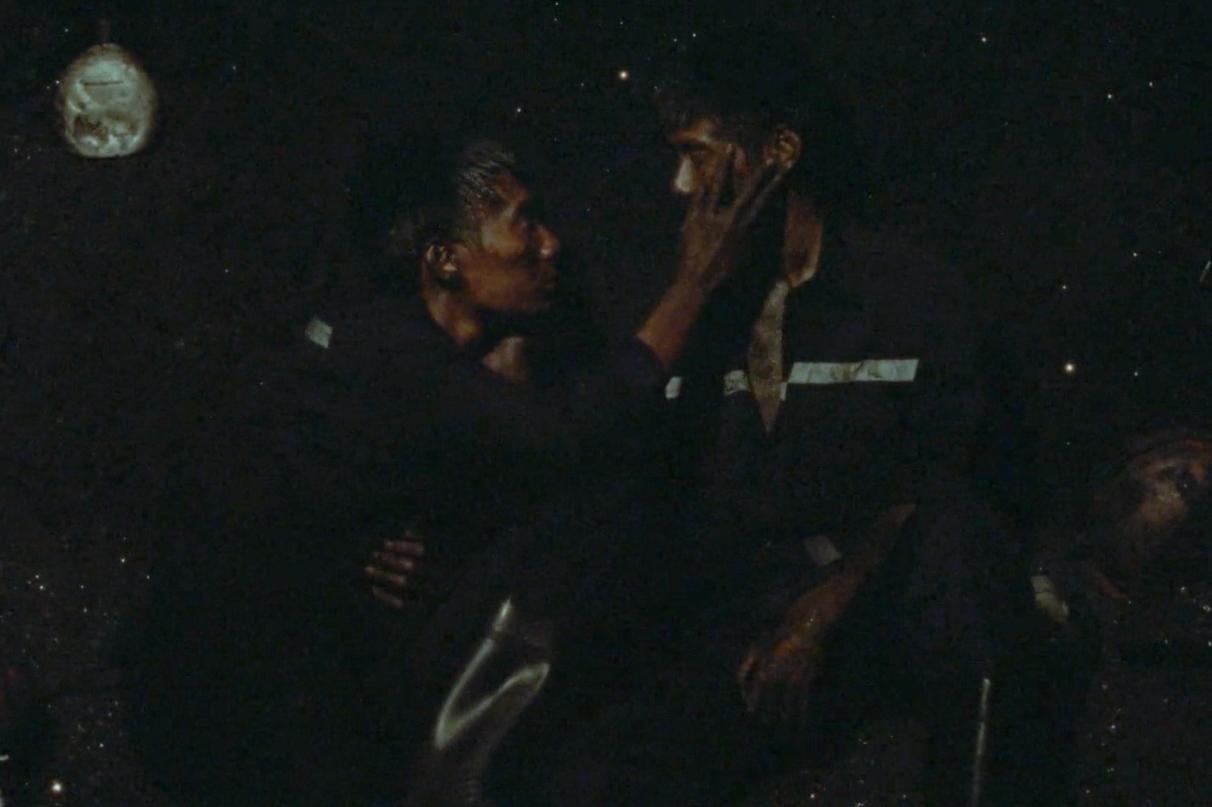
The film masterfully employs the coal mine as a symbolic space, transforming it into a canvas upon which the characters project their desires and confront their memories. In one particularly striking scene, Nam recounts a dream of being trapped in a giant transparent bag, being pushed across a river by a swimmer. As he speaks, the camera shifts to a stationary shot of Việt and Nam in the coal mine. Việt, listening intently, retrieves a canteen from his satchel and places it in a niche on the mine wall. The light reflecting off the canteen transforms it into a luminous moon against the dark, textured expanse of the mine. This simple act imbues the industrial setting with a celestial beauty, elevating their embrace amidst the soot-covered walls into an act of profound intimacy, further obscured and yet illuminated by the very darkness that defines their world. Their caresses, leaving dark smudges on each other’s skin, serve as a visual counterpoint to the reflected light, presenting a constant challenge to the spectator’s perception.
The cinematography, credited to Son Doan, plays a crucial role in this visual storytelling. Shot on 16mm film, the cinematography imbues the Vietnamese landscapes with a poetic quality, a characteristic that earned Doan recognition for his work in Meryem Benm’Barek’s "Derrière les Palmiers" (2025). In "Việt and Nam," Doan captures the "poetics and coded integrity of ‘exotic’ landscapes," but here, the exoticism is not external, but internal, found within the characters’ emotional landscapes and the stark beauty of their immediate surroundings. The visual language of the film, characterized by chiaroscuro and a masterful manipulation of light and shadow, creates a world that is both fluid and flinty, where penumbra both threatens and entices the eye. This visual richness extends to the depiction of all characters, including Nam’s mother, Hoa (Nguyễn Thị Nga), and the one-armed veteran Ba (Lê Việt Tung), who navigate this environment with a palpable sense of presence.
Intertwining Reality and the Dreamscape
"Việt and Nam" deliberately blurs the lines between social reality and psychological experience, moving seamlessly between waking states and dream sequences. This fluidity is exemplified when Việt, after hearing Nam’s dream, narrates his own vision of Nam being pushed in a bag across a river. While the voiceover suggests a dreamlike quality, the scene is revealed to be a clandestine training session for Nam’s illegal emigration. This narrative technique underscores the film’s interest in how personal anxieties and aspirations manifest, often in ways that mimic or are influenced by subconscious imagery.
The characters’ journeys are not solely internal; they are also marked by a collective search for closure and a reckoning with the past. Hoa’s quest to locate her late husband’s resting place becomes a central narrative thread. This search is echoed in a memorable scene reminiscent of Ali Khamraev’s 1985 Soviet/Uzbeki film "Ya Tebya Pomnyu" ("I Remember You"), where a mother sends her son to retrieve soil from her husband’s grave. While the journey in "Việt and Nam" is intensely local, traversing the country towards the Cambodian border, it carries immense personal weight. The characters encounter various institutions and individuals grappling with the legacy of war and displacement. A shaman, demanding professions of faith, stands as a stark symbol of spiritual guidance sought amidst uncertainty.
The Ba Chúc Tomb House and the Weight of History
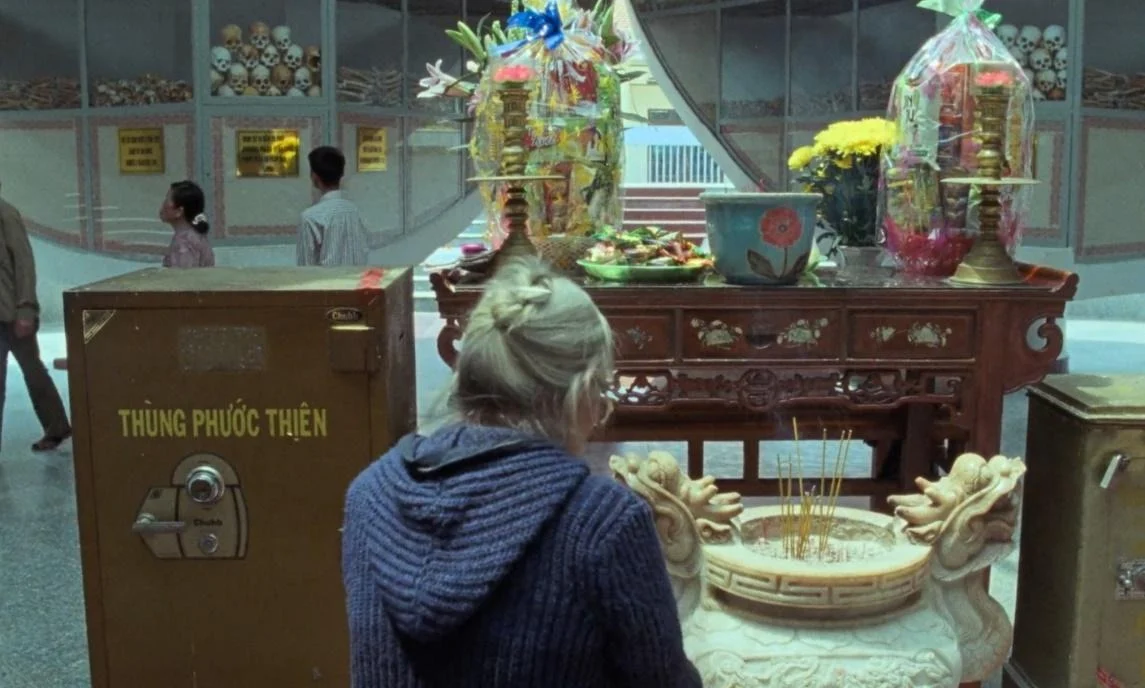
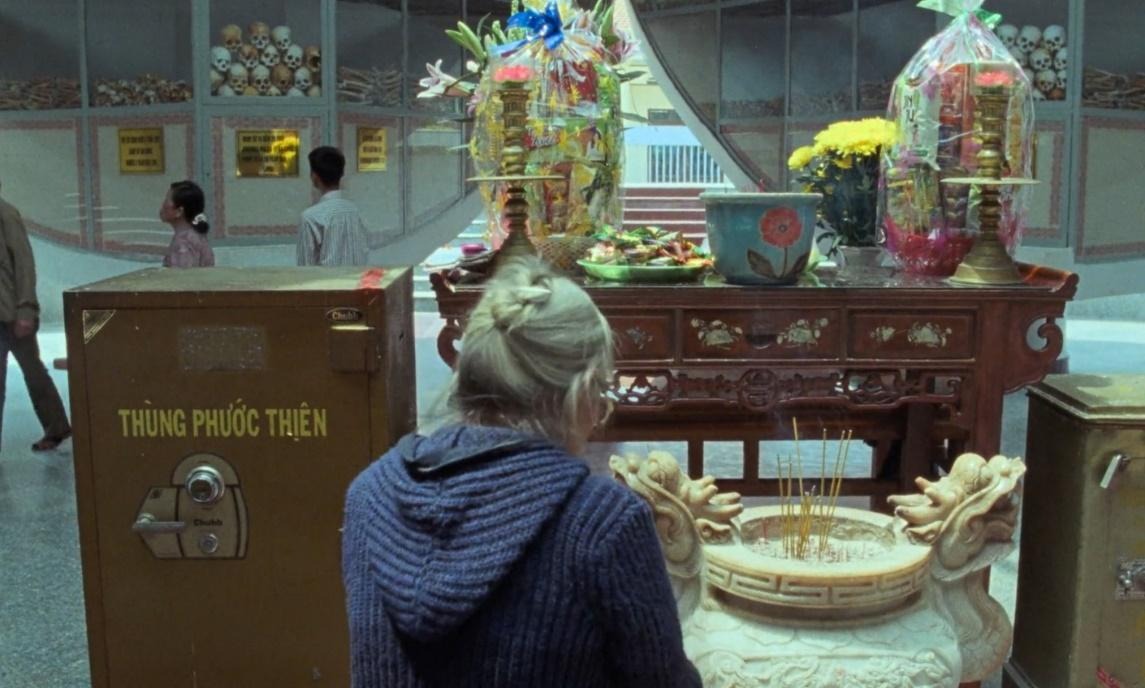
A particularly poignant and harrowing encounter occurs at the Ba Chúc Tomb House, a memorial dedicated to the 3,157 villagers massacred by the Khmer Rouge between April 18 and April 30, 1978. The architectural design of the building, a pristine structure resembling an inverted lotus blossom, stands in stark contrast to the brutal history it commemorates. The interior, surrounded by glass enclosures filled with the skulls and skeletons of victims, is a testament to the horrors of the past. The scene, featuring an elderly woman making an offering at an altar flanked by a "Charity Box" safe, encapsulates the film’s thematic concerns: the enduring impact of violence, the rituals of remembrance, and the complex interplay of grief and pragmatism. This encounter serves as a potent reminder of the wider historical trauma that continues to shape the region, providing a somber counterpoint to the personal struggles of Việt and Nam.
The search for Nam’s father’s grave leads the group to a tree that Bo believes he remembers, and Hoa identifies from her dream. Their frenzied digging around its roots unearths a startling discovery: an unexploded MK-82 bomb. This moment of terrifying realization underscores the pervasive and lingering dangers of conflict, where even the pursuit of peace and remembrance can lead to confronting the instruments of war. Exhausted, the four find temporary respite, sleeping amongst the massive roots of the tree, a visual metaphor for being anchored, however precariously, to the land and its troubled history.
An Allegory of the Abyss and the Intertwining of Souls
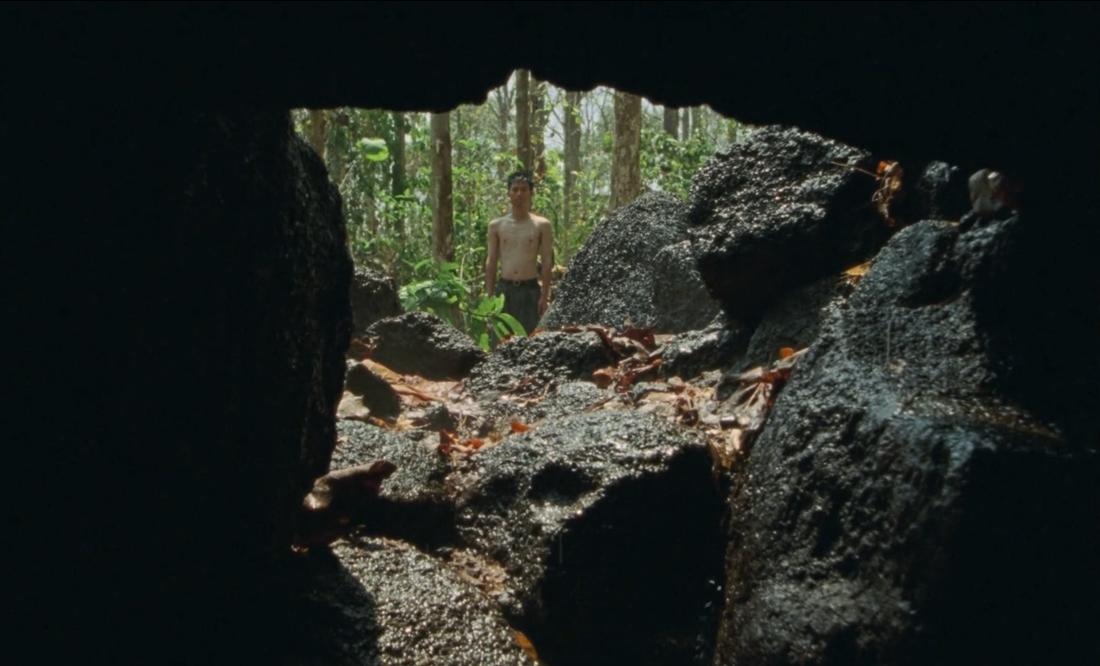
The subsequent sequence masterfully suspends the distinctions between dream and reality, employing potent visual metaphors. A shot of a frog in the rain is juxtaposed with the sleepers remaining dry beneath the tree. Nam, waking and still dry, follows the frog into the rain-drenched forest. This pursuit is crosscut with scenes of the others sleeping undisturbed. When Việt awakens and witnesses Nam’s gradual disappearance into the forest, the scene shifts abruptly to Nam standing in a dry forest, holding a shovel, watching the frog enter an opening in an ancient stone wall. His voiceover reveals his contemplation of his father’s return, a moment of profound introspection that leads to an astonishing shot from within the opening, looking out at Nam. This visual confrontation evokes Nietzsche’s famous aphorism from "Beyond Good and Evil": "And when you gaze long into an abyss, the abyss will also gaze into you."
This moment of profound existential reckoning is shattered by a sudden gunshot, and Nam collapses. His dying words, "Is this what it is like to be dead?" are immediately followed by a cut to the earlier scene of the swimmer pushing Nam in the bag across the river, now viewed with greater detail than Việt could have possessed. This narrative jolt signifies the complete intermingling of dream and reality, event and allegory, and the increasingly fused visions of the two lovers. The film’s allegorical structure, in this instance, moves beyond a direct representation of the lovers to allegorize the very "location" of their love and loss, returning to the symbolic power of the coal mine as an "other scene" where their deepest desires are consummated.
"Trong Lòng Đất": A Title Rich with Meaning
The original Vietnamese title, "Trong Lòng Đất," offers a deeper layer of interpretation that enriches the film’s thematic scope. While it can translate to "underground," a descriptor fitting the clandestine nature of the lovers’ relationship and the setting, film scholar and performance artist Phạm Ngọc Minh elaborates on its more poetic connotations. He suggests that "Đất" (earth, land, soil) can also carry associations of "country" or "nation," while "Lòng" can signify "heart," "inside," or even "womb." Combined, "Trong Lòng Đất" can be understood as being "embraced by one’s ancestors" or "returning to them." This nuanced interpretation transforms the coal mine from a mere physical location into a site of ancestral connection and national identity, a space where personal desires are inextricably linked to the collective past and the land itself.
The lovers’ secret rendezvous point is, therefore, not just a physical "underground" space, but also the source of their livelihood and the community’s energy. Visually, it serves as a microcosm and a theater for the fulfillment and seclusion of desire. It is important to note that these evocative scenes were not filmed in an actual coal mine, but on a meticulously crafted stage set within a natural cave. This artistic choice brilliantly fuses the material reality of the site with the fantasy that allows Việt and Nam to find precarious satisfaction and solace in the chiaroscuro of their existence.
The Legacy of "Việt and Nam"
"Việt and Nam" shares a thematic kinship with Apichatpong Weerasethakul’s "Tropical Malady" (2004) in its exploration of desire and myth. However, where "Tropical Malady" allegorizes the lovers themselves through myth, "Việt and Nam" allegorizes the very "location" of love and loss. The film’s increasingly allegorical motifs function as a visual stream-of-consciousness, portraying a world of impossible desires made heartbreakingly possible. The "sparkling darkness" that envelops Việt and Nam represents not only the joy of their union but also the anticipation of their impending separation, a poignant depiction of togetherness within an inevitable parting. This separation, though painful, will forever be imbued with the memory of a union that consoles and torments in equal measure.
Both "Song Lang" and "Việt and Nam" showcase an investment in the creation of "fantasy spaces" – alternative realms where the impossibility of desire becomes tangible. These films, through their unique narrative approaches and evocative settings, offer audiences a profound contemplation of love, loss, and the enduring power of human connection against the backdrop of historical and personal complexities. "Việt and Nam," with its raw depiction of a hidden love and its profound engagement with Vietnam’s layered past, stands as a significant and compelling work in contemporary cinema.