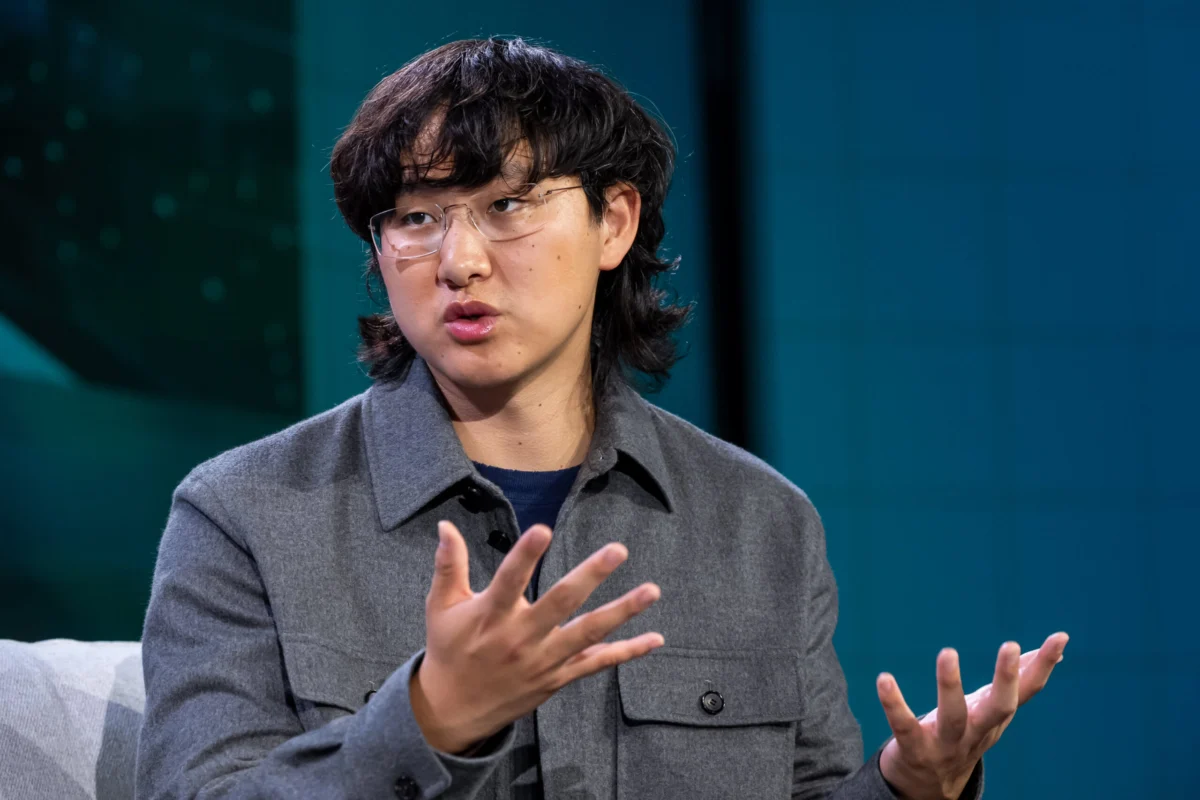
A year after committing a staggering $14.3 billion to acquire a significant stake in Scale AI and recruit its founder, Alexandr Wang, along with a cadre of top-tier engineers, Meta Platforms Inc. finds itself at a critical crossroads. While the massive investment has successfully repositioned the social media giant within the competitive landscape of generative artificial intelligence, the company remains in the shadow of industry frontrunners OpenAI, Anthropic, and Google. The mandate for Wang and his newly formed Meta Superintelligence Labs (MSL) was clear: transform Meta from an AI laggard into a pioneer of "sizzle" and innovation. However, as the initial honeymoon period ends, the pressure to convert technological milestones into fiscal performance is mounting on CEO Mark Zuckerberg.
The cornerstone of Wang’s first year was the April debut of the Muse Spark AI model. This release represented a seismic shift in Meta’s corporate strategy, marking its first major foray into proprietary foundation models. For years, Meta had championed an "open-weight" philosophy with its Llama family of models, providing developers with free access to its underlying architecture. Muse Spark broke that tradition, signaling Zuckerberg’s realization that to compete for the highest tier of AI dominance, the company needed a "walled garden" approach that it could fully control and monetize.
The Strategic Pivot: From Llama to Muse Spark
The transition to proprietary models was born out of necessity rather than mere preference. Industry analysts point to the April 2025 release of Llama 4 as a pivotal failure. Despite the hype, the model failed to captivate the developer community, leaving Meta’s AI efforts looking stagnant compared to the rapid iterations seen from the creators of ChatGPT and Gemini. This "strategic blunder," as some experts now describe it, forced Zuckerberg’s hand. Two months after the Llama 4 disappointment, he executed the $14.3 billion deal to bring Alexandr Wang into the fold—a move that many saw as a desperate but necessary "strategic rebuild."
Thomas Randall, an analyst at Info-Tech Research Group, suggests that without this infusion of talent and the subsequent development of Muse Spark, Meta would be "lost" in the current tech climate. Unlike its predecessors, Muse Spark was not designed primarily for third-party tinkering. Instead, it was engineered for deep integration across Meta’s sprawling ecosystem, including Facebook, Instagram, and the increasingly popular Ray-Ban Meta smart glasses. The goal is a seamless, AI-powered user experience that keeps consumers within Meta’s digital borders.
Financial Performance and Wall Street’s Skepticism
Despite the technical progress under Wang, Wall Street remains unconvinced of Meta’s long-term AI trajectory. Over the past 12 months, Meta’s stock has plummeted 18%, making it one of the worst performers among megacap technology companies. This decline occurred despite a robust first quarter that saw 33% revenue growth—the company’s fastest expansion rate since 2021. The disconnect between strong earnings and a falling share price highlights a specific investor anxiety: the lack of diverse revenue streams.

Currently, advertising accounts for a staggering 98% of Meta’s total revenue. While AI has undeniably bolstered the company’s core advertising models through better targeting and efficiency, investors are hungry for "proof points" of new, AI-first commercialization. Ralph Schackart, an analyst at William Blair, notes that the market is waiting for Meta to prove it can attract paying users for AI tools, similar to the subscription models successfully deployed by Microsoft and OpenAI.
In an effort to address these concerns, Meta has begun testing AI and business-related subscription plans, with the most affordable tier starting at $7.99 per month. Historically, however, Meta has struggled to sell anything other than advertising space. The company’s previous attempt to diversify into the "metaverse" has resulted in more than $80 billion in total losses since late 2020, a figure that continues to weigh heavily on investor sentiment and Zuckerberg’s personal credibility.
The Developer Trust Gap
Perhaps the most significant hurdle facing Alexandr Wang is the erosion of trust within the developer community. By pivoting away from the open-source ethos that defined the Llama era, Meta has alienated many of the engineers who were once its biggest advocates. Rob May, CEO of the startup Neurometric, claims that the AI community has largely begun to "ignore" Meta. He describes the Muse Spark release as a "yawn" because the technology is not widely accessible to outside creators.
"The lack of developer trust will come back to hit them if they don’t focus on third-party developers," warns Krish Subramanian, CEO of KOI AI and former product head at IBM Consulting. He draws a parallel to Microsoft’s early struggles with its Azure cloud platform, noting that it took years of concerted effort for the software giant to regain the trust of open-source coders. If Meta remains focused solely on its internal "walled garden," it risks missing out on the external innovation that often drives platform growth.
In response to these criticisms, Meta spokespeople have emphasized that the company has not abandoned the open-source ecosystem entirely. Wang himself has stated that Meta plans to offer outside developers access to Muse Spark’s underlying technology via an API. The company is currently testing this with early partners and expects a broader release within the month. Whether this move is enough to mend fences with the coding community remains to be seen.
Internal Turmoil and Leadership Tensions
The external challenges are mirrored by internal instability. Meta has undergone a series of aggressive "efficiency" measures throughout the year, including the termination of approximately 8,000 workers in May alone. These layoffs have cut deep into departments essential for long-term AI health, including trust and safety teams. Sources familiar with the matter suggest that these cuts have raised internal alarms regarding the potential for ethical lapses or safety risks in future AI development.

Furthermore, there are reports of brewing tension at the top of the AI organization. While Muse Spark was viewed as a technical success internally, there is immense pressure on Wang and Nat Friedman (the former GitHub CEO who joined Meta alongside Wang) to deliver immediate and meaningful revenue growth. Standing in the wings is Andrew Bosworth, Meta’s Chief Technology Officer and a 20-year veteran of the company. As a close confidant of Zuckerberg, "Boz" represents the old guard. Sources suggest that if the newcomers fail to hit their aggressive financial targets, Zuckerberg may consolidate AI leadership under Bosworth’s more traditional management style.
A Quest for Efficiency as a Differentiator
As Meta navigates these leadership and developer challenges, some experts believe the company may find its "lane" by focusing on computational efficiency. Andrew Moore, CEO of Lovelace and former Google Cloud AI chief, suggests that Meta’s focus on making models more efficient through advanced training techniques could be a major competitive advantage.
"If they do proprietary, computationally efficient models, that will be so different from what’s happening in this death match between the big guys," Moore said. As the costs of running massive foundation models continue to skyrocket, a provider that can offer lower latency and reduced computational overhead may become highly attractive to enterprise clients. To succeed, Meta must demonstrate a clear technical advantage in areas like cost-per-token or response speed—nuances that matter deeply to professional developers and businesses.
Conclusion: The Stakes for the Zuckerberg Vision
Alexandr Wang has described Muse Spark as merely an "appetizer" for more powerful, larger models currently in development at Meta Superintelligence Labs. However, in the fast-moving world of AI, "cadence" is everything. Competitors like OpenAI and Google maintain a relentless release schedule that keeps the industry’s attention fixed on their progress.
For Mark Zuckerberg, the success of the $14.3 billion Wang experiment is about more than just technology; it is about his survival as a visionary leader. After the financial hemorrhage caused by the Reality Labs metaverse project, his "goodwill" with investors is nearing exhaustion. "He’s running out of the space for his credibility to last," says Howard Yu, a professor at the International Institute for Management Development.
The next twelve months will determine if Alexandr Wang can turn Meta’s AI "sizzle" into a sustainable financial fire. If Muse Spark and its successors fail to gain traction as standalone products or significantly move the needle on non-ad revenue, Meta may find itself permanently relegated to the second tier of the AI revolution, despite having spent billions to secure a seat at the head table. For now, the "machine" that Meta built—a $200 billion-a-year advertising juggernaut—remains its only reliable shield, but in the age of superintelligence, a shield may not be enough to win the war.