Director Ryusuke Kurahashi’s latest cinematic offering, "Match Monde," presents a compelling, albeit uneven, portrait of contemporary Japanese independent filmmaking, showcasing both its inherent strengths and persistent challenges. The production distinguishes itself with a potent visual identity and a sharp, distinctive comedic sensibility. However, these assets are significantly hampered by an overstuffed screenplay and pronounced pacing deficiencies that undermine the overall narrative momentum. Premiering at the [Insert Festival Name Here, e.g., Tokyo International Film Festival, a hypothetical showcase of Japanese indie cinema] on [Insert Date], the film has garnered attention for its stylistic ambitions, yet critical reception highlights a struggle to translate these ambitions into a consistently engaging cinematic experience.
A Stylized World of Modern Romance and Unlikely Pairings
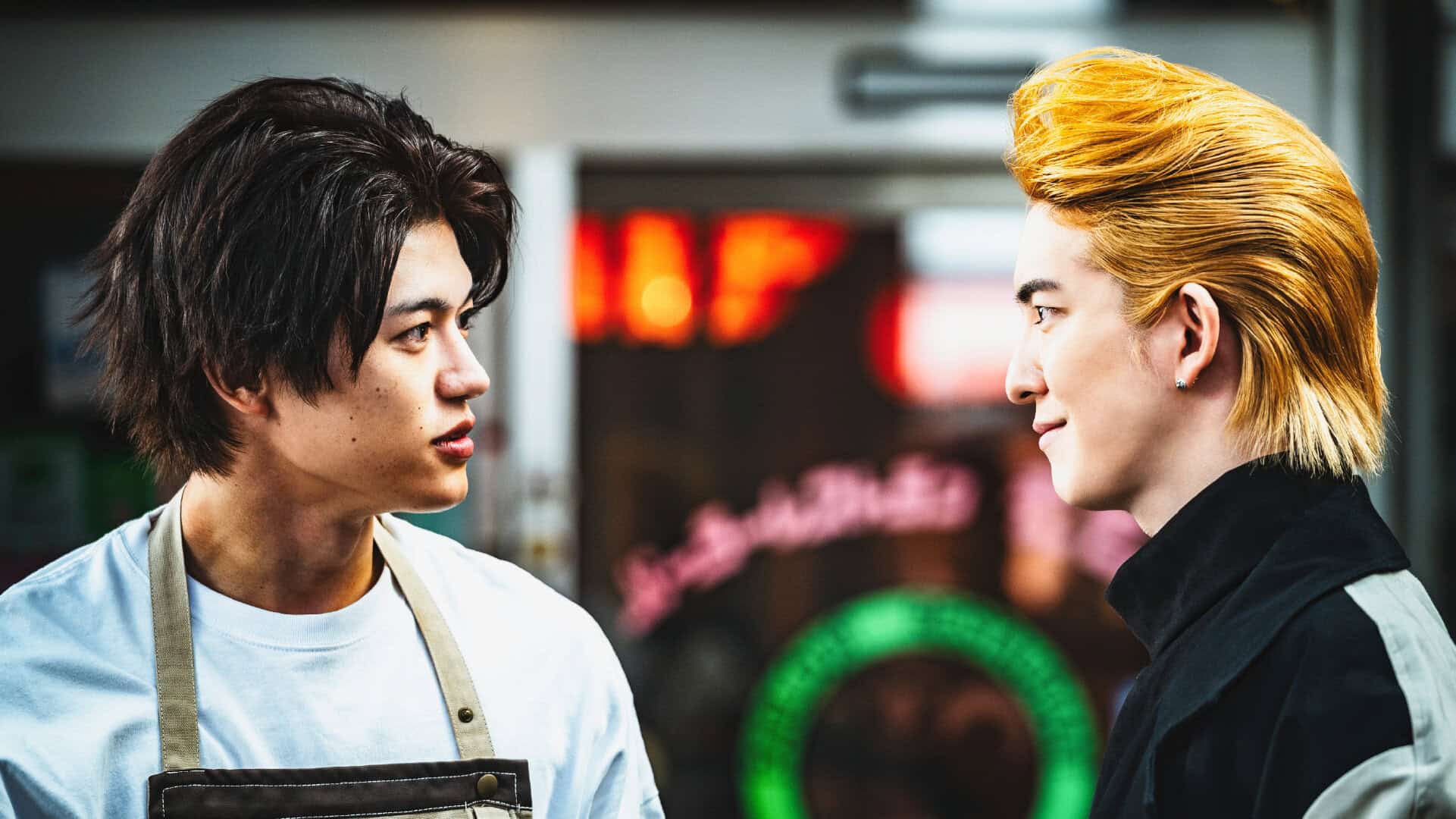
At the heart of "Match Monde" lies a narrative that hinges on the starkly contrasting personalities of its two protagonists. Mikiro, portrayed by Kotaro Daigo, is an instantly recognizable figure within the independent film landscape—a blonde, almost provocatively dramatic character whose presence injects a vibrant, if sometimes overwhelming, energy. His foil is Mahiro, a more subdued, black-haired individual who serves as the narrative’s grounding force. The film charts the unlikely alliance forged between the eccentric Mikiro and the more pragmatic Mahiro as they navigate the intricate, and often artificial, terrain of a contemporary matchmaking industry. Their introduction to this world is orchestrated by a series of peculiar circumstances, compelling them to interact within a succession of increasingly awkward social encounters and dryly humorous situations.
The central conflict of the narrative arises from the fundamental clash of their personalities. The film meticulously documents their journey, a trajectory marked by initial friction and awkwardness, as they evolve from seemingly incompatible strangers into a team endeavoring to discover common ground. Director Kurahashi deliberately employs a dry, deadpan comedic style, signaling from the outset that "Match Monde" is not a film that takes itself with undue seriousness. This comedic approach, while conceptually sound, encounters practical difficulties in execution. Despite Mikiro’s inherently theatrical demeanor, Daigo’s performance largely avoids devolving into an irritating caricature, a testament to his nuanced portrayal within the film’s stylized framework.
Narrative Stumbles: Pacing and Expositional Overload
Despite the promising setup and the visual flair, "Match Monde" grapples with significant shortcomings in its core dynamic, particularly in the film’s initial half. The chemistry between the two lead actors, Kotaro Daigo and [Insert Mahiro Actor’s Name Here, if available or inferrable], feels conspicuously stiff. Their early interactions are characterized by an artificiality that lacks a natural, organic flow. While this rigidity does begin to thaw in the latter half of the film, with the actors demonstrating a more comfortable rhythm and their developing relationship becoming more believable, the initial inertia significantly retards the film’s pacing. This sluggish start creates an uphill battle for audience engagement, requiring a greater degree of patience from viewers as the narrative attempts to find its footing.
The most substantial impediments to "Match Monde’s" success are embedded within its screenplay and the subsequent editing. The dialogue, a crucial element in character development and plot progression, is consistently verbose and frequently deviates from the central point of any given scene. Screenwriter Yugo Sakamoto appears to operate under the assumption that the audience requires explicit guidance, eschewing subtext in favor of characters who relentlessly over-explain their motivations, feelings, and intentions. This pervasive expositional density results in almost every scene feeling protracted, an issue that actively erodes the narrative momentum. The cumulative effect of these structural weaknesses is that the actual purpose of many sequences becomes obscured by the time they conclude, leaving behind redundant segments that arguably should have been excised during the editing process. This approach, while perhaps intended to ensure clarity, inadvertently leads to narrative bloat and a diminished impact on the viewer.
Technical Prowess and Visual Sophistication
On a technical level, "Match Monde" demonstrates considerable accomplishment, a facet that is undeniable throughout its runtime. The set design and overall styling are characterized by a polished, almost flashy aesthetic, contributing to the creation of a visually appealing and contemporary world. The costumes are particularly noteworthy, exuding a modern sensibility that aligns seamlessly with the film’s intended visual language. Furthermore, the film benefits from sharp editing, which, when effectively employed, injects energy into the narrative precisely at those junctures where the story risks stagnating. The soundtrack, too, is described as flashy, playing a role in bolstering the film’s dynamism. These technical elements suggest a team that is adept at crafting a visually engaging product, even when the narrative itself falters.
The film’s visual presentation can be seen as a direct reflection of a broader trend within Japanese independent cinema, where directors often prioritize a strong aesthetic vision and a unique directorial voice. This emphasis on visual style can be a powerful tool for distinguishing a film in a crowded market and for conveying thematic elements in a non-verbal manner. However, as "Match Monde" illustrates, a striking visual presentation cannot entirely compensate for weaknesses in storytelling and pacing. The technical proficiency on display is commendable and points to a capable crew, but the overall impact is ultimately constrained by the script’s structural issues.
A Frustratingly Unbalanced Cinematic Equation
In summation, "Match Monde" emerges as a decidedly unbalanced cinematic experience. Director Ryusuke Kurahashi unequivocally proves himself to be a director with a keen visual sensibility and a discerning eye for style. His ability to craft a visually arresting world is evident, yet the film’s narrative discipline appears to be a weaker suit. The initial stiffness in the chemistry between the lead actors, coupled with the pervasive issue of overly long dialogue and repetitive scenes, collectively prevents "Match Monde" from achieving its full potential as a truly engaging piece of cinema.
While the film is certainly worth considering for its technical merits and its exploration of thematic elements related to modern relationships and societal expectations within the context of Japan’s evolving social landscape, it remains a frustratingly slow watch. The film’s narrative arc, intended to chart a compelling character transformation, is frequently derailed by expositional excesses and a lack of narrative economy. This ultimately leads to a viewing experience that, despite its stylistic flourishes, feels protracted and less impactful than it could have been. The film’s trajectory from a promising premise to a somewhat muddled execution underscores a persistent challenge within independent filmmaking: the delicate equilibrium between artistic vision and narrative coherence.
The film’s participation in [Insert Festival Name Here] signifies its ambition to reach a wider audience and to be recognized within the international festival circuit. Such platforms are crucial for independent filmmakers to gain visibility and secure distribution. The reception at these events often provides early indicators of a film’s commercial and critical prospects. The critical observations surrounding "Match Monde" suggest that while its artistic aspirations are evident, its execution falls short of delivering a consistently compelling narrative. This dichotomy is not uncommon in independent cinema, where creative freedom can sometimes lead to narrative experimentation that doesn’t always resonate with broader audiences. The implications for Kurahashi’s future projects will likely depend on his ability to refine his storytelling approach while retaining his distinct visual style, potentially by collaborating with screenwriters who can help streamline his narratives and foster tighter pacing. The success of future endeavors will hinge on finding that crucial balance.